
In this article
- Is Mounjaro fatigue normal?
- Why does Mounjaro make you tired?
- Why do headaches happen on Mounjaro?
- Why do you feel dizzy or light-headed?
- When do tiredness, headache and dizziness tend to occur?
- How to fix Mounjaro tiredness with food
- Do blood pressure and diabetes medicines need review as weight falls?
- Which nutrient gaps are worth testing if fatigue persists?
- Do sleep, activity and constipation matter?
- A sample “energy day” menu: vegetarian and non-vegetarian
- What are the red flags that need urgent care?
- When is a dose review reasonable?
- Common myths
- Questions to ask your healthcare provider
- How The Prime Fit helps
- Frequently asked questions
Mounjaro fatigue is real, common and usually fixable. Most tiredness, headache and dizziness on Mounjaro (tirzepatide) is not caused by the medicine acting on the brain or muscles. It comes from what the medicine does to appetite and thirst: you eat much less, drink less, take in less salt and protein, and lose weight quickly, and the body takes a few weeks to adjust.
These symptoms tend to appear in the first weeks of treatment and again for a short time after each dose increase. In most people they ease with regular small meals, enough protein, enough fluid and better sleep. In a smaller group, the cause is something that needs a prescriber’s attention: blood pressure tablets or diabetes medicines that are now too strong for a lighter body, low blood sugar, dehydration, or a nutrient gap such as low iron or vitamin B12.
This article explains how to tell these apart, what to try at home with everyday Indian foods, and the warning signs that mean you should seek help the same day.
Is Mounjaro fatigue normal?
Yes, within limits. Tiredness is listed among the side effects reported in trials of tirzepatide for weight management, and dizziness and a fall in blood pressure have also been reported. They are far less common than nausea, constipation or loose stools, and they are usually mild. Headache is frequently mentioned by people on treatment, although it is often linked to low fluid, missed meals or a change in caffeine intake and not clearly to the medicine itself.
Why does Mounjaro make you tired?
There are usually several small causes acting together.
- Eating much less. Appetite can fall sharply. Some people drift into one or two tiny meals a day without noticing.
- Low protein. Low protein intake with fast weight loss costs muscle, and less muscle means weakness and poor stamina.
- Low fluid and salt. Thirst is often blunted on treatment. Vomiting or loose stools add to the loss. Mild dehydration causes tiredness, headache and light-headedness on standing.
- Constipation. A slow, uncomfortable gut makes people feel sluggish and puts them off eating and drinking.
- Poor sleep. Acidity, nausea or bloating at night, late dinners and untreated snoring all break sleep.
- Faster weight loss. The quicker the weight falls, the more likely you are to feel drained while the body adapts.

Why do headaches happen on Mounjaro?
The most frequent reasons are simple ones: not drinking enough, long gaps between meals, and poor sleep. A cause that is often missed is caffeine. Many people find chai and coffee less appealing on treatment, or cut them down because of acidity. Dropping from four cups a day to one can bring a dull withdrawal headache for several days. Reducing gradually avoids this.
Headache can also be a sign of low blood sugar in people who take insulin or a sulfonylurea tablet, and occasionally of blood pressure that is too high or too low.
Why do you feel dizzy or light-headed?
Dizziness on standing up, sometimes with a brief greying of vision, usually means blood pressure is dipping when you change position. Three things make this more likely on Mounjaro.
- Less fluid and salt in the body because you are eating and drinking less, or losing fluid through vomiting or loose stools.
- Blood pressure falling as weight drops. This is one of the benefits of weight loss, but if you take blood pressure tablets, the combined effect can become too much.
- Low blood sugar, mainly in people who also take insulin or a sulfonylurea. The official prescribing information for Mounjaro notes that the risk of low blood sugar is higher when it is used with these medicines, and that their doses may need to be reduced.
When do tiredness, headache and dizziness tend to occur?
The pattern is fairly predictable. Symptoms are most likely in the first few weeks on the starting dose and for a week or two after each step up. Mounjaro is started at 2.5 mg once a week, and the dose is raised in steps only after at least four weeks at each level, precisely so the body can adjust. Our Mounjaro dosage guide explains the steps.
Tiredness that appears months into treatment, on a stable dose, is more likely to reflect under-eating, muscle loss or a nutrient gap.
Symptom, likely cause and what to try
| Symptom | Likely cause | What to try |
|---|---|---|
| Tired all day, heavy limbs | Too little food overall, low protein | Three small meals and one or two snacks, each with a protein food |
| Light-headed on standing | Low fluid and salt, or blood pressure now too low | Fluids through the day, chaas or nimbu pani with a pinch of salt, rise slowly, check blood pressure |
| Dull headache by afternoon | Low fluid, missed meal, less caffeine than usual | Water on waking and with each meal, do not skip lunch, cut caffeine gradually |
| Shaky, sweaty, hungry, irritable | Low blood sugar, mainly if on insulin or a sulfonylurea | Check sugar if you have a meter, treat as advised by your care team, ask for a dose review |
| Sluggish, bloated, poor appetite | Constipation | Fluids, fibre, movement; see our guide below |
| Tired despite eating well, breathless, pale | Possible low iron, B12, vitamin D or thyroid problem | Ask for blood tests |

How to fix Mounjaro tiredness with food
The aim is not to eat more than you want. It is to make the small amount you eat do more work.
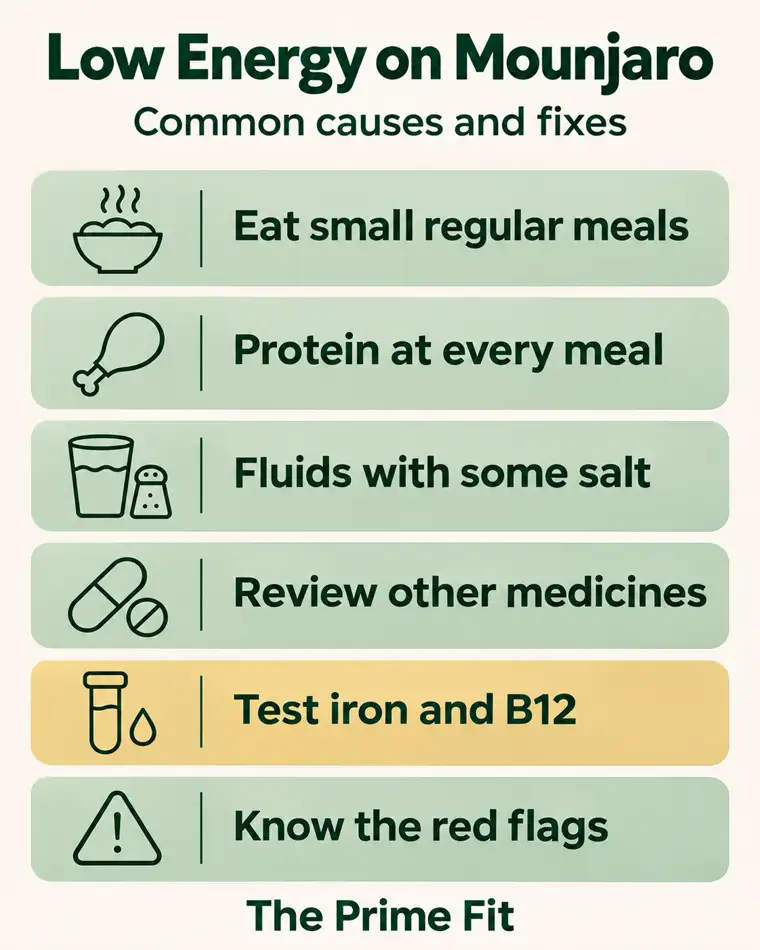
- Eat by the clock, not by hunger. Hunger signals are quiet on treatment. Plan three small meals and one or two snacks, roughly every three to four hours while awake.
- Do not skip meals, especially breakfast.
- Put protein first on the plate. Dal, curd, paneer, eggs, sprouts, chana, rajma, soya chunks, fish or chicken. Eat the protein before the roti or rice so it is not the part left behind.
- Keep some carbohydrate. One roti, a small katori of rice, poha, oats or fruit with each meal steadies energy.
- Use liquids when solids feel heavy. Chaas, thin dal, a curd and fruit smoothie, or milk are easier on days of nausea.
For a full week of meals, see the Mounjaro diet plan with an Indian menu. Vegetarians can use our vegetarian high-protein meal plan.
How much fluid and salt do you need?
Most adults do well with about 2 to 2.5 litres of fluid a day, more in a Delhi summer or if you sweat heavily, unless you have been told to limit fluids. Because thirst is unreliable on treatment, sip to a plan: a glass on waking, one with each meal and snack, and one in the evening. Pale yellow urine is a reasonable sign that you are drinking enough.
When food intake falls, salt intake falls with it. For people who feel light-headed and do not have a salt restriction, one or two salted drinks a day can help: chaas with a pinch of salt and roasted jeera, nimbu pani with a pinch of salt, thin dal or a clear vegetable soup. On days with vomiting or loose stools, oral rehydration solution is the better choice.
If you have a salt or fluid limit
People with high blood pressure, heart failure or kidney disease are often advised to limit salt or fluid. Do not add salt or increase fluids without checking with your prescriber first.
Do blood pressure and diabetes medicines need review as weight falls?
Often, yes. Weight loss usually lowers blood pressure and blood sugar, which is good news, but it means the doses of other medicines set at your old weight may need to come down.
- Blood pressure medicines. If you take them and feel dizzy on standing, measure your blood pressure at home, sitting, on several days, and note any readings taken while you feel unwell. Share the list with your prescriber. Do not stop or halve tablets by yourself.
- Insulin and sulfonylureas. These are the diabetes medicines most likely to cause low blood sugar alongside Mounjaro. Check your sugar more often in the weeks after starting or stepping up, and report any low readings. Doses are commonly adjusted by the prescriber.
Which nutrient gaps are worth testing if fatigue persists?
If tiredness lasts beyond a few weeks despite eating and drinking well, ask about blood tests. Several deficiencies are common in India even before treatment, and a smaller food intake can unmask them.
| Test | Why it matters | Who is more at risk |
|---|---|---|
| Haemoglobin and iron stores (ferritin) | Low iron causes tiredness, breathlessness on effort, headache and hair fall | Women with heavy periods, vegetarians, people eating very little |
| Vitamin B12 | Low levels cause fatigue, tingling in hands and feet, poor concentration | Vegetarians, people on long-term metformin or acid-reducing medicines |
| Vitamin D | Low levels are linked with aches, weakness and low mood | Most indoor workers; very common in Indian cities |
| Thyroid function (TSH) | An underactive thyroid causes tiredness, weight gain and feeling cold | Women, people with a family history, those already on thyroid tablets |
Supplements work best when a test shows a need. Our guide to blood tests before starting GLP-1 treatment explains what each test shows.
Do sleep, activity and constipation matter?
All three do. A light dinner two to three hours before bed, with the head of the bed slightly raised if acidity is a problem, protects sleep. If your partner reports loud snoring or pauses in breathing, mention it, because sleep apnoea is a common and treatable cause of daytime exhaustion in people with excess weight.
Gentle activity raises energy even when it feels like the last thing you want. A 10 to 15 minute walk after meals and two short sessions of simple strength work a week help preserve muscle. See our beginner strength plan.
Constipation deserves active treatment, not patience. See Mounjaro constipation, acidity and bloating: Indian food fixes.
A sample “energy day” menu: vegetarian and non-vegetarian
This is an illustrative example of how to spread small, protein-led meals and fluids across a day. Start the day with a glass of water, and let portions follow your appetite.
| Time | Vegetarian | Non-vegetarian |
|---|---|---|
| Breakfast | Moong dal chilla with paneer filling, or vegetable poha with a cup of curd | Two-egg omelette or bhurji with one roti or a slice of toast |
| Mid-morning | Chaas with a pinch of salt and roasted jeera, a small fruit | Chaas with a pinch of salt and roasted jeera, a small fruit |
| Lunch | A katori of dal or rajma, a small portion of rice or one roti, sabzi, curd | Chicken or fish curry (less oil), a small portion of rice or one roti, sabzi, curd |
| Late afternoon | Roasted chana or sprouts chaat, nimbu pani with a pinch of salt | A boiled egg or roasted chana, nimbu pani with a pinch of salt |
| Dinner (early and light) | Paneer or soya bhurji with one roti, or vegetable dal khichdi with curd | Grilled fish or chicken with sauteed vegetables and one roti, or egg curry with a little rice |
What are the red flags that need urgent care?
Seek medical help the same day, or go to an emergency department, if you have
Fainting or near-fainting; chest pain or pressure; a very fast, pounding or irregular heartbeat; breathlessness at rest; a severe or sudden headache, especially with a change in vision; confusion, slurred speech or weakness on one side; signs of low blood sugar that do not settle quickly after taking sugar (sweating, shaking, intense hunger, blurred vision, odd behaviour); or signs of dehydration (very little or very dark urine, a dry mouth, inability to keep fluids down for a day, dizziness that does not ease on lying down). Severe, persistent abdominal pain with vomiting also needs urgent review.
Dehydration from prolonged vomiting or loose stools can strain the kidneys, so it is a reason to seek help. The wider list of warning signs is in our guide to Mounjaro side effects by dose.
When is a dose review reasonable?
Stepping up is not compulsory at every four-week point. It is reasonable to ask your prescriber about staying longer at the current dose, or stepping back, if:
- tiredness, headache or dizziness has lasted more than two to three weeks at the same dose despite the food and fluid measures above;
- weight is falling faster than your team advised and you feel weak;
- you have had a fall, a faint or a confirmed low blood sugar reading;
- symptoms began clearly after the latest increase.
Never change the dose, split pens or skip weeks without advice. Follow the leaflet that comes with your pen and the plan your prescriber has set.

Common myths
- “Feeling drained means the medicine is working.” No. Weight loss does not require exhaustion. Persistent fatigue usually signals under-eating or another fixable cause.
- “Eating as little as possible gives the best result.” Very low intake speeds muscle loss, worsens tiredness and makes weight harder to maintain later.
- “Dizziness is always low blood sugar.” In people not on insulin or a sulfonylurea, low fluid and low blood pressure are more likely.
Questions to ask your healthcare provider
- Could any of my current medicines be contributing to tiredness or dizziness now that my weight is lower?
- Should the dose of my blood pressure or diabetes medicine be reviewed?
- What blood pressure and blood sugar readings should prompt me to call you?
- Should I have my haemoglobin, ferritin, B12, vitamin D and thyroid checked?
- Is my rate of weight loss appropriate, and how much protein should I aim for?
- Should I stay on this dose longer before the next increase?
How The Prime Fit helps
At The Prime Fit, treatment with Mounjaro begins with an assessment of your health history, current medicines and baseline tests, so that likely causes of fatigue can be anticipated. Nutrition support focuses on practical Indian meals that protect protein and fluid intake when appetite is low. Regular follow-up lets you report tiredness, dizziness or headaches early, so that food, fluids, other medicines and the pace of dose increases can be reviewed.
Frequently asked questions
How long does Mounjaro fatigue last?
For most people it eases within a few weeks of starting or of a dose increase, once eating, drinking and sleep settle into a routine. Tiredness that lasts longer should be discussed with your prescriber.
Does Mounjaro cause headaches?
Headaches are commonly reported by people on treatment, but they are usually linked to low fluid intake, missed meals, poor sleep or a sudden drop in caffeine. A severe or sudden headache, or one with vision change, weakness or confusion, needs urgent medical attention.
Why do I feel dizzy when I stand up on Mounjaro?
The usual reason is a brief dip in blood pressure caused by low fluid and salt intake, sometimes combined with blood pressure tablets that are now too strong for your lower weight. Drink regularly, rise slowly, check your blood pressure at home and share the readings with your prescriber.
Can Mounjaro cause low blood sugar?
The risk is mainly in people who also take insulin or a sulfonylurea tablet. In that group the prescriber often reduces the dose of the other medicine.
Should I take electrolyte drinks on Mounjaro?
Most people do not need commercial products. Chaas or nimbu pani with a pinch of salt, thin dal, soup and coconut water cover everyday needs. Use oral rehydration solution if you have vomiting or loose stools. If you have a salt or fluid restriction, ask your prescriber first.
Will a lower dose reduce tiredness?
Sometimes. If symptoms began after an increase and have not settled with food and fluid measures, your prescriber may suggest staying longer at the present dose or stepping back. Do not adjust the dose yourself.
Is it safe to exercise when I feel tired on Mounjaro?
Gentle walking and light strength work are usually safe and often improve energy, provided you have eaten and had fluids beforehand. Stop if you feel faint or have chest discomfort.
Which vitamins should I check if I am always tired?
Ask about haemoglobin, iron stores, vitamin B12, vitamin D and thyroid function. Low levels are common in India and can be corrected, but treatment should follow a test result and not guesswork.
This article is general patient education and is not a substitute for individual medical advice. Mounjaro is a prescription medicine. Always follow the leaflet supplied with your pen and the instructions of your own prescriber, and seek urgent care for any of the warning signs described above.