In this article
- What counts as constipation?
- Why GLP-1 medicines cause constipation
- The five-part plan
- Step 1: Drink enough
- Step 2: Build up fibre the right way
- Step 3: The best Indian foods for relief
- Foods and habits that make constipation worse
- Getting enough protein and fibre together
- 7-day high-fibre Indian meal plan for GLP-1 users
- Step 4: Movement and toilet routine
- Step 5: Laxatives and medicines
- When constipation needs urgent attention
- Piles and fissures: preventing complications
- Why constipation can affect the scale
- A sample daily routine
- What to expect at each stage of treatment
- Special situations
- How The Prime Fit helps
- Frequently asked questions
If your bowel habits have slowed since you started Mounjaro (tirzepatide), Wegovy or Ozempic (semaglutide), you are in good company. In clinical trials, roughly one in six to one in four people on these medicines reported constipation. Unlike nausea, which usually fades within a couple of weeks of each dose increase, constipation can linger for months if nothing is done about it. It makes people feel bloated, heavy and uncomfortable, and it is a common reason for wanting to stop treatment.
The encouraging part is that constipation responds well to simple measures. Most people can prevent or fix it with the right amounts of fluid and fibre, a few changes to meals and routine, and, where necessary, a gentle laxative recommended by their healthcare provider. This guide gives you a complete plan built around everyday Indian food.
It is general information. If you have severe pain, vomiting, a swollen abdomen or blood in your stool, do not rely on home measures. See the warning signs section and seek medical care.
What counts as constipation?
Bowel habits vary. Anything from three times a day to three times a week can be normal for a healthy adult. Healthcare professionals consider constipation to be present when you have some of the following:
- Fewer than three bowel movements a week
- Hard, dry or lumpy stools
- Straining, or a feeling of blockage
- A sense that the bowel has not emptied completely
- Needing to spend a long time on the toilet
What matters most is a change from your own normal pattern. If you used to go every morning and now go every third or fourth day with effort, that is constipation for you, even if it would be normal for someone else.
Why GLP-1 medicines cause constipation
Several things happen at once, and understanding them points directly to the solutions.
1. The gut moves more slowly
GLP-1 medicines slow the emptying of the stomach and reduce the movement of the intestines. Food and waste take longer to travel through the bowel, and the longer stool stays in the colon, the more water is absorbed from it. The result is harder, drier stool.
2. You eat less, so there is less bulk
Smaller portions mean less fibre and less volume reaching the colon. The colon needs a certain amount of bulk to trigger the wave-like contractions that move stool along.
3. You drink less without noticing
These medicines reduce thirst as well as hunger in many people, and feeling full discourages drinking. Mild dehydration makes the body pull even more water out of the stool.
4. Fibre intake often falls
When appetite is low, many people prioritise protein, which is correct, but drop vegetables, fruit, whole grains and dals. Others switch to soft, low-fibre foods to manage nausea, such as toast, biscuits, rice and curd.
5. Less fat in the diet
Fat stimulates the bowel. Very low-fat eating, adopted to avoid nausea, can slow things further.
6. Less movement
Fatigue in the early weeks may reduce walking and exercise, both of which stimulate the gut.
7. Other contributors
Iron and calcium supplements, some blood pressure medicines, certain antacids, painkillers containing opioids, an underactive thyroid and long-standing diabetes can all cause or worsen constipation. Tell your healthcare provider about everything you take.
The five-part plan
Think of constipation relief as five habits working together. Any one alone may not be enough.
| Habit | Daily target | Why it works |
|---|---|---|
| Fluids | About 2 to 3 litres, unless your healthcare provider has set a limit | Keeps stool soft; fibre cannot work without water |
| Fibre | About 25 to 30 grams, built up gradually | Adds bulk and holds water in the stool |
| Movement | At least 30 minutes of walking, plus a short walk after meals | Stimulates the muscles of the bowel |
| Routine | A fixed, unhurried toilet time, ideally after breakfast | Uses the body’s natural reflex to empty the bowel after eating |
| Medicines if needed | As advised by your healthcare provider | Supports the bowel when diet and habits are not enough |

Step 1: Drink enough
Because thirst is blunted on GLP-1 treatment, you cannot rely on feeling thirsty. Drink to a plan.
- Start the day with one to two glasses of warm water. Warm fluids on waking help trigger a bowel movement in many people.
- Keep a one-litre bottle with you and aim to finish it by lunch, and a second by evening.
- Sip between meals rather than with them, if drinking with food makes you feel too full.
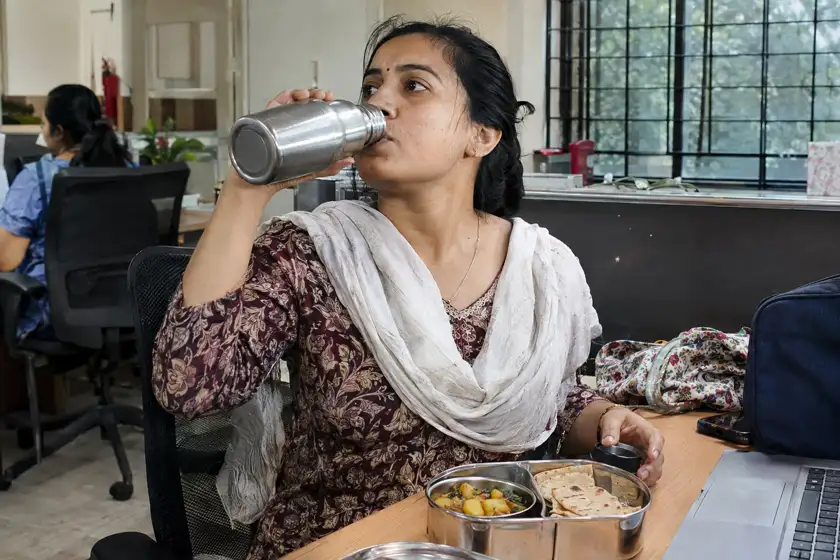
- Count chaas, nimbu pani without much sugar, coconut water, clear soups, dal water, jeera or saunf water and herbal teas towards your total.
- Check your urine: pale yellow means you are well hydrated; dark yellow means you need more.
Tea and coffee in moderation are fine and can stimulate the bowel, but they should not be your main fluids. People with heart or kidney disease who have been given a fluid limit must follow their healthcare provider’s advice.
Step 2: Build up fibre the right way
Fibre is the part of plant foods that is not digested. There are two kinds, and you need both.
- Soluble fibre absorbs water and forms a soft gel, making stool easier to pass. Sources: oats, isabgol (psyllium husk), chia and flax seeds, apples, guava, oranges, dals and beans.
- Insoluble fibre adds bulk and speeds movement through the bowel. Sources: whole wheat, bran, millets, vegetables, fruit skins and nuts.
Two rules that prevent bloating
Increase fibre gradually, by one extra serving every few days, and increase water at the same time. A sudden jump in fibre without enough fluid can make constipation and gas worse, especially when the gut is already slow.
Fibre in common Indian foods
| Food | Serving | Approximate fibre |
|---|---|---|
| Guava | 1 medium | 5 g |
| Pear or apple, with skin | 1 medium | 4 g |
| Papaya | 1 cup, cubed | 2.5 g |
| Orange | 1 medium | 3 g |
| Dried figs (anjeer), soaked | 2 pieces | 3 g |
| Prunes | 4 pieces | 3 g |
| Rajma or chana, cooked | 1 katori | 6 to 8 g |
| Whole moong or masoor dal, cooked | 1 katori | 5 to 7 g |
| Whole wheat roti | 1 medium | 2 to 3 g |
| Bajra or jowar roti | 1 medium | 3 g |
| Oats, dry | 4 tablespoons | 4 g |
| Cooked vegetables (bhindi, beans, cabbage, lauki, palak) | 1 katori | 3 to 4 g |
| Salad (carrot, cucumber, tomato) | 1 small plate | 2 to 3 g |
| Chia seeds or ground flaxseed | 1 tablespoon | 3 to 4 g |
| Isabgol (psyllium husk) | 1 heaped teaspoon | 3 to 4 g |
| Almonds | 10 pieces | 1.5 g |
Figures are approximate and vary with variety and preparation. A day that includes two fruits, two katoris of vegetables, two katoris of dal or pulses, whole-grain rotis and a spoon of seeds will reach about 25 to 30 grams.
Step 3: The best Indian foods for relief
Fruits that help most
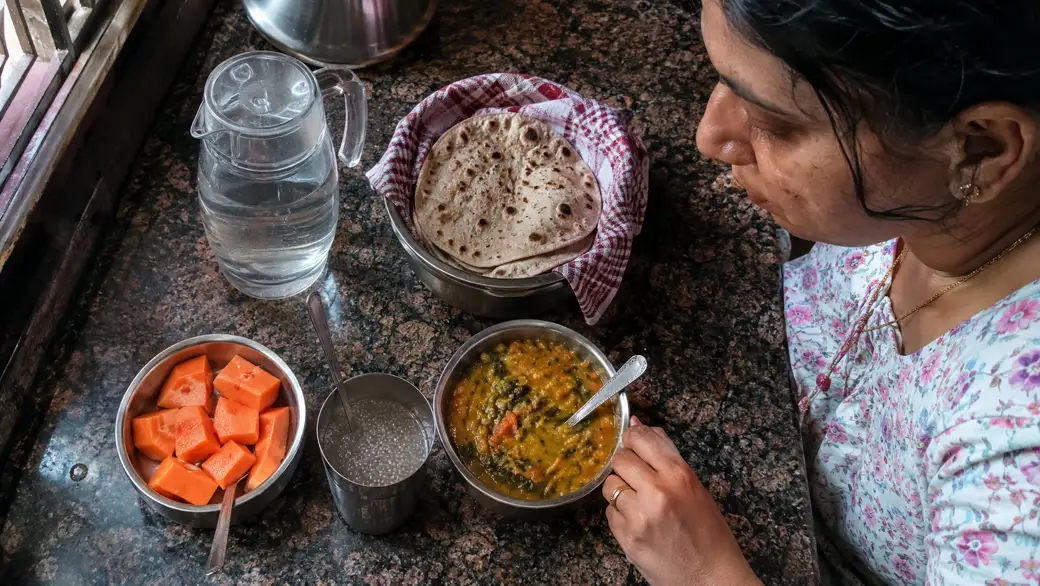
- Papaya: gentle, widely available and well tolerated even when appetite is low.
- Guava: one of the highest-fibre fruits; eat it with the seeds if they suit you.
- Kiwi: two a day have been shown in studies to improve stool frequency and comfort.
- Prunes and soaked figs or raisins: contain natural sorbitol as well as fibre. Start with two or three, since larger amounts can cause loose stools.
- Pear, apple and orange: eat whole, not as juice.
- Ripe banana: fine in moderation; unripe banana can be constipating.
Vegetables
Aim for vegetables at both lunch and dinner. Leafy greens, bhindi, beans, gourds, cabbage, carrots and beetroot are all useful. If raw salad causes bloating, choose cooked or lightly steamed vegetables and soups.
Whole grains, dals and pulses
Choose whole wheat or millet rotis over maida, oats or dalia at breakfast, and whole dals with their skins. Chana, rajma and lobia are rich in both fibre and protein. Soaking and pressure-cooking them well, and adding hing, ginger and jeera, reduces gas.
Seeds and isabgol
One tablespoon of chia seeds soaked in water, or ground flaxseed stirred into curd or atta, adds soluble fibre with very little volume, which is helpful when you cannot eat much. Isabgol is a traditional, well-studied bulk-forming fibre: one to two teaspoons in a full glass of water or warm milk, followed by another glass of water, once a day. Always take it with plenty of fluid.
Curd, chaas and fermented foods
Fermented foods such as curd, chaas, idli and dosa batter support a healthy gut. The evidence for probiotics in constipation is modest, but these foods are nutritious, easy to digest and provide protein.
A little healthy fat
Do not remove fat entirely. A teaspoon of ghee on roti or dal, a small handful of nuts, or food cooked in a moderate amount of oil helps stimulate the bowel.
Foods and habits that make constipation worse
| Limit | Why | Better choice |
|---|---|---|
| Maida foods: white bread, biscuits, rusk, noodles, bakery items | Very low in fibre | Whole wheat roti, oats, dalia, millet |
| Large amounts of polished rice with little else | Low fibre, low bulk | Small portion with dal and plenty of vegetables |
| Fried and processed snacks, cheese-heavy foods | Low fibre; slow to digest | Roasted chana, fruit, sprouts, makhana |
| Too much tea or coffee in place of water | Does not replace fluid needs | Water, chaas, nimbu pani |
| Unripe bananas, excess red meat | Can be binding for some people | Papaya, guava, pulses, fish |
| Skipping meals | The bowel reflex is triggered by eating | Three small, regular meals |
| Ignoring the urge to go | Stool dries out further | Go when you feel the need |
Getting enough protein and fibre together
People on GLP-1 treatment are rightly told to prioritise protein to protect muscle. The mistake is to let protein push out fibre. With small appetites, choose foods that deliver both, and combine them at each meal.
- High protein and high fibre: chana, rajma, lobia, whole moong, sprouts, soya chunks, besan, peanuts.
- Protein foods to pair with fibre: paneer with palak or mixed vegetables; eggs with sautéed vegetables and a whole wheat roti; fish or chicken with a large serving of sabzi; curd with fruit and chia.
- If you use a protein powder, blend it with fruit and a spoon of oats or seeds rather than taking it in water alone.
7-day high-fibre Indian meal plan for GLP-1 users
Portions are deliberately small to suit a reduced appetite. Each day provides protein at every meal and roughly 25 to 30 grams of fibre. Drink water between meals.
| Day | On waking | Breakfast | Lunch | Evening | Dinner |
|---|---|---|---|---|---|
| Mon | Warm water; 2 soaked figs | Vegetable oats with curd | 1 bajra roti, whole moong dal, bhindi sabzi, salad | Papaya bowl with chia | Paneer and vegetable curry, 1 phulka |
| Tue | Warm water with lemon | 2 moong chillas with mint chutney | Small katori brown rice, rajma, cabbage sabzi, chaas | 1 guava, 10 almonds | Vegetable dal soup; egg bhurji or tofu bhurji |
| Wed | Warm water; 4 soaked raisins | Vegetable dalia with peanuts | 2 whole wheat phulkas, chana masala, lauki sabzi, salad | Sprouts chaat | Grilled fish or paneer with sautéed beans and carrots |
| Thu | Jeera water | Curd with oats, apple and ground flaxseed | Vegetable moong dal khichdi, kadhi, salad | 2 kiwis or 1 pear | 1 jowar roti, palak dal, mixed vegetables |
| Fri | Warm water; 3 prunes | 2 idlis with vegetable-rich sambar | 1 roti, lobia curry, tori sabzi, curd | Roasted chana and chaas | Chicken or soya chunk curry with stir-fried cabbage, 1 phulka |
| Sat | Warm water with lemon | Besan chilla with vegetables, 1 orange | Small katori rice, sambar, beans poriyal, curd | Papaya or guava | Mixed vegetable soup, paneer tikka, salad |
| Sun | Warm water; 2 soaked figs | Vegetable stuffed roti with curd | Family meal: start with salad and sabzi, then dal and 1 roti | Fruit with a spoon of mixed seeds | Light moong dal khichdi with vegetables |
If advised by your healthcare provider, add isabgol at bedtime with a full glass of water.
Step 4: Movement and toilet routine
Move every day
Physical activity speeds the passage of stool. A brisk 30-minute walk, or three 10-minute walks after meals, makes a real difference. Yoga postures that involve gentle twisting and knee-to-chest positions, such as pawanmuktasana and malasana (a deep squat), are traditionally used for bowel regularity and are safe for most people.
Use the after-breakfast reflex
Eating triggers a natural reflex that moves the colon, strongest in the morning. Have breakfast, then sit on the toilet for five to ten minutes at the same time each day, even if you do not feel a strong urge at first. The body can be trained.
Posture matters
A squatting position straightens the passage and makes emptying easier, which is one advantage of the Indian-style toilet. On a western toilet, place a small footstool under your feet so that your knees are higher than your hips, lean forward with your elbows on your knees, relax your abdomen and avoid straining or holding your breath.
Do not rush, and do not linger
Give yourself unhurried time, but avoid sitting for long periods with your phone. Prolonged sitting and straining contribute to piles (haemorrhoids) and fissures.

Step 5: Laxatives and medicines
If the measures above have not worked after about a week, or if you are very uncomfortable, speak to your healthcare provider about a laxative. Several types are used, and many are safe for regular use under guidance.
| Type | Examples | How it works | Notes |
|---|---|---|---|
| Bulk-forming fibre | Isabgol (psyllium) | Holds water and adds soft bulk | First choice for many; needs plenty of fluid; takes one to three days |
| Osmotic | Polyethylene glycol (macrogol), lactulose | Draws water into the bowel to soften stool | Often recommended on GLP-1 treatment; generally suitable for longer use on advice |
| Stool softener | Docusate | Lets water mix into the stool | Mild; useful with hard stools or piles |
| Stimulant | Bisacodyl, senna | Stimulates bowel contractions | For short-term or occasional use; can cause cramps |
| Suppository or enema | Glycerine suppository | Acts locally in the rectum | For occasional quick relief, on medical advice |
Do not combine several products or use stimulant laxatives daily without medical advice. Avoid unregulated “detox” teas and slimming churans; many contain strong stimulant laxatives in unknown amounts.
Should the dose be changed?
If constipation becomes troublesome soon after a dose increase and does not respond to these steps, your healthcare provider may keep you on the current dose longer or step back to the previous dose. Tell your care team early. Stopping treatment is rarely necessary for constipation alone.
When constipation needs urgent attention
Seek medical care promptly if you have
Severe or worsening abdominal pain; a swollen, tight abdomen; repeated vomiting; inability to pass stool or gas; blood in the stool or black, tarry stools; fever; no bowel movement for about a week despite treatment; or unexplained weight loss beyond what is expected. Rarely, GLP-1 medicines have been associated with intestinal blockage, which needs emergency assessment.
Also see your healthcare provider for new constipation after the age of 50, a family history of bowel cancer, or constipation alternating with diarrhoea.
Piles and fissures: preventing complications
Hard stools and straining can cause piles, which are swollen veins around the anus, and fissures, which are small painful tears. Signs include bright red blood on the paper, pain during or after passing stool, itching or a lump. Keeping stools soft is both the prevention and the main treatment. Warm sitz baths, sitting in a tub of warm water for 10 minutes, relieve pain. Report bleeding to your healthcare provider so that other causes can be excluded.
Why constipation can affect the scale
Retained stool and the water held with it can add half a kilogram to more than a kilogram on the scale and cause bloating that makes clothes feel tighter. People often think their weight loss has stalled when they are simply constipated. If the scale stops moving and you have not had a proper bowel movement for several days, address the constipation before concluding that the medicine has stopped working.

A sample daily routine
| Time | Habit |
|---|---|
| On waking | 1 to 2 glasses of warm water; soaked figs or raisins |
| Morning | 10 minutes of stretching or yoga; high-fibre breakfast with protein |
| After breakfast | Unhurried toilet time with feet on a footstool |
| Through the morning | Finish the first litre of water; a fruit mid-morning |
| Lunch | Vegetables first, then dal or protein, then roti or rice; 10-minute walk afterwards |
| Afternoon and evening | Second litre of fluid; fruit, sprouts or roasted chana; 30-minute walk |
| Dinner | Early and light, with vegetables and protein; short walk |
| Bedtime | Isabgol with water or warm milk, if advised |
What to expect at each stage of treatment
| Stage | What often happens | What to do |
|---|---|---|
| Starting dose | Appetite and thirst fall; bowel movements become less frequent | Set a daily water target from day one; keep fruit and vegetables in every meal |
| The week after each dose increase | Light, low-fibre “nausea foods” take over and constipation follows a few days later | Keep papaya, soaked figs, oats and well-cooked vegetables in the menu even on gentle days |
| Higher doses | Portions are very small, so fibre and fluid are hard to reach | Use concentrated sources: chia, flaxseed, isabgol, pulses; discuss a regular osmotic laxative with your healthcare provider |
| Maintenance | The bowel usually settles into a new pattern | Continue the habits; review any laxative use with your healthcare provider |
Special situations
Travel
Long journeys, changes in routine and reluctance to use unfamiliar toilets all slow the bowel. Carry a water bottle, fruit, roasted chana and your isabgol or prescribed laxative, walk whenever you can, and keep to your usual morning routine as far as possible.
Fasting days and festivals
Fasts often reduce fluid and fibre while adding fried foods and sweets. If you fast, drink water, chaas or coconut water where your fast allows, include fruit, and return to vegetables and dal at the next meal. Check with your healthcare provider before fasting if you have diabetes.
Older adults
Constipation is more common with age, and dehydration is more risky. Regular fluids, a daily walk and an early conversation with the healthcare professional about a gentle laxative are sensible.
People taking iron or calcium
These supplements commonly cause constipation. Do not stop them yourself; ask your healthcare provider whether the type, dose or timing can be changed.
How The Prime Fit helps
At The Prime Fit, side effects are managed before they become reasons to stop. Your dietitian plans fibre, fluid and protein targets around your appetite and food preferences from the first week of treatment and adjusts them at weekly reviews. If constipation appears, you can message the team; your healthcare provider can recommend a suitable laxative and decide whether your dose should stay where it is for longer.
If you are on GLP-1 treatment and struggling with side effects, or considering starting, book a consultation or read about our GLP-1 support programme.
Frequently asked questions
How long does constipation last on GLP-1 medicines?
It varies. For some people it settles within a few weeks; for others it continues while they are on treatment unless fluid, fibre and activity are increased. With the right habits, most people can control it.
Which is more constipating, Mounjaro or Wegovy?
Both can cause constipation. In their main weight-management trials it was reported by roughly one in six people on tirzepatide and about one in four on semaglutide 2.4 mg, but the trials were separate and individuals differ.
What is the fastest way to relieve constipation at home?
Drink two glasses of warm water, eat papaya, prunes or soaked figs, go for a walk and sit on the toilet after a meal with your feet raised on a stool. If there is no result in a few days, ask your healthcare provider about an osmotic laxative.
Is it safe to take isabgol every day?
For most people, yes, provided it is taken with plenty of water. Take it at a different time from your other medicines, and check with your healthcare provider if you have swallowing problems or bowel narrowing.
Can I take a laxative with my GLP-1 injection?
Yes, laxatives are commonly used alongside these medicines. Osmotic laxatives and bulk-forming fibre are usual first choices. Ask your healthcare provider which one and what dose suit you.
How much water should I drink?
Most adults need about 2 to 3 litres of fluid a day, more in hot weather or with exercise, unless a healthcare professional has advised a restriction. Pale yellow urine is a good sign.
Does protein powder cause constipation?
Protein itself does not, but relying on shakes in place of meals reduces fibre. Blend protein with fruit, oats or seeds, and keep vegetables and pulses in your diet.
Why am I bloated and gassy after adding fibre?
Usually because fibre was increased too quickly or without enough water. Reduce slightly, increase more slowly, drink more, and cook vegetables and pulses well with ginger, jeera and hing.
Should I stop my injection because of constipation?
Rarely. Speak to your healthcare provider first. Diet changes, a laxative, or staying longer on the current dose usually solve the problem.
When should I see a healthcare professional?
If you have severe pain, vomiting, a swollen abdomen, blood in the stool, no bowel movement for about a week, or constipation that does not improve with simple measures.
This article is general information and is not a substitute for a consultation. Speak to your healthcare provider before starting any medicine, including laxatives, particularly if you have other health conditions.