In this article
- How common is hair loss on GLP-1 medicines?
- Why it happens: the hair cycle and telogen effluvium
- The typical timeline
- What makes it worse: the main contributors
- Is it telogen effluvium or something else?
- Tests worth asking about
- The plan to protect and regrow your hair
- Supplements and treatments: what works
- Simple ways to judge how much you are shedding
- What regrowth looks like
- Hair loss in specific situations
- Questions to ask your healthcare provider
- Should you stop the medicine?
- Preventing it from the start
- When to see a healthcare professional or dermatologist
- The emotional side
- Common myths
- How The Prime Fit helps
- Frequently asked questions
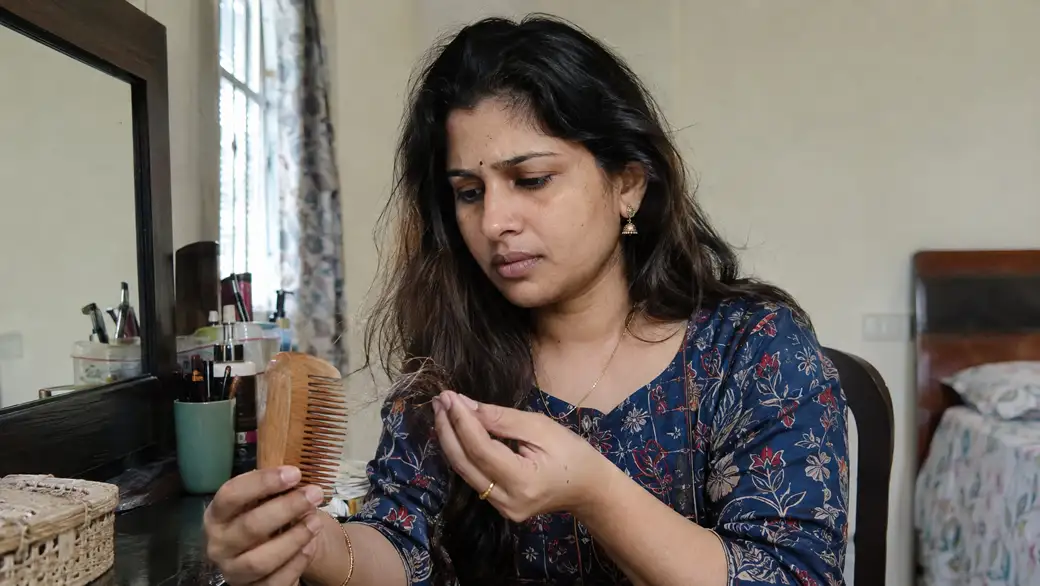
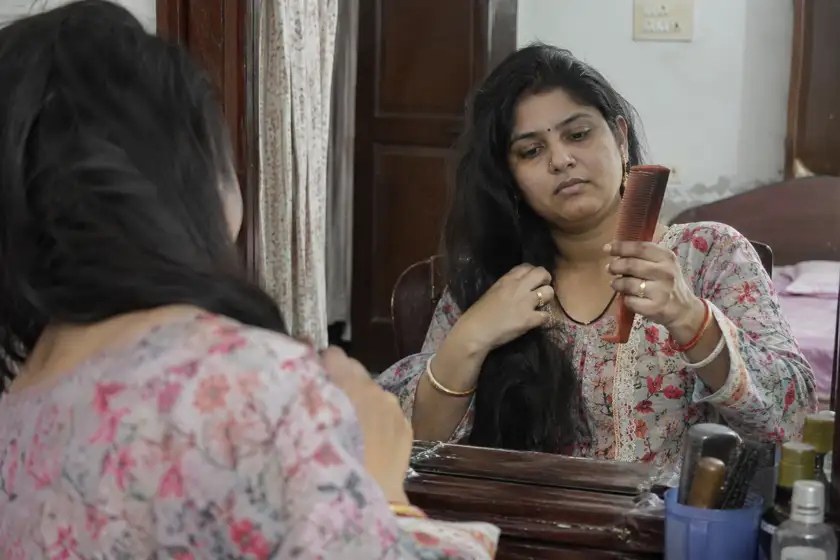
Three or four months into treatment with Mounjaro (tirzepatide), Wegovy or Ozempic (semaglutide), the weight is coming off and you are feeling better. Then you notice more hair than usual on the pillow, in the shower drain and on your comb. For many people this is the most distressing part of the whole experience, and it often arrives without warning.
The reassuring facts are these. This kind of hair fall is well understood. It is linked to weight loss itself, whatever the method, and is seen after bariatric surgery and strict dieting too. The hair follicles are not destroyed. In the great majority of cases the shedding slows within a few months and the hair grows back. There is also a good deal you can do to reduce it.
This guide explains what is happening, how long it lasts, which other causes should be checked, and a practical plan covering food, supplements, hair care and treatment. It is general information. If your hair loss is patchy, severe or prolonged, see your healthcare provider or a dermatologist.
How common is hair loss on GLP-1 medicines?
In the clinical trials of these medicines for weight management, hair loss was reported more often in the treatment groups than with placebo, though still by a minority of participants.
| Medicine | People reporting hair loss on treatment | On placebo |
|---|---|---|
| Semaglutide 2.4 mg (Wegovy) | About 3 in 100 | About 1 in 100 |
| Tirzepatide 5 to 15 mg (Mounjaro) | About 5 to 6 in 100 | About 1 in 100 |
Two patterns stand out in the data. Hair loss was reported more often by women than by men, and more often by people who lost larger amounts of weight. Both observations point to weight loss as the driver. In everyday practice the proportion who notice some extra shedding is probably higher than these figures, because mild shedding often goes unreported in trials.
Why it happens: the hair cycle and telogen effluvium
Each hair on your scalp follows its own cycle with three main phases:
- Growth (anagen): lasts two to six years. At any time, about 85 to 90 percent of scalp hairs are growing.
- Transition (catagen): a short phase of two to three weeks.
- Resting (telogen): lasts about three months, after which the hair is shed and a new one begins to grow from the same follicle. Normally 10 to 15 percent of hairs are in this phase.
Losing 50 to 100 hairs a day is normal. When the body experiences a significant physical stress, a larger share of hairs shifts early from the growth phase into the resting phase. About two to four months later, those hairs fall out together. This is called telogen effluvium.
The body treats rapid weight loss and reduced food intake as a stress. Hair is not essential for survival, so when energy and protein are in short supply, the body directs resources elsewhere. Other triggers that cause exactly the same reaction include major surgery, high fever, childbirth, severe illness, crash diets and emotional shock.
The key point
In telogen effluvium the follicle remains alive. The hair that falls is replaced by a new hair growing from the same root. It is a temporary shift in timing, not permanent baldness.
The typical timeline
| Time from starting treatment | What usually happens |
|---|---|
| Months 0 to 2 | No change in hair. Weight loss begins; the trigger is occurring silently |
| Months 3 to 5 | Shedding becomes noticeable: more hair on the brush, in the shower and on clothes; the ponytail feels thinner |
| Months 5 to 8 | Shedding peaks and then slows, particularly as the rate of weight loss settles and nutrition improves |
| Months 6 to 12 | Short new hairs appear along the hairline and parting; volume gradually returns |
| 12 to 18 months | For most people, density is back to, or close to, where it was |
Because scalp hair grows about one centimetre a month, it takes time for regrowth to become visible in length and volume. Patience is part of the treatment.
If weight loss continues to be rapid, or a nutritional deficiency persists, shedding can continue for longer. That is why addressing the causes matters.
What makes it worse: the main contributors
1. Rapid weight loss
Losing more than about 1 kg a week over several weeks is the most consistent trigger. The faster and larger the loss, the more likely the shedding.
2. Too little protein
Hair is made of the protein keratin. With a small appetite, many people eat far less protein than they need. This is especially common in vegetarian diets built around roti, rice and sabzi.
3. Low iron
Iron deficiency is very common in Indian women, and low iron stores are strongly associated with hair shedding. Ferritin, the blood marker of iron stores, can be low even when haemoglobin is normal.
4. Other nutritional gaps
Low vitamin D, vitamin B12 and zinc are frequent in India and have all been linked with hair problems. Very low calorie intake reduces essential fatty acids and several micronutrients at once.
5. Thyroid problems
Both underactive and overactive thyroid cause diffuse hair thinning. Thyroid disease is common, and the dose of thyroid tablets may need to change as weight falls.
6. Hormonal conditions
PCOS, with raised androgen levels, causes thinning over the crown and parting. Menopause and the months after childbirth are also times of hair change.
7. Pattern hair loss
Hereditary thinning, known as androgenetic alopecia or male- and female-pattern hair loss, progresses slowly over years. An episode of shedding can unmask it or make it more noticeable.
8. Stress, illness and other medicines
Emotional stress, recent infection or surgery, and some medicines can contribute.
The medicine itself has not been shown to damage hair follicles directly. Researchers continue to study the question, but the pattern and timing fit weight-loss-related shedding.
Is it telogen effluvium or something else?
| Feature | Telogen effluvium (most likely) | See a dermatologist |
|---|---|---|
| Pattern | Even thinning all over the scalp | Round bald patches; a widening parting or receding temples that has progressed over years |
| Timing | Begins 2 to 4 months after weight loss starts | Began before treatment, or continues beyond 6 to 9 months |
| Scalp | Looks normal | Redness, scaling, pain, itching, pustules or scarring |
| Hair shafts | Hairs come out whole, with a small white bulb at the root | Hairs break along the shaft |
| Other hair | Mainly scalp | Loss of eyebrows, eyelashes or body hair |
| Other symptoms | None, or tiredness from low intake | Irregular periods, new facial hair or acne; marked fatigue, feeling cold, weight changes not explained by treatment |
Tests worth asking about
If shedding is significant, a few blood tests can identify treatable causes. Many will already have been done before treatment and can be compared.
| Test | Why |
|---|---|
| Complete blood count | Anaemia |
| Ferritin | Iron stores. Many dermatologists prefer a level comfortably above the lower limit of normal when treating hair loss |
| Vitamin B12 | Common deficiency, especially in vegetarians and people on metformin |
| Vitamin D | Frequently low in India |
| Thyroid function (TSH) | Thyroid disease; dose review in those on thyroid tablets |
| Zinc | If intake is poor or other signs suggest deficiency |
| Hormone profile | In women with irregular periods, acne or excess facial hair |
| Total protein and albumin | A broad indication of protein status |
Note that biotin supplements can interfere with thyroid and some hormone tests. Tell your healthcare provider if you take them, and stop them for two to three days before testing if advised.
The plan to protect and regrow your hair
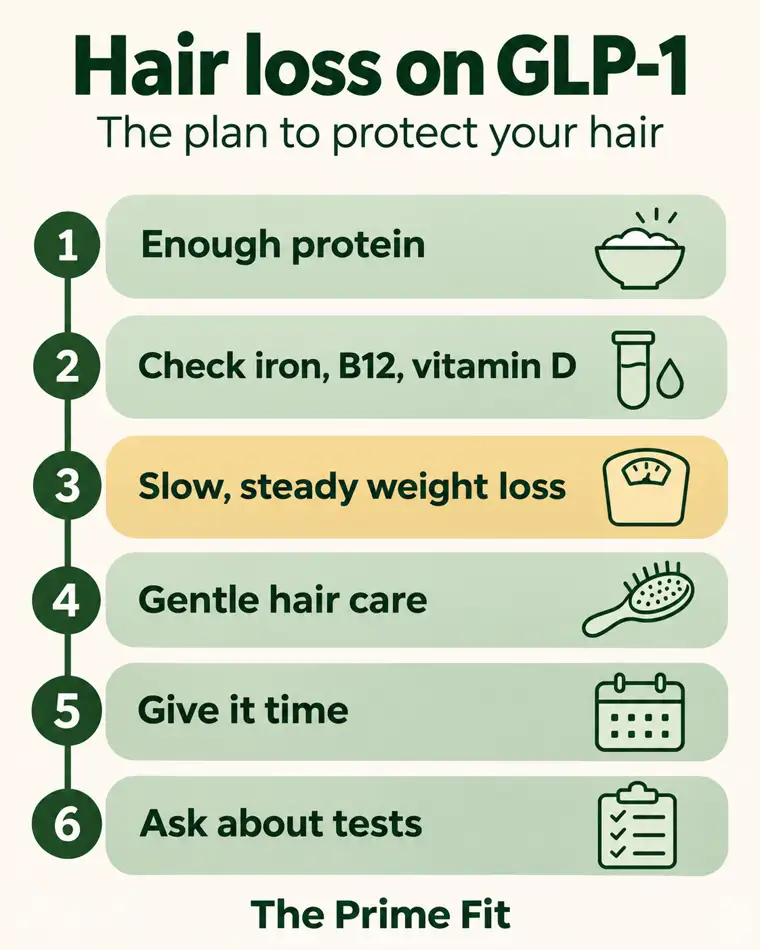
Step 1: Slow the pace if weight loss is too fast
Aim for about 0.5 to 1 kg a week. If you are losing more than that for several weeks, tell your healthcare provider. Holding the dose instead of increasing it, or stepping back one level, often steadies weight loss without giving up your progress. Do not stop or change the dose yourself.
Step 2: Eat enough protein, every day
For many adults on treatment, the target is about 1.0 to 1.5 grams of protein per kilogram of body weight, adjusted by your dietitian and healthcare professional. Spread it over three meals, about 20 to 30 grams each, and eat the protein part of the meal first.
| Food | Serving | Approximate protein |
|---|---|---|
| Paneer | 100 g | 18 g |
| Curd or hung curd | 1 katori / 150 g hung curd | 6 to 8 g / 12 to 15 g |
| Cooked dal | 1 katori | 7 to 9 g |
| Chana or rajma, cooked | 1 katori | 12 to 15 g |
| Soya chunks (dry) | 30 g | 15 g |
| Eggs | 2 | 12 g |
| Chicken or fish, cooked | 100 g | 20 to 28 g |
| Milk | 1 glass | 8 g |
If appetite is too small to reach your target with food, your dietitian may recommend a protein supplement.
Step 3: Correct deficiencies found on testing
Iron, vitamin D, vitamin B12 and zinc should be replaced when they are low, at doses your healthcare provider prescribes. Iron is best absorbed with vitamin C, such as lemon, amla or an orange, and away from tea, coffee and calcium. Do not take iron or high-dose supplements without a test showing you need them; excess iron, zinc, vitamin A and selenium can themselves cause harm, and some cause hair loss.
Step 4: Eat for your hair
| Nutrient | Role | Indian food sources |
|---|---|---|
| Protein | Building block of hair | Dal, pulses, paneer, curd, eggs, fish, chicken, soya |
| Iron | Oxygen supply to follicles | Spinach, methi, bajra, ragi, chana, rajma, eggs, meat; add lemon or amla |
| Zinc | Follicle repair and growth | Pumpkin and sesame seeds, peanuts, cashews, chana, whole grains, eggs |
| Vitamin B12 | Cell division | Milk, curd, paneer, eggs, fish, meat |
| Vitamin D | Hair cycle regulation | Sunlight, fortified milk, eggs, fish; supplement if deficient |
| Omega-3 fats | Scalp health | Fish, walnuts, flaxseed, chia |
| Vitamin C | Iron absorption; collagen | Amla, guava, orange, lemon, capsicum |
| Biotin and B vitamins | Keratin production | Eggs, nuts, pulses, whole grains. Deficiency is uncommon |
A sample day that covers them
| Meal | Vegetarian | Non-vegetarian |
|---|---|---|
| Breakfast | 2 moong chillas with paneer filling; 1 orange or amla | 2-egg vegetable omelette, 1 toast; 1 orange |
| Mid-morning | Handful of walnuts and pumpkin seeds | Chaas with roasted chana |
| Lunch | 1 bajra roti, chana or rajma, palak sabzi with lemon, curd | Small katori rice, fish curry, methi sabzi, salad with lemon |
| Evening | Sprouts chaat with lemon; a glass of milk | Boiled egg; fruit |
| Dinner | Paneer or tofu with mixed vegetables, dal, 1 phulka | Chicken curry with vegetables, dal, 1 phulka |
Step 5: Be gentle with your hair
| Do | Avoid |
|---|---|
| Wash as often as you need with a mild shampoo; washing does not cause hair loss | Tight ponytails, buns, braids and extensions that pull on the roots |
| Use conditioner and detangle with a wide-toothed comb, starting from the ends | Brushing or combing roughly when wet |
| Let hair dry naturally when possible | Frequent high heat from straighteners, curlers and blow-dryers |
| Massage the scalp gently for a few minutes; oiling is fine if you enjoy it | Chemical straightening, perming and frequent bleaching during the shedding phase |
| Protect hair from strong sun and chlorinated water | Vigorous towel-rubbing |
| Consider a shorter cut or a changed parting while hair recovers | Expensive “hair growth” products making large promises |
Oiling and scalp massage are pleasant and harmless, but they do not treat telogen effluvium on their own. If you colour your hair, a gentle, ammonia-free colour applied by a professional is generally fine; simply space treatments out and avoid combining colouring with heat styling or chemical straightening in the same month.
Step 6: Look after sleep and stress
Poor sleep and ongoing stress prolong shedding. Aim for seven to eight hours, keep up regular activity, and remember that worrying about the hair fall can itself feed the cycle. Knowing that it is temporary helps.

Supplements and treatments: what works
| Option | Evidence and comments |
|---|---|
| Correcting iron, vitamin D, B12 or zinc deficiency | Worthwhile when tests show a deficiency |
| Adequate protein | Fundamental |
| Biotin | Helps only in true deficiency, which is rare. High doses interfere with blood tests |
| General “hair, skin and nails” multivitamins | Little evidence in people without deficiency; avoid products with very high doses of vitamin A or selenium |
| Topical minoxidil | A dermatologist may suggest it to speed regrowth or for pattern hair loss. It needs continued use, and can cause temporary extra shedding at first |
| Oral minoxidil, anti-androgen medicines | Prescription treatments for selected patients under specialist care |
| Platelet-rich plasma and other procedures | Used for pattern hair loss in some centres; evidence is mixed, and they are not needed for simple telogen effluvium |
| Collagen powders, onion juice, special oils | No good evidence |
Simple ways to judge how much you are shedding
Hair fall always looks dramatic in the drain. A few simple checks give a more objective picture.
- Count for a few days. Collect the hairs from your brush, pillow and shower for three days. Up to about 100 a day is within the normal range; more on wash days is expected, especially if you wash every few days.
- The gentle pull test. Take about 50 to 60 hairs between your fingers near the scalp and pull gently along their length. More than five or six coming away suggests active shedding. Do not repeat it often.
- Photographs. Take pictures of your parting, hairline and crown once a month in the same light. Comparing photographs is far more reliable than memory.
- Ponytail thickness. If your hair is long, note how many times a hair tie wraps around.
Bring your notes and photographs to your appointment. They help your healthcare provider distinguish temporary shedding from other types of hair loss.
What regrowth looks like
The first sign of recovery is that shedding slows: fewer hairs on the brush and in the shower. Next, short, fine hairs appear along the hairline and parting, sometimes sticking up as “baby hairs”. These are new hairs replacing those that were shed, and they are the best evidence that the follicles are healthy. Over the following months they thicken and lengthen, and overall volume returns. Regrowth may be uneven at first. Continue the same nutrition and gentle care during this phase, since the new hairs depend on it.
Hair loss in specific situations
Women with PCOS
PCOS can cause gradual thinning over the crown because of raised androgen levels. Weight loss often improves hormone levels, which may help in the long run, but a shedding episode can make existing thinning more obvious. A dermatologist or endocrinologist can advise on treatments directed at the hormonal cause.
Around and after menopause
Falling oestrogen levels make hair finer and reduce density. Protein, iron and vitamin D matter even more, and pattern hair loss is common in this age group, so an early dermatology opinion is worthwhile if thinning persists.
After childbirth
Shedding two to four months after delivery is normal and has the same mechanism. Weight loss medicines are not used during breastfeeding; if treatment starts later, a second wave of shedding is possible and usually temporary.
Men
Men experience weight-loss-related shedding too, often on top of hereditary balding at the temples and crown. If the hairline is receding, effective treatments exist and are best started early.
After bariatric surgery or with a gastric balloon
Hair shedding is common after these procedures for the same reasons, and the same plan applies, with particular attention to iron, zinc and protein.
Questions to ask your healthcare provider
- Is my rate of weight loss too fast, and should my dose be held?
- Which blood tests should we check or repeat?
- Am I eating enough protein, and do I need a supplement?
- Does the pattern of my hair loss suggest anything other than temporary shedding?
- Should I see a dermatologist?
Should you stop the medicine?
Usually not. Stopping treatment because of hair shedding gives up the health benefits of weight loss, and the hair cycle will take months to settle either way. In most cases, steadying the rate of weight loss, improving protein intake and correcting deficiencies is enough. If hair loss is severe or very distressing, discuss it with your healthcare provider. Options include holding or reducing the dose and involving a dermatologist. The decision should be made together, weighing how much the hair loss affects you against what the treatment is achieving.
Preventing it from the start
- Have iron, B12, vitamin D and thyroid checked before treatment, and correct any deficiency.
- Set a protein target from the first week and track it for a few days each month.
- Increase the dose gradually, and do not chase rapid weight loss.
- Do not skip meals because you are not hungry.
- Start strength training; it signals the body to retain protein.
- Take photographs of your parting and hairline at the start, so that later changes can be judged objectively.

When to see a healthcare professional or dermatologist
Arrange a review if
Shedding continues for more than six to nine months; you have bald patches, a rapidly widening parting or receding hairline; the scalp is red, scaly, painful or itchy; you are losing eyebrows or eyelashes; hair loss began before your weight loss; or you have other symptoms such as irregular periods, new facial hair, marked tiredness or feeling cold.
The emotional side
Hair is closely tied to identity and confidence, and for many people, especially women, hair fall is far more upsetting than nausea or constipation. It can feel as though one problem has been exchanged for another. These feelings are valid. It may help to remember that shedding looks worse to you than to others, that new growth is already under way beneath the surface, and that a hairdresser can do a great deal with cut and styling in the meantime. If the distress is affecting your mood or your willingness to continue treatment, tell your care team.
Common myths
“The injection kills hair follicles”
There is no evidence of this. The shedding pattern is that of temporary, weight-loss-related telogen effluvium.
“The hair will never come back”
In telogen effluvium, regrowth is the rule, usually within six to twelve months.
“Washing my hair less will reduce the fall”
Hairs that are ready to shed will fall whether you wash or not. Washing less only means more come out at once.
“Biotin gummies will fix it”
Biotin helps only if you are deficient, which is uncommon, and it can distort blood test results.
“Only women are affected”
Men are affected too, though they may notice it less or attribute it to male-pattern balding.
“Oiling every day will stop it”
Oiling is harmless and soothing, but it does not address the cause.
How The Prime Fit helps
At The Prime Fit, protecting your hair is part of protecting your overall nutrition. We check iron, B12, vitamin D and thyroid function before treatment and correct deficiencies early. Your dietitian sets and reviews a protein target each week, your healthcare provider keeps weight loss at a steady pace, and if shedding occurs we look for the cause and involve a dermatologist where needed.
If you are concerned about hair fall during treatment, book a consultation or read about our GLP-1 support programme.
Frequently asked questions
Do Mounjaro, Wegovy and Ozempic cause hair loss?
Hair shedding was reported by a small percentage of people in trials, more often with greater weight loss. It is thought to be telogen effluvium triggered by rapid weight loss and nutritional gaps, not direct damage from the medicine.
When does the hair fall start?
Usually two to four months after weight loss begins, because hairs that enter the resting phase take about three months to shed.
How long does it last?
Typically three to six months, after which shedding slows. Volume recovers gradually over six to twelve months.
Will my hair grow back?
In most cases, yes. The follicles are not damaged, and new hairs replace those that were shed once weight stabilises and nutrition is adequate.
How can I prevent hair loss on these medicines?
Lose weight at a steady pace, eat enough protein every day, correct iron, vitamin D and B12 deficiencies, avoid skipping meals and be gentle with your hair.
How much protein do I need?
Many adults on treatment are advised about 1.0 to 1.5 grams per kilogram of body weight a day, spread across meals. Your dietitian will set your target.
Which blood tests should I have?
A blood count, ferritin, vitamin B12, vitamin D and thyroid function are the most useful, with zinc and hormone tests in selected cases.
Should I take biotin?
Only if a deficiency is suspected. Biotin has little benefit otherwise and can interfere with thyroid and other blood tests.
Should I stop my injection?
Usually not. Speak to your healthcare provider first. Adjusting the pace of weight loss and improving nutrition is normally enough.
Can I use minoxidil?
A dermatologist may recommend topical minoxidil in some cases. Ask for advice before starting, because it needs continued use and is not suitable for everyone.
This article is general information and is not a substitute for a consultation. Do not start supplements or change a prescription medicine without your healthcare provider’s advice.