In this article
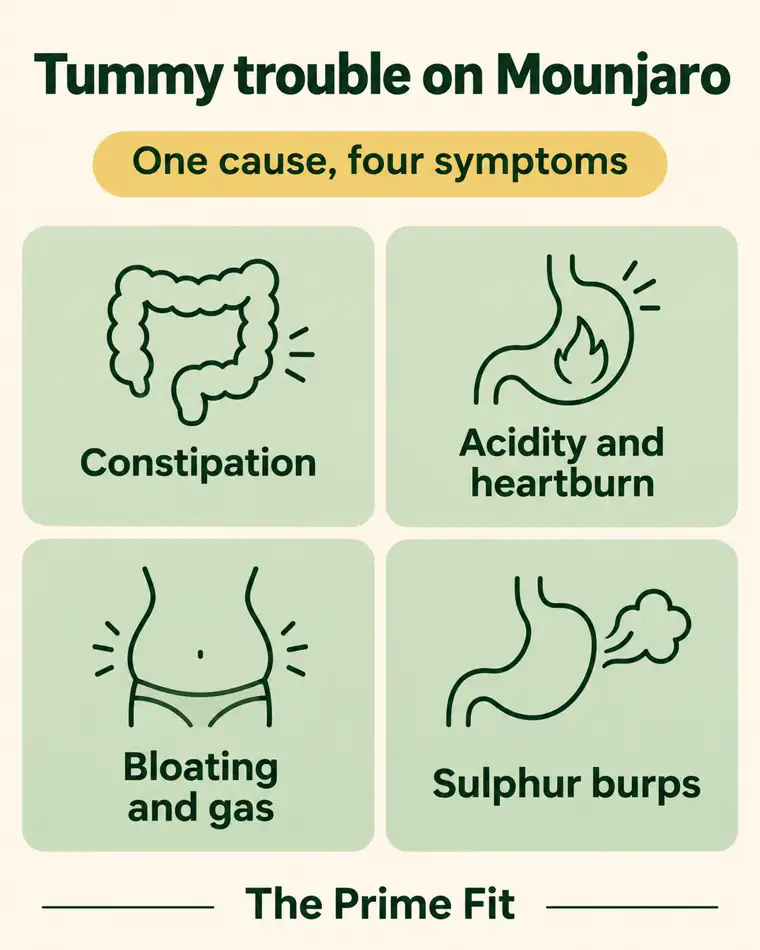
- One cause, four symptoms
- How common are they on Mounjaro?
- The combined plan
- Part 1: Constipation
- Part 2: Acidity and heartburn
- Part 3: Bloating, fullness and gas
- Part 4: Sulphur burps
- A 3-day reset menu
- Symptom finder
- Home remedies: what helps
- Balancing protein with a sensitive stomach
- Should the dose change?
- When to seek medical help
- Piles and fissures
- A daily routine that prevents most problems
- Common mistakes
- Common myths
- How The Prime Fit helps
- Frequently asked questions
Nausea gets most of the attention when people talk about the side effects of Mounjaro (tirzepatide). In practice, the complaints that linger are often lower-key and more persistent: not going to the toilet for days, a burning in the chest after dinner, a stomach that feels like a drum by evening, and burps that smell of rotten eggs.
These symptoms are uncomfortable and embarrassing, and they are a common reason people think of stopping treatment. They are also among the most fixable. They share one underlying cause, and the same handful of changes to food, fluid and routine improves all of them.
This guide explains why they happen and what to do, with Indian foods and a three-day reset menu. It is general information. Severe pain, persistent vomiting, a swollen abdomen or blood in the stool need medical attention, not home measures.
One cause, four symptoms
Tirzepatide slows the emptying of the stomach and the movement of the intestines. This is part of how it produces fullness. The side effects follow directly.
| Symptom | What is happening |
|---|---|
| Constipation | Stool moves slowly through the colon and more water is absorbed from it, so it becomes hard and dry. Less food, fibre and fluid make it worse |
| Acidity and heartburn | Food stays in the stomach longer. A full stomach pushes acid up into the food pipe, especially when lying down |
| Bloating and fullness | Food and gas remain in the stomach and intestines for longer |
| Sulphur burps | Protein-rich food sitting in the stomach is broken down by bacteria, releasing hydrogen sulphide gas, which smells of rotten eggs |
They also feed each other. Constipation worsens bloating and reflux by increasing pressure in the abdomen. Treating the constipation often improves the others.
How common are they on Mounjaro?
In the main weight-management trial of tirzepatide, the proportion of people reporting each symptom at any time over 72 weeks was approximately:
| Symptom | On tirzepatide | On placebo |
|---|---|---|
| Constipation | About 12 to 17 in 100 | About 6 in 100 |
| Indigestion | About 9 to 11 in 100 | About 4 in 100 |
| Burping | About 4 to 6 in 100 | About 1 in 100 |
| Bloating or abdominal distension | About 3 to 5 in 100 | About 2 in 100 |
| Acid reflux | About 3 to 5 in 100 | About 2 in 100 |
| Flatulence | About 3 to 5 in 100 | About 1 to 2 in 100 |
These figures are approximate. In everyday practice, mild versions of these symptoms are probably more common than the trial numbers suggest, because people do not always report them.
When they appear
Acidity, burping and bloating tend to appear in the days after starting or increasing the dose and settle within one to two weeks. Constipation behaves differently. It often builds gradually over the first months and may persist for as long as intake of fibre and fluid stays low.
The combined plan
| Habit | Helps constipation | Helps acidity | Helps bloating and burps |
|---|---|---|---|
| Small meals, eaten slowly | Yes | Yes | |
| Less oil and fried food | Yes | Yes | |
| Early, light dinner | Yes | Yes | |
| 2 to 3 litres of fluid, between meals | Yes | Yes | Yes |
| Fibre, increased gradually | Yes | Too much too fast makes it worse | |
| A walk after meals | Yes | Yes | Yes |
| Regular toilet time after breakfast | Yes | Yes | |
| Not lying down for 2 to 3 hours after eating | Yes | Yes | |
| No fizzy drinks or alcohol | Yes | Yes | |
| Staying on the dose longer before increasing | Yes | Yes | Yes |
Part 1: Constipation
Fluids first
Thirst is reduced on Mounjaro, so you cannot wait to feel thirsty. Aim for 2 to 3 litres a day unless your healthcare provider has set a limit.
- One to two glasses of warm water on waking.
- A one-litre bottle finished by lunch and another by evening.
- Chaas, nimbu pani with little sugar, coconut water, clear soups, jeera or saunf water all count.
- Pale yellow urine means you are drinking enough.
Fibre, built up slowly
Aim for about 25 to 30 grams a day, increased by one extra serving every few days, always with more water. A sudden jump in fibre on a slow gut causes gas and bloating.
| Food | Serving | Approximate fibre |
|---|---|---|
| Guava | 1 medium | 5 g |
| Papaya | 1 cup | 2.5 g |
| Pear or apple with skin | 1 medium | 4 g |
| Soaked figs | 2 | 3 g |
| Prunes | 4 | 3 g |
| Cooked vegetables | 1 katori | 3 to 4 g |
| Whole moong or masoor dal | 1 katori | 5 to 7 g |
| Chana or rajma | 1 katori | 6 to 8 g |
| Oats | 4 tablespoons dry | 4 g |
| Bajra or jowar roti | 1 | 3 g |
| Chia seeds or ground flaxseed | 1 tablespoon | 3 to 4 g |
| Isabgol (psyllium husk) | 1 heaped teaspoon | 3 to 4 g |
The most useful foods
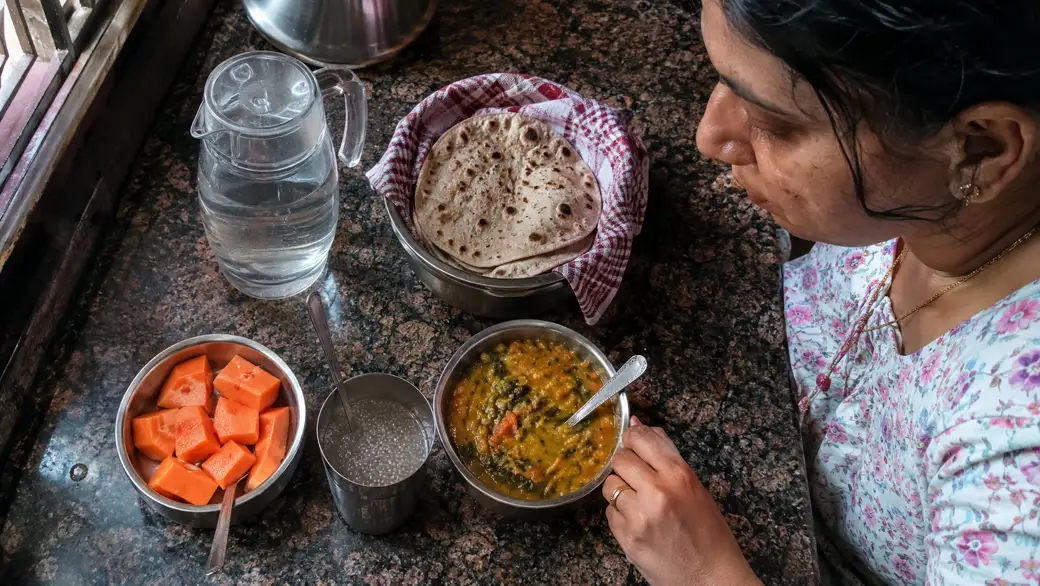
- Papaya: gentle and well tolerated even when you feel full.
- Soaked figs, raisins or prunes on waking: two to four; they contain natural sorbitol as well as fibre.
- Kiwi: two a day have improved bowel frequency in studies.
- Guava and pear.
- Cooked vegetables twice a day: lauki, tori, bhindi, beans, palak, carrots.
- Soaked chia or isabgol: concentrated soluble fibre in a small volume. Always with a full glass of water, followed by another.
- A teaspoon of ghee or oil in meals: a little fat stimulates the bowel. Do not cut fat to zero.
- Curd and chaas.
Movement and routine
- Walk for 30 minutes a day, and for 10 minutes after meals.
- Sit on the toilet for 5 to 10 minutes after breakfast every day, when the bowel’s natural reflex is strongest.
- On a western toilet, put your feet on a low stool so that your knees are above your hips, and lean forward.
- Do not ignore the urge to go, and do not strain.
What makes it worse
Maida, biscuits, white bread, large amounts of polished rice, cheese, unripe bananas, too much tea in place of water, skipped meals, and iron or calcium supplements. Do not stop prescribed supplements yourself; ask whether the type or timing can be changed.
Laxatives
If a week of these measures has not worked, ask your healthcare provider about a laxative.
| Type | Examples | Notes |
|---|---|---|
| Bulk-forming | Isabgol | First choice for many; needs plenty of water; works in 1 to 3 days |
| Osmotic | Polyethylene glycol, lactulose | Soften stool by drawing water into the bowel; often recommended on GLP-1 treatment |
| Stool softener | Docusate | Mild; useful with piles |
| Stimulant | Bisacodyl, senna | Short-term use; can cause cramps |
Avoid “detox” teas and slimming churans, which often contain strong stimulant laxatives in unknown amounts.
Part 2: Acidity and heartburn
Why Mounjaro causes it
A stomach that empties slowly stays fuller for longer. When it is full, pressure pushes acid and food back up into the food pipe, causing burning behind the breastbone, a sour taste, or a feeling of food coming up. Lying down, bending and tight clothing make it worse. Constipation adds to the pressure from below.
Food and habit fixes
- Smaller meals. This is the single most effective change. Half your previous portion, on a small plate.
- Dinner early and light, at least two to three hours before bed.
- Less oil. Fat slows the stomach further.
- Do not lie down or bend after eating. Sit or walk gently.
- Raise the head of the bed by 15 to 20 cm with blocks under the legs, or use a wedge pillow. Extra pillows alone bend the body and can make it worse.
- Sleep on your left side.
- Loose clothing around the waist.
- Sip fluids between meals instead of drinking large amounts with food.
- Treat constipation.
- Stop smoking, which loosens the valve at the top of the stomach.
Common Indian triggers
| Trigger | Gentler choice |
|---|---|
| Deep-fried snacks: samosa, pakora, puri, vada | Steamed or roasted: idli, dhokla, roasted chana, makhana |
| Rich gravies with cream, butter or a lot of oil | Dal, light curries, tandoori or grilled items |
| Very spicy food, extra chilli, pickles | Mild spices: jeera, dhania, haldi, ginger |
| Strong tea or coffee on an empty stomach | With or after food; weaker; fewer cups |
| Fizzy drinks | Water, chaas, coconut water |
| Citrus juice, tomato-heavy gravies, raw onion, if they trouble you | Whole fruit in small amounts; cooked onion; lauki or tori-based dishes |
| Chocolate, mint and alcohol | Avoid in the evening |
| Late, heavy dinners and bedtime snacks | Khichdi, dal-soup or curd rice by 7.30 to 8 pm |
Triggers vary. Keep a note for a week of what you ate before each episode.
Foods that soothe
Cold milk in a small amount helps some people briefly, though it can rebound. More reliably helpful are bananas, oats, curd rice, lauki, coconut water, saunf after meals, and small sips of jeera water. Ginger helps nausea but can aggravate heartburn in a few people.
Medicines
Antacids give quick, short relief. Acid-reducing tablets, of the H2-blocker or proton pump inhibitor type, may be prescribed for a few weeks if symptoms are frequent. Take them as your healthcare provider advises, and do not continue for months without review.
Part 3: Bloating, fullness and gas
- Eat slowly and chew well. Eating fast means swallowing air.
- Stop before you are full. Fullness arrives late on this medicine.
- Avoid fizzy drinks, chewing gum and drinking through straws.
- Cook vegetables instead of eating large raw salads while the gut is slow.
- Prepare pulses carefully: soak for 8 to 12 hours, discard the water, pressure-cook until soft, and temper with hing, ginger, jeera and ajwain.
- Start with moong and masoor dal, and add chana and rajma gradually.
- Go easy on gas-forming vegetables such as cabbage, cauliflower and radish in the gentle weeks.
- Check for “sugar-free” products. Sorbitol and similar sweeteners in gum, sweets and some protein bars cause gas and loose stools.
- Sip protein shakes slowly, and consider a lactose-free or plant-based powder if milk products bloat you.
- Walk after meals.
- Treat constipation. A full colon is the commonest cause of persistent bloating.
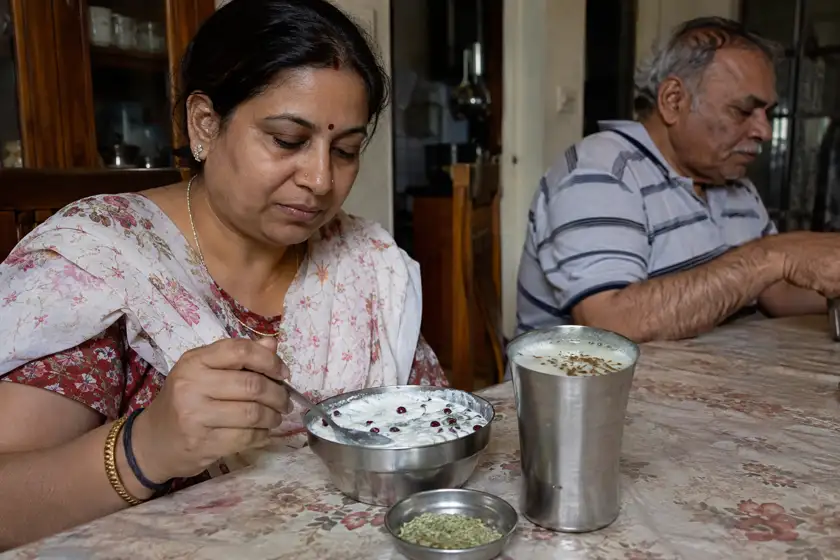
Traditional after-meal digestives, a pinch of ajwain with warm water, saunf, or jeera water, are safe and help many people.
Part 4: Sulphur burps
Burps that smell of rotten eggs are caused by hydrogen sulphide, produced when sulphur-containing food lingers in the stomach and is broken down by bacteria. They are unpleasant but not dangerous.
| What to do | Why |
|---|---|
| Smaller meals, especially at dinner | Less food sitting in the stomach |
| Reduce eggs, red meat, large amounts of paneer and whey shakes for a few days | These are rich in sulphur-containing amino acids. Use dal, curd, tofu, fish or chicken in small portions instead |
| Go easy on onion, garlic, cabbage, cauliflower, broccoli and radish | Also high in sulphur compounds |
| Avoid fried and fatty food | Slows the stomach further |
| Avoid fizzy drinks and alcohol | More gas; slower emptying |
| Drink water through the day | Helps food move on |
| Walk after eating | Speeds stomach emptying |
| Relieve constipation | Reduces back-pressure and fermentation |
| Saunf, jeera or ajwain water after meals | Traditional remedies that many people find helpful |
They are usually worst in the week after a dose increase and fade as the body adapts. Do not cut protein overall. Spread it across the day in smaller amounts and choose gentler sources for a few days. If burps come with vomiting of undigested food hours after eating, tell your healthcare provider.
A 3-day reset menu
Use this when several symptoms flare together, or in the first days after a dose increase. Portions are small. Drink water, jeera water or chaas between meals.
| Day 1 | Day 2 | Day 3 | |
|---|---|---|---|
| On waking | Warm water; 2 soaked figs | Warm water; 4 soaked raisins | Warm water; 3 prunes |
| Breakfast | Vegetable dalia with a little curd | 2 idlis with thin sambar | Oats cooked in milk with half a banana |
| Mid-morning | Papaya bowl | Coconut water; a few soaked almonds | Papaya or a pear |
| Lunch | Moong dal khichdi with lauki, curd | Soft phulka, moong dal, tori sabzi, curd | Small portion of rice, dal, well-cooked beans and carrot, chaas |
| 4.30 pm | Chaas with roasted jeera | Roasted makhana; saunf water | Curd with a spoon of soaked chia |
| Dinner by 7.30 pm | Vegetable and dal soup, 1 soft phulka | Curd rice with grated carrot | Lauki or pumpkin soup with a little paneer or tofu, 1 phulka |
| After dinner | 10-minute walk; saunf | 10-minute walk; ajwain water | 10-minute walk; saunf |
| Bedtime | Isabgol with water, if advised | Isabgol with water, if advised | Isabgol with water, if advised |
Non-vegetarians can replace the dinner protein with a clear chicken soup or a small piece of steamed fish. After three days, return gradually to your usual protein-first meals.
Symptom finder
| What you notice | Most likely reason | First thing to change |
|---|---|---|
| Burning in the chest at night | Late or large dinner; lying flat | Dinner by 8 pm, half the portion; raise the head of the bed |
| Burning soon after meals | Portion too large or too oily; eating fast | Smaller plate; fifteen minutes per meal; less oil |
| Rotten-egg burps a day or two after the injection | Food lingering in the stomach | Smaller protein portions spread out; no fried food; a walk after eating |
| Bloated by evening, flat in the morning | Gas building through the day; constipation | Treat constipation; cooked vegetables; no fizzy drinks |
| Hard pellets every third day | Too little fluid and fibre | Two more glasses of water; papaya or soaked figs; isabgol |
| Urge but difficulty passing | Hard stool; posture | Footstool; stool softener on advice; do not strain |
| Bloating after dal or chana | Pulses not soaked or cooked enough; too much too soon | Soak overnight, cook soft, add hing and ginger; start with moong |
| Bloating after milk or a whey shake | Lactose | Try curd, lactose-free milk or a plant protein |
| Everything worse in the week after a dose increase | Adjustment to the new dose | Three-day reset menu; ask to stay longer on the dose |
Home remedies: what helps
| Remedy | Useful for | Notes |
|---|---|---|
| Jeera water | Bloating, gas, mild nausea | Boil a teaspoon of cumin in two cups of water; sip warm |
| Saunf after meals | Bloating, burping | Half a teaspoon chewed, or as tea |
| Ajwain with a pinch of salt and warm water | Gas, heaviness | Small amounts; may aggravate heartburn in some |
| Hing in tadka | Gas from pulses | A pinch is enough |
| Ginger | Nausea | Can worsen heartburn in a few people |
| Warm water on waking | Constipation | Stimulates the bowel reflex |
| Soaked figs, raisins or prunes | Constipation | Count them as part of your fruit |
| Chaas with roasted jeera | Digestion, hydration | Unsweetened, lightly salted |
| Triphala or senna-based churans | Constipation | Stimulant action; occasional use only, and tell your healthcare provider |
| Baking soda in water, lemon-soda “eno” drinks | Quick relief of acidity | High in sodium; not for regular use, and not with high blood pressure or kidney disease |
| Apple cider vinegar | Claimed for digestion | No good evidence; can worsen reflux |
Balancing protein with a sensitive stomach
People are rightly told to prioritise protein on Mounjaro. Large protein portions, however, can sit heavily and feed sulphur burps. The answer is distribution, not reduction.
- Spread protein over four or five small eating occasions.
- Favour gentler sources when symptoms flare: moong dal, curd, chaas, soft tofu, fish, egg white.
- Keep paneer to about 50 g at a time, cooked simply.
- Sip shakes over 15 to 20 minutes.
- Pair every protein food with cooked vegetables for fibre.
Should the dose change?
If symptoms have not settled two to three weeks after a dose increase, or keep you from eating and drinking properly, speak to your healthcare provider before the next step. Options are to stay on the current dose for longer, go back one step, or add short-term treatment. Four weeks on each dose is a minimum, not a deadline, and many people do well on 5 or 10 mg. Do not adjust the dose yourself.
When to seek medical help
See a healthcare professional promptly, or urgently, if you have
Severe or worsening abdominal pain, especially in the upper abdomen or going through to the back; a tight, swollen abdomen; repeated vomiting, or vomiting food eaten many hours earlier; inability to pass stool or gas; blood in the stool or black stools; no bowel movement for about a week despite treatment; difficulty or pain on swallowing; unexplained chest pain; fever; or yellowing of the eyes.
Chest pain is not always acidity. Pain with breathlessness, sweating, or spreading to the arm or jaw needs emergency assessment.
Piles and fissures
Hard stools and straining can cause piles and small tears around the anus, with pain or bright red blood on the paper. Keeping stools soft with fluid, fibre and, if needed, a softener is the treatment. Warm sitz baths ease pain. Report any bleeding to your healthcare provider so that other causes can be excluded.
A daily routine that prevents most problems
| Time | Habit |
|---|---|
| On waking | 1 to 2 glasses of warm water; soaked figs or raisins |
| Breakfast | Small, with protein and fibre; then unhurried toilet time with feet on a stool |
| Morning | First litre of water finished; a fruit |
| Lunch | Vegetables and dal first; small portion of roti or rice; 10-minute walk |
| Afternoon | Second litre; chaas; a planned snack |
| Evening | 30-minute walk |
| Dinner | Light, low in oil, by 8 pm; 10-minute walk; saunf |
| Night | No food for 2 to 3 hours before bed; head of the bed raised if you have reflux; isabgol if advised |
Common mistakes
- Adding a lot of fibre suddenly without more water, which causes more bloating.
- Cutting out all fat to control nausea, which worsens constipation.
- Eating a normal-sized dinner late and lying down soon afterwards.
- Large protein shakes drunk quickly.
- Replacing water with tea and coffee.
- Taking antacids daily for months without telling the healthcare professional.
- Using stimulant laxatives or slimming teas regularly.
- Increasing the dose on schedule while symptoms are still troublesome.
Common myths
“These symptoms mean the medicine is damaging my stomach”
They reflect slower movement of the gut while the medicine is active, and they improve with adaptation and with the measures above.
“Acidity means I should eat less protein”
Eat protein in smaller amounts more often, from gentler sources.
“A fat-free diet is best for the stomach”
A little fat helps the bowel and the gallbladder. Fried food is the problem, not a teaspoon of oil.
“Constipation will go away on its own”
It often persists unless fluid, fibre and activity are increased.
“Sulphur burps are a sign of infection”
On this medicine they are usually due to slow stomach emptying. Persistent symptoms with vomiting or pain should be assessed.
“I have to stop Mounjaro”
Rarely. Food changes, simple medicines or a slower dose schedule solve it for most people.
How The Prime Fit helps
At The Prime Fit, digestive side effects are planned for before they happen. Your dietitian sets fluid, fibre and protein targets from the first week, prepares a gentle menu for each dose increase, and reviews your symptoms weekly. If constipation or acidity persists, your healthcare provider can prescribe suitable treatment and keep you on your current dose for longer, and the team is available by message between visits.
If digestive symptoms are troubling you, book a consultation or read about our GLP-1 support programme.
Frequently asked questions
Does Mounjaro cause constipation?
Yes, in roughly one person in six to eight in trials. It slows the gut, and people eat and drink less. Fluids, fibre, walking and, if needed, a laxative control it.
Why do I have acidity on Mounjaro?
Food stays in the stomach longer, so acid is more likely to come back up, especially after large or late meals. Smaller, earlier, lower-fat meals help most.
What causes sulphur burps?
Hydrogen sulphide gas, produced when protein-rich food lingers in a slow stomach. Smaller meals and a few days with less egg, red meat and large paneer portions usually settle it.
What is the fastest way to relieve constipation?
Two glasses of warm water, papaya or soaked figs, a walk, and sitting on the toilet after breakfast with your feet raised. If there is no result in a few days, ask about an osmotic laxative.
Can I take antacids or acid-reducing tablets?
Yes, on your healthcare provider’s advice. They are commonly used for short periods alongside changes in eating.
Can I take isabgol every day?
For most people, yes, with plenty of water, and at a different time from other medicines.
How long do these symptoms last?
Acidity, burping and bloating usually settle within one to two weeks of a dose change. Constipation can last longer unless you address fluid and fibre.
Which foods should I avoid?
Deep-fried and oily foods, rich gravies, very spicy dishes, fizzy drinks, alcohol, large late dinners and maida-based snacks.
Should I stop my injection?
Not without speaking to your healthcare provider. Staying longer on the current dose or stepping back usually solves the problem.
When should I worry?
With severe pain, a swollen abdomen, repeated vomiting, blood in the stool, no bowel movement for a week, difficulty swallowing or chest pain that is not clearly reflux.
This article is general information and is not a substitute for a consultation. Trial figures are approximate. Speak to your healthcare provider before starting any medicine, including laxatives and antacids.