In this article
- What Mounjaro is and how the dose affects it
- The Mounjaro dose schedule at a glance
- Step by step: what each dose is for and what to expect
- How your healthcare provider decides whether to increase the dose
- Choosing a maintenance dose
- How and when to inject
- What to do if you miss a dose
- Storing your Mounjaro
- Eating well at each dose step
- Side effects and the dose
- Special situations that affect dosing
- Common dosing mistakes to avoid
- A realistic timeline
- How Mounjaro doses compare with Wegovy and Ozempic
- Questions to ask at your dose review
- How dosing is managed at The Prime Fit
- Frequently asked questions
One of the first questions people ask about Mounjaro (tirzepatide) is, “Which dose will I be on?” The honest answer is that the dose changes over time. Everyone begins on the same low starting dose, and the amount is then increased step by step until you and your healthcare provider find the dose that controls appetite and weight with side effects you can live with. For some people that is 5 mg. For others it is 10 mg or 15 mg.
This guide explains how Mounjaro dosing works from the first injection to long-term maintenance: the schedule, the reason for each step, what you are likely to feel, what to do if you miss a dose, and how to adjust your meals as the dose rises. It is general information to help you understand your treatment. Your own dose and timing must come from your prescriber, and the leaflet in your pack is the final reference for your particular pen or vial.
What Mounjaro is and how the dose affects it
Mounjaro contains tirzepatide, a once-weekly injection that acts on two gut-hormone receptors, GIP and GLP-1. Together these effects reduce appetite, increase the feeling of fullness, slow the emptying of the stomach and improve the body’s insulin response to food. It is used for type 2 diabetes and for chronic weight management in adults who meet medical criteria, alongside a reduced-calorie diet and physical activity.
The effects of tirzepatide are dose dependent. Higher doses generally produce more appetite suppression and more weight loss, and they also carry a higher chance of digestive side effects such as nausea, constipation and loose stools. Dosing is therefore a balance. The aim is not to reach the highest number. The aim is the lowest dose that gives you steady, healthy progress.
The Mounjaro dose schedule at a glance
Mounjaro is available in six strengths: 2.5 mg, 5 mg, 7.5 mg, 10 mg, 12.5 mg and 15 mg. It is injected under the skin once a week, on the same day each week.
| Step | Weekly dose | Minimum time on this dose | Purpose |
|---|---|---|---|
| 1 | 2.5 mg | 4 weeks | Starting dose. Lets the body adjust; not intended as a long-term dose |
| 2 | 5 mg | At least 4 weeks | First treatment dose and a recognised maintenance dose |
| 3 | 7.5 mg | At least 4 weeks | Step dose on the way to 10 mg |
| 4 | 10 mg | At least 4 weeks | Recognised maintenance dose |
| 5 | 12.5 mg | At least 4 weeks | Step dose on the way to 15 mg |
| 6 | 15 mg | Ongoing | Maximum dose and a recognised maintenance dose |
Three rules summarise the schedule:
- Start at 2.5 mg once weekly for four weeks.
- Increase by 2.5 mg at a time and only after at least four weeks on the current dose.
- Never exceed 15 mg once weekly.
If every step is taken at the earliest opportunity, the 15 mg dose is reached after about 20 weeks. In real life many people take longer, and many never need to go that high.

Step by step: what each dose is for and what to expect
2.5 mg: the starting dose (weeks 1 to 4)
The first four weeks are about tolerance, not results. The 2.5 mg dose introduces the medicine gently so that the stomach and brain can adapt. Many people notice a smaller appetite and feel full sooner within the first week or two. Some lose a little weight; others see no change on the scale yet. Both are normal.
Possible effects at this stage include mild nausea, a feeling of fullness, burping, softer stools or constipation. They are usually mild. This is the best time to build the habits that will carry you through the higher doses: smaller plates, slower eating, protein at every meal and enough water.
5 mg: the first treatment dose (from week 5)
At 5 mg the appetite effect becomes clearer for most people. Portions shrink without much effort, and cravings between meals reduce. In the main weight-management trial of tirzepatide, people who stayed on 5 mg lost about 15 percent of their body weight on average over 72 weeks, alongside diet and activity advice. That makes 5 mg a real treatment dose in its own right, not just a stepping stone.
If you are losing weight steadily at 5 mg and feel well, your healthcare provider may advise staying there. There is no need to increase simply because four weeks have passed.
7.5 mg: a step dose
The 7.5 mg dose bridges the gap between 5 mg and 10 mg. Side effects sometimes return for a week or so after the increase, typically nausea in the two or three days after the injection. Returning to lighter, lower-fat meals for that week usually helps.
10 mg: a common maintenance dose
Many people settle at 10 mg. In the same trial, the average weight loss at 10 mg was around 19 to 20 percent of body weight over 72 weeks. Appetite control is stronger, so the main nutritional risk at this stage is eating too little protein and losing muscle along with fat. This is a good point to check your protein intake and strength-training routine with your dietitian.
12.5 mg: a step dose
This dose is used for at least four weeks before moving to 15 mg, if a further increase is needed. Some people find it is as far as they need to go.
15 mg: the maximum dose
The highest dose produced the largest average weight loss in trials, about 21 percent of body weight over 72 weeks, though the difference between 10 mg and 15 mg was modest for many people. It also has the highest rate of digestive side effects. A healthcare professional will usually suggest 15 mg when weight loss has stalled at a lower dose for some time despite good adherence to diet and activity, and when earlier doses have been well tolerated.
Trial averages are not promises
The figures above are averages from clinical trials in which participants also received lifestyle support. Individual results vary widely. Some people lose more, some less, and people with type 2 diabetes tend to lose somewhat less than those without.
How your healthcare provider decides whether to increase the dose
A dose increase is a clinical decision, made at each review. Your healthcare provider will usually consider:
- Your rate of weight loss. A loss of roughly 0.5 to 1 kg a week is generally considered a good, safe pace. If you are losing at that rate, there is usually no reason to increase.
- Your appetite and food noise. If hunger has clearly returned and portions are creeping up, an increase may help.
- Side effects. Ongoing nausea, vomiting or troublesome constipation are reasons to stay at the current dose longer, or to step back.
- Your blood sugar, if you have diabetes, and whether other diabetes medicines need adjusting.
- Your nutrition. If you are already struggling to eat enough protein, a higher dose may make that worse.
- Practical factors, such as travel, festivals, exams or demanding work weeks, when side effects would be particularly unwelcome.
Staying on a dose longer is allowed
Four weeks is the minimum, not a deadline. It is perfectly acceptable to stay on any dose for eight weeks, twelve weeks or indefinitely if it is working. Slower escalation is one of the most effective ways to reduce side effects.
Stepping down is also an option
If a higher dose causes side effects that do not settle, your healthcare provider can return you to the previous dose. This is common and is not a failure of treatment.
Choosing a maintenance dose
The recognised maintenance doses are 5 mg, 10 mg and 15 mg once weekly. The right one is the dose at which three things are true: your weight is moving towards, or holding at, the target you agreed with your healthcare provider; side effects are absent or minor; and you can eat a balanced diet with adequate protein.
Obesity is a long-term condition, and research shows that when treatment stops, appetite tends to return and much of the lost weight is regained over the following year in many people. For that reason, maintenance is usually planned as long-term treatment at the lowest effective dose, with regular reviews. Any plan to reduce or stop should be made with your healthcare provider and supported by a clear nutrition and activity plan.
How and when to inject
- Once a week, same day each week. Choose a day you will remember. Many people prefer a day that is followed by one or two quieter days, because any nausea tends to peak one to three days after the injection.
- Any time of day, with or without food.
- Under the skin of the abdomen (at least a few centimetres from the navel) or the front of the thigh. The back of the upper arm can be used if someone else gives the injection.
- Rotate the site each week. You can use the same area of the body, but choose a different spot.
- Do not inject into skin that is bruised, tender, scarred or hardened.
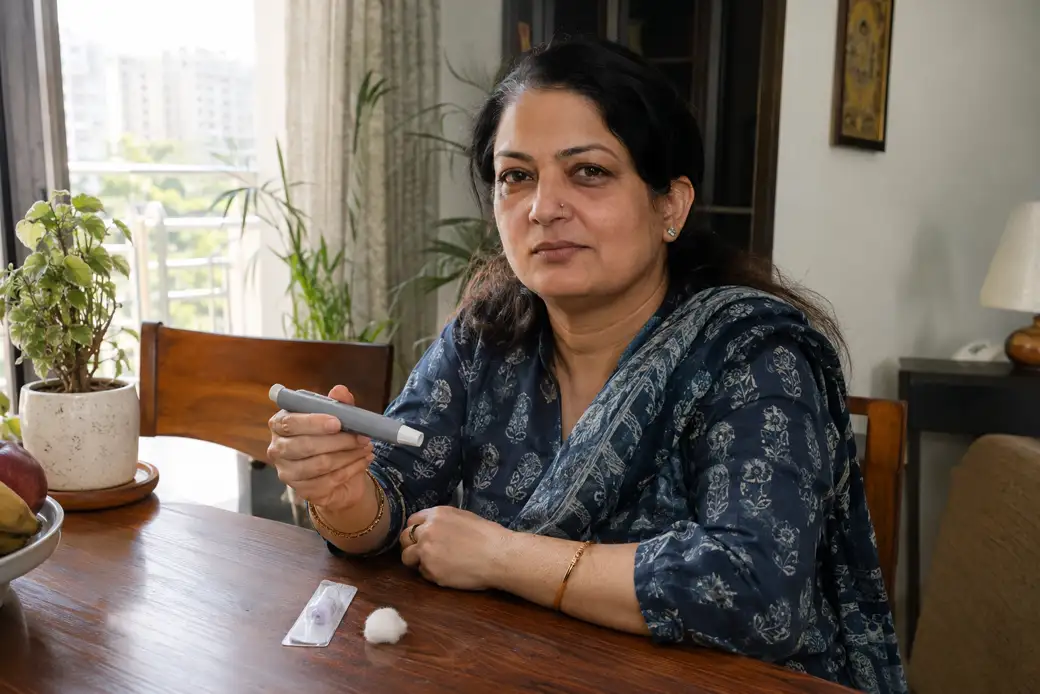
- Follow the instructions for your device. Mounjaro is supplied in different presentations, including vials used with a syringe, single-dose pens and multi-dose pens. The technique differs between them, so ask your healthcare provider, nurse or pharmacist to demonstrate the one you have been prescribed, and read the leaflet in the pack.
Changing your injection day
You can change the day of the week you inject, as long as there are at least three days (72 hours) between two doses. After the change, continue weekly on the new day.

What to do if you miss a dose
| Situation | What to do |
|---|---|
| You remember within 4 days (96 hours) of the missed dose | Take the dose as soon as you remember, then return to your usual day the following week |
| More than 4 days have passed | Skip the missed dose. Take the next dose on your usual day. Do not take two doses close together |
| You have missed two or more weeks | Contact your healthcare provider before restarting. Depending on the gap, they may advise restarting at a lower dose to avoid strong side effects |
Never take a double dose to make up for a missed one. If you often forget, set a weekly phone reminder or link the injection to a fixed routine, such as Sunday evening after dinner.
Storing your Mounjaro
- Keep it in the refrigerator, between 2°C and 8°C, in its original carton to protect it from light.
- Do not freeze it, and do not use it if it has been frozen.
- If needed, unopened pens or vials can usually be kept out of the fridge at room temperature (below 30°C) for a limited period. The permitted time differs between presentations, so check the leaflet for your product.
- Check the expiry date, and do not use the medicine if the liquid is cloudy, coloured or contains particles.
- During Indian summers and while travelling, carry it in an insulated pouch with a cool pack, without letting it touch ice directly.
- Dispose of needles and used pens in a puncture-proof container, out of reach of children.
Eating well at each dose step
How you eat has a large effect on how each dose feels. A simple approach is to treat the first week after every increase as a “gentle week”.
| Stage | Food focus | Indian examples |
|---|---|---|
| Starting dose and the week after any increase | Small, light, low-fat meals; fluids between meals | Moong dal khichdi, idli with sambar, curd rice, dalia, vegetable soup, soft phulka with dal |
| Settled on a dose | Protein first, then vegetables, then roti or rice; three meals a day even if appetite is low | Dal or paneer or eggs or fish at each meal, sabzi, salad, 1 to 2 rotis or a small katori of rice |
| Higher doses (10 mg and above) | Protect muscle: aim for a clear protein food at every meal and snack, and strength exercise twice a week | Curd or hung curd, sprouts, chana, tofu, soya, eggs, chicken; a protein supplement if advised |
| Any stage, to prevent constipation | Fluids, fibre and movement | 2 to 3 litres of fluid, papaya or guava, vegetables, isabgol if advised, daily walk |
Foods that commonly trigger nausea on Mounjaro are deep-fried snacks, rich gravies, very sweet desserts, large portions and alcohol. You do not have to avoid them for life, but they are best kept small, especially in the days after a dose increase.
Side effects and the dose
Most side effects are linked to starting treatment and to each increase, and they tend to settle within a few days to two weeks. The commonest are nausea, diarrhoea, constipation, vomiting, indigestion and reduced appetite. Tell your healthcare provider if they are affecting your eating, work or sleep. The usual solutions are to stay longer at the current dose, step back a dose, or use short-term supportive medicines.
Seek medical help urgently if
You have severe, persistent abdominal pain (with or without vomiting), repeated vomiting and cannot keep fluids down, signs of dehydration, yellowing of the eyes or skin, or swelling of the face or throat or difficulty breathing. Stop the injection until you have been assessed.
For a full explanation of each side effect and how to manage it, see our complete guide to GLP-1 side effects.
Special situations that affect dosing
Diabetes medicines
If you take insulin or a sulfonylurea (such as glimepiride or gliclazide), your healthcare provider may lower those doses when Mounjaro is started or increased, to reduce the risk of low blood sugar. Monitor your sugars as advised, particularly around dose changes.
Oral contraceptive pills
Tirzepatide can reduce the absorption of oral contraceptives when it is started and after each dose increase. Healthcare professionals generally advise using a barrier method in addition, or switching to a non-oral method, for four weeks after starting and for four weeks after each increase.
Pregnancy and breastfeeding
Mounjaro is not recommended in pregnancy or while breastfeeding. If you are planning a pregnancy, discuss with your healthcare provider when to stop treatment beforehand.
Kidney and liver conditions
No routine dose change is required for reduced kidney or liver function, but dehydration from vomiting or diarrhoea can strain the kidneys, so fluid intake and early reporting of symptoms are important.
Surgery, endoscopy and anaesthesia
Because Mounjaro slows stomach emptying, tell your surgeon or anaesthetist well in advance. They may ask you to pause the injection or change fasting instructions.
Older adults
The schedule is the same, but slower escalation and close attention to protein, hydration and muscle strength are sensible.
Common dosing mistakes to avoid
- Increasing too fast. Moving up before four weeks, or as soon as four weeks pass regardless of how you feel, is the commonest cause of severe nausea and of people abandoning treatment.
- Assuming a higher dose is always better. If a lower dose is working, staying on it means fewer side effects and leaves room to increase later if progress slows.
- Splitting, stretching or “microdosing” on your own. Altering the dose or the interval without medical advice makes the effect unpredictable. Multi-dose pens should be used only as instructed.
- Doubling up after a missed dose. This sharply increases side effects.
- Restarting at a high dose after a long break. Tolerance is lost within a few weeks. Speak to your healthcare provider first.
- Skipping meals because you are not hungry. Under-eating leads to fatigue, hair shedding, constipation and muscle loss.
- Buying from unverified sources. Products sold online without a prescription may be counterfeit, wrongly stored or wrongly dosed.
- Sharing pens. A pen is for one person only, even if the needle is changed.
A realistic timeline
| Period | Typical dose | What usually happens |
|---|---|---|
| Month 1 | 2.5 mg | Body adapts; appetite begins to fall; small or no weight change |
| Months 2 to 3 | 5 mg, possibly 7.5 mg | Clear appetite control; steady weight loss begins |
| Months 4 to 6 | 5 to 10 mg, depending on response | Most of the dose-finding happens here; nutrition and strength training become central |
| Months 6 to 12 | Maintenance dose (5, 10 or 15 mg) | Continued loss, then a gradual levelling off |
| Beyond 12 months | Lowest effective maintenance dose | Weight maintenance, regular reviews, long-term plan |
Weight loss on tirzepatide typically continues for many months and then reaches a plateau, often after about a year or more. A plateau at a healthier weight is the expected result of successful treatment, not a sign that the medicine has stopped working.

How Mounjaro doses compare with Wegovy and Ozempic
People often compare the numbers on different pens, but milligrams of one medicine cannot be compared with milligrams of another. Tirzepatide (Mounjaro) and semaglutide (Wegovy, Ozempic) are different molecules with different strengths.
| Medicine | Weekly dose steps | Usual time on each step | Highest dose |
|---|---|---|---|
| Mounjaro (tirzepatide) | 2.5, 5, 7.5, 10, 12.5, 15 mg | At least 4 weeks | 15 mg |
| Wegovy (semaglutide, weight management) | 0.25, 0.5, 1, 1.7, 2.4 mg | 4 weeks | 2.4 mg |
| Ozempic (semaglutide, type 2 diabetes) | 0.25, 0.5, 1 mg (2 mg in some countries) | At least 4 weeks | Depends on local approval |
A 5 mg dose of Mounjaro is therefore not “stronger” or “weaker” than a 1 mg dose of semaglutide in any simple way. If your healthcare provider switches you from one medicine to the other, they will choose a starting dose based on your previous dose, how you tolerated it and how long it has been since your last injection. Do not try to convert doses yourself.
Questions to ask at your dose review
A short, focused conversation at each review helps you and your healthcare provider choose the right next step. Useful questions include:
- Is my rate of weight loss healthy, or is it too fast or too slow?
- Should I stay on this dose, increase, or step back?
- Am I eating enough protein, and should my body composition be measured?
- Do any of my other medicines, for diabetes, blood pressure or contraception, need to change?
- Which blood tests should be repeated, and when?
- What is our plan for maintenance once I reach my target?
Bringing a simple record of your weekly weight, any side effects and a typical day of eating makes these decisions quicker and more accurate.
How dosing is managed at The Prime Fit
At The Prime Fit, Mounjaro is prescribed only after an expert-led assessment of your medical history, current medicines and blood tests. The dose is reviewed regularly and increased only when you are ready, according to your weight trend, appetite and how you feel. A dietitian builds your meals around Indian food for each dose step, with protein targets and weekly follow-up, and you can message the team if a side effect appears between visits.
To find out whether Mounjaro is suitable for you, book a consultation or read more about our Mounjaro programme and GLP-1 therapy.
Frequently asked questions
What is the starting dose of Mounjaro?
The starting dose is 2.5 mg once a week for four weeks. It is used to let the body adjust and is not intended as a long-term dose. After four weeks the dose is usually increased to 5 mg.
How often is the Mounjaro dose increased?
The dose can be increased by 2.5 mg after at least four weeks on the current dose. Your healthcare provider may keep you on a dose for longer if it is working well or if you have side effects.
What is the maximum dose of Mounjaro?
The maximum dose is 15 mg once a week.
Which Mounjaro dose is best for weight loss?
There is no single best dose. In trials, average weight loss increased from 5 mg to 10 mg to 15 mg, but so did side effects. The best dose for you is the lowest one that gives steady weight loss with minimal side effects.
Can I stay on 2.5 mg or 5 mg if I am losing weight?
The 2.5 mg dose is meant for starting treatment, so healthcare professionals usually move to 5 mg. If 5 mg is working well, it is a recognised maintenance dose and you may be advised to stay on it.
What happens if I miss a Mounjaro injection?
Take it as soon as you remember if it is within four days of the missed dose. If more than four days have passed, skip it and take the next dose on your usual day. Do not take two doses within three days of each other.
Can I change the day I take my injection?
Yes, as long as there are at least three days between two doses. Then continue weekly on the new day.
Can I go back to a lower dose?
Yes. If side effects are difficult at a higher dose, your healthcare provider can return you to the previous dose. Many people do well at a lower dose.
Is it safe to take a higher dose to lose weight faster?
No. Increasing faster or beyond what is prescribed raises the risk of severe side effects and does not lead to healthier results. Very rapid weight loss also increases muscle loss, hair shedding and gallstones.
How long will I need to take Mounjaro?
Obesity is a long-term condition, and weight often returns when treatment stops. Many people continue on the lowest effective maintenance dose with regular reviews. Any decision to stop should be planned with your healthcare provider.
This article is general information and is not a substitute for a consultation. Mounjaro is a prescription-only medicine. Always follow your healthcare provider’s instructions and the leaflet supplied with your medicine.