In this article
- What people mean by “Ozempic face”
- Why it happens
- Who is most likely to notice it?
- Loose skin elsewhere on the body
- Will the skin tighten on its own?
- Prevention: what genuinely helps
- What to expect over time
- What does not work
- If it bothers you: treatment options
- Skin problems that improve with weight loss
- Caring for loose skin day to day
- Hair, nails and stretch marks
- Keeping it in perspective
- Questions to ask your healthcare provider
- Common myths
- How The Prime Fit helps
- Frequently asked questions
People start weight loss treatment hoping to look and feel better. It can be disheartening when, some months in, a relative remarks that you look tired, or you notice in a photograph that your cheeks have hollowed and the skin on your arms or abdomen hangs more loosely. The media have given this a catchy name, “Ozempic face”, along with variations for other parts of the body.
The name is misleading. Nothing in semaglutide (Ozempic, Wegovy) or tirzepatide (Mounjaro) attacks the face or the skin. The same changes follow bariatric surgery, serious illness and strict dieting. They are the visible result of losing a large amount of fat, sometimes quickly, from under skin that has been stretched and has aged.
This guide explains what is happening, who is most likely to be affected, what you can do to limit it, and what treatments are available if it bothers you. It is general information. For individual advice on skin and cosmetic treatments, consult a qualified dermatologist or plastic surgeon.
What people mean by “Ozempic face”
The term is used for a cluster of changes in facial appearance after significant weight loss:
- Hollowing of the cheeks and temples
- More prominent cheekbones and jaw, sometimes a sharper but older look
- Deeper lines from the nose to the corners of the mouth, and from the mouth to the chin
- Sunken or darker under-eye area
- Looser skin along the jawline and neck, with jowls or a “turkey neck”
- Thinner lips and more visible fine lines
- A tired or drawn expression
Similar terms have been coined for loss of volume in the buttocks, breasts, hands and feet. All describe the same process in different places.
Not everyone experiences this, and many people look healthier and younger after losing weight. Whether the change is welcome depends on your age, how much you lose and how quickly, and your starting facial structure.
Why it happens
1. Fat is lost from everywhere, including the face
The face contains several pads of fat, under the skin and deeper, that give it roundness and support. With age these pads shrink and slip downwards; that is a large part of why faces look older. Weight loss removes fat from them too. You cannot choose where fat comes from. A body that is losing 15 or 20 percent of its weight will lose some from the face.
2. Skin cannot always shrink to fit
Skin owes its firmness and spring to two proteins, collagen and elastin. When skin has been stretched for years by excess weight, these fibres are damaged, in the same way that an elastic band left stretched loses its snap. After the fat beneath has gone, the skin may not retract fully. The longer the skin has been stretched and the older it is, the less it recovers.
3. Speed
Gradual weight loss gives skin time to remodel. Rapid loss outpaces it. This is one reason the effect has been noticed with highly effective medicines and with surgery, both of which produce faster and larger loss than dieting usually does.
4. Loss of muscle
If protein and resistance exercise are inadequate, muscle is lost along with fat. Muscle gives shape to the face, arms, thighs and buttocks. Losing it makes skin look emptier.
5. Nutrition and hydration
Collagen production needs protein, vitamin C, zinc and other nutrients. A very small appetite can leave these short. Dehydration makes skin look dull and lined.
6. Age and everything else
From the mid-twenties, the skin makes about one percent less collagen each year, and the decline accelerates in women after menopause. Sun exposure, smoking and genetics add to it. Weight loss does not cause these changes, but it reveals them.
The essential point
The medicine does not damage skin or facial tissue. The changes are those of substantial, sometimes rapid, weight loss in skin that has aged and been stretched. They occur with any effective weight loss method.

Who is most likely to notice it?
| Factor | Why it matters |
|---|---|
| Age over 40 | Less collagen and elastin; facial fat pads already thinning |
| Large total weight loss, more than about 15 to 20% | More fat lost from the face and more skin left over |
| Rapid loss, more than about 1 kg a week for weeks | Skin has no time to adapt; more muscle lost |
| Long-standing obesity or repeated weight cycling | Skin stretched for years, or stretched repeatedly |
| A naturally lean or angular face | Less facial fat to spare |
| Sun damage | Ultraviolet light breaks down collagen and elastin |
| Smoking | Reduces blood supply to the skin and accelerates collagen loss |
| After menopause | Falling oestrogen reduces skin thickness and elasticity |
| Low protein intake, little strength training | Loss of muscle and poorer skin repair |
| Genetics | Skin quality runs in families |
Younger people losing a moderate amount at a steady pace usually see little or no unwelcome change, and their skin retracts well. If several of the factors in the table apply to you, it does not mean you should avoid treatment. It means the preventive steps in this guide deserve particular attention from the first week.
Loose skin elsewhere on the body
Skin laxity after major weight loss is most noticeable where fat stores were largest.
| Area | Typical change | Practical issues |
|---|---|---|
| Abdomen | A fold or apron of skin below the navel | Chafing and rashes under the fold; clothing fit |
| Upper arms | Hanging skin on the underside | Sleeve fit; self-consciousness |
| Inner thighs | Loose, crepey skin | Rubbing when walking |
| Breasts | Loss of volume and drooping | Bra fit and support |
| Buttocks | Flattening and sagging | Discomfort sitting on hard surfaces |
| Neck and jawline | Jowls, loose neck skin | Appearance |
| Back | Folds below the bra line | Clothing fit |
The amount varies enormously. After a loss of 10 to 15 kg, most people have mild looseness that improves with time and muscle tone. After 30 kg or more, particularly later in life, some excess skin is likely to remain.
Will the skin tighten on its own?
Partly, and slowly. Skin continues to remodel for a year or two after weight stabilises. Mild to moderate laxity often improves noticeably in that time, especially in younger people and with strength training. Large folds of excess skin do not disappear by themselves. Facial fullness does not return unless weight is regained, though the face often looks better once weight has been stable for some months, hydration and nutrition are good, and the early drawn look of rapid loss has passed.
Prevention: what genuinely helps
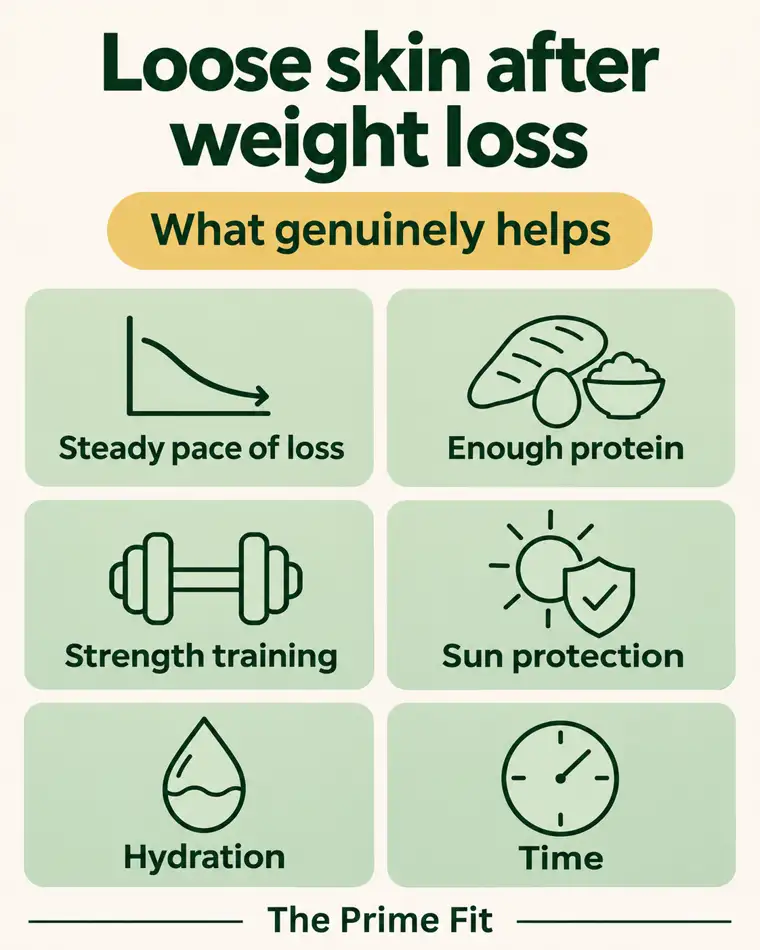
You cannot eliminate the effect of losing a large amount of weight, but you can reduce it considerably.
1. Lose weight at a steady pace
Aim for about 0.5 to 1 kg a week after the first few weeks. If you are losing faster, ask your healthcare provider whether to hold the dose. Slower dose increases give the skin time and preserve muscle. There is no advantage in reaching your target three months sooner if the cost is a gaunt face.
2. Do not aim too low
The healthiest weight for you is not necessarily the lowest you can reach. Beyond a certain point, further loss adds little to health and takes more from the face. Agree a sensible target with your healthcare provider, based on health measures, and consider stopping the descent when you look and feel well.
3. Eat enough protein
Protein supplies the amino acids for collagen and protects muscle. Many adults on treatment are advised about 1.0 to 1.5 grams per kilogram of body weight a day, spread over three meals.
4. Train your muscles
Resistance exercise two to three times a week preserves and builds muscle under the skin of the arms, shoulders, chest, back, buttocks and thighs. Firm muscle fills out loose skin better than any cream. It will not replace facial fat, but it changes how the whole body looks.
5. Protect your skin from the sun
Ultraviolet light is the main external cause of collagen breakdown. Use a broad-spectrum sunscreen of SPF 30 or higher on the face, neck and hands every morning, reapply when outdoors, and use shade, a hat or an umbrella in strong sun. This matters on all skin tones.
6. Do not smoke
Smoking is one of the strongest accelerators of skin ageing and impairs healing if you later have a procedure.
7. Stay hydrated
Thirst is reduced on GLP-1 medicines. Drink 2 to 3 litres a day unless advised otherwise. Well-hydrated skin looks plumper.
8. Feed your skin
| Nutrient | Role in skin | Indian food sources |
|---|---|---|
| Protein | Raw material for collagen and elastin | Dal, pulses, paneer, curd, eggs, fish, chicken, soya |
| Vitamin C | Essential for collagen formation; antioxidant | Amla, guava, orange, lemon, capsicum, tomatoes |
| Zinc | Repair and healing | Pumpkin and sesame seeds, peanuts, chana, whole grains, eggs |
| Vitamin A and carotenoids | Skin cell renewal | Carrots, pumpkin, spinach, mango, papaya, eggs |
| Vitamin E | Antioxidant protection | Almonds, sunflower seeds, peanuts |
| Omega-3 fats | Skin barrier and moisture | Fish, walnuts, flaxseed, chia |
| Iron and B12 | Healthy colour; prevent pallor and dullness | Greens, bajra, eggs, meat; milk, curd |
| Water | Hydration and turgor | Water, chaas, coconut water |
9. Look after your skin daily
- Cleanse gently; avoid harsh soaps and scrubbing.
- Moisturise face and body, especially after bathing. Moisturiser does not tighten skin, but it improves comfort and appearance.
- Sunscreen every morning.
- A retinoid at night, if recommended by a dermatologist, has good evidence for improving skin texture and collagen over months. It is not used in pregnancy.
- Vitamin C serum in the morning has some supporting evidence.
10. Sleep and manage stress
Skin repairs itself during sleep. Chronic sleep loss and stress show on the face.
A sample day of skin-supporting meals
| Meal | Vegetarian | Non-vegetarian |
|---|---|---|
| Breakfast | Moong chillas with paneer; an orange or amla | 2-egg omelette with tomato and capsicum; an orange |
| Mid-morning | Almonds and pumpkin seeds; coconut water | Walnuts; chaas |
| Lunch | Roti, chana or rajma, palak sabzi with lemon, carrot salad, curd | Small katori of rice, fish curry, mixed vegetables, salad with lemon |
| Evening | Papaya or guava; roasted peanuts | Boiled egg; fruit |
| Dinner | Paneer or tofu with pumpkin and beans, dal, 1 phulka | Chicken with vegetables, dal, 1 phulka |
This covers protein at every meal, vitamin C twice, zinc and vitamin E from seeds and nuts, carotenoids from orange and green vegetables, and healthy fats.

What to expect over time
| Stage | Face and skin | What to do |
|---|---|---|
| First 3 months | Little visible change; puffiness may reduce, which many people like | Set protein and water targets; start sunscreen and strength training |
| Months 3 to 9 | Fastest weight loss; cheeks and temples slim; skin on arms and abdomen may loosen; hair shedding possible | Check the pace; hold the dose if losing too fast; review protein and iron |
| Months 9 to 18 | Weight levels off; the face may look most drawn around the end of the rapid phase | Avoid chasing a lower number; keep training; give it time |
| 6 to 12 months after weight stabilises | Skin remodels; mild laxity improves; the face settles and often looks healthier | Reassess calmly; consider a dermatology opinion if still concerned |
| Beyond | Stable appearance if weight is maintained | Maintenance treatment, strength training, sun protection for life |
What does not work
| Claim | Reality |
|---|---|
| Firming and tightening creams | Hydrate the surface; do not lift or tighten loose skin |
| Facial exercises or “face yoga” | Little good evidence; may improve muscle tone slightly but will not replace lost fat |
| Collagen drinks and powders | Some small studies suggest modest improvement in skin hydration and elasticity; evidence is limited, and they are no substitute for adequate dietary protein |
| Body wraps, massage oils and detox treatments | No lasting effect on skin laxity |
| Waist trainers and compression garments | Improve comfort and contour under clothes; do not tighten skin permanently |
| Spot-reducing exercises | You cannot direct where fat is lost or kept |
If it bothers you: treatment options
Many people are content once they adjust to their new appearance. If you are not, there are effective treatments. They should be carried out by qualified dermatologists or plastic surgeons, ideally once your weight has been stable for some months.
For the face
| Treatment | What it does | Points to know |
|---|---|---|
| Hyaluronic acid fillers | Replace lost volume in cheeks, temples, under-eyes and lips | Immediate effect; lasts roughly 6 to 18 months; needs an experienced injector |
| Collagen-stimulating injections | Prompt the skin to make its own collagen over months | Gradual, longer-lasting improvement; several sessions |
| Fat transfer | Fat from another part of the body is injected into the face | A surgical procedure; results can be long-lasting but variable |
| Energy-based skin tightening | Radiofrequency, ultrasound or laser devices heat the deeper skin to stimulate collagen | Modest tightening for mild laxity; repeated sessions |
| Microneedling, with or without radiofrequency | Stimulates collagen and improves texture | Mild improvement; little downtime |
| Thread lift | Dissolvable threads lift sagging tissue | Temporary; results vary |
| Face or neck lift surgery | Removes excess skin and repositions deeper tissues | For significant laxity; the most lasting result; requires surgery and recovery |
For the body
| Treatment | What it does | Points to know |
|---|---|---|
| Strength training | Builds muscle that fills and firms | The first and most valuable step |
| Non-surgical skin tightening | Radiofrequency or ultrasound devices | Helps mild laxity only |
| Abdominoplasty (tummy tuck) | Removes excess abdominal skin and tightens the wall | Major surgery; a permanent scar low on the abdomen |
| Arm lift, thigh lift | Remove hanging skin | Scars along the inner arm or thigh |
| Breast lift, with or without implants | Reshapes and lifts | For significant drooping or volume loss |
| Lower body lift | Addresses abdomen, hips, buttocks and thighs together | After very large weight loss; extensive surgery |
When is the right time?
- Wait until your weight has been stable for at least six to twelve months. Treating while still losing means results will change, and regaining weight afterwards stretches the skin again.
- Be well nourished. Protein, iron and vitamin levels should be adequate before surgery, for healing.
- Stop smoking well in advance.
- Tell the surgeon and anaesthetist that you take a GLP-1 medicine. It affects fasting instructions before anaesthesia.
- Choose carefully. Check qualifications and experience, ask to see results in similar patients, and be wary of package deals and pressure.
- Be realistic. Procedures improve; they do not perfect. All surgery leaves scars and carries risk.
Skin problems that improve with weight loss
Amid the worry about laxity, it is easy to overlook how much the skin benefits.
- Acanthosis nigricans, the dark, velvety thickening on the neck, underarms and knuckles linked to insulin resistance, often lightens.
- Skin tags stop appearing as readily.
- Rashes and fungal infections in skin folds become less frequent as folds reduce, though a loose abdominal fold can still trap moisture.
- Acne and excess hair in PCOS may improve as hormone levels settle.
- Psoriasis and hidradenitis suppurativa, inflammatory skin conditions linked with obesity, often become milder.
- Leg swelling and varicose veins may ease.
- Wound healing improves with better blood sugar.
Caring for loose skin day to day
- Keep skin folds clean and dry. Pat dry after bathing and use an absorbent powder or barrier cream if moisture collects.
- See a healthcare professional for redness, soreness, itching or odour in a fold; fungal infections are easily treated.
- Wear well-fitted, supportive underwear and, if you find it comfortable, light compression garments during exercise.
- Have a bra fitting after significant weight loss.
- Buy clothes that fit your current body. Well-cut clothes make more difference to appearance than most treatments.
- Moisturise daily to reduce dryness and the crepey look.
Hair, nails and stretch marks
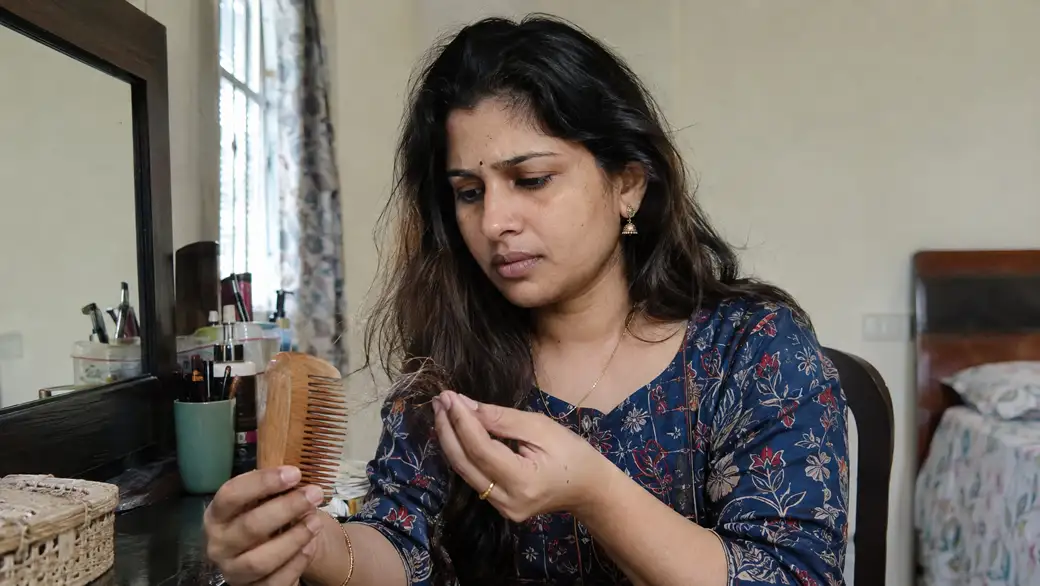
Temporary hair shedding two to four months into treatment has the same root as the skin changes: rapid weight loss and nutritional gaps. It usually recovers. Brittle nails can reflect low protein, iron or zinc. Stretch marks that formed during weight gain do not disappear with weight loss, though they fade from red or purple to pale over time; dermatological treatments can soften them but not remove them.
Keeping it in perspective
A slimmer face and some loose skin are signs that a large amount of harmful fat has gone, including the fat around your liver and heart that you cannot see. In return you have lower blood sugar and blood pressure, a lighter load on your joints and a lower risk of diabetes and heart disease. Most people, weighing these against a few lines, would make the same choice again.
That does not mean your feelings about your appearance are trivial. It is entirely reasonable to care about how you look, and to take steps to look your best. The aim is balance: protect what you can through pace, protein, strength and sun protection; give your skin a year to settle; then decide calmly whether any treatment is worth it for you.
If concern about your appearance becomes constant or distressing, or is pushing you to lose more weight than is healthy, please tell your healthcare provider.
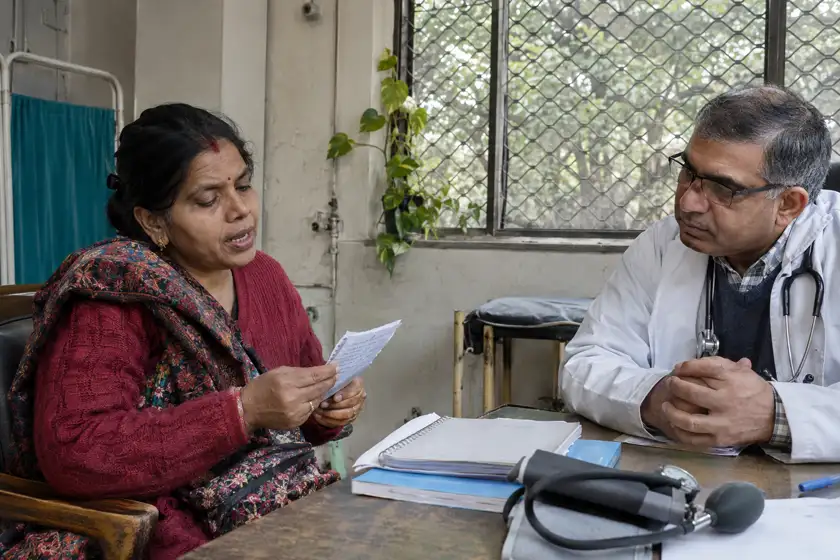
Questions to ask your healthcare provider
- Is my rate of weight loss appropriate, or should we slow down?
- What is a sensible target weight for my health and my age?
- Am I eating enough protein, and are my iron and vitamin levels adequate?
- What strength exercises would help the areas that concern me?
- When would it be reasonable to see a dermatologist or plastic surgeon?
- If I have a procedure, what should I do about my injection beforehand?
Common myths
“The injection ages your face”
Weight loss changes the face. The medicine has no direct ageing effect on skin.
“It only happens with Ozempic”
It happens with any substantial weight loss, including surgery and dieting.
“Everyone gets it”
Many people look younger and healthier. It is most noticeable in older adults after large or rapid loss.
“Creams and collagen powders will tighten the skin”
They can improve hydration slightly but do not lift loose skin.
“I should stop treatment to save my face”
Stopping usually means regaining weight and losing the health benefits. Slowing the pace and protecting muscle is the better approach.
“Loose skin means I lost weight the wrong way”
Some laxity is expected after large weight loss, however carefully it is done.
How The Prime Fit helps
At The Prime Fit, we plan for how you will look and feel as well as what you will weigh. Your healthcare provider paces dose increases to keep weight loss steady and helps you set a target that is healthy for your age and build. Your dietitian sets and reviews protein targets and checks iron and vitamin levels, and we guide you on strength training to keep muscle. If you wish to explore skin or cosmetic treatments once your weight is stable, we can advise on timing and on what your surgical team needs to know.
To plan treatment that protects your muscle and skin, book a consultation or read about our GLP-1 support programme.
Frequently asked questions
What is “Ozempic face”?
An informal term for facial hollowing and sagging after substantial weight loss. It is caused by loss of facial fat and skin that cannot fully retract, not by the medicine itself.
Does Mounjaro or Wegovy cause it too?
Any effective weight loss treatment can, including these medicines, bariatric surgery and dieting. It depends on how much weight is lost, how fast, and your age and skin.
Can I prevent it?
You can reduce it by losing weight steadily, not aiming too low, eating enough protein, doing strength training, protecting your skin from the sun, staying hydrated and not smoking.
Will my face fill out again?
Facial fat returns only with weight regain. The face often looks better once weight is stable and nutrition is good. Fillers or collagen-stimulating treatments can restore volume if you wish.
Will loose skin tighten by itself?
Mild to moderate looseness often improves over one to two years, especially with strength training and in younger people. Large folds usually need surgery to remove.
Do firming creams or collagen supplements work?
Creams hydrate but do not tighten. Evidence for collagen supplements is limited and modest. Adequate dietary protein matters more.
Does exercise help loose skin?
Resistance exercise builds muscle that fills out skin on the arms, legs, chest and buttocks. It does not remove excess skin or replace facial fat.
When can I have fillers or surgery?
Ideally after your weight has been stable for six to twelve months and your nutrition is good. Tell the surgeon and anaesthetist about your GLP-1 medicine.
Should I slow down my weight loss?
If you are losing more than about 1 kg a week for several weeks, or look and feel drained, ask your healthcare provider about holding or reducing the dose.
Is losing weight still worth it?
For people with weight-related health problems, yes. The benefits for blood sugar, the heart, liver and joints are substantial, and the skin changes can be limited and, if needed, treated.
This article is general information and is not a substitute for a consultation. Cosmetic and surgical treatments carry risks and should be discussed with a qualified dermatologist or plastic surgeon.