In this article
- Why tests come before the first injection
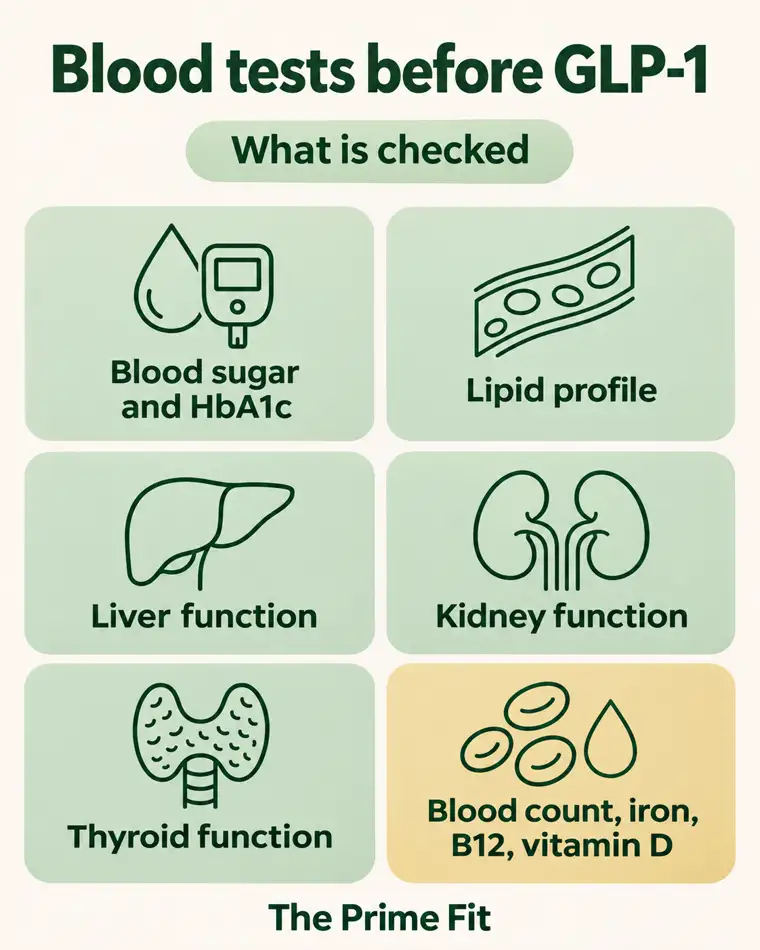
- The assessment at a glance
- How to prepare for your tests
- Blood sugar: fasting glucose and HbA1c
- Lipid profile: cholesterol and triglycerides
- Liver function tests
- Kidney function and electrolytes
- Thyroid function
- Complete blood count, iron, vitamin B12 and vitamin D
- Pregnancy test
- Tests for selected patients
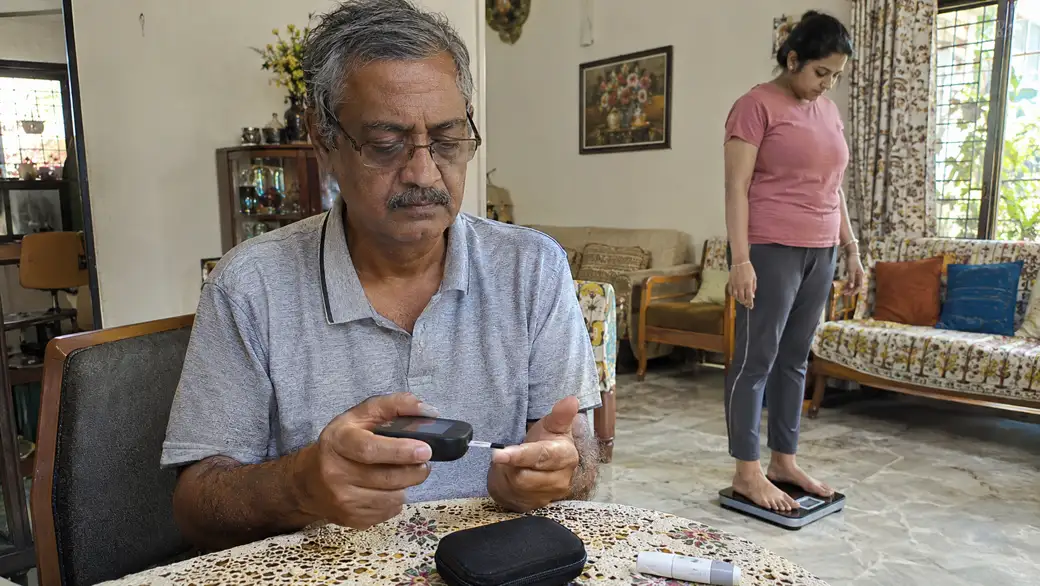
- Measurements that are not blood tests
- How results change the plan
- Follow-up testing during treatment
- What happens on the day
- A worked example
- Questions to ask about your results
- Symptoms that need a test without waiting for the next review
- Understanding your report: practical tips
- Tests you probably do not need
- Common myths
- How The Prime Fit carries out the assessment
- Frequently asked questions
Before prescribing a GLP-1 medicine such as Mounjaro (tirzepatide), Wegovy or Ozempic (semaglutide), a careful healthcare professional will ask for some tests. Patients sometimes see this as a delay. In fact it is one of the most valuable parts of treatment. The tests answer three questions: is this medicine safe for you, is something else contributing to your weight, and where are you starting from?
Many people with excess weight have conditions they do not know about, such as prediabetes, fatty liver, an underactive thyroid or vitamin deficiencies. Finding them changes the plan and often explains symptoms such as tiredness or hair fall that might otherwise be blamed on the medicine later. A baseline also lets you see your health improving in black and white over the following months.
This guide explains the tests commonly done, how to prepare, what typical results look like, how they influence treatment and when they are repeated. It is general information. Reference ranges vary slightly between laboratories, and your own healthcare provider will decide which tests you need and how to interpret them.
Why tests come before the first injection
- Safety. To identify conditions in which the medicine should be avoided or used with extra care.
- Diagnosis. To detect diabetes, prediabetes, thyroid disease, fatty liver, PCOS and other contributors to weight gain.
- Choosing the right treatment. Results help decide between medicines, or whether another approach suits you better.
- Adjusting other medicines. Blood sugar and kidney results guide doses of diabetes and blood pressure medicines.
- Nutrition. Correcting deficiencies before appetite falls prevents fatigue and hair shedding.
- A baseline. So that improvement, or any problem, can be measured against a starting point.
The assessment at a glance
| Check | What it looks at | Usually done for |
|---|---|---|
| Weight, height, BMI, waist | Degree and pattern of excess weight | Everyone |
| Blood pressure and pulse | Cardiovascular baseline | Everyone |
| Body composition | Fat mass and muscle mass | Where available |
| Fasting glucose and HbA1c | Diabetes and prediabetes | Everyone |
| Lipid profile | Cholesterol and triglycerides | Everyone |
| Liver function tests | Fatty liver and liver health | Everyone |
| Kidney function and electrolytes | Kidney health and hydration baseline | Everyone |
| Thyroid function (TSH) | Underactive or overactive thyroid | Everyone |
| Complete blood count | Anaemia and general health | Everyone |
| Vitamin B12, vitamin D, iron studies | Common deficiencies | Most people in India |
| Pregnancy test | Treatment is not used in pregnancy | Women who could be pregnant |
| Urine albumin | Early kidney damage | Diabetes or high blood pressure |
| Ultrasound of the abdomen | Fatty liver, gallstones | Raised liver tests, symptoms or healthcare professional’s judgement |
| Others: hormones, ECG, sleep study, pancreatic enzymes | Specific conditions | Selected patients |
How to prepare for your tests
- Fasting: for fasting glucose and a full lipid profile, do not eat or drink anything except water for 8 to 12 hours. An early-morning appointment is easiest.
- Water: drink water as usual. Being well hydrated makes the blood draw easier.
- Medicines: take your regular medicines unless told otherwise. If you take thyroid tablets, many healthcare professionals prefer the blood sample to be taken before that day’s dose. If you take diabetes medicines, ask whether to delay them until after the test and breakfast.
- Supplements: biotin, found in many hair and nail supplements, can interfere with thyroid and some hormone tests. Stop it for two to three days beforehand if your healthcare provider agrees.
- Alcohol and heavy exercise: avoid both for 24 hours before, as they can affect liver enzymes and triglycerides.
- Illness: if you have a fever or acute infection, postpone non-urgent tests.
- Bring: a list of your medicines and supplements, and any previous reports for comparison.
Blood sugar: fasting glucose and HbA1c
Fasting glucose measures the sugar in your blood after an overnight fast. HbA1c reflects your average blood sugar over the previous two to three months and does not require fasting.
| Category | Fasting glucose (mg/dL) | HbA1c (%) |
|---|---|---|
| Normal | Below 100 | Below 5.7 |
| Prediabetes | 100 to 125 | 5.7 to 6.4 |
| Diabetes | 126 or above | 6.5 or above |
A diagnosis of diabetes is usually confirmed with a repeat test. HbA1c can be misleading in people with anaemia or certain haemoglobin variants, which are not rare in India, so healthcare professionals interpret it alongside glucose readings.
How this affects treatment
- Prediabetes strengthens the case for treatment, because weight loss can return blood sugar to normal.
- Diabetes influences the choice of medicine and dose, and means other diabetes medicines may need adjusting to avoid low blood sugar.
- Very high sugars may need to be brought under control alongside or before starting.
Some healthcare professionals also measure fasting insulin to estimate insulin resistance, particularly in PCOS. It can be informative but is not essential.
Lipid profile: cholesterol and triglycerides
| Measure | Desirable level (mg/dL) | Notes |
|---|---|---|
| Total cholesterol | Below 200 | Less useful than the individual components |
| LDL cholesterol | Below 100 for most adults; lower targets with diabetes or heart disease | The main target for preventing heart disease |
| HDL cholesterol | Above 40 in men, above 50 in women | Often low in Indians |
| Triglycerides | Below 150 | Often raised with abdominal obesity, insulin resistance and alcohol |
How this affects treatment
High triglycerides and low HDL are typical of metabolic syndrome and usually improve with weight loss. Very high triglycerides, above about 500 mg/dL, raise the risk of pancreatitis and need treatment in their own right; your healthcare provider will want them controlled and will consider this when prescribing. A raised LDL may need a statin, which GLP-1 treatment does not replace.
Liver function tests
The key markers are the liver enzymes ALT (SGPT) and AST (SGOT), along with GGT, alkaline phosphatase, bilirubin and albumin. Laboratories commonly quote an upper limit of about 40 units per litre for ALT, although many liver specialists consider values above about 30 in men and 20 to 25 in women worth noting.
Mildly raised ALT in someone with excess weight most often indicates fatty liver. Enzymes can be normal even when fat is present, so an ultrasound is often added. If fatty liver is found, your healthcare provider may calculate a fibrosis score from routine blood tests or arrange an elastography scan to check for scarring.
How this affects treatment
Fatty liver is a reason to treat excess weight, not a reason to avoid treatment, and liver enzymes usually fall as weight is lost. Markedly abnormal results, or signs of other liver disease, need investigation first. Alcohol intake will be discussed honestly.
Kidney function and electrolytes
Creatinine is used to calculate the estimated glomerular filtration rate (eGFR), a measure of how well the kidneys filter the blood. Sodium and potassium are measured at the same time.
| eGFR (mL/min/1.73 m²) | Meaning |
|---|---|
| 90 or above | Normal |
| 60 to 89 | Mildly reduced; often normal with age |
| Below 60 for three months or more | Chronic kidney disease |
In people with diabetes or high blood pressure, a urine albumin-to-creatinine ratio is added. A result below 30 mg/g is normal; higher values are an early sign of kidney damage.
How this affects treatment
These medicines do not generally need dose changes for reduced kidney function, and semaglutide has been shown to protect the kidneys in diabetes. The concern is dehydration from vomiting or diarrhoea, which can injure the kidneys temporarily. People with reduced kidney function are started cautiously, advised carefully about fluids and monitored more closely. Kidney function also guides the dose of other medicines such as metformin.
Thyroid function
Thyroid-stimulating hormone (TSH) is the screening test. A typical reference range is about 0.4 to 4.0 mIU/L, varying a little between laboratories. A raised TSH suggests an underactive thyroid (hypothyroidism), which is common in Indian women and can cause tiredness, constipation, hair fall and modest weight gain. If TSH is abnormal, free T4 and sometimes thyroid antibodies are checked.
How this affects treatment
- Hypothyroidism should be treated and stabilised, but it does not prevent GLP-1 treatment.
- People already on thyroid tablets may need a lower dose as they lose weight, so TSH is rechecked during treatment.
- A personal or family history of medullary thyroid carcinoma or MEN 2 is a contraindication. This is established from your history, not from a routine blood test. Calcitonin testing and thyroid ultrasound are not needed routinely and are arranged only if your healthcare provider finds a reason, such as a lump in the neck.
Complete blood count, iron, vitamin B12 and vitamin D
Nutritional deficiencies are very common in India, including in people with excess weight, and they matter more once appetite falls.
| Test | Typical lower limit | Why it matters |
|---|---|---|
| Haemoglobin | 12 g/dL in women, 13 g/dL in men | Anaemia causes fatigue and breathlessness and can distort HbA1c |
| Ferritin (iron stores) | About 30 ng/mL | Low iron contributes to tiredness and hair shedding |
| Vitamin B12 | About 200 pg/mL; 200 to 300 is borderline | Often low in vegetarians and in people taking metformin; affects nerves and energy |
| Vitamin D (25-hydroxy) | Below 20 ng/mL is deficient; 20 to 30 is insufficient | Bone and muscle health during weight loss |
How this affects treatment
Deficiencies are corrected with supplements or diet at the start. Doing so reduces the chance that fatigue or hair fall a few months later is wrongly attributed to the injection, and it protects bone and muscle during weight loss.
Pregnancy test
GLP-1 medicines are not used in pregnancy or when trying to conceive. Women who could be pregnant are usually offered a test before starting, and contraception is discussed. Because weight loss can improve fertility, this conversation matters even for women with irregular periods or PCOS.
Tests for selected patients
| Test | When it is considered |
|---|---|
| Ultrasound of the abdomen | Raised liver enzymes; upper abdominal pain; to look for fatty liver or gallstones before rapid weight loss |
| Liver elastography (FibroScan) | Fatty liver with a raised fibrosis score, diabetes or persistently abnormal enzymes |
| Amylase and lipase | Previous pancreatitis or suggestive symptoms; not needed routinely |
| Hormone profile for PCOS | Irregular periods, acne or excess hair: testosterone, LH, FSH, prolactin, and sometimes a pelvic ultrasound |
| Cortisol testing | Features suggesting Cushing’s syndrome, such as easy bruising, purple stretch marks or muscle weakness |
| ECG, and sometimes echocardiography | Heart disease, high blood pressure, diabetes, chest symptoms or older age |
| Sleep study | Loud snoring, witnessed pauses in breathing, daytime sleepiness |
| Uric acid | History of gout; levels can fluctuate during weight loss |
| Eye examination | Diabetes, especially with known retinopathy, before a rapid improvement in blood sugar |
| HbA1c alternatives or glucose tolerance test | When HbA1c is unreliable, or in PCOS |
You are unlikely to need all of these. A good assessment is targeted, not a list of every test available. If your healthcare provider recommends one of them, ask what it is looking for and how the result would change your treatment; a clear answer to that question is the sign of a test worth doing.
Measurements that are not blood tests
- BMI: weight in kilograms divided by height in metres squared.
- Waist circumference: measured midway between the lowest rib and the hip bone. For Asian Indians, 90 cm or more in men and 80 cm or more in women indicates increased risk.
- Blood pressure: ideally the average of two readings taken seated after five minutes of rest.
- Body composition: estimates fat and muscle, and gives a baseline for protecting muscle during treatment.
- History: previous pancreatitis, gallbladder disease, thyroid cancer in the family, eating patterns, mood, sleep, medicines, contraception and pregnancy plans. No test replaces this conversation.
How results change the plan
| Finding | What your healthcare provider may do |
|---|---|
| Prediabetes | Proceed; set a goal of returning sugar to normal |
| Diabetes | Choose medicine and dose accordingly; adjust insulin or sulfonylureas; arrange eye and kidney checks |
| Raised TSH | Start or adjust thyroid treatment; proceed once stable or in parallel |
| Fatty liver | Proceed; assess for scarring; advise on alcohol |
| Gallstones on ultrasound | Discuss the risk of symptoms with weight loss; aim for a steadier pace; consider a surgical opinion if symptomatic |
| Very high triglycerides | Treat first or alongside; caution because of pancreatitis risk |
| Reduced kidney function | Start low, go slow, emphasise fluids, monitor more often |
| Anaemia or vitamin deficiency | Correct with supplements; investigate the cause of anaemia |
| Positive pregnancy test | Do not start; refer to an obstetrician |
| History of medullary thyroid carcinoma, MEN 2 or pancreatitis | Avoid these medicines or seek specialist advice; discuss alternatives |
| All normal | Proceed if you meet the weight criteria; you have a healthy baseline to protect |
Follow-up testing during treatment
Repeating tests shows whether treatment is delivering health benefits and picks up problems early. A typical schedule is shown below; yours will depend on your conditions.
| When | What is usually checked |
|---|---|
| Every visit | Weight, waist, blood pressure, side effects, eating and activity |
| About 3 months | HbA1c or glucose if raised at baseline; kidney function and electrolytes if there has been vomiting, diarrhoea or kidney disease; TSH if on thyroid treatment |
| About 6 months | HbA1c, lipids, liver enzymes; body composition; vitamins if previously low |
| 12 months and then yearly | Full repeat of the baseline panel; review of all medicines |
| Any time | Tests prompted by symptoms: severe abdominal pain, jaundice, persistent vomiting, marked fatigue, hair loss |
What usually improves
Within three to six months, most people see lower HbA1c and fasting glucose, lower triglycerides, lower liver enzymes and lower blood pressure. LDL cholesterol changes less. Seeing these results is often more motivating than the scale, and they are the real purpose of treatment.
What to watch for
A rising creatinine after a period of vomiting suggests dehydration. A falling haemoglobin, B12 or vitamin D suggests intake is too low. A TSH that drops in someone on thyroid tablets may mean the dose should be reduced. Your healthcare provider reviews these trends at each stage.
What happens on the day
- Arrive fasting, having had only water since the night before, and bring your medicine list and previous reports.
- Measurements: height, weight, waist and blood pressure are recorded, and body composition if available.
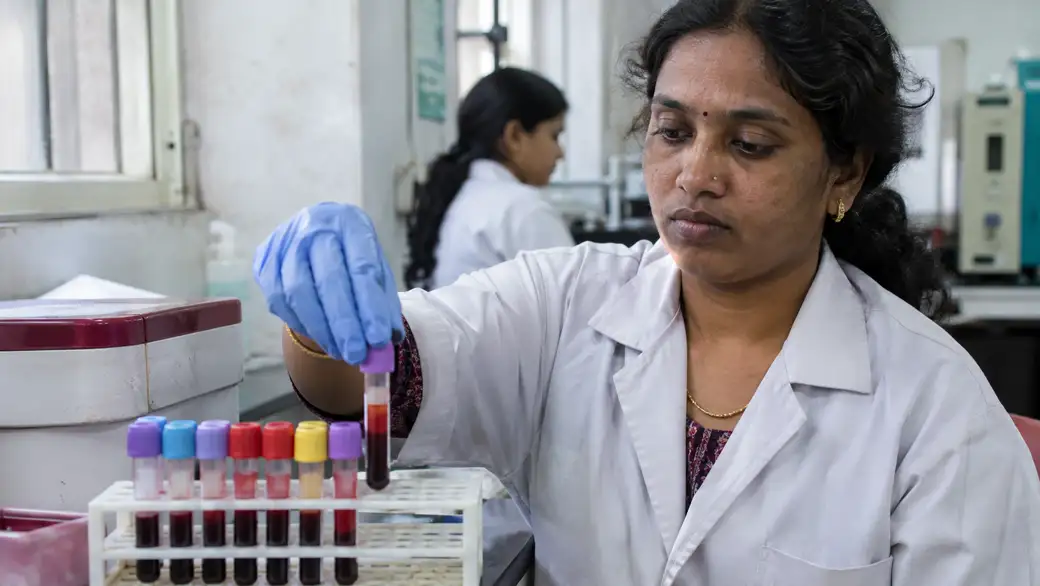
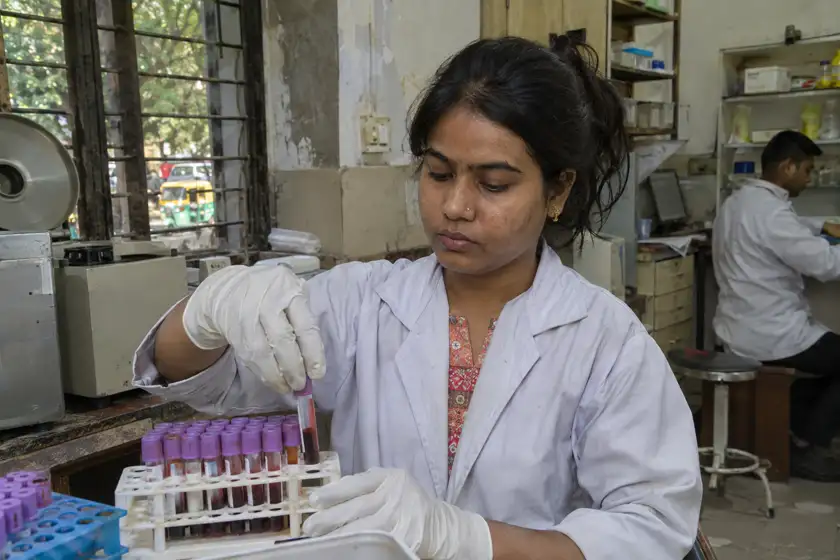
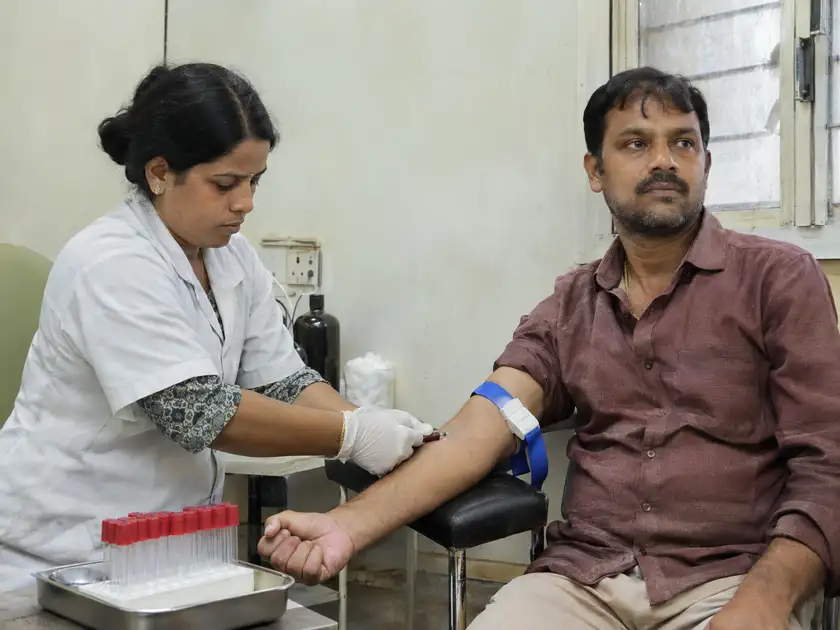
- Blood sample: a few tubes are taken from a vein in the arm. It takes two or three minutes. Tell the staff if you feel faint with needles.
- Urine sample, if needed, for albumin or a pregnancy test.
- Eat afterwards. Have breakfast and take any medicines you delayed.
- Results for most tests are ready within one to two days. Some hormone and vitamin tests take a little longer.
- Review appointment: your healthcare provider goes through the results with you and agrees the plan.
A worked example
The table shows an illustrative set of results for a 44-year-old woman with a BMI of 33, and how a healthcare professional might read them. It is an example, not a template for interpreting your own report.
| Test | Result | Reading | Action |
|---|---|---|---|
| HbA1c | 6.1% | Prediabetes | Supports treatment; aim to return to below 5.7% |
| Triglycerides | 210 mg/dL | Raised | Expected to fall with weight loss; recheck at 6 months |
| LDL cholesterol | 128 mg/dL | Above target | Assess overall heart risk; diet changes; consider a statin |
| ALT | 52 U/L | Mildly raised | Ultrasound for fatty liver; advise on alcohol; recheck |
| eGFR | 96 | Normal | No action; emphasise fluids |
| TSH | 6.8 mIU/L | Raised | Repeat with free T4 and antibodies; treat if confirmed |
| Haemoglobin | 11.2 g/dL | Mild anaemia | Check ferritin and B12; treat the cause |
| Vitamin D | 14 ng/mL | Deficient | Supplement and recheck |
| Vitamin B12 | 190 pg/mL | Low | Supplement; review diet |
In this example, none of the findings prevents treatment. Several would have caused tiredness or hair fall later, and treating them first makes the whole course smoother. A year on, the same panel would be expected to show clear improvement in sugar, triglycerides and liver enzymes.
Questions to ask about your results
- Which results are outside the normal range, and what do they mean for me?
- Does anything need treatment before I start?
- Do any of my current medicines need to change?
- Which numbers should improve with treatment, and by when?
- When will these tests be repeated?

Symptoms that need a test without waiting for the next review
Contact your healthcare provider promptly if you have
Severe or persistent upper abdominal pain, with or without vomiting; yellowing of the eyes or dark urine; vomiting or diarrhoea lasting more than a day or two; very little urine or dizziness on standing; repeated low blood sugar; palpitations or fainting; or a lump or swelling in the neck. These may need urgent blood tests or a scan.
Understanding your report: practical tips
- Look at the reference range printed beside each result. Ranges differ slightly between laboratories and by age and sex.
- A value just outside the range is not always a problem, and a value inside it is not always ideal. Context matters.
- Use the same laboratory for follow-up tests where possible, so that results are comparable.
- Keep your reports together, on paper or as photographs, and bring them to each visit.
- Units matter. Glucose and cholesterol are reported in mg/dL in India; some online sources use mmol/L.
- Do not self-treat from a report. Starting thyroid tablets, iron or high-dose vitamin D on your own can cause harm.
Tests you probably do not need
Large “full body” or “weight loss” packages often include tests that add cost without changing your care, such as tumour markers, extensive allergy panels, genetic “diet” tests and food intolerance tests. Routine calcitonin or pancreatic enzyme screening in people without symptoms or risk factors is also not recommended. A focused set of tests chosen by your healthcare provider is more useful than a long list.
Common myths
“Tests are unnecessary if I only want to lose weight”
They are how unsafe situations are avoided and how hidden conditions are found. Skipping them is how problems are missed.
“If my reports are normal, the injection cannot be justified”
Eligibility is based on BMI and weight-related conditions. Normal blood tests in someone with obesity mean there is good health to protect.
“The injection will damage my liver and kidneys, so tests are to catch that”
Weight loss usually improves liver tests, and kidney protection has been shown in diabetes. Monitoring mainly looks for dehydration and nutritional gaps.
“One set of tests at the start is enough”
Follow-up tests show benefit, guide changes to other medicines and detect deficiencies.
“A thyroid test will show whether the medicine is causing thyroid cancer”
Routine thyroid function tests do not screen for the rare tumour mentioned in the warnings. Your history, and reporting any neck lump, are what matter.
How The Prime Fit carries out the assessment
At The Prime Fit, treatment starts with a healthcare professional’s consultation, measurements including waist and body composition, and a focused set of blood tests chosen for your history. Your healthcare provider explains each result in plain language, treats what needs treating, and decides with you whether medication, a nutrition programme or another option is right. Tests are repeated at sensible intervals so that you can see your health improve.
To arrange an assessment, book a consultation or read about our GLP-1 therapy and clinical nutrition services.
Frequently asked questions
Which blood tests are needed before starting Mounjaro or Wegovy?
Commonly fasting glucose and HbA1c, a lipid profile, liver and kidney function, thyroid function, a complete blood count, and vitamin B12, vitamin D and iron levels, with a pregnancy test where relevant. Your healthcare provider may add others based on your history.
Do I need to fast before the tests?
Yes for fasting glucose and a full lipid profile: 8 to 12 hours with only water. HbA1c, thyroid and most other tests do not require fasting, but they are usually done together in the morning.
Can I start treatment if I have thyroid disease?
Hypothyroidism does not prevent treatment once it is being managed. The medicines are avoided in people with a personal or family history of medullary thyroid carcinoma or MEN 2.
Is an ultrasound necessary?
Not for everyone. It is useful when liver tests are raised, when there is upper abdominal pain, or when your healthcare provider wants to check for fatty liver or gallstones before weight loss.
Do I need a pancreas test before starting?
Routine amylase or lipase testing is not recommended in people without a history of pancreatitis or symptoms. Your healthcare provider will ask about your history.
How often are tests repeated?
Typically some at about three months, a fuller set at six months, and the whole panel yearly, with extra tests if you have symptoms or other conditions.
What if my HbA1c shows diabetes?
Treatment can usually proceed, and these medicines also treat diabetes. Your healthcare provider will choose the dose accordingly, adjust other diabetes medicines and arrange eye and kidney checks.
Why check vitamin B12 and vitamin D?
Both are commonly low in India. Correcting them before appetite falls helps prevent fatigue, hair shedding and loss of bone and muscle strength.
Are old reports acceptable?
Recent reports, usually within the last three months, are often acceptable. Bring them along; your healthcare provider will decide what needs repeating.
Will the injection change my test results?
Usually for the better: lower blood sugar, triglycerides, liver enzymes and blood pressure. Monitoring also checks kidney function, hydration and vitamin levels.
This article is general information and is not a substitute for a consultation. Reference ranges vary between laboratories; your healthcare provider should interpret your results and decide which tests you need.