In this article
- What is gastroparesis?
- How do GLP-1 medicines affect the stomach?
- Expected slowing or true gastroparesis: how to tell the difference
- Do GLP-1 medicines cause gastroparesis? What the research shows
- Who is more likely to have problems?
- How is gastroparesis diagnosed?
- Warning signs that need urgent care
- What happens if your healthcare provider suspects it?
- How to eat when your stomach is slow: Indian food guide
- A sample day for a slow-stomach phase
- Surgery, endoscopy and anaesthesia
- Does a slow stomach affect your other medicines?
- Common myths about “stomach paralysis”
- Questions to ask your healthcare provider
- How The Prime Fit helps
- Frequently asked questions
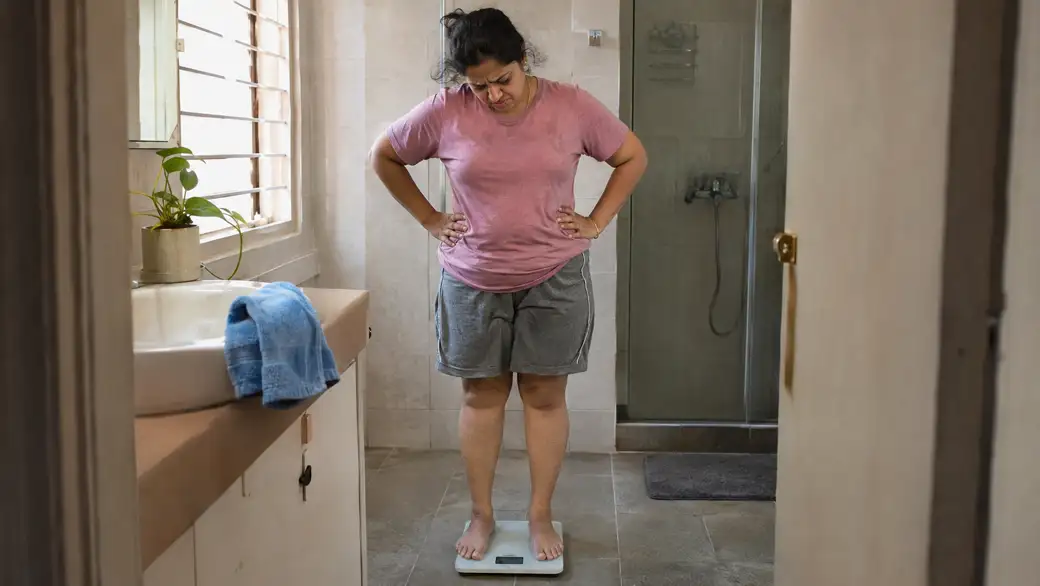
Headlines about “stomach paralysis” on weight loss injections have worried many people who are taking, or thinking about taking, Mounjaro, Wegovy or Ozempic. The short answer on gastroparesis and GLP-1 medicines is this: these medicines slow the emptying of the stomach in almost everyone, because that is part of how they work. In a small number of people the slowing becomes severe enough to cause persistent vomiting and other symptoms that look like gastroparesis. That is uncommon, and in most reported cases it improves after the medicine is reduced or stopped.
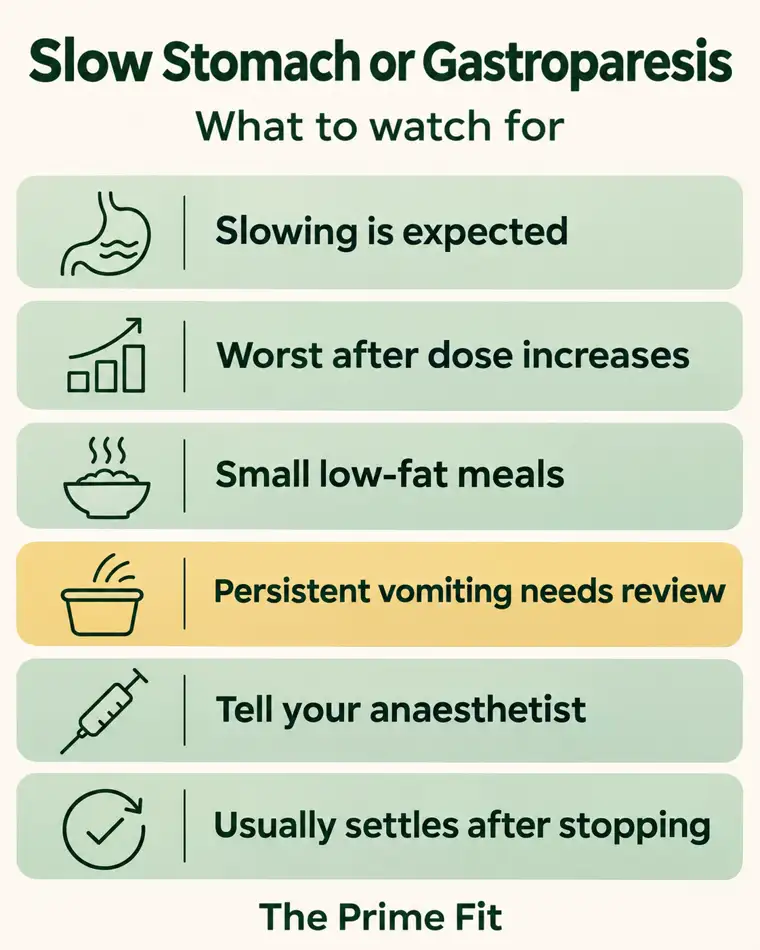
So the fear is not baseless, but it is often out of proportion. Feeling full quickly, mild nausea and occasional burping in the first weeks are expected effects, not paralysis. Vomiting food eaten many hours earlier, being unable to keep fluids down, or severe abdominal pain are different, and they need a healthcare professional promptly.
What is gastroparesis?
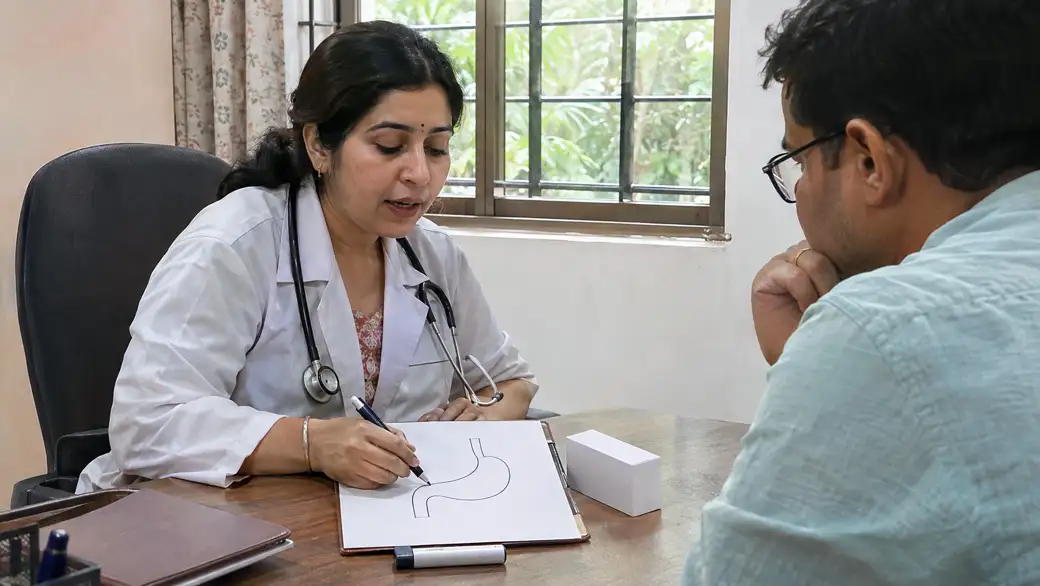
Gastroparesis literally means “partial paralysis of the stomach”. Healthcare professionals use the term for a specific condition: the stomach empties food into the small intestine much more slowly than normal, even though nothing is physically blocking the way out.
The typical symptoms are:
- Nausea that persists through the day
- Vomiting, sometimes of food eaten many hours or even a day earlier
- Feeling full after only a few bites
- Bloating and discomfort or pain in the upper abdomen
- In longer-standing cases, weight loss, dehydration and poor nutrition
Gastroparesis existed long before GLP-1 medicines. The best-known causes are long-standing diabetes (high blood sugar damages the nerves of the gut over years), surgery on the stomach or food pipe, some viral illnesses, and certain medicines, particularly strong opioid painkillers. In many people no cause is found.
How do GLP-1 medicines affect the stomach?
GLP-1 is a natural gut hormone released after meals. One of its jobs is to tell the stomach to slow down, so that food reaches the intestine gradually. Medicines that copy this hormone, such as semaglutide (Wegovy, Ozempic, Rybelsus) and tirzepatide (Mounjaro), do the same thing more strongly and for much longer.
Slower emptying is one reason you feel full on smaller portions and why blood sugar rises less sharply after meals. It is also the source of the most common side effects: nausea, fullness, burping, acidity and sometimes vomiting.
Two points are reassuring. First, the slowing is greatest when treatment starts and after each dose increase. Studies of long-acting GLP-1 medicines suggest the stomach partly adapts over the following weeks, which is why side effects usually ease with time. Second, this is a medicine effect on a healthy stomach, not nerve damage. When the medicine leaves the body, the signal that slows the stomach goes with it.

Expected slowing or true gastroparesis: how to tell the difference
There is no sharp line, but the pattern, severity and duration of symptoms are good guides.
| Feature | Expected slowing on a GLP-1 medicine | Possible gastroparesis-like problem |
|---|---|---|
| Fullness | Full sooner than before, comfortable with smaller meals | Full after a few bites, unable to finish even very small meals for days |
| Nausea | Mild to moderate, comes and goes, worst in the days after a dose increase | Constant, not easing over one to two weeks |
| Vomiting | None, or an occasional episode after a large or oily meal | Repeated, or bringing up food eaten many hours earlier |
| Pain | Mild heaviness or burping | Significant upper abdominal pain or marked swelling |
| What to do | Adjust meals, mention it at your next review | Contact your healthcare provider before the next dose |
Do GLP-1 medicines cause gastroparesis? What the research shows
This is where honesty about uncertainty matters.
In the large clinical trials of semaglutide and tirzepatide for weight management, nausea, vomiting, diarrhoea and constipation were common, but most cases were mild to moderate and occurred during dose escalation. Only a minority of participants stopped treatment because of gut side effects. Gastroparesis as a diagnosis was rarely reported, although the trials did not routinely test stomach emptying, so mild cases could have been missed.
In studies of health records and insurance databases published from 2023 onwards, people using GLP-1 medicines for weight loss were diagnosed with gastroparesis more often than people using a different, non-GLP-1 weight loss medicine. The key message from these studies is that the relative risk appears higher while the absolute risk for any one person remains low. These studies cannot prove cause, because the diagnosis is often made on symptoms alone and people on GLP-1 medicines are watched more closely for gut problems.
Case reports describe individuals with severe, prolonged vomiting and delayed emptying on testing. Most improved after stopping the medicine. A small number of people have reported symptoms lasting months, which has led to legal claims in some countries. Whether the medicine caused lasting harm in those cases, or uncovered a condition that was already developing, is not settled.
Regulators have responded with caution rather than alarm. Prescribing information for these medicines notes that they have not been studied in people with severe gastroparesis and are generally not recommended for them. Warnings about delayed emptying, and about a rare slowing of the bowel called ileus, have been added to some product information.
Who is more likely to have problems?
Based on how the condition behaves and on clinical experience, healthcare professionals are more careful with people who have:
- Known gastroparesis or a history of unexplained repeated vomiting
- Long-standing diabetes, especially with nerve damage in the feet, eye or kidney complications, or very variable sugars
- Previous surgery on the stomach or food pipe, including some bariatric operations and anti-reflux surgery
- Regular use of opioid painkillers or other medicines that slow the gut
- Severe, poorly controlled acid reflux
None of these is an automatic bar to treatment, but they should be discussed at the first assessment. Our article on who should not take Mounjaro explains the wider list of precautions.
Diabetes deserves a special mention, because many Indians starting a GLP-1 medicine have it. Diabetes is itself a leading cause of gastroparesis, and a high blood sugar level slows the stomach temporarily. If you take insulin or a sulfonylurea tablet and are vomiting, blood sugar can fall too low: check it more often and call your healthcare provider about adjusting doses.
How is gastroparesis diagnosed?
Symptoms alone are not enough, because ulcers, gallstones, pancreatitis, bowel obstruction and severe reflux can look similar. Diagnosis usually involves two steps.
- Ruling out a blockage, usually with an upper endoscopy and sometimes a scan.
- Measuring stomach emptying, most often with a gastric emptying scan. You eat a small standard meal containing a harmless tracer, and a camera measures how much remains in the stomach over about four hours.
There is an important catch. A GLP-1 medicine will make the test look abnormal even in a healthy stomach. For a reliable result, specialists usually want the medicine stopped for a period first. Because weekly injections stay in the body for several weeks after the last dose, the timing is a decision for your gastroenterologist and prescriber together.
Warning signs that need urgent care
Seek medical help the same day
Go to a healthcare professional or emergency department if you have: vomiting that continues for more than a day or stops you keeping fluids down; severe or constant abdominal pain, especially if it spreads to the back; a swollen, tight abdomen with no stool or wind passed; vomit that is green, brown, or contains blood; signs of dehydration such as very little urine, dizziness on standing or a racing heart; or low blood sugar that you cannot correct because you cannot eat. Do not take your next dose until you have been assessed.
Severe pain with vomiting can also signal gallbladder or pancreas problems rather than a slow stomach. Our guide to gallstones and pancreatitis on GLP-1 medicines explains those symptoms.
What happens if your healthcare provider suspects it?
The usual approach is stepwise.
- Pause or reduce the dose. Mild cases often settle by stepping back to the previous dose and staying there longer. The standard escalation steps are described in our Mounjaro dosage guide.
- Correct fluids and salts. Oral rehydration solution in small sips, or a drip if vomiting is severe.
- Short-term anti-sickness medicine where appropriate, prescribed by your healthcare provider.
- Stop the medicine if symptoms are severe or persistent, and investigate if they do not improve.
Weekly semaglutide and tirzepatide leave the body gradually, over roughly four to five weeks after the last injection. Symptoms therefore tend to fade over weeks, not overnight. If they do not improve after that time, further tests are needed to look for another cause.
How to eat when your stomach is slow: Indian food guide
The principles are simple: smaller volumes, less fat, softer textures, and time. Fat and coarse fibre are the slowest things to leave the stomach, and liquids leave faster than solids.
| Usually easier | Usually harder |
|---|---|
| Moong dal khichdi, soft rice with thin dal | Chole bhature, rajma with heavy tadka, biryani in large portions |
| Idli, plain dosa with little oil, upma, poha | Puri, paratha with butter, pakora, samosa |
| Curd, chaas, curd rice | Rich paneer gravies, malai, cream-based dishes |
| Well-cooked lauki, tori, pumpkin, carrot | Large raw salads, raw cabbage, stringy or seedy vegetables |
| Chicken or fish in thin curry, clear chicken soup | Mutton curry, fried fish, tandoori platters late at night |
| Water, coconut water, thin soups in sips | Fizzy drinks, alcohol, large glasses of lassi with meals |
Other habits that help:
- Eat five or six small meals instead of two or three large ones.
- Chew thoroughly and take at least 20 minutes over a meal.
- Stay upright for two to three hours after eating, and take a gentle 10 minute walk.
- Finish dinner early. A heavy meal at 10 pm sits in a slowed stomach all night.
One caution: a low-fibre, soft diet is a short-term measure for bad days. In the long run you still need vegetables, pulses and fibre to avoid constipation, which is itself common on treatment. See our guide to constipation on GLP-1 medicines for the balance.
A sample day for a slow-stomach phase
This is an illustrative example for the few days after a dose increase when fullness and nausea are at their worst. It is not a long-term plan, and portions should be adjusted with your dietitian.
| Time | Vegetarian | Non-vegetarian |
|---|---|---|
| Breakfast | 2 idlis with thin sambar | 1 soft boiled egg with 1 idli or a slice of toast |
| Mid-morning | 1 small katori curd | 1 small katori curd |
| Lunch | 1 katori moong dal khichdi with well-cooked lauki | Half katori soft rice with thin fish curry |
| Evening | 1 glass chaas with roasted jeera | 1 cup clear chicken soup |
| Early dinner | Soft paneer bhurji with 1 small phulka | Shredded chicken in thin gravy with 1 small phulka |
Surgery, endoscopy and anaesthesia
A slower stomach has one consequence that many people do not think about. If food is still in the stomach when you are sedated or given a general anaesthetic, it can come back up and enter the lungs. Standard fasting times may not be enough for someone on a weekly GLP-1 medicine, particularly soon after starting or increasing the dose.
Always tell the surgeon, anaesthetist or endoscopy team that you take one of these medicines, including for dental procedures under sedation. They may advise a longer fast, a liquid diet the day before, or holding a dose. The details are in our guide to GLP-1 medicines before surgery and endoscopy.
Does a slow stomach affect your other medicines?
Tablets also pass through the stomach, so slower emptying can delay their absorption. For most medicines this makes no practical difference. It matters more for medicines where timing or exact levels are important.
- Oral contraceptive pills: with tirzepatide, extra barrier contraception is advised for four weeks after starting and after each dose increase. Repeated vomiting can reduce the reliability of any pill.
- Medicines with a narrow safe range, such as some blood thinners, thyroid tablets and anti-epileptic medicines, may need closer monitoring.

Common myths about “stomach paralysis”
Myth: Everyone on these injections ends up with a paralysed stomach. Everyone has some slowing. Very few have persistent, severe symptoms.
Myth: Feeling full quickly means I have gastroparesis. Early fullness is the intended effect. Concern begins with repeated vomiting, inability to drink, or symptoms that do not ease.
Myth: The damage is always permanent. In most reported cases symptoms improved after the medicine was stopped. Persistent cases have been described but appear to be rare, and the cause is debated.
Myth: If I vomit, I should push through, because it means the medicine is working. Vomiting is a side effect, not a sign of success. Weight loss comes from eating less comfortably, not from being sick.
Questions to ask your healthcare provider
- Do I have any condition, such as long-standing diabetes or previous stomach surgery, that raises my risk of a slow stomach?
- How slowly can we increase my dose, and can I stay longer on a step if I feel unwell?
- What exactly should make me skip a dose and call you?
- If I am vomiting, how should I adjust my diabetes medicines?
- What should I tell an anaesthetist or endoscopy team?
How The Prime Fit helps
At The Prime Fit, treatment begins with a medical assessment that includes your history of diabetes, digestive symptoms, previous surgery and current medicines, so that people at higher risk of stomach problems are identified before a prescription is considered. Dose increases are paced to how you are tolerating treatment, not to a fixed calendar.
Our clinical nutrition support focuses on meal size, texture, protein and fluids through each dose step, using everyday Indian foods. Regular follow-up gives you a place to report symptoms early, when a small adjustment is usually enough. If symptoms suggest something more serious, we advise appropriate investigation and specialist review.
Frequently asked questions
Do GLP-1 medicines cause gastroparesis?
They slow stomach emptying in nearly everyone, which is part of how they work. In a small number of people this becomes severe enough to resemble gastroparesis. Database studies suggest the diagnosis is made more often in people on these medicines, but the absolute risk appears low and most cases improve after stopping.
Is “stomach paralysis” from Mounjaro, Wegovy or Ozempic permanent?
Usually not. The slowing is a medicine effect and generally fades over several weeks as the medicine leaves the body. A small number of people have reported longer-lasting symptoms. These cases appear to be rare and it is not yet clear what causes them.
How long does the stomach take to return to normal after stopping?
Weekly semaglutide and tirzepatide clear from the body over roughly four to five weeks after the last dose, and symptoms typically ease gradually over that period. If they have not improved by then, see your healthcare provider for further assessment.
What are the first signs of gastroparesis on a GLP-1 medicine?
Persistent nausea, feeling full after a few bites, repeated vomiting, especially of food eaten many hours earlier, and upper abdominal bloating or pain that does not settle within one to two weeks at a stable dose.
Can I take a GLP-1 medicine if I already have gastroparesis?
These medicines are generally not recommended for people with severe gastroparesis, because they have not been studied in that group and could worsen symptoms. If your condition is mild or uncertain, the decision needs an individual discussion with your healthcare provider.
Does the slowing of the stomach wear off with time?
Partly. Research on long-acting GLP-1 medicines suggests the effect on stomach emptying is strongest at the start and after dose increases, then lessens over weeks.
Should I stop my injection if I am vomiting?
If you have vomited more than once or twice, cannot keep fluids down, or have significant abdominal pain, do not take the next dose until you have spoken to your prescriber. Seek urgent care for severe pain, dehydration, or vomiting that continues for more than a day.
Is gastroparesis more likely with Mounjaro than with Wegovy?
There is not enough reliable evidence to say one is clearly worse than the other. Both slow the stomach, and gut side effects with both are most common during dose escalation.
This article is general patient education and is not a substitute for personal medical advice, diagnosis or treatment. GLP-1 medicines are prescription-only and should be started, adjusted or stopped only under the supervision of a registered medical practitioner. If you have severe or persistent symptoms, seek medical care promptly.