In this article
- Key takeaways
- What happens in the first 90 days on GLP-1 treatment?
- The 90-day plan at a glance
- Weeks 1 to 4: what should you do on the starting dose?
- Weeks 5 to 8: how do you handle dose steps and build strength?
- Weeks 9 to 12: how do you review progress and deal with plateaus?
- What should you eat in the first three months? Indian examples
- Which warning signs need urgent care?
- What should a review at day 90 cover?
- Common myths
- Questions to ask your healthcare provider
- How The Prime Fit helps
- GLP-1 support packages
- Frequently asked questions
Your first 90 days on GLP-1 treatment usually fall into three phases: weeks 1 to 4 on a low starting dose while your body adjusts, weeks 5 to 8 when the dose is stepped up and routines are built, and weeks 9 to 12 when progress is reviewed and long-term habits are fixed. Most side effects appear early or just after a dose increase, and most of them settle with simple changes to food and fluids.
The medicine lowers appetite, but it does not decide what you eat, protect your muscle or prevent constipation. Your prescriber sets the dose and the schedule, and nothing in this guide replaces their instructions.
The week by week plan below is written for adults using Mounjaro, Wegovy or a similar weekly medicine on prescription. It also explains how structured support, such as The Prime Fit’s GLP-1 Support Program fits around the care you receive from your prescriber.
Key takeaways
- Weeks 1 to 4: a low starting dose, smaller meals, protein at every meal and 2 to 3 litres of fluid a day.
- Weeks 5 to 8: dose steps if your prescriber advises them, strength training twice a week and active constipation prevention.
- Weeks 9 to 12: review weight, waist, symptoms and blood tests, and plan for plateaus.
- Protein target: about 1.0 to 1.2 g per kg of body weight a day for most adults, unless advised otherwise.
- Know the warning signs: severe abdominal pain, repeated vomiting or signs of dehydration need urgent care.
What happens in the first 90 days on GLP-1 treatment?
In the first 90 days, the dose rises gradually, appetite falls, and weight usually begins to come down, slowly at first. These medicines are started low and increased in steps so that the gut can adapt, so modest early loss is normal.
Mounjaro starts at 2.5 mg once a week for 4 weeks, after which the usual next step is 5 mg. Wegovy starts at 0.25 mg once a week for 4 weeks, and is then increased in steps, usually every 4 weeks. Whether and when you move up depends on tolerance and response, and your prescriber sets the schedule. Our guides to the Mounjaro dose steps and the Wegovy dosage schedule give the detail.

The 90-day plan at a glance
This table summarises the three phases.
| Phase | What is happening | Your priorities | Common problems |
|---|---|---|---|
| Weeks 1 to 4 | Starting dose, body adjusting, appetite beginning to fall | Small meals, protein first, fluids, learning the injection routine, a symptom diary | Nausea, fullness, burping, tiredness, mild headache |
| Weeks 5 to 8 | Dose steps if advised, clearer appetite reduction, steadier loss | Strength training twice a week, fibre and fluids for the bowel, keeping protein up as appetite falls | Constipation, acidity, side effects returning for a few days after each step |
| Weeks 9 to 12 | Further steps or a stable dose, results becoming visible | Reviewing progress, handling flat weeks, fixing habits for the long term | Plateaus, under-eating, skipped exercise, hair shedding worries |
Weeks 1 to 4: what should you do on the starting dose?
In weeks 1 to 4, focus on tolerating the medicine and setting up three habits: protein at every meal, steady fluids and smaller portions eaten slowly.
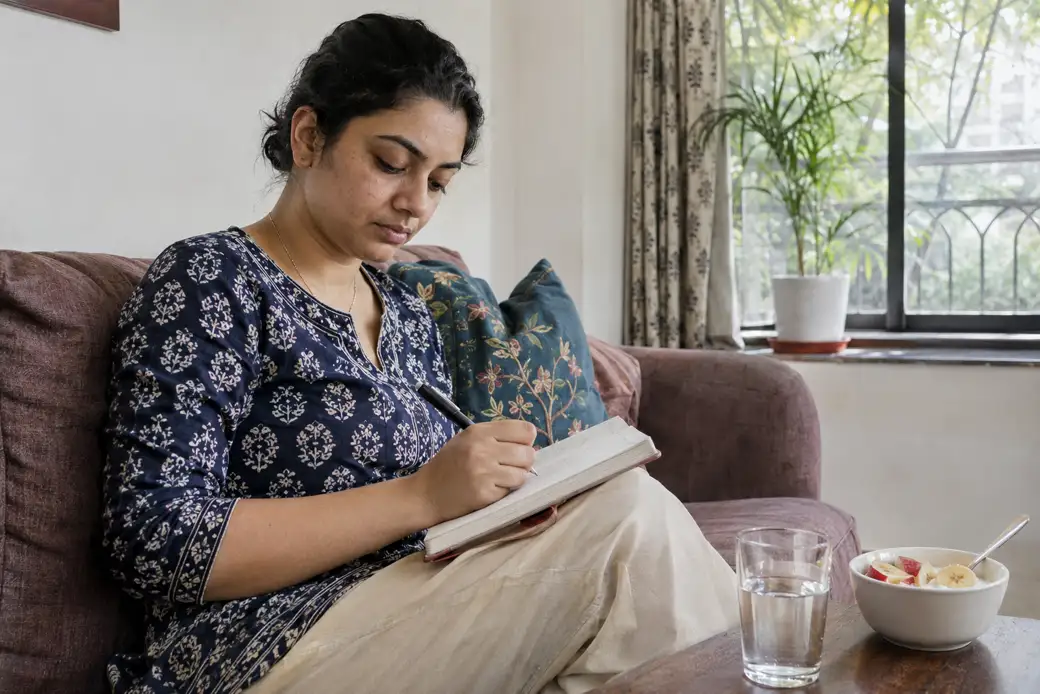
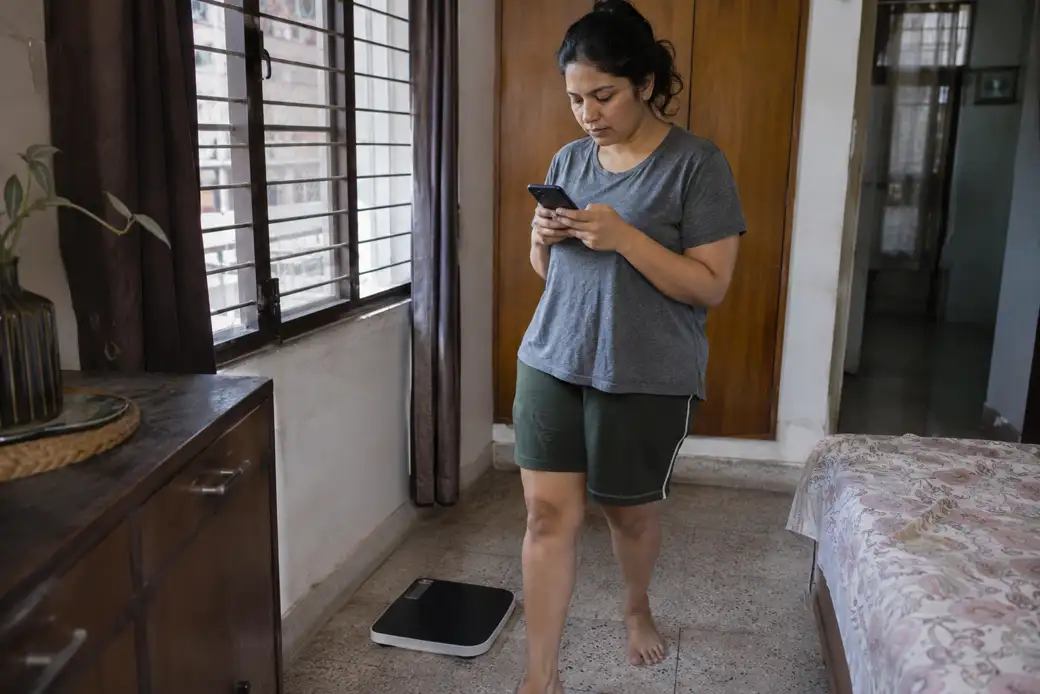
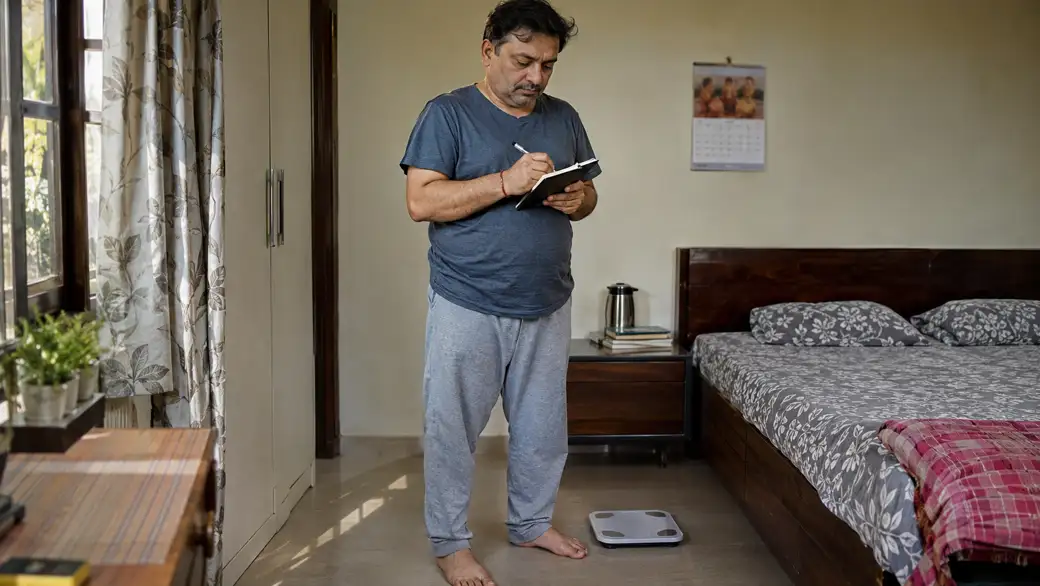
Before the first dose, make sure you have recorded your starting weight, waist and blood pressure, and that any baseline blood tests requested by your prescriber are done. Pick a fixed injection day.
- Eat smaller meals, slowly: the stomach empties more slowly on treatment, so a normal-sized plate can cause nausea. Stop at the first sign of fullness.
- Put protein first: eat the dal, paneer, egg, curd, chicken or fish on your plate before the roti or rice.
- Drink 2 to 3 litres of fluid a day: thirst is blunted, so sip through the day. Water, chaas, nimbu pani without sugar and thin dal all count. Follow any fluid limit you have been given for heart or kidney disease.
- Go easy on fried, oily and very sweet food: pakoras, puri, rich gravies and mithai are the most common triggers of nausea.
Nausea tends to peak in the day or two after the injection, and bland foods such as toast, khichdi or curd rice help many people. If you take insulin or tablets that can cause low blood sugar, your prescriber may need to adjust them, so report any shakiness, sweating or confusion promptly.
Weeks 5 to 8: how do you handle dose steps and build strength?
In weeks 5 to 8, expect side effects to return briefly after each dose step, start strength training, and prevent constipation before it starts.
Dose steps
If your prescriber increases the dose, treat the following week like week 1 again: smaller meals, bland food on the day after the injection, and extra attention to fluids. If side effects are troublesome, tell your prescriber before the next step is due. Do not change the dose yourself.
Strength training
Part of the weight lost on any treatment is lean tissue, and resistance exercise is the main way to limit that. Two sessions a week on non-consecutive days is enough to begin. Use chair squats, wall push-ups, resistance band rows, glute bridges and a light overhead press, with 2 sets of 10 to 12 repetitions each. Our beginner strength plan shows how to progress. Add walking on most days, building towards 150 minutes a week.
Constipation prevention
Constipation is one of the most common complaints in this phase, because you are eating less food, drinking less and the gut is moving more slowly. Prevention works better than cure.
- Include vegetables or salad at lunch and dinner, and 1 to 2 fruits a day such as papaya, guava or pear.
- Choose whole grains and dals with their skins: whole wheat roti, oats, rajma, chana and whole moong.
- Increase fibre gradually and always with fluid, or bloating gets worse.
- Ask your care team before using isabgol or a laxative, and seek advice if you have not passed stool for more than 3 days.
The guide to constipation on GLP-1 medicines has Indian food fixes in detail.

Weeks 9 to 12: how do you review progress and deal with plateaus?
In weeks 9 to 12, compare your measurements with your baseline, expect at least one flat week, and decide which habits you will keep for the long term.
A flat week or two is not a true plateau. Body weight moves by a kilogram or more from day to day with salt, hormones and bowel habits. Look at the trend over 3 to 4 weeks and at your waist measurement before drawing conclusions.
- Check protein and total intake: eating very little slows progress, drains energy and costs muscle.
- Check liquid calories: sweet tea, juices, lassi and alcohol add up quickly.
- Check the dose with your prescriber: many people are still below their eventual maintenance dose at this point.
What should you eat in the first three months? Indian examples
Eat small, regular meals built around a protein source, with vegetables and a modest portion of grain. For most adults a reasonable protein target is about 1.0 to 1.2 g per kg of body weight a day, and some people are advised to aim higher. If you have kidney disease, ask for an individual target.
Illustrative example
A person weighing 90 kg aiming for 1.0 to 1.2 g of protein per kg would need about 90 to 108 g a day. Many people work towards this in stages while appetite is low.
The sample day below is illustrative. The protein figures are approximate and depend on portion size.
| Meal | Vegetarian | Approx. protein | Non-vegetarian | Approx. protein |
|---|---|---|---|---|
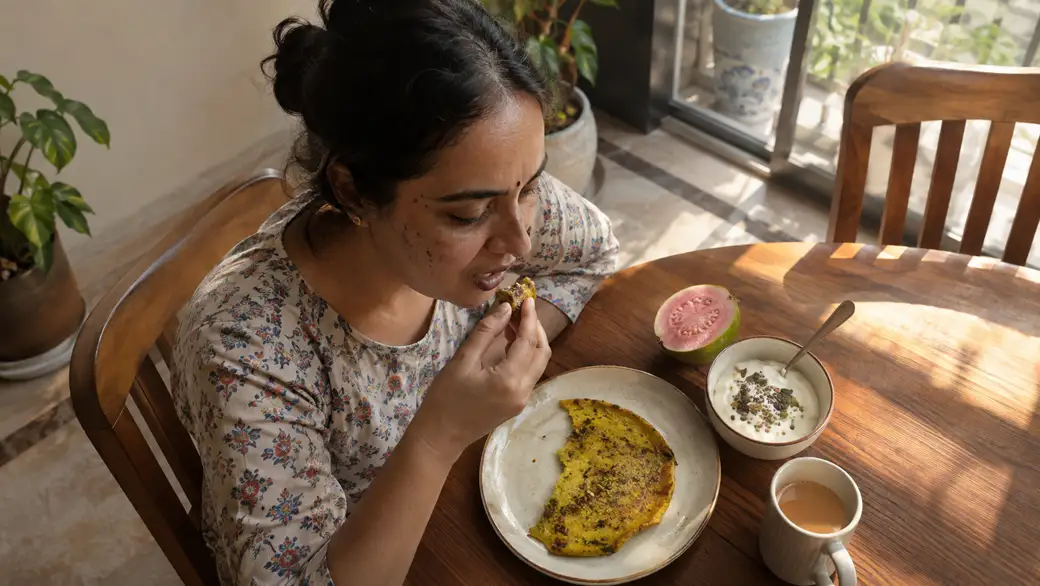
| Breakfast | 2 moong dal chillas with 50 g paneer filling, a small bowl of curd | 20 g | 2-egg omelette with vegetables, 1 toast, a small bowl of curd | 18 g |
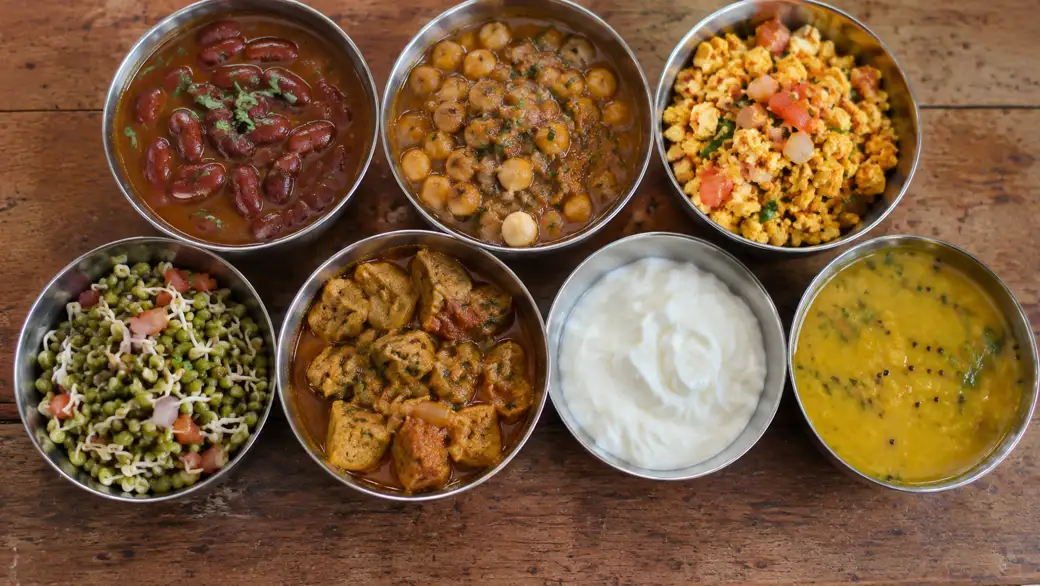
| Lunch | 1 katori rajma or chana, 1 phulka, sabzi, salad, a bowl of curd | 22 g | 100 g chicken curry, 1 phulka, sabzi, salad | 30 g |
| Evening | A glass of chaas with a handful of roasted chana | 10 g | 1 boiled egg with a glass of chaas | 10 g |
| Dinner | 100 g paneer or tofu bhurji, 1 katori dal, sautéed vegetables | 23 g | 100 g grilled fish, 1 katori dal, sautéed vegetables | 27 g |
| Total | About 75 g | About 85 g |
If these totals fall short of your target, a glass of milk, extra curd or soya chunks in a sabzi can close the gap. A dietitian-led clinical nutrition plan can fit these meals to your dose step and your household cooking.
Which warning signs need urgent care?
Seek urgent medical care for severe abdominal pain, repeated vomiting, signs of dehydration, an allergic reaction or symptoms of very low blood sugar. These are uncommon, unlike the nausea, fullness, acidity and constipation that are expected early on and described in the complete guide to GLP-1 side effects.
Get urgent medical help if you have
Severe pain in the upper abdomen that does not settle, especially if it spreads to the back or comes with vomiting. Pain under the right ribs with fever or yellowing of the eyes or skin. Vomiting that stops you keeping fluids down for more than a day. Very little urine, dizziness on standing or a racing heart. Swelling of the face, lips or throat, or difficulty breathing. Shaking, sweating, confusion or fainting, particularly if you take insulin or sulphonylurea tablets. Sudden changes in vision. A lump or swelling in the neck, or persistent hoarseness. Thoughts of self-harm or a marked drop in mood.
Do not take the next dose until you have been assessed. If you become pregnant or think you might be, contact your prescriber straight away, because these medicines are not used in pregnancy. Mounjaro can also make the contraceptive pill less reliable around the time of starting and each dose increase, so ask your prescriber about additional contraception.
What should a review at day 90 cover?
A day 90 review should cover results, tolerability, nutrition, muscle, blood tests and the plan for the next three months. Many people have not yet reached their maintenance dose by then.
- Weight and waist compared with baseline, as kilograms and as a percentage.
- Side effects so far, and whether the current dose is tolerable.
- Protein, fluid and fibre intake, and whether you are eating enough overall.
- Strength and activity: sessions completed, and body composition if it is being measured.
- Blood pressure and blood tests requested by your prescriber, such as glucose or HbA1c, kidney function and lipids.
- Other medicines: doses for diabetes or blood pressure may need review as weight falls.
- The next step: continue, adjust the dose, or rethink the approach if the response is poor.
Illustrative example
A person who started at 90 kg and weighs 85.5 kg at day 90 has lost 4.5 kg, which is 5% of starting weight (4.5 divided by 90). In the main trials, average loss at about three months was in the region of 5 to 6%, with a wide spread on either side. Slower early loss on a low dose does not predict failure.
Common myths
“If you have not lost much in the first month, it is not working”
The starting dose is designed for adjustment. Meaningful loss often begins after the first dose steps.
“The injection does the work, so exercise is optional”
Without strength training, more of the weight lost is muscle, and maintaining weight later becomes harder.
“After 90 days you can stop”
Obesity is a long-term condition. How long treatment continues is a decision for you and your prescriber, and stopping abruptly often leads to regain.

Questions to ask your healthcare provider
- What is my dose schedule, and what would make you slow it down?
- Which of my other medicines might need adjusting as I lose weight?
- What should I do if I miss a dose or vomit after injecting?
- What amount of weight loss by day 90 would you consider a good response for me?
- Which symptoms should make me contact you the same day?
- What contraception advice applies to me on this medicine?
How The Prime Fit helps
The Prime Fit’s GLP-1 Support Program is designed to work alongside a GLP-1 medicine prescribed elsewhere. It provides structured nutrition, lifestyle coaching, exercise planning, progress monitoring and side-effect guidance. The Prime Fit does not supply medicines, and decisions about your dose remain with your prescriber. A medicine-free lifestyle route is also available.
The support changes with each phase.
- Weeks 1 to 4: an assessment of your eating pattern and routine, a meal structure suited to a low appetite, and practical guidance on nausea, fluids and protein.
- Weeks 5 to 8: meal adjustments around dose steps, a constipation prevention plan and a strength routine matched to your fitness.
- Weeks 9 to 12: a review of your progress, help with flat weeks, and habits for festivals, travel and the months ahead.
If anything you report suggests a medical problem, our team will ask you to contact your prescriber or seek urgent care.
GLP-1 support packages
If you want this kind of help alongside your medicine, these are our four support packages. Every package includes the same five parts; only the length of support changes. No medicine is supplied through them. See full package details.

Trial
1 week
Discounted price
₹1,499Regular price ₹3,000
You save ₹1,501 (50% off)
About ₹1,499 per week
Try it before committing to longer.
- 1-on-1 initial consultation (10 to 15 min)
- Personalised diet and protein guidance
- Side-effect management guidance
- 1 week of WhatsApp support
- Weekly progress review

First dose increase
1 month
Discounted price
₹2,999Regular price ₹5,000
You save ₹2,001 (40% off)
About ₹697 per week
Enough time to get through the first dose increase.
- 1-on-1 initial consultation (10 to 15 min)
- Personalised diet and protein guidance
- Side-effect management guidance
- 1 month of WhatsApp support
- Weekly progress review

Titration phase
2 months
Discounted price
₹4,500Regular price ₹8,000
You save ₹3,500 (44% off)
About ₹517 per week
Covers the titration phase where most people struggle.
- 1-on-1 initial consultation (10 to 15 min)
- Personalised diet and protein guidance
- Side-effect management guidance
- 2 months of WhatsApp support
- Weekly progress review

Lowest cost per week
3 months
Discounted price
₹5,999Regular price ₹12,000
You save ₹6,001 (50% off)
About ₹461 per week
Lowest cost per week, and long enough for habits to hold.
- 1-on-1 initial consultation (10 to 15 min)
- Personalised diet and protein guidance
- Side-effect management guidance
- 3 months of WhatsApp support
- Weekly progress review
Frequently asked questions
What should I expect in the first 90 days on GLP-1 medicines?
In the first 90 days on GLP-1 medicines, expect a low starting dose for about 4 weeks, gradual dose steps if your prescriber advises them, a falling appetite and steady weight loss that often begins slowly. Nausea, fullness and constipation are common early on and usually ease. A review at about day 90 checks progress and tolerability.
How much weight can I lose in the first 3 months on a GLP-1 medicine?
Weight loss in the first 3 months on a GLP-1 medicine varies widely. In the main trials, average loss at about three months was in the region of 5 to 6% of starting weight, which is 4.5 to 5.4 kg for a person weighing 90 kg. Some people lose more and some less, especially on lower doses.
What is the starting dose of Mounjaro and Wegovy?
Mounjaro starts at 2.5 mg once a week for 4 weeks, and Wegovy starts at 0.25 mg once a week for 4 weeks. These starting doses help the body adjust and are then increased in steps. Your prescriber sets the schedule for Mounjaro or Wegovy and may slow it down if side effects are troublesome.
How much protein should I eat on GLP-1 treatment?
Most adults on GLP-1 treatment are advised to eat about 1.0 to 1.2 g of protein per kg of body weight a day, which is 80 to 96 g for someone weighing 80 kg. Spread it across meals using dal, paneer, curd, eggs, chicken or fish. People with kidney disease need an individual target from their care team.
How can I prevent constipation in the first weeks of GLP-1 treatment?
To prevent constipation on GLP-1 treatment, drink 2 to 3 litres of fluid a day, eat vegetables at lunch and dinner, include 1 to 2 fruits such as papaya or guava, choose whole grains and dals, and walk daily. Increase fibre gradually. Ask your care team before using laxatives, and seek advice if there is no bowel movement for over 3 days.
When should I start strength training on a GLP-1 medicine?
You can start gentle strength training on a GLP-1 medicine as soon as you feel well enough, and many people begin in weeks 5 to 8 once early side effects settle. Two sessions a week of simple exercises such as chair squats, wall push-ups and band rows help to protect muscle while you lose weight.
Which symptoms on GLP-1 medicines need urgent medical care?
On GLP-1 medicines, seek urgent medical care for severe upper abdominal pain that does not settle, pain with fever or yellowing of the eyes, vomiting that prevents you keeping fluids down, very little urine or dizziness, swelling of the face or throat, difficulty breathing, or shaking and confusion from low blood sugar. Do not take the next dose until assessed.
What happens at a 90-day review on GLP-1 treatment?
A 90-day review on GLP-1 treatment compares your weight and waist with baseline, checks side effects, protein and fluid intake, strength training, blood pressure and any blood tests your prescriber has requested. It also covers other medicines that may need adjusting and agrees the plan for the next three months, including the dose.
This article is general information and is not a substitute for a consultation with a qualified healthcare provider. Dose schedules are set by your prescriber, and figures from research are approximate averages. Do not start, stop or change the dose of any medicine without medical advice.