In this article
- Key takeaways
- What is a GLP-1 support program?
- Why is the medicine alone not enough?
- What does a good GLP-1 support programme include?
- What does the nutrition plan look like in practice?
- What does the activity plan include?
- Who benefits most from a support programme?
- How does a programme work alongside your prescriber?
- What is a GLP-1 support programme not?
- How do you judge the quality of a programme?
- Common myths about GLP-1 support
- Questions to ask your healthcare provider
- How The Prime Fit helps
- GLP-1 support packages
- Frequently asked questions
A GLP-1 support program is a structured service that works alongside your prescribed medicine and covers what the prescription does not: a nutrition plan with a protein target, an activity plan that protects muscle, practical guidance on side effects, regular progress reviews and a plan for maintaining weight afterwards. It does not replace your prescriber and it does not supply medicine. It suits most people using Mounjaro, Wegovy, Ozempic or Rybelsus, and it matters most for those who are eating very little, losing weight quickly, struggling with side effects or thinking about stopping.
In British and Indian usage the word is usually spelt “programme”, and this guide uses that spelling from here on. It covers why medicine alone leaves gaps, what a good programme includes and how to judge one. One example is The Prime Fit GLP-1 Support Program described near the end. This is general information, and any decision about a medicine or its dose belongs with your prescriber.
Key takeaways
- The medicine reduces appetite; it does not choose your food. Eating less without a plan often means eating too little protein.
- Some of the weight lost on any method is muscle. Enough protein and strength training twice a week reduce that loss.
- A good programme has six parts: assessment, nutrition plan, activity plan, side-effect guidance, regular reviews and maintenance planning.
- Support works alongside your prescriber. It is not a prescription service and should never adjust your dose.
- Weight tends to return when treatment stops unless habits and a maintenance plan are already in place.
- Judge quality by assessment, safety rules and honesty, not by promises of fast results.
What is a GLP-1 support program?
A GLP-1 support program is organised lifestyle care built around a GLP-1 medicine that someone else has prescribed for you. GLP-1 medicines reduce hunger, slow the emptying of the stomach and quieten constant thoughts about food. What they cannot do is decide what goes on your plate, how you train, or what happens after the final dose.
A support programme fills that space. It usually combines structured nutrition, lifestyle coaching, exercise planning, progress monitoring and practical side-effect guidance. Some programmes, including ours, also offer a medicine-free lifestyle route.

Why is the medicine alone not enough?
The medicine alone is not enough because it changes how much you want to eat, not what you eat or how your body uses it. In the large trials of these medicines, participants were also given lifestyle advice on diet and physical activity.
In everyday use, four gaps tend to open between medical visits.
Gap 1: protein and muscle
When appetite falls sharply, protein intake usually falls with it. A day of tea, biscuits, a little khichdi and half a roti with sabzi can contain under 30 g of protein. Whenever weight is lost, by any method, part of the loss is lean tissue, including muscle. Low protein and no resistance exercise make that share larger. Less muscle means less strength and a harder time keeping weight off later. Our article on muscle loss and how to protect muscle covers this in depth.
Gap 2: side effects
Nausea, constipation, acidity, bloating and tiredness are common, especially after each dose increase. Most are mild and respond to simple changes such as smaller meals, less fried food and more fluid and fibre. People who do not know this often skip doses or stop altogether. The complete guide to GLP-1 side effects explains what is expected and what is not.
Gap 3: plateaus
Weight loss on these medicines slows and then levels off, usually somewhere after the first year. That is normal biology, not failure. Without a review, people often respond by eating even less, which costs more muscle. A structured review checks protein, activity, sleep and alcohol first.
Gap 4: stopping
Trials in which people stopped treatment found that much of the lost weight returned over the following year: about two thirds of it, on average, in one well-known semaglutide study. Appetite returns when the medicine leaves the body, so habits and a maintenance plan built during treatment matter.
What does a good GLP-1 support programme include?
A good GLP-1 support programme includes six parts, and it is reasonable to ask a provider about each one.
| Part | What it involves | Why it matters |
|---|---|---|
| Starting assessment | Health history, current medicines, weight, waist, usual diet, routine, activity, sleep and goals | The plan fits you, and risks are spotted early |
| Nutrition plan | A protein target, meal structure, fluids, fibre and foods you already eat at home | Protects muscle and prevents deficiencies when appetite is low |
| Activity plan | Strength work at least twice a week plus walking or other aerobic activity | Keeps muscle, strength and bone while fat is lost |
| Side-effect guidance | Food and routine changes for nausea, constipation and acidity; clear rules on when to call your prescriber | Fewer missed doses and earlier action on warning signs |
| Regular reviews | Weight trend, waist, intake, symptoms, activity and how you are coping | Problems are corrected in weeks, not months |
| Maintenance planning | Habits, portion awareness and a plan for dose reduction or stopping, agreed with your prescriber | Reduces regain after treatment |
Two details are worth checking: the assessment should come before the plan, and the plan should use ordinary Indian food such as dal, curd, paneer, eggs, roti, rice and sabzi.
What does the nutrition plan look like in practice?
In practice, the nutrition plan sets a daily protein target and spreads it across small meals you can manage on a reduced appetite. Many guidelines for weight loss suggest roughly 1.0 to 1.5 g of protein per kg of body weight a day for adults with healthy kidneys, sometimes calculated on a target weight in people with a high BMI. The right figure for you is individual, and people with kidney disease need specific advice.
Illustrative example
A person weighing 80 kg is given a target of 1.2 g per kg: 80 x 1.2 = 96 g of protein a day. Split across three meals and one snack, that is about 24 g each time, for instance 100 g of paneer with a katori of dal at lunch. This is an example of the arithmetic, not a prescription.
A practical Indian day on a low appetite might look like this.
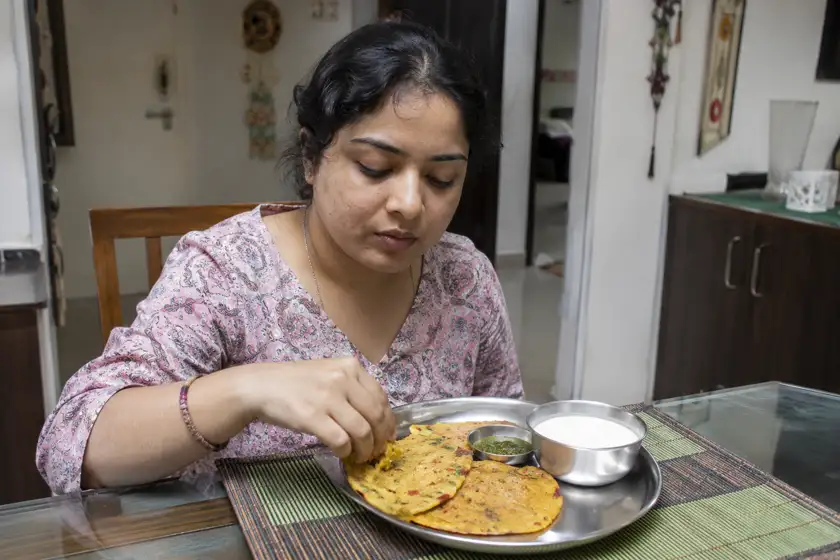
- Vegetarian: two besan chillas with curd in the morning; dal, paneer bhurji, one roti and salad at lunch; roasted chana or a glass of milk in the evening; soya chunk curry with sabzi and a small portion of rice at night.
- Non-vegetarian: a two-egg omelette with one toast; chicken curry with dal, one roti and salad; a bowl of curd in the evening; grilled or curried fish with sabzi and a small portion of rice.
- Every day: protein eaten first at each meal, about 2 to 2.5 litres of fluid unless you have been told to restrict fluids, and fibre from vegetables, fruit, dals and whole grains.
The plan should also cover festivals, fasting days, travel and eating out. If you want this level of detail, a clinical nutrition consultation is the usual route.

What does the activity plan include?
The activity plan includes resistance exercise at least two days a week and regular aerobic movement, building towards the widely used target of 150 minutes of moderate activity a week. Resistance exercise is what tells the body to keep its muscle while weight falls.
It does not need a gym. Sit-to-stand from a chair, wall push-ups, step-ups and resistance band rows are enough to begin with. Our beginner strength plan for GLP-1 users shows a simple routine. A good programme adjusts for joint pain, heart conditions and low-energy weeks.
Who benefits most from a support programme?
The people who benefit most from a support programme are those at higher risk of losing muscle, becoming undernourished or regaining weight.
- People with very low appetite who are eating one or two small meals a day.
- Vegetarians and people who eat little protein, which is common on a typical Indian diet built around roti, rice and sabzi.
- Adults over about 50, who lose muscle more easily and regain it more slowly.
- People losing weight quickly, for example more than about 1% of body weight a week over several weeks.
- People with type 2 diabetes, fatty liver, PCOS or thyroid conditions, whose food plan needs to fit their other treatment.
- People at a plateau, or planning to reduce the dose or stop.
For reference, Asian Indian adults are classed as overweight from a BMI of 23 and as having obesity from 25, and waist-related risk starts at 90 cm for men and 80 cm for women. Whether a medicine is suitable at a given BMI is a prescriber’s decision; lifestyle support is appropriate at any of these levels.
How does a programme work alongside your prescriber?
A programme works alongside your prescriber by handling the day-to-day lifestyle work and sending medical questions back to the person responsible for your prescription. The prescriber owns the medicine, the dose, the blood tests and your other conditions. The programme owns food, activity, routines and monitoring.
A useful programme gives you a short summary of your weight trend, intake, symptoms and activity that you can show at your next medical review. If a plateau appears, it shows whether protein, movement and sleep are in order before a dose change is considered. Our article on weight loss plateaus explains that reasoning.
Symptoms that need your prescriber or urgent care, not a coach
Seek urgent medical help for severe or persistent abdominal pain, especially if it spreads to the back or comes with vomiting; vomiting that will not stop or an inability to keep fluids down; signs of dehydration such as very little urine, dizziness or fainting; yellowing of the eyes or skin; swelling of the face, lips or throat or difficulty breathing; and, if you take insulin or a sulfonylurea, symptoms of low blood sugar that do not settle with sugar. Tell your prescriber promptly about a pregnancy or plans for one, new changes in vision, or persistent low mood.
What is a GLP-1 support programme not?
A GLP-1 support programme is not a prescription service, a pharmacy or a substitute for medical care.
- It does not supply medicines. Medicines should come only through a valid prescription and a licensed pharmacy.
- It does not start, stop or change doses. Suggestions about dose belong with your prescriber.
- It is not a crash diet. Very low intakes on top of an appetite-suppressing medicine increase muscle loss, gallstone risk and deficiencies.
How do you judge the quality of a programme?
You judge the quality of a programme by how carefully it assesses you, how clearly it handles safety and how honest it is about results.
| Good signs | Warning signs |
|---|---|
| Asks about your health history and medicines before giving a plan | Same plan for everyone, sent on day one |
| Sets a protein target and explains how it was calculated | Focuses only on cutting calories |
| Includes strength exercise | No activity plan, or cardio only |
| Has written rules on when to contact your prescriber | Advises on dose, or offers to arrange medicine without a prescription |
| Talks about maintenance from the start | Promises a fixed number of kilos by a fixed date |
Common myths about GLP-1 support
Myth: the injection does all the work. Fact: the medicine lowers appetite. Food quality, protein and exercise still decide how much of the loss is fat and how much is muscle.
Myth: eating as little as possible gives the best result. Fact: very low intake speeds up the scale but costs muscle, energy and hair, and raises the risk of gallstones. Enough protein and steady loss work better.
Myth: once you reach your goal, the work is finished. Fact: maintenance is a phase of its own. See our guide to maintaining weight after GLP-1 treatment.

Questions to ask your healthcare provider
- What protein intake is safe for me, given my kidney function and other conditions?
- Are there any exercises I should avoid, or build up to slowly?
- Which side effects should I manage at home, and which should I report to you straight away?
- If my weight stalls, what would you want to know before changing the dose?
- How long do you expect me to stay on this medicine, and how would we plan a reduction or stop?
How The Prime Fit helps
The Prime Fit GLP-1 Support Program is designed for people who use GLP-1 medicines prescribed elsewhere, and it also offers a medicine-free lifestyle route. It brings together structured nutrition, lifestyle coaching, exercise planning, progress monitoring and side-effect guidance, starting from an assessment of your health, routine and food preferences.
We do not supply medicines and we do not change doses. Our role is the daily work around the prescription: an eating plan built from familiar Indian food, an activity plan matched to your fitness, help with common side effects, follow-up and preparation for maintenance. If something needs medical attention, we ask you to contact your prescriber. Results vary from person to person and cannot be promised.
GLP-1 support packages
If you want this kind of help alongside your medicine, these are our four support packages. Every package includes the same five parts; only the length of support changes. No medicine is supplied through them. See full package details.

Trial
1 week
Discounted price
₹1,499Regular price ₹3,000
You save ₹1,501 (50% off)
About ₹1,499 per week
Try it before committing to longer.
- 1-on-1 initial consultation (10 to 15 min)
- Personalised diet and protein guidance
- Side-effect management guidance
- 1 week of WhatsApp support
- Weekly progress review

First dose increase
1 month
Discounted price
₹2,999Regular price ₹5,000
You save ₹2,001 (40% off)
About ₹697 per week
Enough time to get through the first dose increase.
- 1-on-1 initial consultation (10 to 15 min)
- Personalised diet and protein guidance
- Side-effect management guidance
- 1 month of WhatsApp support
- Weekly progress review

Titration phase
2 months
Discounted price
₹4,500Regular price ₹8,000
You save ₹3,500 (44% off)
About ₹517 per week
Covers the titration phase where most people struggle.
- 1-on-1 initial consultation (10 to 15 min)
- Personalised diet and protein guidance
- Side-effect management guidance
- 2 months of WhatsApp support
- Weekly progress review

Lowest cost per week
3 months
Discounted price
₹5,999Regular price ₹12,000
You save ₹6,001 (50% off)
About ₹461 per week
Lowest cost per week, and long enough for habits to hold.
- 1-on-1 initial consultation (10 to 15 min)
- Personalised diet and protein guidance
- Side-effect management guidance
- 3 months of WhatsApp support
- Weekly progress review
Frequently asked questions
What is a GLP-1 support program?
A GLP-1 support program is a structured lifestyle service for people using GLP-1 medicines such as Mounjaro, Wegovy or Ozempic. It adds a nutrition plan with a protein target, an activity plan, side-effect guidance, regular progress reviews and maintenance planning. It works alongside the prescriber and does not supply or adjust medicines.
Do I need a support programme if my GLP-1 medicine is working?
A support programme is still useful when a GLP-1 medicine is working, because the scale does not show what is being lost. Without enough protein and strength exercise, a larger share of weight loss can be muscle. Structured support also prepares you for plateaus and for maintaining weight when the dose is reduced or stopped.
Does a GLP-1 support programme provide the injections?
A GLP-1 support programme does not provide injections or tablets. GLP-1 medicines are prescription medicines and should be obtained only through a valid prescription and a licensed pharmacy. A support programme covers food, activity, routines, monitoring and side-effect guidance, and refers medical questions back to the prescriber.
Can a support programme change my Mounjaro or Wegovy dose?
A support programme should never change a Mounjaro or Wegovy dose. Starting, increasing, reducing or stopping a GLP-1 medicine is a medical decision for the prescriber. A good programme can give you a clear summary of your weight trend, intake and symptoms so that the prescriber can make a better informed decision.
How much protein should I eat on a GLP-1 medicine?
Protein needs on a GLP-1 medicine are individual, but many weight loss guidelines suggest roughly 1.0 to 1.5 g per kg of body weight a day for adults with healthy kidneys. As an illustrative example, 80 kg at 1.2 g per kg is 96 g a day. People with kidney disease need personal advice first.
Is a GLP-1 support programme useful if I am not on any medicine?
A support programme can be useful without any medicine, if it offers a medicine-free lifestyle route. The same foundations apply: an assessment, a protein-adequate eating plan, strength and aerobic activity, sleep, and regular reviews. Many people begin with lifestyle changes alone, and some continue that way after finishing a GLP-1 medicine.
When should I join a GLP-1 support programme?
The best time to join a GLP-1 support programme is at the start of treatment, so that protein targets and strength exercise are in place before muscle is lost. It is also worth joining at a plateau, when side effects are affecting eating, or several months before a planned dose reduction or stop.
Will a support programme stop weight regain after GLP-1 treatment?
No support programme can guarantee that weight will not return after GLP-1 treatment. Studies show that much of the lost weight tends to come back when the medicine is stopped. Building eating and exercise habits during treatment, keeping muscle, and following a maintenance plan agreed with the prescriber improve the chances of holding the loss.
This article is general health information for education only. It is not medical advice and does not replace an individual assessment by a qualified healthcare provider. Do not start, stop or change any medicine on the basis of this article. Results from any weight management programme vary between individuals and cannot be guaranteed.