In this article
- Why abdominal fat matters more in men
- How well do the medicines work in men?
- Who is eligible?
- Testosterone: what happens?
- Sexual function
- Fertility
- Muscle: keeping what you have
- Conditions common in men that improve with weight loss
- Side effects in men
- Alcohol
- A practical plan for men
- Tests worth having
- Priorities by age
- Tracking progress beyond the scale
- Questions to ask your healthcare provider
- Why men delay, and why not to
- Two illustrative examples
- Common myths
- How The Prime Fit works with men
- Frequently asked questions
Men are under-represented in weight centres. They tend to seek help later, often only after a diagnosis of diabetes, a warning about blood pressure, or a partner’s complaint about snoring. Yet men, and Indian men in particular, face the health consequences of excess weight earlier in life, because they store more fat deep in the abdomen around the organs.
GLP-1 medicines such as Wegovy and Ozempic (semaglutide) and Mounjaro (tirzepatide) work well in men. They also raise questions that men ask about, sometimes hesitantly: What happens to testosterone? Will I lose muscle? Does it affect sexual function or fertility? Can I still have a drink? Will the belly actually go?
This guide answers those questions with the evidence available. It is general information and does not replace an assessment by your own healthcare provider.
Why abdominal fat matters more in men
Body fat is stored in two main places. Subcutaneous fat lies under the skin. Visceral fat lies inside the abdomen, around the liver, intestines and pancreas. Men store a larger share of their fat viscerally, which is why the classic male pattern is a firm, protruding belly with relatively slim arms and legs.
Visceral fat is metabolically active. It releases fatty acids and inflammatory signals directly to the liver, driving insulin resistance, fatty liver, high triglycerides, low HDL cholesterol and raised blood pressure. Indian men accumulate visceral fat at lower body weights than men of European origin, and develop type 2 diabetes and heart disease about a decade earlier on average.
| Measure | Increased risk for Asian Indian men |
|---|---|
| Waist circumference | 90 cm (about 35.5 inches) or more |
| Waist-to-height ratio | Above 0.5 |
| BMI | 23 or above is overweight; 25 or above is obesity by Indian criteria |
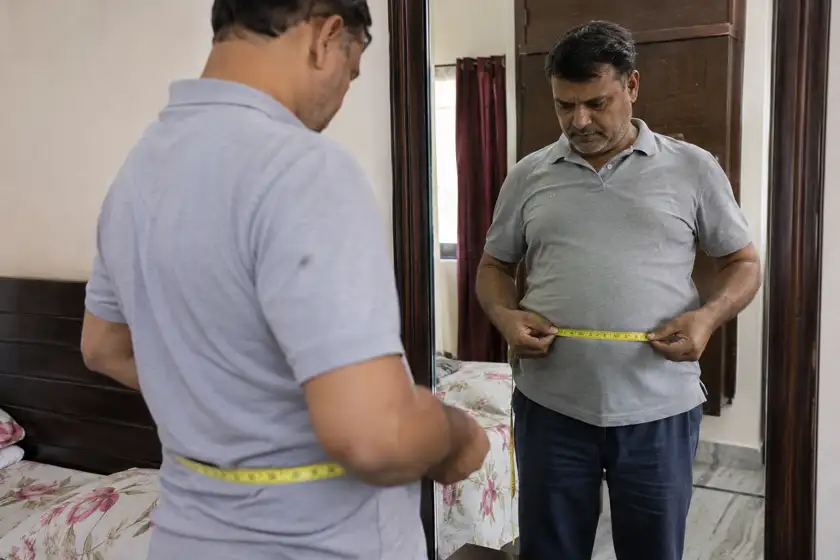
A man with a “normal-looking” build apart from his waist can have significant metabolic risk. Measure your waist midway between the lowest rib and the hip bone, not at the belt line.
How well do the medicines work in men?
Men lose substantial weight on these medicines. In the main trials, the average loss across all participants was about 15 percent of body weight with semaglutide 2.4 mg and about 20 percent with the higher doses of tirzepatide, over 16 to 18 months. Men lost a slightly lower percentage than women on average, but because men usually start heavier, the loss in kilograms is often similar or greater.
| Starting weight | 10% loss | 15% loss | 20% loss |
|---|---|---|---|
| 90 kg | 9 kg | 13.5 kg | 18 kg |
| 100 kg | 10 kg | 15 kg | 20 kg |
| 115 kg | 11.5 kg | 17 kg | 23 kg |
| 130 kg | 13 kg | 19.5 kg | 26 kg |
Does the belly go?
Yes. Imaging studies within the trials show that visceral fat falls by a larger proportion than total body fat. Waist circumference typically reduces by 10 to 18 cm with a 15 to 20 percent weight loss. Because visceral fat is the first to respond, blood sugar, triglycerides and liver enzymes often improve before the mirror shows much change.
Men with type 2 diabetes lose somewhat less weight on average, but gain large improvements in blood sugar.
Who is eligible?
The criteria are the same for men and women: a BMI of 30 or above, or 27 or above with a weight-related condition such as type 2 diabetes or prediabetes, high blood pressure, abnormal lipids, sleep apnoea, fatty liver or cardiovascular disease, alongside diet and activity. Healthcare professionals assess Indian patients individually, since risk begins at lower BMI. The medicines are not suitable for anyone with a personal or family history of medullary thyroid carcinoma or MEN 2, and are used cautiously after pancreatitis.
Testosterone: what happens?
Obesity lowers testosterone
Low testosterone is common in men with obesity and type 2 diabetes. Several mechanisms are involved:
- Fat tissue converts testosterone into oestrogen.
- Insulin resistance lowers the protein that carries testosterone in the blood, reducing total levels.
- Inflammatory signals and hormones from fat tissue suppress the brain’s signals to the testes.
- Sleep apnoea and poor sleep reduce the night-time rise in testosterone.
The result can be low energy, reduced libido, erectile difficulty, low mood and loss of muscle, which in turn make weight gain worse. It is a vicious circle.
Weight loss raises it
Losing weight reverses much of this. Studies of diet, medication and bariatric surgery consistently show that testosterone rises as weight falls, roughly in proportion to the amount lost. Small studies of GLP-1 medicines in men with obesity and low testosterone have reported increases in testosterone alongside weight loss, and in some cases improvements in sexual function comparable to testosterone therapy, with the added benefit of better metabolic health and preserved fertility.
These medicines are not testosterone treatments, and the studies are small. The practical point is that for many men with obesity-related low testosterone, treating the weight is the first step, and may be all that is needed.
If you are already on testosterone therapy
Testosterone therapy and a GLP-1 medicine can be used together when both are indicated. As you lose weight, your own testosterone production may recover, and the need for therapy can be reviewed by your healthcare provider. Testosterone therapy suppresses sperm production, which matters if you want children.
Worth testing
If you have low libido, erectile difficulty, fatigue or loss of muscle, ask about a morning testosterone test before or during treatment. A low result should be repeated and interpreted by your healthcare provider.
Sexual function
Erectile dysfunction is closely linked to obesity, diabetes, high blood pressure and blood vessel disease. The small arteries of the penis are affected by the same processes that affect the heart, often years earlier. Erectile difficulty in a man in his forties is therefore a reason to check cardiovascular risk factors.
Weight loss, better blood sugar and blood pressure control, more activity and better sleep all improve erectile function in many men. Trials of lifestyle programmes and bariatric surgery support this.
What about the medicines themselves? One analysis of medical records reported a slightly higher rate of new diagnoses of erectile dysfunction and low testosterone in men without diabetes who were prescribed semaglutide, compared with similar men who were not. The absolute numbers were small, and this kind of study cannot show cause: men attending weight centres are assessed more thoroughly and are more likely to be diagnosed. Rapid weight loss, low calorie intake and fatigue could also play a part. At present there is no good evidence that these medicines harm sexual function, and several reasons to expect improvement.
If you notice a change in libido or erections during treatment, mention it. Common, fixable contributors are eating too little, losing weight too fast, poor sleep and alcohol.
Fertility
Obesity is associated with lower sperm count and quality, and with hormonal changes that impair fertility. Weight loss may improve these measures, although results across studies are mixed. There is no established evidence that a man’s use of semaglutide or tirzepatide harms sperm or a pregnancy conceived during his treatment, and current advice on stopping before conception applies to women. Research is continuing. If you and your partner are trying to conceive, tell your healthcare provider, and remember that testosterone therapy, unlike weight loss, reduces sperm production.
Muscle: keeping what you have
Men generally have more muscle than women and often care a great deal about keeping it. During any weight loss, some of what is lost is lean tissue. In body-composition studies from the trials, roughly a quarter to a third of the weight lost was lean mass. The proportion depends heavily on what you do.
- Protein: about 1.0 to 1.5 grams per kilogram of body weight a day for many men on treatment, adjusted by your dietitian and for kidney health. For a 100 kg man, that is 100 to 150 grams, far above the typical Indian intake.
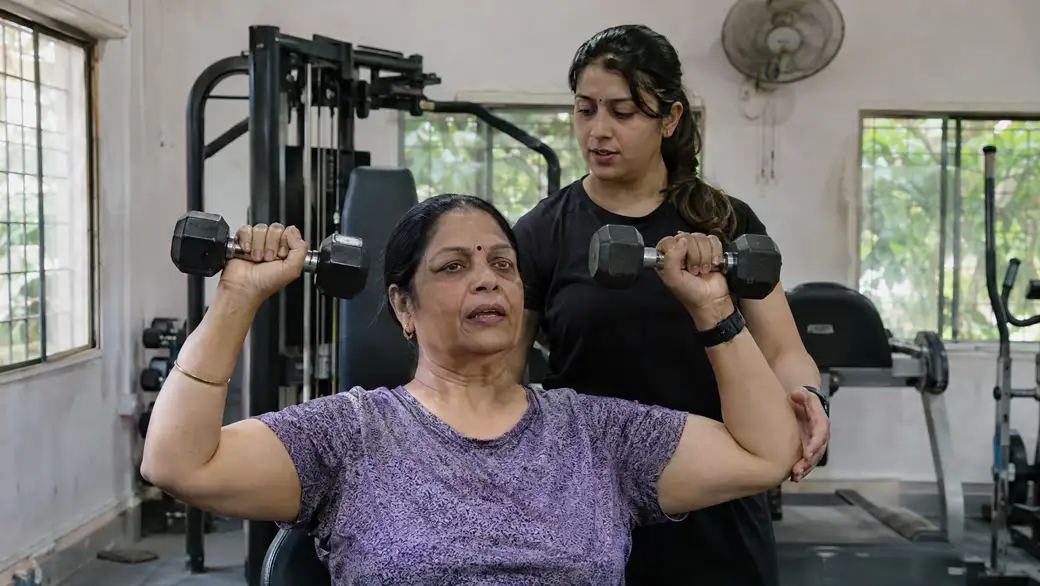
- Resistance training: two to three sessions a week covering legs, back, chest, shoulders and core, with gradual progression.
- Pace: about 0.5 to 1 kg a week. Faster loss costs more muscle.
- Do not skip meals because you are not hungry.
- Sleep: seven to eight hours, when muscle repair occurs.
Men who train with weights and eat enough protein commonly maintain their strength, and beginners may even gain some, while losing fat.
Protein in Indian foods
| Food | Serving | Approximate protein |
|---|---|---|
| Chicken breast, cooked | 150 g | 40 to 45 g |
| Fish, cooked | 150 g | 30 to 33 g |
| Eggs | 3 whole | 18 g |
| Paneer | 100 g | 18 g |
| Soya chunks (dry) | 50 g | 25 g |
| Chana or rajma, cooked | 1 large katori | 14 to 16 g |
| Cooked dal | 1 katori | 7 to 9 g |
| Hung curd or Greek-style yoghurt | 200 g | 16 to 20 g |
| Milk | 1 glass | 8 g |
| Peanuts or roasted chana | 40 g | 8 to 10 g |
| Whey or plant protein powder | 1 scoop | 20 to 25 g |

Conditions common in men that improve with weight loss
| Condition | Link with weight | What treatment can do |
|---|---|---|
| Type 2 diabetes and prediabetes | Driven by visceral fat and insulin resistance | Large falls in blood sugar; high rates of return to normal in prediabetes |
| Heart disease | Indian men are affected early | Semaglutide reduced heart attacks and strokes by about 20% in people with obesity and existing heart disease |
| High blood pressure | Rises with abdominal fat | Systolic pressure falls by about 5 to 7 mmHg on average; tablets may be reduced |
| Obstructive sleep apnoea | Two to three times more common in men; linked to neck and abdominal fat | Tirzepatide roughly halved breathing interruptions in trials |
| Fatty liver | Very common with central obesity | Liver fat and inflammation reduce with 7 to 10% weight loss or more |
| High triglycerides, low HDL | Typical of metabolic syndrome | Triglycerides fall substantially |
| Gout and high uric acid | More common in men and with obesity | Uric acid usually falls with weight loss over time |
| Knee and back pain | Mechanical load and inflammation | Less pain, better function |
| Low testosterone | Suppressed by excess fat | Tends to rise with weight loss |
A note on gout
Although uric acid falls in the long run, rapid weight loss can temporarily raise it and trigger a gout attack in men who are prone. If you have had gout, tell your healthcare provider before starting, keep well hydrated, lose weight steadily, limit alcohol and continue any preventive medicine prescribed.
Snoring and sleep
Loud snoring, pauses in breathing noticed by a partner, waking unrefreshed and daytime sleepiness suggest sleep apnoea. Ask about a sleep study. If you use a CPAP machine, do not stop it as you lose weight without a repeat study.
Side effects in men
The side effects are the same as in women: nausea, constipation, diarrhoea, vomiting and reflux, mostly around dose increases. Men report nausea somewhat less often. Small, low-fat meals, slower eating, enough fluid and fibre, and gradual dose steps manage most problems. Rare but important risks include gallbladder disease and pancreatitis; severe, persistent abdominal pain needs urgent assessment.
Hair shedding can occur a few months into treatment with rapid weight loss or low protein, and may be mistaken for male-pattern balding. It usually recovers.
Alcohol
Alcohol is a larger part of social life for many men, and it works directly against the goals of treatment. It adds calories with no nutrition, is preferentially stored around the abdomen, raises triglycerides and uric acid, worsens fatty liver and sleep apnoea, lowers testosterone, and aggravates nausea and reflux on these medicines. Heavy drinking is also a leading cause of pancreatitis.
Many men find they want less alcohol on treatment. If you drink, keep it occasional and small, with food and water, and not around dose increases. With fatty liver, high triglycerides or previous pancreatitis, the safest amount is none.
A practical plan for men
Eating
- Three meals a day, each built around a clear protein food.
- Half the plate vegetables and salad; a quarter protein; a quarter roti or rice.
- Protein first, then vegetables, then the carbohydrate.
- Cut liquid calories: sweet tea several times a day, soft drinks, juices, beer.
- Plan for work: carry lunch or choose dal, sabzi, salad and grilled items at the canteen; keep roasted chana or nuts at your desk.
- Go easy on late, heavy dinners and weekend overeating, which undo a good week.
A sample day
| Meal | Vegetarian | Non-vegetarian |
|---|---|---|
| Breakfast | 3 moong or besan chillas with paneer filling, curd | 3-egg vegetable omelette, 1 to 2 slices whole wheat toast |
| Mid-morning | Fruit and a handful of peanuts | Chaas and roasted chana |
| Lunch | 2 rotis, rajma or chana, sabzi, salad, curd | 2 rotis or a small bowl of rice, chicken curry, sabzi, salad |
| Evening | Sprouts chaat or a protein shake with a banana | 2 boiled eggs or grilled chicken strips |
| Dinner | Paneer or soya with vegetables, dal, 1 roti | Grilled fish or chicken with vegetables, dal, 1 roti |
On a small appetite, portions will be smaller than these. Protect the protein and reduce the roti and rice first. If you cannot finish a meal, eat the dal, paneer, eggs or chicken and the vegetables, and leave the rest; a protein shake or a glass of milk later in the day can make up the difference.
Training
| Day | Session |
|---|---|
| Monday | Strength: squats or leg press, push-ups or chest press, rows, shoulder press, plank |
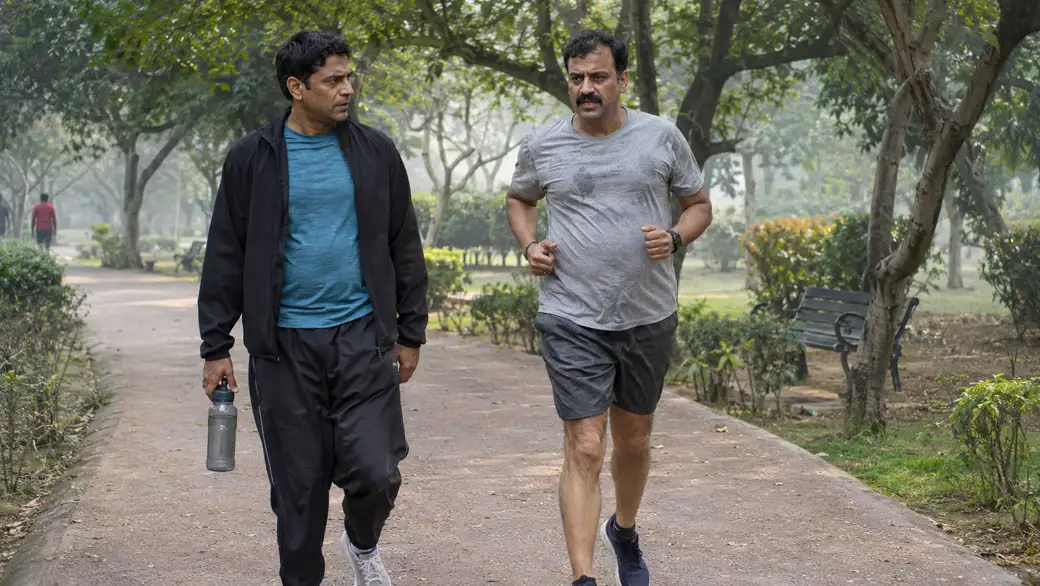
| Tuesday | Brisk walk 30 to 40 minutes |
| Wednesday | Strength: hip hinge or deadlift with guidance, lunges or step-ups, lat pulldown, dips or triceps, core |
| Thursday | Walk, cycle or swim |
| Friday | Strength: repeat Monday with small increases |
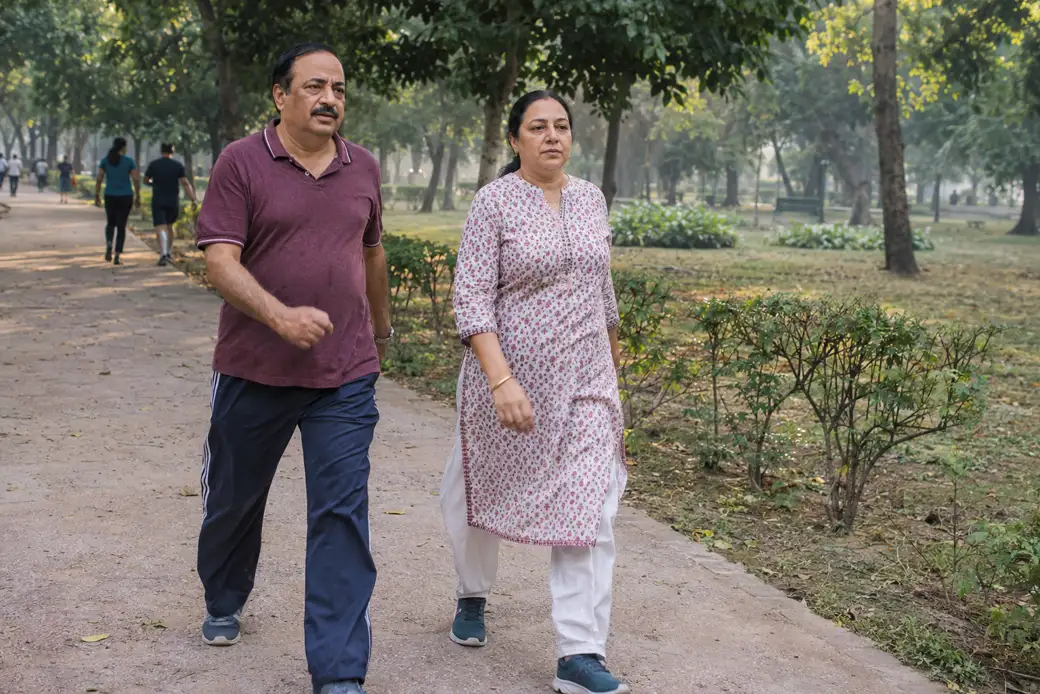
| Weekend | A sport or long walk; one rest day |
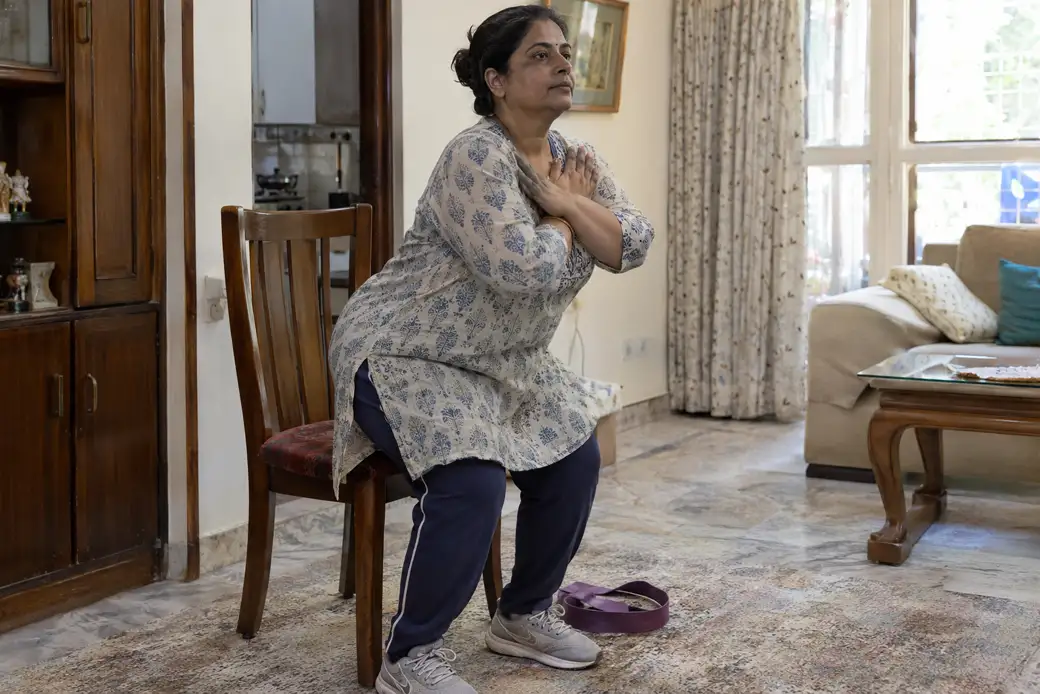
Beginners can start at home with body weight and resistance bands. If you have heart disease, uncontrolled blood pressure, chest symptoms or have been inactive for years, see your healthcare provider before starting.
Tests worth having
- Waist, blood pressure and body composition
- Fasting glucose and HbA1c
- Lipid profile
- Liver function tests, and an ultrasound if raised
- Kidney function and uric acid
- Thyroid function, vitamin B12 and vitamin D
- Morning testosterone if you have symptoms
- ECG or a cardiac assessment if you have risk factors or symptoms
- A sleep study if you snore heavily or are sleepy in the day
Priorities by age
| Age | What is usually happening | What to focus on |
|---|---|---|
| Twenties and thirties | Desk work, long hours, eating out, weekend drinking; waist creeping up; early fatty liver and raised triglycerides are common | Build the training habit and muscle base; cut liquid calories; check sugar, lipids and liver once; fertility considerations |
| Forties | Prediabetes, blood pressure and snoring appear; energy and libido may dip | Full metabolic assessment; testosterone and sleep study if symptomatic; steady weight loss with strength training |
| Fifties | Type 2 diabetes and heart disease become more frequent; muscle begins to decline | Cardiac risk assessment; protect muscle with protein and resistance work; review all medicines as weight falls |
| Sixties and beyond | Loss of muscle and balance matters as much as fat | Slower dose increases; higher protein; strength and balance training; hydration; lower maintenance doses |
Tracking progress beyond the scale
Men who train often find that the scale understates their progress, because fat is being lost while muscle is kept. Use several measures.
- Waist circumference once a month. This is the single most useful number for men.
- Belt notches and shirt collar size.
- Strength: the weights and repetitions in your training log should hold or rise.
- Body composition, where available, every two to three months.
- Blood tests: HbA1c, triglycerides, liver enzymes, and testosterone if it was low.
- Blood pressure at home, weekly.
- How you function: stairs without breathlessness, better sleep, more energy in the afternoon, less snoring.
If your weight is falling but your strength is falling too, your protein or training needs attention, or the pace is too fast.
Questions to ask your healthcare provider
- What are my waist, visceral fat and metabolic risk telling us?
- Should my testosterone be checked, and would weight loss alone be expected to correct it?
- Do I need a heart assessment or a sleep study before I start exercising hard?
- How much protein should I eat, and do I need a supplement?
- Which of my medicines for diabetes or blood pressure may need reducing?
- Is any alcohol reasonable for me, given my liver tests and triglycerides?

Why men delay, and why not to
Many men see weight as a matter of discipline and medical help as an admission of failure. Others simply do not feel unwell. The difficulty is that visceral fat does its damage silently, and the first sign may be a diagnosis of diabetes or a cardiac event in the forties or fifties. Excess weight is a medical condition with effective treatments. Seeking an assessment is no different from having blood pressure checked.
Two illustrative examples
These invented examples show typical courses. They are not predictions for any individual.
Age 38, desk job, waist 104 cm
He weighs 96 kg, has prediabetes, raised triglycerides and a fatty liver, and drinks beer most weekends. With treatment, three protein-based meals, weight training three times a week and much less alcohol, he loses 15 kg over a year. His waist falls to 91 cm, his blood sugar and liver enzymes return to normal, and his strength in the gym has increased.
Age 54, type 2 diabetes, tired and snoring
He weighs 108 kg and takes three tablets for diabetes and blood pressure. His testosterone is low and a sleep study shows moderate sleep apnoea. Over 14 months he loses 13 kg, his HbA1c falls from 8.2 to 6.4 percent, one tablet is stopped, his snoring improves and his repeat testosterone is in the normal range without testosterone therapy.
Common myths
“These injections are for women”
Men respond well and often have more to gain, given their higher cardiovascular risk.
“I will lose all my muscle”
With adequate protein and resistance training, most of the loss is fat.
“They lower testosterone”
Weight loss tends to raise testosterone in men with obesity. There is no good evidence that the medicines lower it.
“A big belly is just a sign of good living”
Abdominal fat is the strongest physical marker of metabolic risk in Indian men.
“I can out-train my diet”
Exercise is essential for health and muscle, but it cannot offset regular overeating and alcohol.
“Once the weight is off, I can stop”
Weight usually returns after stopping. Plan maintenance with your healthcare provider.
How The Prime Fit works with men
At The Prime Fit, assessment for men includes waist and body composition, a full metabolic panel, and, where relevant, testosterone, cardiac and sleep assessment. Your healthcare provider sets a steady pace of treatment and adjusts your other medicines as you improve. Your dietitian builds a high-protein Indian meal plan that works around office hours, travel and family meals, and we guide you on a strength routine to protect muscle, with weekly follow-up.
To find out where you stand, book a consultation or read about our GLP-1 therapy diabetes programme and fatty liver programme.
Frequently asked questions
Do weight loss injections work for men?
Yes. Men lose substantial weight, on average a slightly lower percentage than women but often as many or more kilograms, with marked reductions in abdominal fat.
Will I lose belly fat?
Yes. Visceral abdominal fat falls proportionally more than total body fat, and waist size typically reduces by 10 cm or more with a 15 to 20 percent weight loss.
Do these medicines affect testosterone?
In men with obesity, testosterone tends to rise as weight falls. There is no good evidence that the medicines lower testosterone.
Can they cause erectile dysfunction?
One observational study reported slightly more diagnoses in men on semaglutide, but it could not show cause. Weight loss and better blood sugar generally improve erectile function. Report any change to your healthcare provider.
Do they affect male fertility?
There is no established evidence of harm to sperm. Obesity itself reduces fertility, and weight loss may help. Testosterone therapy, by contrast, lowers sperm production.
How do I avoid losing muscle?
Eat enough protein at every meal, do resistance training two to three times a week, lose weight steadily and sleep well.
Can I take them with testosterone therapy?
Yes, when both are indicated. Your need for testosterone therapy can be reviewed as you lose weight.
Can I drink alcohol on treatment?
Small amounts are not prohibited for most men, but alcohol adds abdominal fat, worsens side effects and harms the liver. Avoid it with fatty liver, high triglycerides or previous pancreatitis.
I have gout. Is treatment safe?
Usually, with care. Rapid weight loss can trigger attacks, so lose weight steadily, stay hydrated and continue preventive medicine. Uric acid generally falls over time.
Will my snoring improve?
Often, yes. Weight loss reduces sleep apnoea, and tirzepatide roughly halved breathing interruptions in trials. Do not stop CPAP without a repeat sleep study.
This article is general information and is not a substitute for a consultation. Trial figures are averages and do not predict individual results. Prescription medicines should be used only under a healthcare professional’s care.