In this article
- The short answer
- How GLP-1 medicines and alcohol affect the body together
- Seven ways alcohol can affect your treatment
- Calories in common drinks
- What is “one drink”?
- Who should avoid alcohol completely
- Ten rules if you choose to drink
- What to eat with drinks: Indian party swaps
- Weddings, festivals and work events
- The morning after
- Do GLP-1 medicines reduce the desire to drink?
- Alcohol, fatty liver and weight loss
- If you have type 2 diabetes
- Alcohol, sleep and the next day’s eating
- Alcohol-free and lower-alcohol alternatives
- Alcohol and other medicines you may be taking
- A quick decision guide
- Common myths
- How The Prime Fit helps you plan real life
- Frequently asked questions
Weddings, office parties, festivals and weekend dinners do not stop when you start a GLP-1 medicine such as Mounjaro (tirzepatide), Wegovy or Ozempic (semaglutide). One of the most practical questions patients ask is whether they can still have a drink.
The short answer is that alcohol is not strictly forbidden with these medicines, and no direct chemical interaction between them has been identified. The longer answer is that alcohol can make the common side effects worse, add calories that slow your progress, increase the risk of low blood sugar in people with diabetes, and add to the strain on the pancreas and liver. Many people also find that they simply want alcohol less once treatment starts.
This guide explains what is known, where the risks lie, who should avoid alcohol completely, and sensible rules for those who choose to drink. It is general information, and it is not an encouragement to drink. Your healthcare provider’s advice, based on your health and medicines, comes first.
The short answer
- No direct interaction: alcohol does not stop the medicine from working, and the medicine does not make alcohol toxic.
- Side effects can worsen: nausea, vomiting, acidity and dehydration are more likely when alcohol is added to a slowed stomach.
- Weight loss can slow: alcohol is calorie-dense, lowers restraint around food and disturbs sleep.
- Extra caution with diabetes: alcohol can cause low blood sugar, especially with insulin or sulfonylureas.
- Some people should not drink at all: including anyone with a history of pancreatitis, significant liver disease, or who is pregnant or planning pregnancy.
- If you drink, less is better: small amounts, with food, with water, and not in the days after a dose increase.
How GLP-1 medicines and alcohol affect the body together
To understand the advice, it helps to look at where the effects of the two overlap.
| Body system | GLP-1 medicine | Alcohol | Together |
|---|---|---|---|
| Stomach | Slows emptying; can cause nausea and reflux | Irritates the stomach lining; increases acid | More nausea, vomiting, burping and acidity |
| Fluids | Reduces thirst; vomiting or diarrhoea can cause fluid loss | Increases urine output | Higher risk of dehydration, headache and dizziness |
| Blood sugar | Lowers glucose when it is high | Blocks the liver from releasing glucose for many hours | Risk of low blood sugar, mainly with insulin or sulfonylureas, or when drinking without food |
| Pancreas | Rare reports of pancreatitis | Heavy drinking is a leading cause of pancreatitis | Avoid heavy drinking; avoid alcohol entirely if you have had pancreatitis |
| Liver | Weight loss usually improves fatty liver | Adds fat and inflammation to the liver | Alcohol works against one of the main benefits of treatment |
| Appetite and choices | Reduces hunger and cravings | Lowers inhibition; encourages snacking | Easy to eat more than planned, then feel unwell |
| Sleep and energy | Fatigue can occur with low intake | Disrupts sleep quality | More tiredness the next day; less activity |
Seven ways alcohol can affect your treatment
1. Nausea and vomiting are more likely
Because the stomach empties slowly on GLP-1 treatment, alcohol and food stay there longer. Alcohol irritates the stomach lining and relaxes the valve at the top of the stomach, which encourages reflux. Drinks that are fizzy, sweet or creamy, and alcohol taken with oily party food, are the most common triggers. Vomiting after drinking is unpleasant and also leads to dehydration.
2. Dehydration creeps up
Alcohol makes you pass more urine. GLP-1 medicines reduce thirst. The combination, particularly in hot weather or after dancing at a wedding, can leave you dehydrated without realising. Dehydration causes headache, dizziness, constipation and, if severe, can affect the kidneys.
3. Low blood sugar, especially with diabetes medicines
After you drink, the liver is busy breaking down alcohol and releases less glucose into the blood. This effect can last up to 24 hours. In people who take insulin or sulfonylurea tablets such as glimepiride or gliclazide, this can lead to hypoglycaemia, sometimes during the night. The symptoms, such as confusion, unsteadiness and slurred speech, can be mistaken for being drunk. Eating much less than usual, which is common on GLP-1 treatment, adds to the risk.
4. Extra calories with no nutrition
Alcohol provides about 7 calories per gram, almost as much as fat, with no protein, fibre or vitamins. On a small appetite, those calories displace the protein and nutrients you need. Mixers, cocktails and the snacks that accompany drinks often add more calories than the alcohol itself.
5. Slower fat loss
The body treats alcohol as a priority fuel and burns it before fat. Regular drinking, even at moderate levels, is linked with abdominal fat. If your weight loss has stalled, weekend drinking is one of the first things worth reviewing.
6. Pancreas and gallbladder
Pancreatitis is a rare but serious problem that has been reported with GLP-1 medicines. Heavy alcohol use is one of the commonest causes of pancreatitis in general. It makes sense not to combine the two risks. Alcohol can also raise triglyceride levels, another risk factor for pancreatitis.
7. Lower tolerance than before
As you lose weight and eat less, the same amount of alcohol produces a higher blood alcohol level. Many people on treatment report feeling the effects faster, and feeling worse the next day. What used to be “two drinks, no problem” may no longer be true.
Calories in common drinks
The figures below are approximate. Actual values depend on the brand, strength and serving size.
| Drink | Typical serving | Approximate calories |
|---|---|---|
| Whisky, rum, vodka, gin (about 40% alcohol) | 30 ml (small peg) | 65 to 70 |
| Whisky, rum, vodka, gin | 60 ml (large peg) | 130 to 140 |
| Regular beer (about 5%) | 330 ml bottle | 140 to 150 |
| Strong beer (about 7 to 8%) | 650 ml bottle | 350 to 400 |
| Light beer | 330 ml | 90 to 110 |
| Red or white wine | 150 ml glass | 120 to 130 |
| Sparkling wine | 120 ml flute | 80 to 100 |
| Ready-to-drink flavoured alcoholic beverage | 275 ml bottle | 150 to 200 |
| Cocktail with juice, syrup or cream | 1 glass | 200 to 400 or more |
| Whisky with cola | 60 ml + 200 ml cola | About 220 |
| Whisky with soda or water | 60 ml + soda | 130 to 140 |
For comparison, one medium roti is about 80 to 100 calories and a katori of dal about 100 to 130. Two large pegs with cola and a plate of fried snacks can equal a full day’s dinner without providing a gram of useful protein.
What is “one drink”?
A standard drink contains roughly 10 grams of pure alcohol. In practical terms that is approximately:
- 30 ml of spirits such as whisky, rum, vodka or gin
- 100 ml of wine
- About 250 to 330 ml of regular-strength beer
A large peg (60 ml) is therefore two drinks, a large restaurant glass of wine can be one and a half to two, and a 650 ml bottle of strong beer can be four or more. Health authorities increasingly stress that no level of alcohol is completely risk-free. Where limits are given, they are commonly no more than one standard drink a day for women and two for men, with several alcohol-free days each week. On GLP-1 treatment, staying well below these levels is wise.
Who should avoid alcohol completely
| Situation | Why |
|---|---|
| Previous pancreatitis | Alcohol is a major trigger; the risk is not worth taking |
| Significant liver disease, including advanced fatty liver or hepatitis | Alcohol accelerates liver damage |
| Very high triglycerides | Alcohol raises them further and increases pancreatitis risk |
| Pregnancy, trying to conceive or breastfeeding | No safe level in pregnancy; GLP-1 medicines are also not used at these times |
| Frequent or severe low blood sugar | Alcohol makes hypoglycaemia more likely and harder to recognise |
| Ongoing vomiting, severe reflux or dehydration | Alcohol will worsen all three |
| History of alcohol dependence | Abstinence is safest; ask for support |
| Medicines that interact with alcohol | For example some sedatives, painkillers, antibiotics and anti-seizure medicines |
If you are unsure whether any of these apply to you, ask your healthcare provider before drinking.
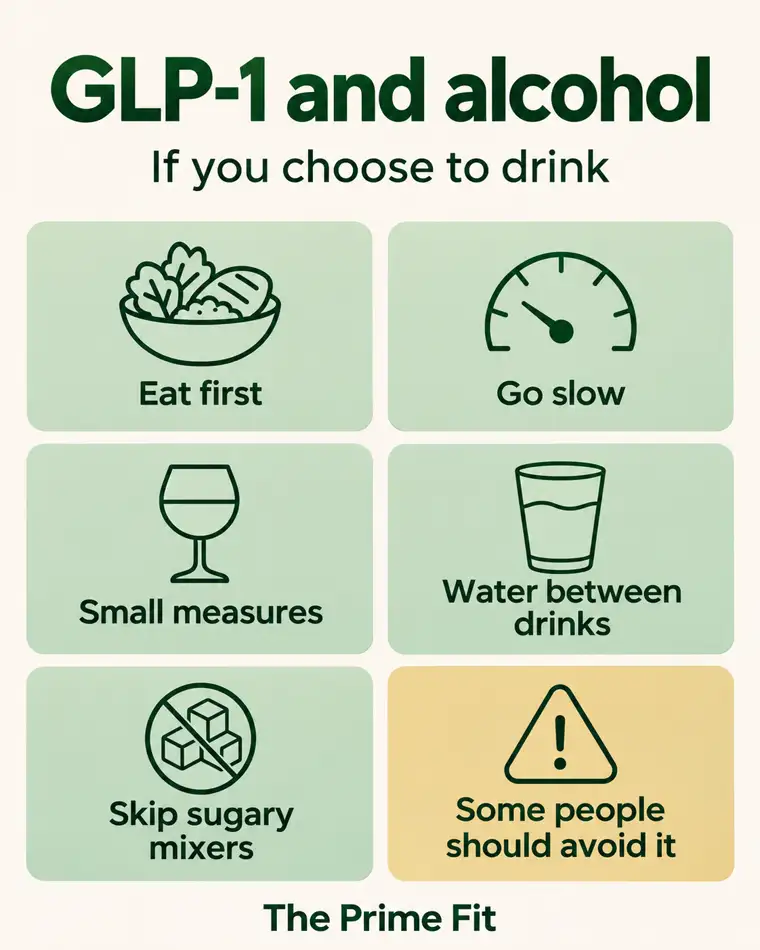
Ten rules if you choose to drink
- Avoid alcohol in the first weeks of treatment and for about a week after each dose increase, when side effects are most likely.
- Do not drink on the day of your injection or the two days after, if that is when you usually feel nauseous.
- Never drink on an empty stomach. Have a small meal with protein first, such as dal and roti, paneer, eggs or grilled chicken.
- Keep it to one, and at most two, standard drinks, and sip slowly. You will probably feel the effect sooner than you used to.
- Alternate every drink with a glass of water, and drink water before bed.
- Choose simple drinks. A small peg with water or soda, or a small glass of dry wine, is easier on the stomach and lower in calories than beer in large volumes, sweet cocktails or creamy liqueurs.
- Avoid fizzy mixers and sugary juices if you get bloating or reflux. Soda can worsen burping; plain water is gentlest.
- Plan the snacks. Fried starters with alcohol are the classic recipe for nausea. See the swaps below.
- If you have diabetes, check your sugar before bed and the next morning, have a snack if advised, and make sure someone with you knows the signs of low blood sugar.
- Keep alcohol-free days the norm, and do not “save up” drinks for one evening.

What to eat with drinks: Indian party swaps
| Common choice | Problem | Better choice |
|---|---|---|
| Fried pakoras, samosas, spring rolls | Oily; sit heavily in a slowed stomach | Paneer tikka, tandoori chicken or fish tikka, grilled mushrooms |
| Salted peanuts and namkeen by the bowl | Easy to overeat; very salty | A small handful of roasted chana or peanuts, makhana |
| Chips with creamy dips | Refined starch and fat | Cucumber, carrot and hung-curd dip; sprouts chaat |
| Butter chicken with naan late at night | Rich gravy plus refined flour | Tandoori dishes, dal, sabzi and one roti, eaten earlier in the evening |
| Sweet cocktails and mocktails | Sugar load; reflux | Nimbu soda without sugar, plain soda with mint, jaljeera |
| Dessert after drinks | Sugar on top of alcohol calories | Share a small portion, or have fruit |
Weddings, festivals and work events
Indian social life often involves several events in a week, and repeated late nights can undo a lot of progress. A few strategies help:
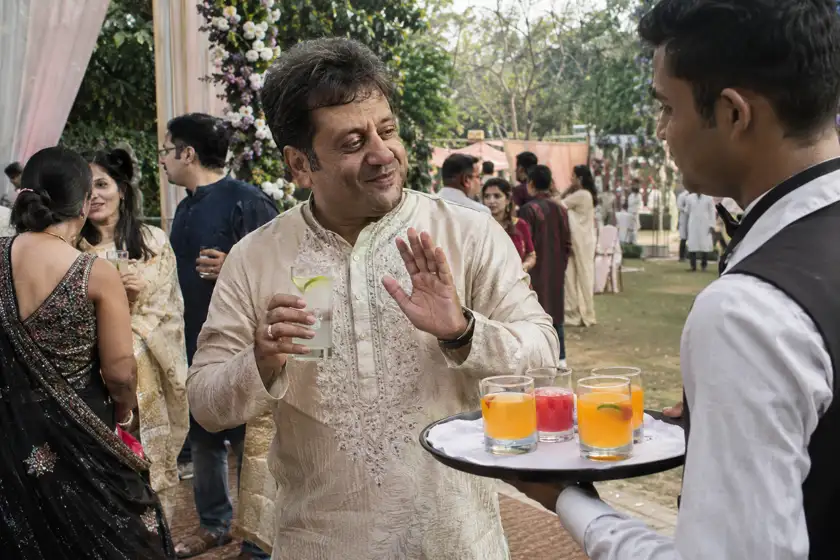
- Decide before you arrive whether you will drink and how much. Decisions made in the moment tend to drift.
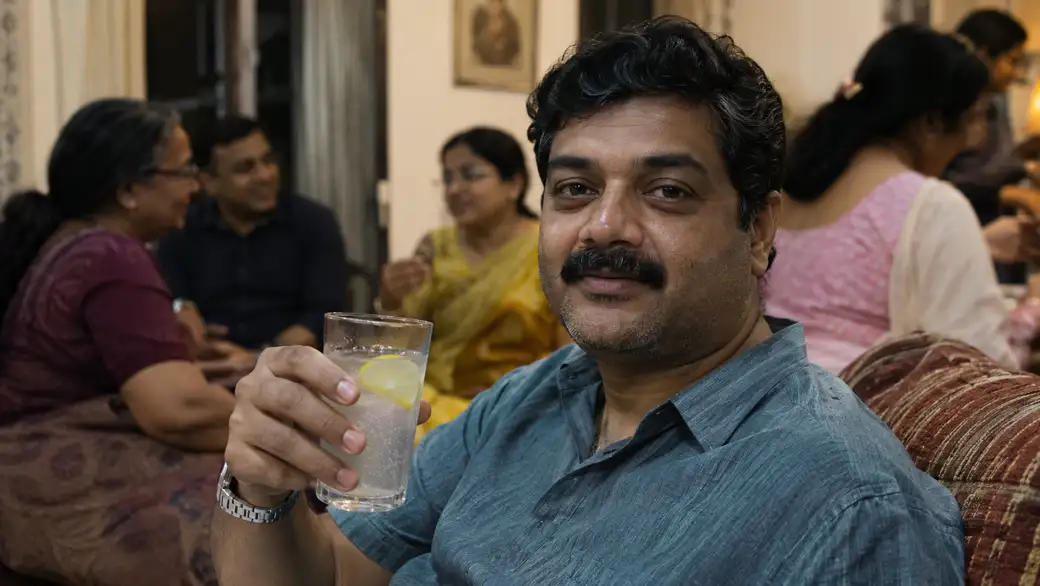
- Hold a non-alcoholic drink. Soda with lime, in a glass, removes most of the social pressure.
- Eat a small protein-rich snack at home so that you are not drinking on an empty stomach while waiting for a late dinner.
- Time your injection so that the two or three days after it do not fall on the main event, where possible. Discuss changing your injection day with your healthcare provider; at least three days are needed between doses.
- Have a ready answer. “I am on medication” or “I am driving” ends most conversations politely.
- Return to routine the next day: water, a normal breakfast with protein, and a walk. Do not skip meals to compensate.
The morning after
If you do overdo it, focus on recovery rather than guilt.
- Rehydrate with water, ORS, coconut water or chaas.
- Eat something light with protein: idli with sambar, eggs and toast, curd rice or khichdi.
- Avoid painkillers on an empty stomach, and avoid “hair of the dog”.
- If you have diabetes, check your blood sugar and eat regularly through the day.
- Do not take an extra dose or change your injection schedule.
Seek medical help urgently if
You have severe, persistent pain in the upper abdomen (which may spread to the back), repeated vomiting and cannot keep fluids down, confusion or drowsiness that does not improve after eating, black or bloody vomit or stools, or signs of severe dehydration such as very little urine and dizziness on standing.
Do GLP-1 medicines reduce the desire to drink?
Many patients notice that alcohol becomes less appealing on treatment. Some lose the taste for it; others find that one drink is enough. This is consistent with how the medicines work. GLP-1 receptors are present in brain areas involved in reward, and the same mechanism that quietens “food noise” may also reduce the pull of alcohol.
Early research supports this observation. Studies in animals, analyses of patient records and small clinical trials suggest that semaglutide and related medicines can reduce alcohol craving and the amount people drink. Larger trials are under way. At present these medicines are not approved for treating alcohol use disorder, and nobody should take them for that purpose outside proper medical care. If you find you are drinking less, that is a welcome side benefit for your weight, liver and sleep.
If, on the other hand, you are worried about how much you drink, please tell your healthcare provider. It is a common problem, effective help exists, and it will make your weight treatment safer.
Alcohol, fatty liver and weight loss
A large proportion of people with obesity or type 2 diabetes have fatty liver disease related to metabolism. Weight loss of 7 to 10 percent or more can reduce liver fat and inflammation, and this is one of the major health gains of GLP-1 treatment. Alcohol adds a second source of liver injury. Even amounts usually described as moderate can speed up scarring in a liver that is already fatty. If you have been told you have fatty liver, raised liver enzymes or fibrosis, the safest amount of alcohol is none, or as close to none as you can manage. Ask your healthcare provider about your own case.
If you have type 2 diabetes
- Know whether your medicines can cause low blood sugar. Insulin and sulfonylureas can; metformin and GLP-1 medicines on their own rarely do.
- Never drink without eating. Include some carbohydrate with your meal, such as a roti or a small portion of rice.
- Avoid sweet wines, liqueurs, regular cola and juice mixers, which raise sugar first and may be followed by a fall later.
- Check your sugar before sleeping. If it is on the lower side, have a snack as your healthcare provider has advised.
- Carry glucose tablets or sugar, and wear or carry medical identification.
- Remember that glucagon injections for severe hypoglycaemia work less well after heavy drinking.
Alcohol, sleep and the next day’s eating
Alcohol may help you fall asleep, but it fragments sleep in the second half of the night and reduces the deep and dream stages. Poor sleep raises the hunger hormone ghrelin, lowers the fullness hormone leptin and reduces insulin sensitivity the following day. People typically eat more, crave sweet and fried food, and skip exercise after a night of drinking. On GLP-1 treatment the appetite effect is partly masked, but tiredness, low mood and a missed workout still slow progress. If you are working hard to protect your muscle with strength training, regular late nights with alcohol work directly against it, because alcohol also reduces muscle protein building after exercise.
Alcohol-free and lower-alcohol alternatives
You do not need alcohol in your glass to take part. These options are easier on the stomach and on your progress.
| Option | Why it works | Watch out for |
|---|---|---|
| Fresh lime soda, salted or plain | Refreshing, almost calorie-free | Ask for no sugar syrup; soda can cause burping |
| Jaljeera or masala chaas | Aids digestion; chaas adds a little protein | Salt content if you have high blood pressure |
| Plain or infused water with mint, cucumber or lemon | Hydrating; gentlest on the stomach | None |
| Coconut water | Replaces fluid and potassium | Contains natural sugar; one glass is enough |
| Alcohol-free beer or wine | Looks and tastes similar | Check the label for sugar and calories |
| Wine spritzer (half wine, half soda) | Halves the alcohol per glass | Still counts as alcohol |
| Virgin mojito or mocktail | Feels festive | Often very high in sugar; ask for less syrup |

Alcohol and other medicines you may be taking
Many people on GLP-1 treatment also take other medicines, and some of these matter more than the injection when it comes to alcohol.
- Insulin and sulfonylureas: risk of low blood sugar, as described above.
- Metformin: heavy drinking increases the rare risk of lactic acidosis. Avoid binge drinking.
- Blood pressure medicines: alcohol can lower blood pressure further and cause dizziness, especially when you are losing weight and a little dehydrated.
- Painkillers: anti-inflammatory tablets with alcohol irritate the stomach; paracetamol with heavy drinking strains the liver.
- Sleeping tablets, anti-anxiety medicines and some antidepressants: alcohol increases drowsiness.
- Certain antibiotics and antifungals: some react badly with alcohol. Check the label or ask your pharmacist.
A quick decision guide
| Your situation today | Best choice |
|---|---|
| First month of treatment, or within a week of a dose increase | Skip alcohol |
| Feeling nauseous, acidic, constipated or dehydrated | Skip alcohol |
| Injection taken today or in the last two days, and you usually feel it | Skip alcohol |
| History of pancreatitis, liver disease, or pregnancy plans | No alcohol at all |
| Settled on a stable dose, feeling well, special occasion | One small drink with food and water, if your healthcare provider has no objection |
Common myths
“A drink helps settle the stomach”
It does the opposite on GLP-1 treatment. Alcohol increases acid and irritation.
“Beer is better than whisky because it is weaker”
Beer is lower in alcohol per millilitre but is drunk in much larger volumes, is fizzy and adds substantial calories. Volume and gas are a poor match for a slow stomach.
“Red wine is good for the heart, so it is fine”
The supposed heart benefits of alcohol have been questioned by more recent research. No healthcare professional would advise starting to drink for health.
“The injection protects my liver, so alcohol does not matter”
Weight loss helps the liver; alcohol harms it. The benefit of one does not cancel the damage of the other.
“If I skip dinner, I can drink without gaining weight”
Drinking on an empty stomach raises blood alcohol faster, worsens nausea, increases the risk of low blood sugar and usually ends with late-night overeating.
How The Prime Fit helps you plan real life
A treatment plan that ignores weddings, festivals and client dinners will not last. At The Prime Fit, your dietitian helps you plan for social occasions: what to eat beforehand, which choices are gentlest on the stomach, how to protect your protein intake, and how to get back on track the next day. Your healthcare provider reviews your medicines, liver tests and blood sugar, and advises honestly on whether alcohol is safe for you at all.
If you would like a plan built around your life, book a consultation or read about our GLP-1 support programme and fatty liver diet programme.
Frequently asked questions
Can I drink alcohol while taking Mounjaro?
There is no direct interaction, and small amounts are not prohibited for most people. However, alcohol can worsen nausea, acidity and dehydration and slow weight loss. Avoid it around dose increases, and avoid it completely if you have had pancreatitis or have significant liver disease.
Can I drink on Wegovy or Ozempic?
The same advice applies. Keep to small amounts, with food and water, and be cautious if you have diabetes and take medicines that can cause low blood sugar.
How long after my injection should I wait before drinking?
There is no fixed rule, because the medicine works all week. Side effects are usually strongest for one to three days after the injection and for about a week after a dose increase, so those are the best times to avoid alcohol.
Why do I feel drunk faster on GLP-1 treatment?
You weigh less and are eating less, so the same amount of alcohol produces a higher level in the blood. Drink less than you used to, and more slowly.
Which alcoholic drink is best on GLP-1 medicines?
None is “best”, but a small measure of spirits with water or a small glass of dry wine is lower in calories and gas than large volumes of beer or sweet cocktails.
Does alcohol stop the injection from working?
No, but the extra calories, poorer food choices and disturbed sleep that come with drinking can slow or stall your weight loss.
Is it dangerous to drink if I have diabetes and take a GLP-1 medicine?
The main danger is low blood sugar if you also take insulin or sulfonylureas, particularly if you drink without eating. Check your sugar, eat with your drink, and follow your healthcare provider’s advice.
Does alcohol increase the risk of pancreatitis on these medicines?
Heavy drinking is a leading cause of pancreatitis in its own right. Because pancreatitis has rarely been reported with GLP-1 medicines, avoiding heavy drinking is sensible, and anyone with previous pancreatitis should not drink.
I have lost interest in alcohol since starting treatment. Is that normal?
Yes, many people report this. Research suggests GLP-1 medicines may reduce alcohol craving, although they are not approved for that purpose.
What should I do if I vomit after drinking?
Stop drinking, sip water or ORS, and rest. Seek medical help if vomiting continues, you cannot keep fluids down, or you have severe abdominal pain.
This article is general information and is not a substitute for a consultation. It does not encourage alcohol use. Ask your healthcare provider whether alcohol is safe for you with your medicines and health conditions.