
In this article
- What is cortisol and what does it do?
- What do people mean by cortisol belly and cortisol face?
- Does stress cause belly fat?
- What is real cortisol excess? Cushing’s syndrome
- Could a medicine be the cause?
- Why does my face look puffy? Other causes of “cortisol face”
- Why belly fat is so common in Indians
- Should you get a cortisol test?
- Do cortisol supplements, detoxes and “cortisol cocktails” work?
- What actually reduces belly fat?
- Practical ways to manage stress in an Indian routine
- Common myths about cortisol belly and cortisol face
- Who should see a healthcare professional, and when is it urgent?
- Questions to ask your healthcare provider
- How The Prime Fit helps
- Frequently asked questions
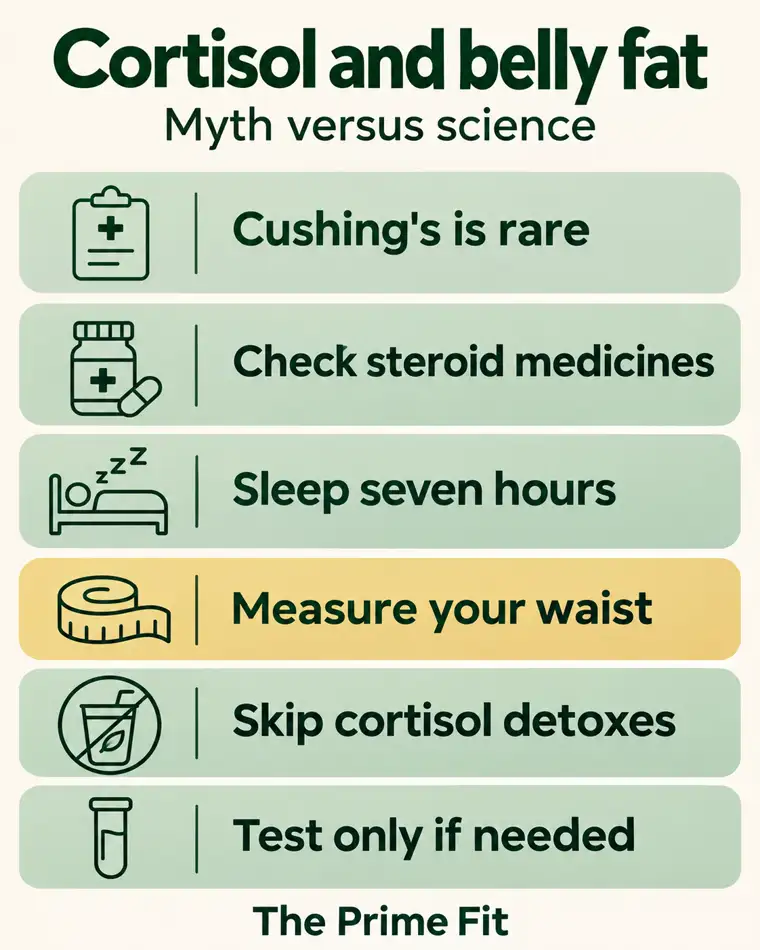
“Cortisol belly” and “cortisol face” are social media terms for abdominal fat and a round, puffy face that are said to be caused by high levels of the stress hormone cortisol. The science is more measured. Very high cortisol does cause central weight gain and a rounded face, but that condition, called Cushing’s syndrome, is rare and usually comes with other clear signs. For the great majority of people, belly fat and facial fullness are explained by overall weight gain, sleep, alcohol, activity levels, genetics, age and sometimes medicines.
Stress still matters. It changes how we eat, sleep and move, and long-term stress is linked with weight gain around the waist. But the link runs mostly through behaviour and sleep, not through a hormone problem that a supplement or a “cortisol detox” can fix.
This article explains what cortisol does, how to recognise the rare cases that need testing, and what actually reduces abdominal fat. It is general information and does not replace a medical consultation.
What is cortisol and what does it do?
Cortisol is a hormone made by the adrenal glands, which sit on top of the kidneys. It is essential for life. It helps maintain blood pressure and blood sugar, regulates the immune system, and helps the body respond to illness, injury and stress.
Cortisol follows a daily rhythm. It is highest in the early morning, around the time of waking, and falls through the day to its lowest point near midnight. It also rises briefly during exercise, illness, fasting and emotional stress. These rises are normal and healthy. A cortisol level is therefore not “good” or “bad” in itself: the time of day and the situation determine what is expected.
What do people mean by cortisol belly and cortisol face?
Online, “cortisol belly” usually means fat that sits around the waist and seems resistant to dieting. “Cortisol face” means a face that looks rounder or puffier than before, often in photographs. Videos then suggest that the cause is hidden high cortisol and offer fixes: supplements, special drinks, avoiding intense exercise, or avoiding coffee.
The idea borrows from real medicine. Healthcare professionals have long known that people with Cushing’s syndrome develop central weight gain and a rounded “moon” face. The leap is in assuming that everyday stress produces a mild version of the same thing in millions of people. That has not been shown.

Does stress cause belly fat?
There is a genuine association. Studies have found that people with markers of higher long-term cortisol exposure tend, on average, to have a larger waist and higher body weight. People who report chronic stress also gain more weight over time in several studies.
Association is not the same as cause, and the relationship probably runs in more than one direction. Carrying more weight can itself alter cortisol handling. Stress also changes behaviour in ways that add abdominal fat without any hormone disorder:
- Eating for comfort, with more sweets, fried snacks and late-night food.
- Shorter and poorer sleep, which increases hunger the next day.
- More alcohol in some people.
- Less movement, because long work hours and fatigue push out exercise.
- Irregular meals, with long gaps followed by large portions.
So stress management is worthwhile for weight. But in a person with ordinary stress and normal adrenal glands, the cortisol level is usually within the normal range, and lowering it further is not the goal.
What is real cortisol excess? Cushing’s syndrome
Cushing’s syndrome is the medical name for the effects of prolonged, substantially raised cortisol. The most common cause by far is long-term use of steroid medicines (glucocorticoids), taken as tablets, injections, or sometimes strong creams, inhalers or joint injections over long periods. Cushing’s syndrome caused by the body itself, usually from a small growth in the pituitary or adrenal gland, is rare.
The pattern of signs is what separates it from ordinary weight gain.
| Feature | Ordinary weight gain | Suggests Cushing’s syndrome |
|---|---|---|
| Fat distribution | Belly, hips, thighs and limbs gain together | Belly, face and upper back gain while arms and legs become thinner |
| Face | Fuller in proportion to weight | Markedly round and often red |
| Stretch marks | Thin, pale or pink | Wide, deep purple or red, often on the abdomen |
| Skin | Normal | Thin, bruises easily, heals slowly |
| Muscles | Normal strength | Weak thighs and upper arms: difficulty rising from a low chair or climbing stairs |
| Other findings | May have raised blood pressure or sugar | New or worsening high blood pressure and diabetes, fragile bones, irregular periods, excess facial hair in women, low mood |
No single feature proves the diagnosis. Easy bruising, wide purple stretch marks, muscle weakness in the thighs and a red, rounded face are the signs that most strongly point towards it. Having only belly fat, with none of these, makes Cushing’s syndrome unlikely.
Could a medicine be the cause?
Before blaming stress, check your medicines. Steroids are prescribed for asthma, arthritis, skin disease, allergies and many other conditions, and they are very useful. Taken at significant doses for long periods, they can cause weight gain, a rounder face, raised blood sugar and thin skin.
In India there is an additional concern. Some creams sold for skin lightening or rashes contain strong steroids, and some unlabelled powders or tablets sold as herbal or “desi” remedies for joint pain, asthma or weight gain have been found to contain steroids. If you have used such products for months, tell your healthcare provider.
Never stop steroids suddenly
If you have been taking steroid medicines for more than a few weeks, do not stop them abruptly, even if you suspect they are causing weight gain. The body may not be able to make enough cortisol of its own straight away, and stopping suddenly can be dangerous. Any reduction must be planned by your healthcare provider.

Why does my face look puffy? Other causes of “cortisol face”
A fuller face is usually not a hormone disorder. Common explanations include:
- General weight gain. The face stores fat like the rest of the body, and some families carry more there.
- Salt and fluid. A salty dinner, pickles, papad or packaged snacks can cause morning puffiness.
- Alcohol and poor sleep, both of which cause temporary swelling around the eyes.
- The days before a period, when fluid retention is common.
- Allergies and sinus congestion.
- An underactive thyroid, which can cause facial puffiness with tiredness, dry skin and constipation. See our article on thyroid problems and weight.
- Kidney, heart or liver problems, where swelling usually also affects the feet or eyelids and needs medical review.
Facial changes can also follow weight loss. That is a different issue, covered in our guide to “Ozempic face” and loose skin.
Why belly fat is so common in Indians
South Asians tend to store more fat around the abdomen and internal organs at a lower body weight than many other populations. This is why Indian guidance uses lower cut-offs: overweight starts at a BMI of 23 and obesity at 25, and a waist above 90 cm in men or 80 cm in women signals higher risk. You can check yours with the BMI calculator.
The usual drivers are familiar: more energy eaten than used over years, long hours of sitting, refined carbohydrate and fried snacks, sugary drinks, alcohol, short sleep and little muscle-strengthening activity. Hormonal changes add to this at certain life stages. Women often notice a shift of fat towards the waist around menopause and men with abdominal obesity may have lower testosterone, as explained in our guide for men and belly fat. None of these requires a cortisol explanation.
Should you get a cortisol test?
Usually not. A random blood cortisol tells very little, because the level changes through the day and rises with any stress, including the blood draw itself. Women taking oestrogen-containing contraceptive pills often show a high total cortisol on a blood test without having any excess of active hormone. Direct-to-consumer “stress hormone panels” therefore produce many confusing results.
When a healthcare professional does suspect Cushing’s syndrome, specific screening tests are used, often more than one:
| Test | What it involves | What it looks for |
|---|---|---|
| Overnight dexamethasone suppression test | A small steroid tablet late at night, then a blood cortisol the next morning | Whether cortisol switches off as it should |
| Late-night salivary cortisol | Saliva samples collected at bedtime, usually on two nights | Loss of the normal night-time low |
| 24-hour urinary free cortisol | All urine collected for a full day, usually twice | Total cortisol output over the day |
Mildly abnormal results can occur with heavy alcohol use, depression, poorly controlled diabetes, severe obesity and disturbed sleep, so results need an endocrinologist’s interpretation. Testing is reasonable if you have several of the features in the first table, especially if they are getting worse over time.
Do cortisol supplements, detoxes and “cortisol cocktails” work?
There is no good evidence that any supplement removes belly fat by lowering cortisol.
- Ashwagandha. Small trials suggest it may modestly reduce perceived stress and cortisol readings. That is not the same as losing abdominal fat. It is not suitable in pregnancy, it may affect thyroid hormone levels, and rare cases of liver injury have been reported. Discuss it with your healthcare provider if you take thyroid or other regular medicines.
- “Cortisol cocktails” of juice, coconut water and salt. These have no proven effect on cortisol and add sugar and sodium.
- “Adrenal fatigue” treatments. Adrenal fatigue is not a recognised medical diagnosis. Products sold for it sometimes contain undeclared hormones.
- “Cortisol-blocking” pills and teas. No reliable trials show fat loss.
What actually reduces belly fat?
Abdominal fat responds to overall fat loss. It cannot be targeted with a particular exercise or food, but it is often among the first areas to reduce when weight comes down.
- A modest, sustained calorie deficit built on dal, pulses, vegetables, curd, eggs, fish or chicken, and measured portions of roti and rice.
- Less sugar, fried food and alcohol.
- Regular activity: at least 150 minutes of brisk walking or similar each week.
- Strength training twice a week to protect muscle. A simple beginner routine is enough to start.
- Seven to nine hours of sleep, at regular times.
- Medical treatment where appropriate. For people who meet the criteria, medicines such as Mounjaro and Wegovy reduce weight and waist size under supervision. See who is eligible.
Practical ways to manage stress in an Indian routine
Stress reduction will not melt fat on its own, but it makes every other habit easier to keep. This is an illustrative example of a weekday routine, not a prescription.
| Time | Habit | Why it helps |
|---|---|---|
| Morning | 10 to 15 minutes of daylight with a walk, yoga or pranayama | Supports the body clock and mood |
| Breakfast | Protein-based: moong chilla with curd, besan cheela, or eggs with a roti | Steadier appetite through the morning |
| Workday | Stand or walk for a few minutes every hour, and eat lunch away from the screen | Breaks up sitting and reduces mindless eating |
| Evening | Planned snack such as roasted chana, fruit or chaas, instead of namkeen with tea | Prevents the 6 pm raid on the kitchen |
| Dinner | Earlier and lighter: dal or grilled fish or chicken, sabzi, salad and 1 to 2 rotis | Better sleep and smaller late-night intake |
| Night | Screens off 30 to 60 minutes before bed, with a fixed bedtime | Longer, deeper sleep |
If stress, low mood or emotional eating feel unmanageable, that deserves help in its own right. Our article on mood and emotional eating explains the options.
Common myths about cortisol belly and cortisol face
- Myth: a round face means high cortisol. Most facial fullness reflects weight, fluid, sleep or genetics.
- Myth: intense exercise gives you a cortisol belly. Exercise raises cortisol briefly, which is a normal response. Regular exercise is linked with less abdominal fat, not more. Rest days still matter.
- Myth: coffee causes cortisol belly. Caffeine can raise cortisol for a short time, less so in regular drinkers. Sugar and cream in the cup matter more.
- Myth: a blood test will reveal the problem. A random cortisol is rarely informative.
- Myth: face massage or tools drain a cortisol face. They may reduce temporary puffiness. They do not change fat or hormones.
- Myth: you cannot lose weight until cortisol is fixed. People with normal adrenal function lose weight with the usual measures.

Who should see a healthcare professional, and when is it urgent?
Book an appointment if you have rapid central weight gain together with any of the following: easy bruising, wide purple stretch marks, weakness in the thighs or shoulders, new high blood pressure or diabetes, irregular or absent periods, new excess facial hair, or fractures after minor falls. Also see a healthcare professional if you have used steroid medicines or unlabelled remedies for a long time.
Seek urgent care
Get urgent medical help for severe weakness, vomiting, dizziness or fainting in someone who has recently stopped or missed long-term steroid medicines. Urgent review is also needed for facial swelling with breathlessness, swelling of the lips or tongue, chest pain, a sudden severe headache or sudden loss of vision.
Questions to ask your healthcare provider
- Do my symptoms and examination suggest a hormone problem, or ordinary weight gain?
- Could any of my medicines, creams or supplements be contributing?
- Do I need thyroid, blood sugar, cholesterol or liver tests?
- Is there any reason to test my cortisol, and which test would you use?
- What are my BMI and waist measurements, and what do they mean for my health?
- Could poor sleep or sleep apnoea be part of the picture?
- Which treatment options are appropriate for my weight?
How The Prime Fit helps
At The Prime Fit, an assessment looks at the whole picture: your weight history, waist measurement, medicines, sleep, stress, periods or menopause where relevant, and appropriate blood tests. If the pattern suggests a hormone condition that needs specialist investigation, you will be advised to see the right specialist.
For the far more common situation of abdominal weight gain without a hormone disorder, the plan combines practical nutrition support, activity guidance and, where suitable, medical treatment such as GLP-1 therapy with regular follow-up to adjust the approach over time.
Frequently asked questions
Is cortisol belly real?
Very high cortisol, as in Cushing’s syndrome, does cause central weight gain, but that is rare. Most belly fat is due to overall weight gain, lifestyle, genetics and age, not a cortisol disorder.
What does a cortisol face look like in real medicine?
In Cushing’s syndrome the face becomes markedly round and often red, usually alongside easy bruising, purple stretch marks, thin skin and muscle weakness. A slightly fuller face on its own is not this.
Can stress alone make me gain weight?
Chronic stress is linked with weight gain, mainly through comfort eating, poor sleep, alcohol and less activity. Managing stress helps, alongside diet and movement.
Should I get my cortisol level checked?
Only if a healthcare professional finds features that suggest Cushing’s syndrome. A random blood cortisol is unreliable. Specific tests such as a dexamethasone suppression test or late-night salivary cortisol are used.
Does ashwagandha reduce cortisol belly?
Small studies suggest it may modestly lower perceived stress and cortisol readings, but there is no good evidence that it reduces belly fat. It is not suitable for everyone, so ask your healthcare provider first.
Does intense exercise raise cortisol and cause belly fat?
Exercise raises cortisol for a short time, which is normal. Regular exercise, including vigorous exercise, is associated with less abdominal fat.
Can steroid medicines cause a round face and belly fat?
Yes, long-term or high-dose steroids can. Do not stop them suddenly. Speak to the healthcare professional who prescribed them about the lowest effective dose or alternatives.
How do I reduce belly fat if my cortisol is normal?
Through overall fat loss: a modest calorie deficit, enough protein and fibre, regular walking, strength training, good sleep and less alcohol. Some people also qualify for medical treatment.
This article is general information and is not a substitute for a consultation. Do not start, stop or change any medicine, including steroids, without medical advice. If you think you may have a hormone condition, see a healthcare professional for a proper assessment.