In this article
- The basics
- Know your device
- Where to inject
- Rotating injection sites
- Before you inject: preparation
- Step by step: single-dose auto-injector pens
- Step by step: multi-dose pens
- Step by step: vial and syringe
- Do I need to pinch the skin?
- Making it more comfortable
- Troubleshooting
- Choosing your injection day and time
- Missed doses
- Storage
- Safe disposal
- Safety rules that are not negotiable
- If someone else gives your injection
- Injection day and food
- If you are afraid of needles
- A one-page checklist
- Common myths
- How The Prime Fit helps you get started
- Frequently asked questions
For many people, the injection is the most intimidating part of starting a GLP-1 medicine such as Mounjaro (tirzepatide), Wegovy or Ozempic (semaglutide). The worry is understandable if you have never injected yourself. In practice, almost everyone finds it far easier than expected. The needle is very fine and short, it goes into the fat just under the skin, and the whole process takes less than a minute once a week.
Good technique matters, though. It makes the injection more comfortable, prevents bruising and lumps, and ensures that you receive the full dose every time. Small errors, such as lifting the pen away too early or injecting into the same spot repeatedly, are common reasons for a medicine seeming to work less well.
This guide covers the principles that apply to all these medicines and the main differences between device types. Pens differ between products and countries, so the leaflet in your own pack, and a demonstration from your healthcare provider, nurse or pharmacist, take priority over any general guide. This is general information.
The basics
| Question | Answer |
|---|---|
| How often? | Once a week, on the same day each week |
| What time? | Any time of day, with or without food |
| Where does it go? | Into the fatty layer under the skin (subcutaneous), not into muscle or a vein |
| Which parts of the body? | Abdomen, front of the thigh, or back of the upper arm |
| How long does it take? | Under a minute |
| Does it hurt? | Most people feel a brief pinch or nothing |
| Who can give it? | You, or a family member or carer who has been shown how |
Know your device
GLP-1 medicines are supplied in several kinds of device. The steps differ, so identify which you have.
| Device type | How it works | Key points |
|---|---|---|
| Single-dose auto-injector pen | One pen contains one dose. The needle is hidden inside. You remove the cap, place the pen on the skin and press or push; the pen injects automatically | No dose to set and no needle to attach. Used once and discarded |
| Multi-dose pen with a dial | One pen contains several weekly doses. You attach a new needle each time, dial or select the dose, insert the needle and press the button | A new needle for every injection. Check the dose window. Note the date of first use and discard the pen after the in-use period |
| Vial with syringe | The medicine is drawn up from a vial into a syringe and injected | Requires careful measuring. Use only the syringe and volume your healthcare provider or pharmacist has specified |
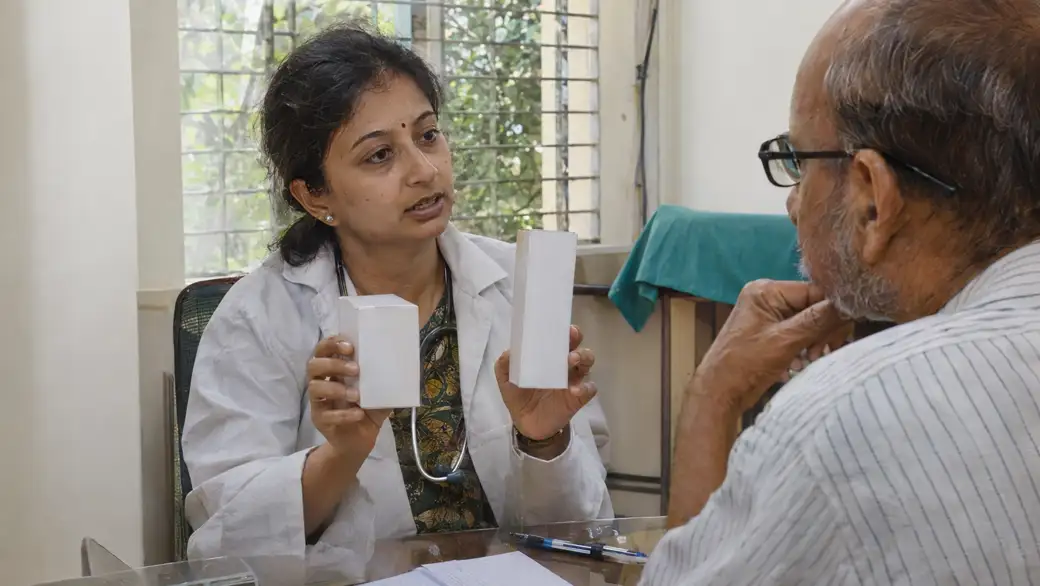
If you are unsure which type you have, or if your pen looks different from your previous one, ask your pharmacist before using it.
Where to inject
The three areas
| Area | Exactly where | Notes |
|---|---|---|
| Abdomen | Anywhere on the front of the abdomen at least 5 cm (about three finger-widths) away from the navel, between the lower ribs and the hip bones | The easiest area for most people; plenty of fat; easy to see and reach |
| Thigh | The front and outer part of the upper thigh, in the middle third between hip and knee | Convenient when sitting. Avoid the inner thigh, which is more sensitive and rubs against clothing |
| Upper arm | The fleshy back of the upper arm, between shoulder and elbow | Difficult to reach yourself; best when someone else gives the injection |
The medicine is absorbed similarly from all three areas. Choose the one that is most comfortable and convenient.
Places to avoid
- Within 5 cm of the navel
- Skin that is bruised, red, swollen, hard, scarred or tender
- Moles, stretch marks, tattoos with raised skin, and surgical scars
- Areas with a rash or infection
- The waistband or belt line, where clothing rubs
- Any lump left from a previous injection
Rotating injection sites
Injecting repeatedly into the same spot can cause lumps of thickened fat, bruising and soreness, and the medicine is absorbed less reliably from damaged tissue. Rotation prevents this.
- You can use the same area of the body each week, but choose a different spot within it.
- Keep each new spot at least 2 to 3 cm, about two finger-widths, from the last one.
- A simple system: divide the abdomen into four quarters around the navel and use one quarter each week, moving clockwise. Add the thighs for further variety.
- Keep a note of the date, dose and site, on your phone or a card in the box.
| Week | Example site |
|---|---|
| 1 | Abdomen, upper right |
| 2 | Abdomen, lower right |
| 3 | Abdomen, lower left |
| 4 | Abdomen, upper left |
| 5 | Right thigh |
| 6 | Left thigh |
Before you inject: preparation
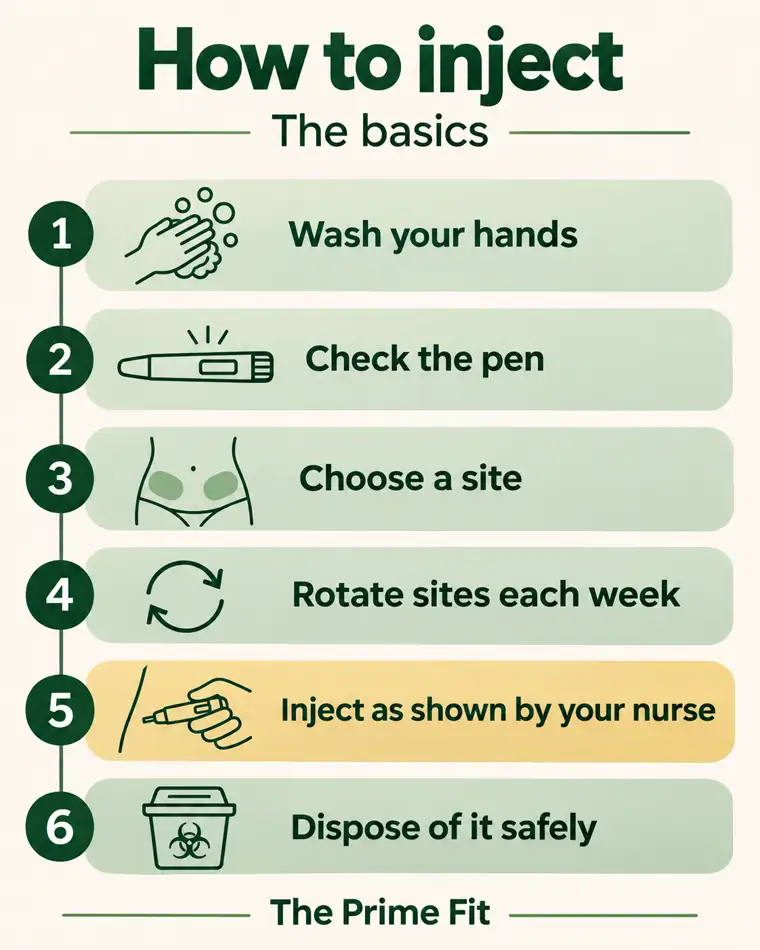
- Check the pen. Confirm the name and strength are what was prescribed. Check the expiry date. Look at the liquid through the window: it should be clear and colourless or slightly yellow, with no particles. Do not use it if it is cloudy, coloured, frozen or damaged.
- Let it warm slightly. Taking the pen out of the fridge about 30 minutes beforehand makes the injection more comfortable. Do not warm it with hot water, sunlight or a microwave.
- Wash your hands with soap and water.
- Gather what you need: the pen, a new needle if your pen uses one, an alcohol swab if you use them, and your sharps container.
- Choose and clean the site. Clean skin is sufficient. If you use an alcohol swab, let the skin dry completely, since injecting through wet alcohol stings.
- Get comfortable. Sit or stand where you can see the site clearly, with good light.
Step by step: single-dose auto-injector pens
These pens deliver one fixed dose. The details below describe the general pattern; follow your leaflet for the exact sequence and timing.
- Check the pen and the liquid, as above. Make sure the pen is locked, if it has a lock.
- Pull the cap straight off. Do not twist it, and do not put it back on, as this can damage the needle. Do not touch the needle end.
- Place the flat base of the pen firmly against the skin at the chosen site, at a right angle, so that the whole base is in contact.
- Unlock the pen if required, then press and hold the button, or push the pen down, as your device requires.
- You will usually hear a click when the injection starts. Keep holding the pen firmly against the skin.
- Continue to hold until the pen signals that the dose is complete. Depending on the device, this is a second click, a coloured bar that stops moving in the window, or a count of several seconds. This typically takes up to about 10 seconds.
- Lift the pen straight off. The needle guard covers the needle.
- Dispose of the whole pen in a sharps container.
The commonest mistake
Lifting the pen away too soon. If you remove it before the injection has finished, some of the dose is lost. Hold steady until the pen shows it is done.
Step by step: multi-dose pens
These pens hold several doses and need a new needle each time.
- Check the label, expiry and liquid. Check the date you first used the pen; discard it if the in-use period in the leaflet has passed.
- Pull off the pen cap. Wipe the rubber seal with an alcohol swab if the leaflet advises.
- Take a new needle. Peel off the paper tab and push or screw the needle straight onto the pen until it is firm.
- Remove the outer needle cap and keep it for later. Remove the inner needle cap and discard it.
- Prime or check the flow if your leaflet tells you to. Some pens need this before the first dose from a new pen, and some before every dose. It usually involves selecting a flow-check symbol or a small number of clicks and pressing the button until a drop appears at the needle tip.
- Select your dose by turning the dose knob until the window shows the prescribed dose, or until the knob stops if your pen delivers a fixed dose. If you go too far, turn back.
- Insert the needle straight into the skin at a right angle.
- Press the button all the way down and hold it. Watch the dose counter return to zero.
- Keep the needle in the skin and the button pressed while you count slowly, usually to about 5 or 6, or for as long as your leaflet states. This lets the full dose flow in.
- Pull the needle straight out.
- Carefully replace the outer needle cap, unscrew or pull off the needle, and put it in your sharps container. Never store the pen with a needle attached.
- Replace the pen cap and return the pen to the refrigerator or store it as the leaflet directs.
Points specific to multi-dose pens
- Use a new needle every time. Reused needles become blunt, hurt more, can block and can introduce infection.
- Write the date of first use on the pen or carton.
- Do not use the pen for more doses than it is designed to deliver, even if liquid remains.
- Do not try to obtain a different dose by counting clicks unless your healthcare provider and the leaflet specifically instruct it.
- If the dose counter does not return to zero, you may not have received the full dose. Do not inject again; ask your healthcare provider or pharmacist.
Step by step: vial and syringe
If your medicine is supplied in a vial, you must be shown how to draw up the dose in person. The outline is:
- Check the vial label, strength, expiry and liquid.
- Wash your hands. Wipe the rubber stopper with an alcohol swab and let it dry.
- Use only the type and size of syringe you were prescribed. Draw air into the syringe equal to your dose, push the needle through the stopper, and inject the air into the vial.
- Turn the vial upside down and draw the liquid to exactly the mark your healthcare provider or pharmacist has shown you. Remove any large air bubbles.
- Inject at a right angle into the cleaned site, push the plunger fully, wait a few seconds and withdraw.
- Dispose of the syringe and needle in a sharps container. Single-use vials are discarded after one dose.
Most dosing errors with vials come from confusing units, millilitres and milligrams. Never guess. If you are uncertain about the volume, stop and ask.

Do I need to pinch the skin?
With auto-injector pens, the base is simply held flat and firm against the skin; pinching is not usually required. With a multi-dose pen and a short needle of 4 to 6 mm, most adults can inject straight in without pinching. Very slim people, or those injecting into an area with little fat, may be advised to lift a fold of skin gently between thumb and finger and inject into it. Follow the advice you were given for your device and body type.
Making it more comfortable
- Let the pen reach room temperature for about 30 minutes.
- Let alcohol dry fully before injecting.
- Relax the muscles in the area. Sit down, breathe out slowly as you inject.
- Choose the abdomen or outer thigh, where there is more padding.
- Insert the needle in one smooth movement; do not hesitate at the skin.
- Keep the pen still during the injection.
- Use a new needle every time with multi-dose pens.
- Do not rub the site afterwards; press gently with a clean finger or cotton if needed.
- Avoid injecting into areas that will be exercised vigorously straight afterwards.
- If you are anxious, have someone with you for the first few doses, or ask a nurse to supervise.
Troubleshooting
| What happened | Why | What to do |
|---|---|---|
| A drop of liquid on the skin or needle tip afterwards | A tiny drop is normal | Nothing; you have received your dose. Next time, hold a little longer before withdrawing |
| Liquid running down the skin | The pen was lifted early, or the base was not flat on the skin | Do not inject a second dose. Note it and tell your healthcare provider or pharmacist. Take your next dose on the usual day |
| A small drop of blood | The needle nicked a tiny blood vessel | Press gently with cotton for a minute. It is harmless |
| A bruise | As above; more likely if you take blood thinners or rub the site | It fades in a few days. Avoid that spot until healed. Do not rub after injecting |
| Redness, itching or a small lump for a day or two | A mild local reaction | Usually settles by itself. Rotate sites. Report it if it is large, painful or lasts more than a few days |
| A firm lump under the skin that persists | Repeated injections in one place | Stop using that area and rotate more widely. Show your healthcare provider |
| Stinging during the injection | Cold medicine, or alcohol not dry | Warm the pen to room temperature; let the skin dry |
| The pen did not click, or the button would not press | Pen still locked, cap not removed, needle blocked, or pen empty | Recheck the steps. For multi-dose pens, change the needle and repeat the flow check. If it still fails, do not force it; contact your pharmacist |
| You are not sure the dose went in | Distraction or an unfamiliar device | Do not take another dose. Ask your healthcare provider or pharmacist. Resume on your next scheduled day |
| You injected the wrong dose | Dial set incorrectly | Contact your healthcare provider. If you took too much, watch for severe nausea or vomiting and seek advice promptly |
| Spreading redness, warmth, pus or fever | Possible infection | See a healthcare professional promptly |
| Hives, swelling of the face or throat, difficulty breathing | Allergic reaction | Emergency care immediately |
Choosing your injection day and time
- Pick a day you will remember and can keep to every week. Many people choose a weekend day.
- Side effects such as nausea tend to be strongest one to three days after the injection, so choose a day followed by quieter days where possible.
- Evening injections suit people who prefer to sleep through any early queasiness.
- Set a weekly reminder on your phone.
- Link the injection to a routine, such as after Sunday dinner.
Changing your injection day
| Medicine | Minimum gap between two doses when changing day |
|---|---|
| Tirzepatide (Mounjaro) | At least 3 days (72 hours) |
| Semaglutide (Wegovy, Ozempic) | At least 2 days (48 hours) |
After changing, continue once a week on the new day. Confirm the rule for your product in its leaflet.
Missed doses
| Medicine | If you miss a dose |
|---|---|
| Tirzepatide (Mounjaro) | Take it as soon as possible if it is within 4 days (96 hours) of the missed dose. If more than 4 days have passed, skip it and take the next dose on your usual day |
| Semaglutide for weight management (Wegovy) | If your next scheduled dose is more than 2 days (48 hours) away, take the missed dose as soon as possible. If it is less than 2 days away, skip it. If you have missed more than 2 weeks, speak to your healthcare provider before restarting |
| Semaglutide for diabetes (Ozempic) | Take it as soon as possible if it is within 5 days of the missed dose. If more than 5 days have passed, skip it and resume on your usual day |
- Never take two doses close together to catch up.
- If you have missed two or more weeks of any of these medicines, contact your healthcare provider. You may need to restart at a lower dose to avoid strong side effects.
- Missing a single dose is not dangerous. Appetite may return a little for a few days.
- If you have diabetes, check your blood sugar more often after a missed dose.
These rules come from the product information as generally published. Check the leaflet for your own product, since details can differ.
Storage
- Keep pens and vials in the refrigerator at 2°C to 8°C, in the carton, away from the freezer compartment.
- Do not freeze. Discard anything that has frozen.
- Protect from light and heat. Never leave the pen in a car or in direct sun.
- Most products may be kept at room temperature for a limited period. The allowance differs between products and devices, so check your leaflet.
- For multi-dose pens, follow the in-use period and storage instructions after first use.
- Keep out of the reach of children.
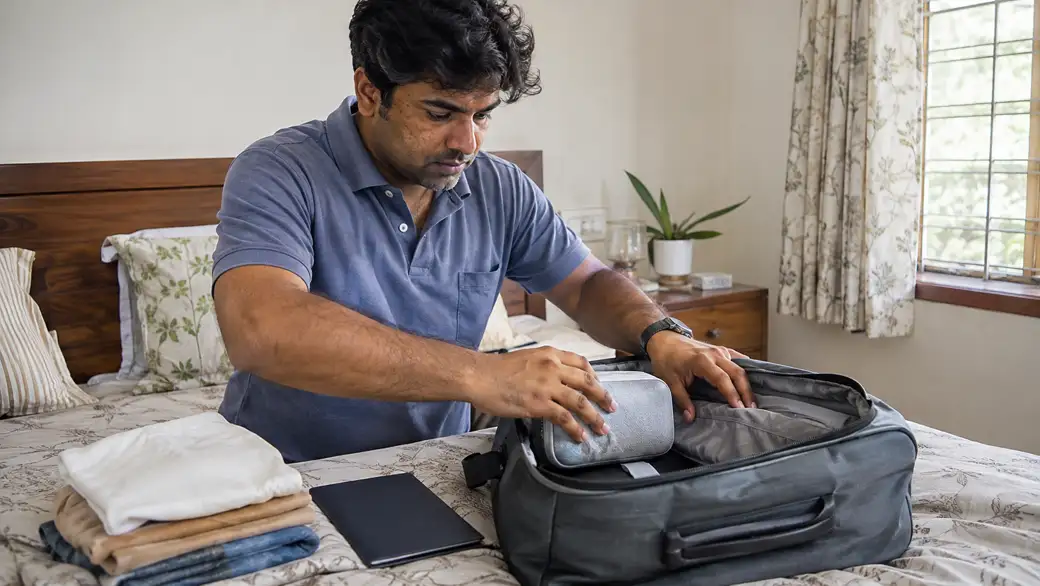
- When travelling, use an insulated pouch with a cool pack that does not touch the pen directly, and carry it in hand luggage.
Safe disposal
- Put used needles, syringes and single-dose pens straight into a puncture-proof sharps container. A pharmacy sharps box is ideal; a thick plastic bottle with a screw cap is an acceptable substitute.
- Do not recap needles from single-dose pens. For multi-dose pens, use the outer cap to remove the needle as shown in the leaflet.
- Never put loose needles in household rubbish, and never flush them.
- When the container is about three-quarters full, seal it and ask your pharmacy, centre or local authority how to dispose of it.
- Keep the container out of the reach of children and pets.
- Empty multi-dose pens, without a needle, can usually go in household waste. Deface the label first.
Safety rules that are not negotiable
- Never share a pen, even with a new needle. Blood can be drawn back into the pen and transmit infection.
- Never reuse a needle.
- Never inject into a vein or muscle.
- Never take more than one dose in a week, or two doses closer together than the minimum gap.
- Never change your dose without your healthcare provider’s instruction.
- Never use a pen that is expired, frozen, damaged, cloudy or of uncertain origin.
- Never mix the medicine with any other injection in the same syringe.
If someone else gives your injection
A spouse, relative or carer can give the injection once they have been shown how. The upper arm becomes a practical site. The person injecting should wash their hands, follow the same steps, and take care with the needle afterwards. If they sustain a needle-stick injury, they should wash the area with soap and water and seek medical advice. For older adults or people with poor eyesight or hand strength, an auto-injector pen is often easier than a dial pen or a vial.
Injection day and food
The injection does not need to be timed with meals. It does help to eat lightly on injection day and the two days after, particularly following a dose increase: small portions, protein first, little oil, and fluids sipped between meals. Avoid a heavy or late dinner on injection day, and keep alcohol away from it.
If you are afraid of needles
Needle anxiety is common. A few things help.
- Look at the needle first. Pen needles are only 4 to 6 mm long and thinner than a sewing needle. With auto-injectors you never see it.
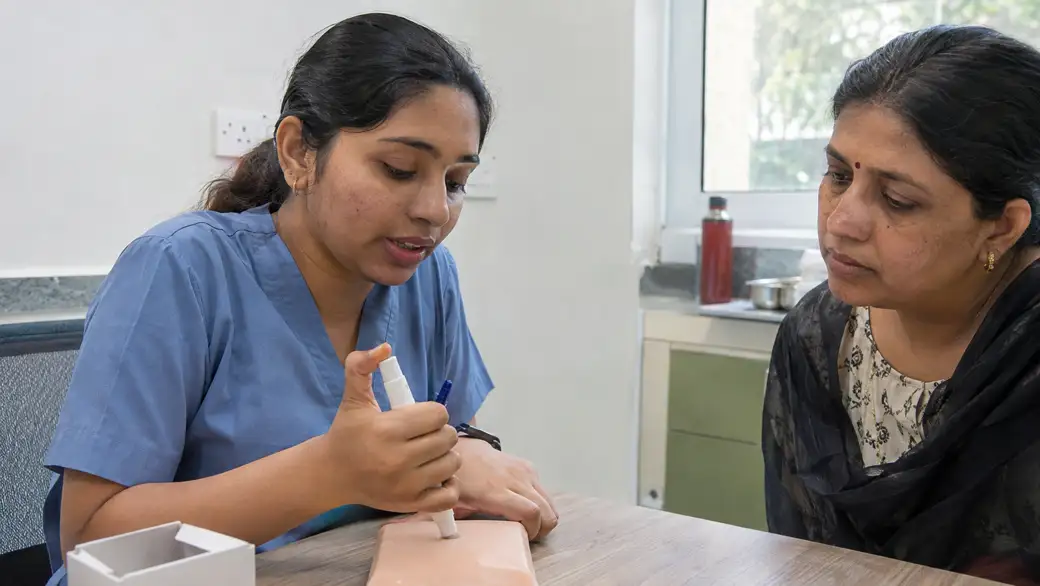
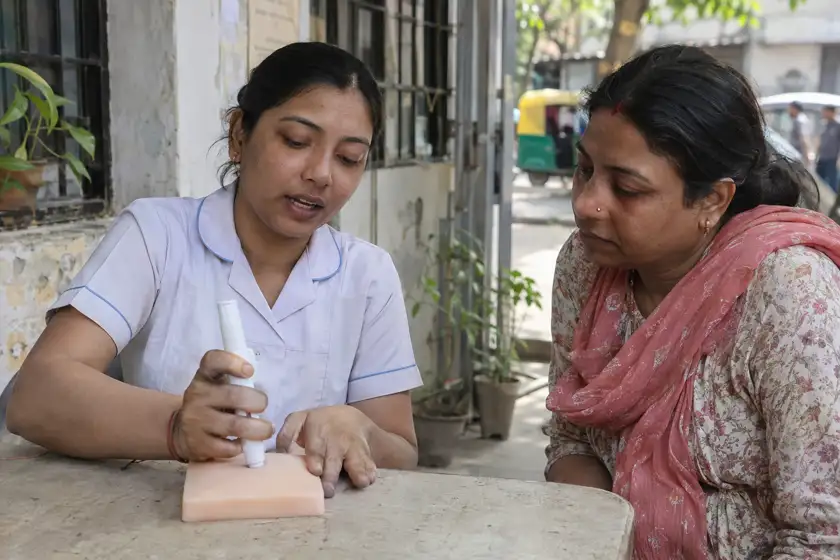
- Ask for a demonstration with a training pen.
- Have the first dose given at the centre.
- Practise the breathing: a slow breath out as you press.
- Do not watch if it bothers you; with an auto-injector you only need to listen for the clicks.
- Remember that it is once a week, for a few seconds.
Most people who were nervous at the start say, by the third or fourth week, that it has become routine.
A one-page checklist
| Step | Done |
|---|---|
| Right day; at least the minimum gap since my last dose | ☐ |
| Right pen and strength; in date; liquid clear | ☐ |
| Pen out of the fridge for about 30 minutes | ☐ |
| Hands washed | ☐ |
| New site chosen, away from last week’s spot and from the navel | ☐ |
| Skin clean and dry | ☐ |
| New needle attached and flow checked, if my pen needs it | ☐ |
| Dose set correctly, if my pen has a dial | ☐ |
| Pen held firmly at a right angle until the dose is complete | ☐ |
| Needle or pen into the sharps container | ☐ |
| Date, dose and site noted | ☐ |
| Reminder set for next week | ☐ |
Common myths
“The injection goes into the stomach”
It goes into the fat under the skin of the abdomen, thigh or arm, not into the stomach itself.
“Injecting into the abdomen works better for belly fat”
The site does not affect where fat is lost. The medicine works throughout the body.
“It must be taken before food”
It can be taken at any time, with or without food.
“A drop on the skin means the dose failed”
A small drop is normal and does not mean you missed your dose.
“If I miss a dose I should double the next one”
Never. Follow the missed-dose rule and resume as normal.
“I can use the same needle a few times”
Needles are for single use. Reuse causes pain, blockage and infection.
“Family members can share one pen”
A pen is for one person only.
How The Prime Fit helps you get started
At The Prime Fit, nobody is handed a pen and sent home. Your first injection is demonstrated in person with your own device, and you can give it yourself under supervision. We show you how to rotate sites, store the pen and dispose of needles, give you a written record card, and remain available by message if a dose goes wrong or you are unsure what to do after a missed injection.
To start treatment with proper guidance, book a consultation or read about our GLP-1 therapy programme.
Frequently asked questions
Where is the best place to inject Mounjaro, Wegovy or Ozempic?
The abdomen at least 5 cm from the navel, the front of the thigh, or the back of the upper arm. All work equally well. Most people find the abdomen easiest.
Does the injection hurt?
The needle is very fine and short. Most people feel a brief pinch or nothing. Letting the pen reach room temperature and the skin dry reduces stinging.
What time of day should I inject?
Any time, with or without food, on the same day each week. Many people prefer the evening or a day followed by quieter days.
Do I need to rotate injection sites?
Yes. Use a different spot each week, at least 2 to 3 cm from the previous one, to prevent lumps and bruising and to keep absorption reliable.
How long should I hold the pen against the skin?
Until your pen shows the dose is complete: a second click, a bar that stops moving, or the count stated in your leaflet, usually between 5 and 10 seconds.
What if some liquid leaks out?
A small drop is normal. If more leaked, do not take another dose. Tell your healthcare provider or pharmacist and take your next dose on the usual day.
What should I do if I miss a dose?
It depends on the medicine. For tirzepatide, take it within 4 days. For Wegovy, take it if the next dose is more than 2 days away. Otherwise skip it. Never double up.
Can I change my injection day?
Yes, provided there are at least 3 days between doses of tirzepatide or 2 days between doses of semaglutide.
Can I reuse a needle or share my pen?
No. Needles are single use, and a pen must never be shared, because of the risk of infection.
How do I dispose of pens and needles?
Place them in a puncture-proof sharps container and ask your pharmacy or centre how to dispose of it when it is nearly full.
This article is general information and is not a substitute for a demonstration by a healthcare professional. Devices differ between products and countries. Always follow the leaflet supplied with your own medicine and your healthcare provider’s instructions.