In this article
- Why would a weight loss medicine affect cravings at all?
- Can GLP-1 medicines reduce alcohol cravings? What human studies show
- What about smoking and tobacco?
- Other cravings: sweets, opioids, cannabis, gambling, shopping
- Are GLP-1 medicines approved for addiction? No
- If you notice less interest in alcohol or cigarettes on treatment
- Drinking alcohol while on a GLP-1 medicine
- Practical Indian examples: handling the triggers
- Proven help for alcohol and tobacco already exists
- Possible downsides: mood, pleasure and nutrition
- Who should be especially careful
- Common myths about GLP-1 medicines and cravings
- Questions to ask your healthcare provider
- How The Prime Fit helps
- Frequently asked questions
People taking weight loss injections often report something they did not expect: the evening drink loses its appeal, or the urge for a cigarette fades. This has led to a widely searched question: can GLP-1 medicines reduce alcohol, smoking and other cravings?
The careful answer is “possibly, for some people, and we do not yet know how much”. Animal research, studies of health records and a few small clinical trials suggest that semaglutide (Wegovy, Ozempic) may reduce alcohol craving and the amount people drink. The findings for smoking are mixed, and for other substances and behaviours such as gambling or shopping there are mostly personal stories.
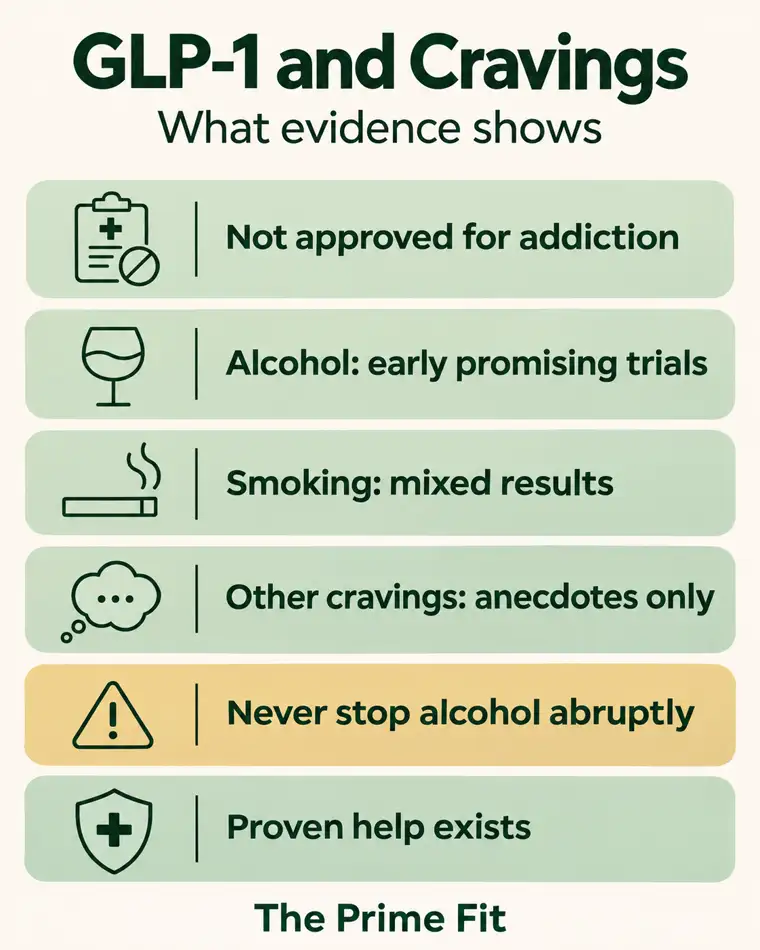
Two facts should frame everything else. First, no GLP-1 medicine is approved anywhere for treating alcohol dependence, nicotine dependence or any other addiction. Second, the evidence is early. Larger trials are under way, and until they report, these medicines should not be started, or relied on, for this purpose. Effective, proven treatments for alcohol and tobacco dependence already exist.
Why would a weight loss medicine affect cravings at all?
GLP-1 is a hormone made in the gut and also in the brain. Receptors for it are found not only in the areas that control hunger and fullness but also in the brain’s reward circuits, the regions that respond to anything pleasurable and that drive “wanting”.
The same circuits are involved whether the reward is a gulab jamun, a glass of whisky or a cigarette. GLP-1 medicines are thought to turn down the intensity of that wanting signal. People on treatment often describe this with food as a quietening of constant thoughts about eating, which we cover in our guide to food noise. It is biologically plausible that the same quietening could extend to other rewards.
In animal experiments this is fairly consistent: rodents and monkeys given GLP-1 medicines drink less alcohol and, in other studies, work less hard to obtain nicotine and some other drugs. Animal results, however, frequently fail to carry over to people, so they are a reason to study the question, not an answer to it.
Can GLP-1 medicines reduce alcohol cravings? What human studies show
Alcohol is where the human evidence is strongest, though still limited.
- Small randomised trials. In one early trial, adults with alcohol use disorder who were not seeking treatment received low-dose weekly semaglutide or a placebo for about nine weeks. Those on semaglutide drank less in a supervised laboratory test, reported less craving, and had fewer heavy drinking days by the end. The trial involved only a few dozen people and was short.
- An earlier trial of an older GLP-1 medicine found no overall reduction in heavy drinking compared with placebo, but did see a reduction in the subgroup of participants who also had obesity. Subgroup findings are suggestive, not conclusive.
- Health record studies. Several large analyses, including national registry data from Scandinavia and insurance records from the United States, have found that people prescribed semaglutide for diabetes or obesity had fewer diagnoses of, or hospital visits for, alcohol-related problems than comparable people on other medicines. These studies cannot prove cause.
- Patient reports. Surveys and analyses of online posts repeatedly describe reduced desire for alcohol on both semaglutide and tirzepatide (Mounjaro).
Taken together, the signal is promising and consistent in direction. What is missing is large, long trials in people with alcohol dependence showing how big the effect is, how long it lasts, what dose is needed, and whether it holds in people who are not overweight. Tirzepatide has less trial evidence in this area than semaglutide.

What about smoking and tobacco?
Here the picture is less clear.
- One small pilot trial that added a GLP-1 medicine to nicotine patches and counselling reported better quit rates than patches and counselling alone.
- Another trial, using a different GLP-1 medicine alongside standard stop-smoking treatment, found no improvement in quit rates, though participants gained less weight after quitting.
- A large health record study in people with type 2 diabetes found that those starting semaglutide had fewer medical visits related to tobacco dependence than those starting other diabetes medicines. Again, this shows an association only.
- In the small alcohol trial described above, participants who smoked also smoked somewhat fewer cigarettes on semaglutide.
There is no research on GLP-1 medicines for smokeless tobacco, which matters in India where gutka, khaini, zarda and paan with tobacco are widely used, and very little on bidis specifically.
Other cravings: sweets, opioids, cannabis, gambling, shopping
| Craving or behaviour | Type of evidence so far | How strong is it? |
|---|---|---|
| Food, sweets, fried snacks | Large clinical trials and consistent patient experience | Strong: this is the intended, approved effect in weight management |
| Alcohol | Animal studies, health record studies, a few small randomised trials | Promising but early |
| Cigarettes | Animal studies, health record studies, small trials with conflicting results | Uncertain |
| Smokeless tobacco (gutka, khaini) | None | Unknown |
| Opioids | Animal studies, health record studies, very small early trials | Very early |
| Cannabis, cocaine and other drugs | Animal studies and a few health record studies | Very early |
| Gambling, compulsive shopping, nail biting, excessive phone use | Individual stories and case reports | Anecdotal only |
Are GLP-1 medicines approved for addiction? No
Important
Mounjaro, Wegovy, Ozempic and Rybelsus are approved for type 2 diabetes and, depending on the product, for long-term weight management in people who meet medical criteria. None is approved in India or elsewhere to treat alcohol use disorder, tobacco dependence, drug dependence or behavioural addictions. Using them for these purposes is unproven, and obtaining them without a prescription for this reason is unsafe.
This matters for three reasons. The right dose and duration for addiction, if there is one, are unknown. People with alcohol or drug dependence often have other health problems, such as liver or pancreas disease or poor nutrition, that change the safety picture. And relying on an unproven option can delay treatment that is known to work.
Eligibility for these medicines is based on weight and health, as explained in our guide to who is eligible for weight loss injections. For Asian Indians, overweight begins at a BMI of 23 and obesity at 25, with higher risk at a waist above 90 cm in men and 80 cm in women.

If you notice less interest in alcohol or cigarettes on treatment
If you are on a GLP-1 medicine for weight or diabetes and find you want alcohol or tobacco less, that is a welcome side benefit and a real opportunity.
- Use the window. Reduced craving makes change easier, but habits, routines and social cues still need deliberate work.
- Tell your healthcare provider. It is useful clinical information, and they can connect you with stop-smoking or alcohol support to make the change last.
- Do not assume it is permanent. Appetite and food cravings commonly return when these medicines are stopped. It is reasonable to expect the same for other cravings, although this has not been properly studied.
Drinking alcohol while on a GLP-1 medicine
Whether or not your desire changes, alcohol and these medicines need some care together.
| Concern | Why it matters | Practical step |
|---|---|---|
| Nausea and acidity | Alcohol irritates a stomach that is already emptying slowly | Avoid drinking in the days after an injection or dose increase if you feel unwell |
| Low blood sugar | Alcohol lowers sugar, especially with insulin or sulfonylurea tablets and when eating little | Never drink on an empty stomach; check sugars if you have diabetes |
| Dehydration | Reduced thirst and fluid intake on treatment, plus the diuretic effect of alcohol | Alternate with water or nimbu pani without sugar |
| Pancreas and liver | Heavy drinking is a major cause of pancreatitis and liver disease | Keep intake low; report severe abdominal pain urgently |
| Calories | Alcohol carries about 7 kcal per gram with no nutrition | Count drinks as part of your intake |
As a rough guide, a 30 ml measure of whisky, rum or vodka has about 65 to 70 kcal, a 330 ml bottle of regular beer about 140 kcal, and a 150 ml glass of wine about 120 kcal, before mixers and snacks. The World Health Organization’s position is that no level of alcohol is free of health risk. Our detailed guide to GLP-1 injections and alcohol covers this fully.
Practical Indian examples: handling the triggers
Cravings are tied to situations as much as to substances. Reduced desire helps most when you also plan for the moments that prompt the habit.
| Situation | What often happens | What to try instead |
|---|---|---|
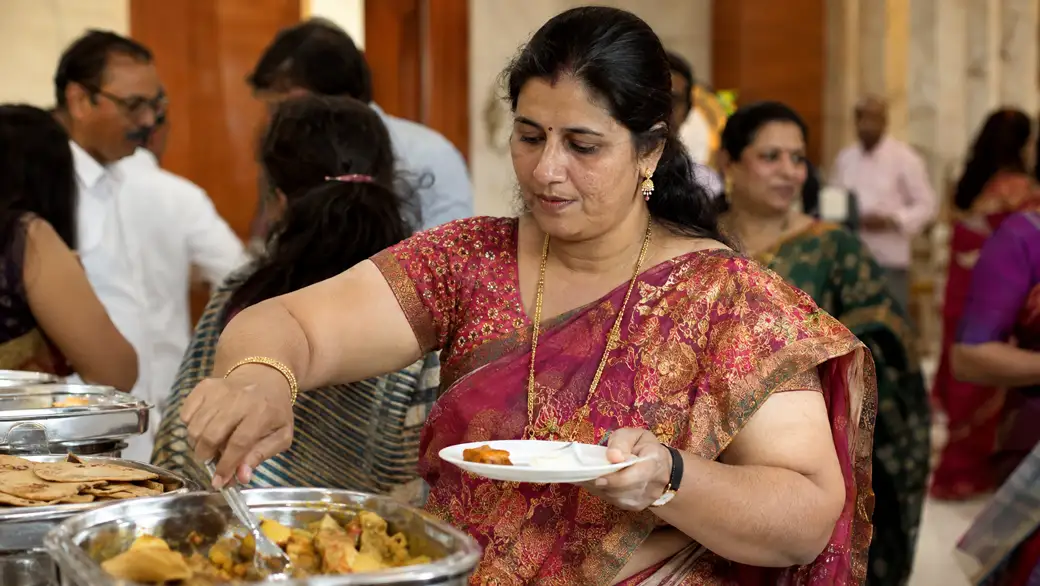
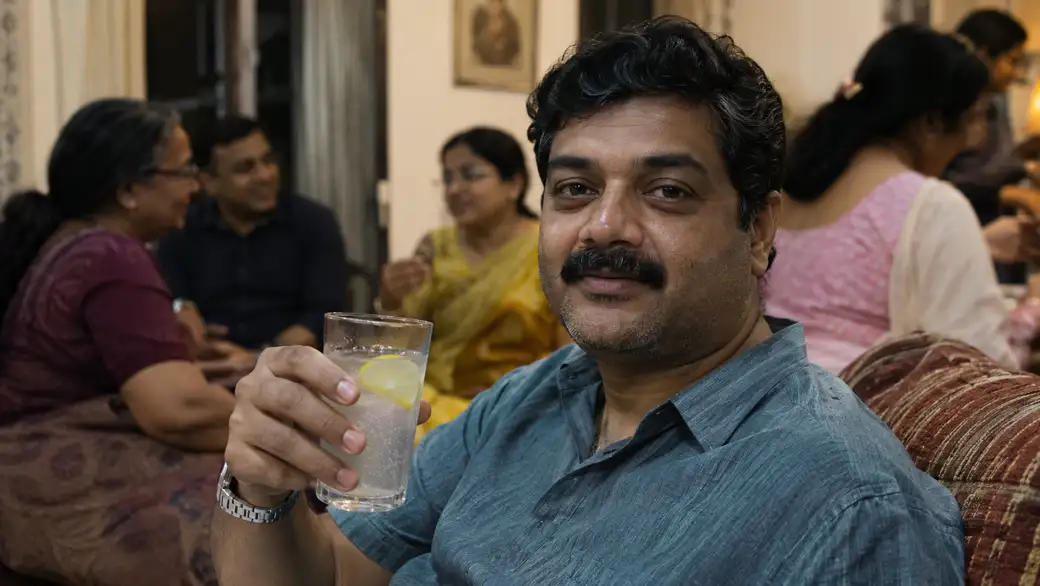
| Wedding or sangeet with an open bar | Several large pegs with fried starters | Hold a nimbu soda or jaljeera; if drinking, set a limit of one small drink with food. Choose paneer tikka or tandoori chicken or fish over pakoras |
| Evening drink at home to unwind | Habit linked to the time of day, with namkeen | Replace the ritual: chaas, masala soda water, or a short walk, with roasted chana, makhana or a boiled egg |
| Cigarette with chai at the tapri | The tea break triggers the cigarette | Change the place or the drink for a few weeks; keep saunf, elaichi or sugar-free gum to hand |
| Paan or gutka after meals | Automatic after lunch and dinner | Plain saunf or roasted ajwain; ask your healthcare provider or dentist about stop-tobacco support |
| Festival sweets: Diwali, Eid, Christmas | Boxes of mithai within reach all week | Serve yourself one piece on a plate after a meal, then put the box away |
Proven help for alcohol and tobacco already exists
If drinking or tobacco is a concern for you or someone in your family, you do not need to wait for GLP-1 research.
- For alcohol: assessment by a healthcare professional or psychiatrist, counselling and structured psychological therapies, mutual-help groups, and prescription medicines that are specifically approved to reduce craving or support abstinence.
- For tobacco: counselling, nicotine replacement in the form of gum, patches or lozenges, and prescription stop-smoking medicines. Combining counselling with medication gives the best quit rates.
- In India: government services include the National Tobacco Quit Line (1800 112 356) and the Tele MANAS mental health helpline (14416).
Do not stop heavy drinking suddenly without medical advice
If you drink heavily every day, stopping abruptly can cause dangerous withdrawal. Seek urgent medical care for severe shaking, sweating, confusion, seeing or hearing things that are not there, or seizures. Also seek urgent help for severe abdominal pain with vomiting, vomiting blood, yellowing of the eyes, or thoughts of harming yourself.
Possible downsides: mood, pleasure and nutrition
If a medicine can dampen the pull of rewards, could it dampen enjoyment more broadly? A small number of people report feeling emotionally flat or less interested in things they used to enjoy. Medicine regulators in Europe and the United States have reviewed reports of low mood and suicidal thoughts in people taking GLP-1 medicines and have not found evidence that the medicines cause them, but monitoring continues and product information advises reporting mood changes.
Tell your healthcare provider promptly if you notice persistent low mood, loss of interest, anxiety or any thoughts of self-harm. Our guide to GLP-1 medicines and mental health discusses this in more detail.
Nutrition is the other concern. People who drink heavily often eat poorly and may be low in B vitamins and protein. Adding a medicine that sharply reduces appetite to that situation can worsen deficiencies and muscle loss. This is another reason why treatment should follow a proper assessment, including the blood tests done before starting GLP-1 treatment.
Who should be especially careful
- Anyone with a history of pancreatitis, particularly alcohol-related pancreatitis
- People with liver disease from alcohol or other causes
- People with diabetes on insulin or sulfonylureas who drink
- Those with a current or past eating disorder
- People with depression or other mental health conditions, who need closer follow-up
- Anyone who is underweight or poorly nourished
- Women who are pregnant, planning pregnancy or breastfeeding, for whom these medicines are not recommended
A full discussion of contraindications is in our GLP-1 side effects guide. Be honest with your prescriber about how much you drink and whether you use tobacco in any form. The information is used to keep you safe, not to judge you.

Common myths about GLP-1 medicines and cravings
Myth: Ozempic cures alcoholism. No. Early research shows reduced drinking in some people. It is not an approved or proven treatment for alcohol dependence.
Myth: If I start a weight loss injection, I will automatically stop smoking. Trial results for smoking are mixed. Quitting still needs a plan and, ideally, proven stop-smoking treatment.
Myth: Because I crave alcohol less, it is safer to drink on these medicines. Reduced desire does not reduce the risks of low blood sugar, dehydration, pancreatitis or liver damage.
Myth: The effect lasts after the medicine is stopped. There is no evidence for this. Lasting change comes from the habits and support built during treatment.
Questions to ask your healthcare provider
- Given my weight, health and alcohol or tobacco use, am I a suitable candidate for a GLP-1 medicine on medical grounds?
- Does my drinking raise my risk of pancreatitis, liver problems or low blood sugar on this treatment?
- Is it safe for me to cut down alcohol on my own, or do I need supervised withdrawal?
- What proven treatments for alcohol or tobacco dependence would you recommend alongside my weight treatment?
- What mood changes should I report, and to whom?
How The Prime Fit helps
The Prime Fit provides medically supervised weight management. A first assessment covers your weight history, medical conditions, medicines and lifestyle, including alcohol and tobacco use, because these affect both safety and results. GLP-1 medicines are considered only when you meet the medical criteria for weight or diabetes care, not as a treatment for addiction.
If treatment is appropriate, our GLP-1 support programme combines dose supervision with nutrition guidance and regular follow-up, which is also where changes in appetite, cravings and mood can be discussed openly. If alcohol or tobacco dependence needs dedicated care, we will advise you to see an appropriate specialist service alongside your weight treatment. We do not promise that any medicine will change your relationship with alcohol or tobacco.
Frequently asked questions
Can GLP-1 medicines reduce alcohol cravings?
Possibly. Small trials and large health record studies suggest semaglutide may reduce craving and the amount people drink. The evidence is early, the size of the effect is uncertain, and the medicines are not approved for this purpose.
Is Ozempic or Wegovy approved to treat alcohol dependence?
No. Neither is approved in India or any other country for alcohol use disorder or any addiction. They are approved for type 2 diabetes or weight management, depending on the product.
Does Mounjaro reduce the desire to drink?
Many people on tirzepatide report less interest in alcohol, and some observational research supports this. There is less clinical trial evidence for tirzepatide than for semaglutide, so no firm conclusion can be drawn.
Can weight loss injections help me quit smoking?
The evidence is mixed. Some small studies suggest a benefit and others do not, although they may limit weight gain after quitting. Proven options such as counselling, nicotine replacement and prescription stop-smoking medicines remain the first choice.
Why do I not feel like drinking on a GLP-1 medicine?
GLP-1 receptors are present in the brain’s reward circuits, and these medicines appear to reduce the drive towards rewarding things, including food and possibly alcohol. Nausea and a slower stomach can also make alcohol less pleasant.
Will the cravings come back if I stop the medicine?
This has not been studied well for alcohol or tobacco. Food cravings and appetite commonly return after stopping, so it is sensible to expect other cravings might too, and to build habits and support while on treatment.
Can I get a GLP-1 prescription only to cut down drinking?
That would be an unapproved use without adequate evidence of benefit or safety, and a responsible centre will not prescribe on that basis alone. Speak to a healthcare professional or psychiatrist about established treatments for alcohol dependence.
Is it dangerous to stop drinking suddenly?
For people who drink heavily every day, yes. Sudden withdrawal can cause severe shaking, confusion and seizures and can be life-threatening. Get medical advice before stopping, and seek urgent care if these symptoms occur.
This article is general patient education and is not a substitute for personal medical advice, diagnosis or treatment. GLP-1 medicines are prescription-only, are not approved for the treatment of any addiction, and should be used only under the supervision of a registered medical practitioner. If you are worried about alcohol, tobacco or drug use, please speak to a healthcare professional.