In this article
- Obesity and mental health are already linked
- What do studies show about mood and safety?
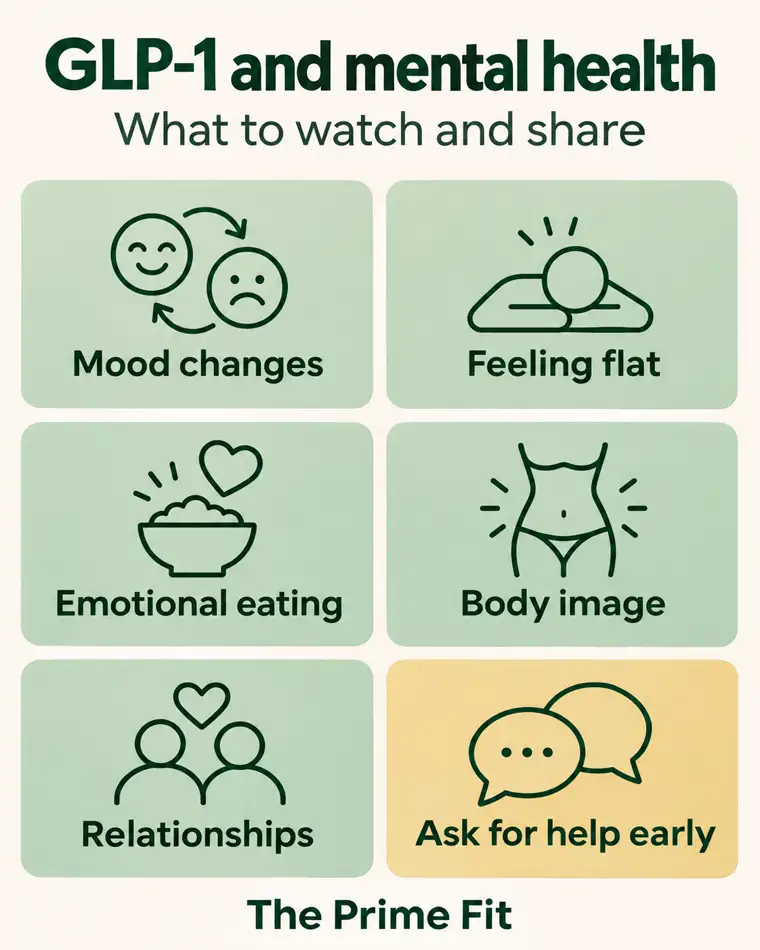
- The emotional changes people commonly describe
- Why might some people feel flat?
- Emotional eating: when food stops comforting
- Eating disorders: an important caution
- Body image and identity
- Relationships and social life
- If you already have a mental health condition
- Looking after your mental wellbeing on treatment
- An emotional timeline: what is common, and when
- Two illustrative examples
- When to speak to your healthcare provider
- For family and friends
- Stopping, regain and how it feels
- Questions to ask your healthcare provider
- Common myths
- How The Prime Fit looks after the whole person
- Frequently asked questions
When people begin treatment with a GLP-1 medicine such as Mounjaro (tirzepatide), Wegovy or Ozempic (semaglutide), they expect changes in appetite and weight. Fewer expect changes in how they feel. Yet food is tied to comfort, celebration, family and identity, and a medicine that changes your relationship with food inevitably touches your emotional life as well.
For most people the effect is positive: less preoccupation with food, more energy, more confidence, relief from years of struggle. Some notice the opposite at times, such as feeling flat, irritable or oddly unsettled. News reports about mood and these medicines have added to the uncertainty.
This guide looks at the evidence calmly. It covers what large studies show, why emotional changes happen, emotional eating and eating disorders, body image and relationships, practical ways to protect your mental wellbeing, and clear guidance on when to seek help. It is general information and not a substitute for care from a healthcare professional or mental health professional. If you are in distress now, please contact a healthcare professional, a trusted person or a helpline today.
Obesity and mental health are already linked
Excess weight and mental health influence each other in both directions.
- People living with obesity have higher rates of depression and anxiety than the general population.
- Depression can lead to weight gain through low activity, disturbed sleep and comfort eating, and some medicines used to treat it increase appetite.
- Weight stigma, including teasing, family comments and discrimination, causes shame, social withdrawal and low self-esteem.
- Chronic pain, poor sleep, sleep apnoea and conditions such as PCOS and diabetes add their own burden.
- Repeated cycles of dieting and regain erode confidence.
This background matters when interpreting any report of low mood in someone taking a weight loss medicine. Many people start treatment already carrying a higher risk.
What do studies show about mood and safety?
In 2023, reports of low mood and thoughts of self-harm in people taking GLP-1 medicines prompted regulators in Europe, the United States and elsewhere to carry out formal reviews. Researchers also re-examined trial data and large health-record databases.
| Source of evidence | What was found |
|---|---|
| Regulatory reviews in Europe and the United States | The available evidence did not support a causal link between GLP-1 medicines and suicidal thoughts or actions. Monitoring continues |
| Pooled analysis of the semaglutide weight-management trials | Rates of depressive symptoms and suicidal thoughts were no higher with semaglutide than with placebo; depressive symptom scores were slightly better on treatment |
| Large studies of health records | Several found no increased risk, and some found a lower rate of new or recurrent suicidal thoughts in people prescribed semaglutide than in those prescribed other weight or diabetes medicines |
| Spontaneous reports to safety databases | Reports exist, but such systems cannot show whether the medicine was the cause |
Two limits should be kept in mind. First, the main trials excluded people with recent serious depression or a history of suicide attempts, so evidence in that group is thinner. Second, individual reactions can occur even when averages are reassuring. For these reasons, prescribing information advises monitoring mood, and healthcare professionals ask about it.
The balanced reading
Current evidence does not show that these medicines cause depression or suicidal thinking, and on average mental wellbeing improves with treatment. Any individual who notices a change in mood should still tell their healthcare provider promptly.
The emotional changes people commonly describe
Positive changes
- Quiet in the mind. The constant chatter about food eases, freeing attention for other things.
- A sense of control. Eating no longer feels like a daily battle.
- More energy and mobility, which lifts mood and makes activity enjoyable.
- Better sleep, particularly as snoring and sleep apnoea improve.
- Confidence in clothes, at work and in social situations.
- Relief from guilt and self-blame, on understanding that biology was involved.
- Less interest in alcohol for some people.
Difficult changes
- Feeling flat. A minority describe muted pleasure, not only in food but in other things they used to enjoy.
- Irritability or low mood in the first weeks or after dose increases, often alongside nausea, tiredness and eating very little.
- Loss of a coping tool. When food no longer comforts, underlying stress, loneliness or sadness can surface.
- Anxiety about regain, about side effects, or about depending on a medicine.
- Grief or strangeness about a changing body and identity.
- Reactions from others: comments, envy, judgement about “taking the easy way”.
- Worry about appearance shifting from weight to loose skin, facial changes or hair shedding.
Most of these are understandable responses to rapid change and settle with time and support. Some are signals that the dose, nutrition or emotional support needs attention.

Why might some people feel flat?
Several explanations are plausible, and more than one may apply.
| Possible reason | What is happening | What helps |
|---|---|---|
| Eating too little | Very low calorie and carbohydrate intake causes fatigue, poor concentration, irritability and low mood | Regular meals with protein and some whole-grain carbohydrate; dose review |
| Dehydration and low salt | Headache, tiredness, light-headedness | Fluids through the day; ORS or chaas in hot weather |
| Nutritional deficiencies | Low iron, vitamin B12, vitamin D or folate contribute to fatigue and low mood | Blood tests and replacement |
| Effect on reward pathways | GLP-1 receptors are present in brain areas involved in reward. Reduced response to food may, in some people, extend to other pleasures | Tell your healthcare provider; a lower dose often helps |
| Loss of emotional eating | Feelings previously soothed by food are now felt directly | New coping strategies; counselling |
| Side effects | Persistent nausea and constipation are wearing | Dietary changes, slower dose increases, supportive treatment |
| Poor sleep | Reflux, late meals or anxiety disturb sleep | Early, light dinner; sleep routine |
| Thyroid or other medical causes | An underactive thyroid causes low mood and fatigue; thyroid tablet doses may need adjusting as weight changes | Thyroid test |
| Pre-existing or new depression | May be unrelated to the medicine | Assessment and treatment |
The reward-pathway explanation is a hypothesis under study, not an established effect. What is clear is that if you feel persistently flat or low, it should be discussed and not simply endured.
Emotional eating: when food stops comforting
Many people eat in response to feelings: stress after work, boredom in the evening, sadness, loneliness, even happiness. On GLP-1 treatment the urge often fades, which is welcome. But the feelings that drove the eating have not gone anywhere.
Some people find themselves restless in the evenings, snappier with family, or reaching for other outlets such as shopping, scrolling or alcohol. Recognising this is the first step. The period of reduced appetite is an opportunity to build other ways of coping while the pull of food is quiet.
Alternatives that work
| Feeling | What food used to do | What to try instead |
|---|---|---|
| Stress | Calm and distraction | Ten minutes of walking, slow breathing, a shower, music, writing down what is worrying you |
| Boredom | Stimulation | A hobby with your hands, a phone call, a short task, getting out of the house |
| Loneliness | Company | Contact with a friend or relative; a class or group; time outdoors among people |
| Tiredness | Energy | Rest, an earlier bedtime, a glass of water, daylight |
| Sadness | Comfort | Talking to someone you trust; allowing the feeling; professional support if it persists |
| Reward after a hard day | A treat | A non-food reward: an episode of a favourite programme, a bath, time for yourself |
| Celebration | Shared pleasure | Keep the occasion, enjoy a small portion, focus on the people |
Eating disorders: an important caution
Appetite-suppressing medicines interact with eating disorders in ways that need care.
- Restrictive eating disorders, such as anorexia nervosa or atypical anorexia: these medicines can make restriction easier and are potentially dangerous. They should not be used.
- Bulimia nervosa: the combination of vomiting, slowed stomach emptying and dehydration is risky. Specialist assessment is essential.
- Binge eating disorder: early studies suggest that GLP-1 medicines may reduce binge episodes, and research is continuing. They are not approved for this purpose and do not replace psychological treatment.
- A past eating disorder: rapid weight loss, calorie tracking and praise for losing weight can all trigger relapse.
Tell your healthcare provider honestly about any history of disordered eating before starting. During treatment, warning signs include an ever-lower target weight, fear of eating, skipping meals deliberately, distress at any rise on the scale, hiding how little you eat, compulsive exercise, or using the medicine at a higher dose than prescribed. These call for a prompt conversation with your healthcare provider.
Body image and identity
People are often surprised that losing weight does not automatically bring peace with their body. Three experiences are common.
- The mind lags behind the mirror. You may still see yourself as larger than you are, or feel like an impostor in a smaller size.
- The focus moves. Attention shifts to loose skin, a thinner face, hair shedding or stretch marks.
- Identity shifts. If you have long been “the big one” in your family or circle of friends, or the person who loves food and feeds everyone, change can feel like loss as well as gain.
Give yourself time. Wear clothes that fit your current body. Notice what your body can now do, not only how it looks. If dissatisfaction with your appearance is intense, constant or driving you to lose more weight than is healthy, speak to your healthcare provider.
Relationships and social life
Food is central to Indian family life, and changes in how you eat are noticed.
| Situation | Why it is hard | What can help |
|---|---|---|
| Relatives pressing food on you | Refusing food can be taken as refusing love | Take a small portion, praise the cooking, eat slowly. “It is delicious, I am full” is enough |
| Comments on your body, positive or negative | Constant attention on appearance is tiring | A simple “I am focusing on my health” and a change of subject |
| Judgement about using medication | “You should have done it with willpower” | You do not owe anyone your medical details. Share with those you trust |
| A partner’s unease | Change in one person shifts the balance in a couple | Talk openly; involve them in walks and meals |
| Friends whose social life revolves around eating and drinking | You may feel left out | Suggest activities that are not centred on food; keep joining, eat lightly |
| Increased attention from others | Can be uncomfortable or confusing | It is acceptable to feel ambivalent; talk it through with someone |
Whether to tell people about your treatment is your choice. Some find openness reduces pressure; others prefer privacy. Neither is wrong.
If you already have a mental health condition
A history of depression, anxiety or another condition does not automatically rule out treatment, but it calls for planning.
- Tell your prescriber about your diagnosis, treatment, and any past thoughts of self-harm.
- Involve your psychiatrist or therapist. They should know you are starting a weight loss medicine.
- Start when you are stable, not during a crisis or major life upheaval.
- Do not stop psychiatric medicines because of concerns about weight without medical advice.
- Agree what to watch for, and ask someone close to you to tell you if they notice changes.
- Have more frequent reviews in the first few months.
Weight gain caused by psychiatric medicines
Some antidepressants, mood stabilisers and antipsychotics increase appetite and weight, which can be distressing and lead people to stop effective treatment. Studies of GLP-1 medicines in people with weight gain from antipsychotic medicines have shown weight loss and better metabolic health without worsening of psychiatric symptoms. This is a decision for your psychiatrist and physician together.
Looking after your mental wellbeing on treatment
Eat enough, regularly
Under-eating is the most common fixable cause of low mood and irritability. Three meals with protein, vegetables and some whole grains keep blood sugar and energy steady. Very low carbohydrate intake on top of a small appetite leaves many people feeling flat.
| Nutrient | Link with mood and energy | Indian food sources |
|---|---|---|
| Protein | Building blocks for brain chemicals; steadier energy | Dal, curd, paneer, eggs, fish, chicken, soya |
| Iron | Deficiency causes fatigue and low mood | Leafy greens, bajra, chana, eggs, meat, with lemon or amla |
| Vitamin B12 and folate | Deficiency linked with depression and poor concentration | Milk, curd, eggs, fish; greens and pulses for folate |
| Vitamin D | Low levels associated with low mood | Sunlight, fortified milk, eggs, fish; supplement if deficient |
| Omega-3 fats | Support brain function | Fish, walnuts, flaxseed |
| Whole-grain carbohydrate and fibre | Steady blood sugar; gut health | Whole wheat, millets, oats, fruit, vegetables |
| Fluids | Dehydration impairs mood and concentration | Water, chaas, nimbu pani, coconut water |
Move every day
Physical activity is one of the most effective treatments for mild to moderate low mood and anxiety. A daily walk outdoors and strength exercise two to three times a week improve mood, sleep and confidence, and protect muscle.
Protect sleep
Aim for seven to eight hours at regular times. Finish dinner early, limit screens late at night, and tell your healthcare provider about snoring or reflux that disturbs sleep.
Stay connected
Do not let changes in eating isolate you. Keep joining family meals and outings. Let one or two people know what you are doing and how you feel.
Limit alcohol
Alcohol lowers mood, disturbs sleep and worsens side effects.
Set goals beyond the scale
Strength, stamina, blood test results, sleep and things you can now do are more sustaining than a number, and less likely to feed anxiety.
Keep a simple mood note
Once a week, rate your mood, energy and sleep out of ten alongside your weight. Patterns, such as a dip after each dose increase, become visible and useful at reviews.
Consider psychological support
Counselling, particularly approaches that address eating behaviour, body image and stress, complements medical treatment. Seeking it is not a sign that something has gone wrong.
An emotional timeline: what is common, and when
| Stage | What many people feel | What helps |
|---|---|---|
| Weeks 1 to 4 | Hope and relief, mixed with worry about side effects; surprise at how quiet appetite becomes | Set up meal times; tell one trusted person; note your starting mood and sleep |
| Months 2 to 3 | Dose increases bring tired or irritable days; evenings may feel empty without snacking | Eat enough on increase weeks; plan evening activities; report persistent low mood |
| Months 4 to 6 | Visible change; compliments and comments; confidence rising; body image catching up | Decide how much to share; buy clothes that fit; start or progress strength training |
| Months 6 to 12 | Hair shedding or facial changes may cause dismay; the novelty fades; old stresses are still there | Check nutrition; consider counselling; set goals beyond weight |
| Plateau and maintenance | Frustration that the scale has stopped; anxiety about regain or about long-term medication | Review health gains with your healthcare provider; agree a maintenance plan; keep follow-up |
Not everyone passes through these stages, and they can arrive in any order. Knowing they are common makes them less alarming.
Two illustrative examples
These invented examples show how such situations are usually resolved. They are not advice for any individual.
Flat and tired at a higher dose
A 43-year-old man feels well for three months, then becomes listless and irritable after a dose increase. He is eating one small meal a day. Tests show low vitamin B12. His dose is stepped back, he returns to three protein-based meals, B12 is replaced, and within a month his energy and mood recover while his weight continues to fall slowly.
Evenings without comfort eating
A 37-year-old woman no longer snacks at night, but finds herself tearful and restless once the children are asleep. She realises that eating had been how she unwound. With a few sessions of counselling, an evening walk and a regular call with her sister, the evenings become manageable, and she feels more in control than before treatment.
When to speak to your healthcare provider
- Low mood, tearfulness or loss of interest lasting more than two weeks
- Feeling flat or unable to enjoy things you used to enjoy
- Marked anxiety, panic or irritability
- Poor sleep most nights
- Withdrawal from family, friends or work
- Signs of disordered eating, as described above
- Any change in mood that began or worsened after starting the medicine or increasing the dose
Your healthcare provider may check for nutritional and thyroid causes, adjust the dose, hold a planned increase, or arrange psychological or psychiatric support. Do not stop any prescribed medicine abruptly without advice.
If you have thoughts of harming yourself
Please seek help immediately. Contact your healthcare provider, go to the nearest hospital emergency department, or call a helpline. In India, the government’s Tele-MANAS mental health helpline is available at 14416, free and at all hours. Tell someone you trust how you are feeling, and do not stay alone. These thoughts can be treated, and support is available.
For family and friends
If someone close to you is on treatment, your support matters more than your advice.
- Avoid commenting on their body or what is on their plate, even to praise.
- Do not press food on them or take refusal personally.
- Ask how they are feeling, not only how much they have lost.
- Join them for walks and cook meals everyone can share.
- Notice changes: withdrawal, persistent sadness, eating very little, preoccupation with weight. Gently encourage them to speak to their healthcare provider.
- If they express hopelessness or thoughts of self-harm, stay with them and help them reach medical care or a helpline straight away.
Stopping, regain and how it feels
When treatment stops, appetite and food noise return, and weight often rises. This can bring disappointment, shame and a sense of failure, particularly after months of praise. It helps to know in advance that regain reflects the biology of a chronic condition, not a personal weakness, and that restarting or adjusting treatment is a medical decision, not a defeat. Plan any stop with your healthcare provider, keep your habits and follow-up in place, and be as kind to yourself as you would be to a friend in the same position.
Questions to ask your healthcare provider
- Given my history, is there anything about my mental health we should plan for?
- What changes in mood should I report, and how quickly?
- Should my psychiatrist or therapist be informed?
- Could my tiredness or low mood be due to low iron, B12, vitamin D or thyroid problems?
- If I feel flat on this dose, can we try a lower one?
- Can you recommend counselling for emotional eating or body image?
Common myths
“These injections cause depression”
Large trials and regulatory reviews have not shown this. On average, wellbeing improves. Individuals should still report mood changes.
“If I feel low, I should just push through”
Persistent low mood needs attention. Often the cause is simple and fixable.
“Losing weight will solve my emotional problems”
It helps many things, but stress, relationships and self-worth need their own care.
“Needing counselling means the treatment has failed”
Psychological support is part of good long-term weight care.
“People with depression cannot take these medicines”
Many can, with planning and monitoring, once they are stable.
“Emotional eating disappears for good”
The urge is reduced while on treatment. The feelings behind it still need healthier outlets.
How The Prime Fit looks after the whole person
At The Prime Fit, we ask about mood, sleep, stress and your history with food at the first assessment and at reviews, alongside weight and blood tests. Doses are adjusted if you feel flat or unwell, nutritional causes of fatigue are checked and treated, and your dietitian helps you build regular, satisfying meals and alternatives to emotional eating. Where more support is needed, we help you find a qualified mental health professional.
To talk through treatment in confidence, book a consultation or read about our GLP-1 support programme.
Frequently asked questions
Do GLP-1 medicines cause depression?
Current evidence from large trials and regulatory reviews does not show that they cause depression. On average, mood and quality of life improve. Tell your healthcare provider if you notice low mood.
Are they linked to suicidal thoughts?
Regulators reviewed reports and did not find evidence of a causal link, and several large studies found no increased risk. Anyone experiencing such thoughts should seek help immediately.
Why do I feel flat or less interested in things?
Possible reasons include eating too little, dehydration, low iron or B12, poor sleep, loss of food as a comfort, or, in some people, a dampening of reward. Speak to your healthcare provider; a dose change or nutritional correction often helps.
Will the medicine stop my emotional eating?
It usually reduces the urge. The emotions that triggered it remain, so building other ways of coping is important.
Can I take these medicines if I have depression or anxiety?
Often yes, when your condition is stable, with your experts informed and closer follow-up.
Can I take them with antidepressants?
There is no general prohibition. Tell your healthcare provider about all your medicines, and do not stop psychiatric treatment without advice.
Are they safe if I have had an eating disorder?
This needs specialist assessment. They are not suitable in restrictive eating disorders and carry risks in bulimia.
Do they help binge eating?
Early studies suggest fewer binge episodes, but they are not approved for binge eating disorder and do not replace psychological treatment.
Why do I still dislike my body after losing weight?
Body image often changes more slowly than the body. This is common. If it is distressing or driving unhealthy behaviour, seek support.
What should I do if my mood drops after a dose increase?
Contact your healthcare provider. Check that you are eating and drinking enough. The dose can be held or reduced.
This article is general information and is not a substitute for medical or psychological care. If you are struggling with your mood or have thoughts of self-harm, please contact a healthcare professional, your nearest emergency department or a mental health helpline without delay.