In this article
- How does poor sleep drive hunger?
- Does lack of sleep cause weight gain?
- How much sleep do adults need?
- Sleep apnoea: the warning signs
- Other causes of poor sleep to rule out
- Indian habits that quietly damage sleep
- How to sleep better: a practical evening routine
- What should you eat in the evening?
- Shift work, new parents and other difficult situations
- Sleep while on weight loss medicines
- Common myths about sleep and weight
- Questions to ask your healthcare provider
- How The Prime Fit helps
- Frequently asked questions
Sleep and weight loss are more closely linked than most people realise. When you regularly sleep too little, the hormones that control appetite shift in the wrong direction: you feel hungrier, you feel less satisfied after eating, and you are drawn to sweet, salty and fried food. You also have less energy to move. Over months and years, short sleep is consistently associated with weight gain, a larger waist and a higher risk of type 2 diabetes.
The reverse is true too. Excess weight, especially around the neck and abdomen, can disturb sleep through snoring and obstructive sleep apnoea, which then makes weight harder to lose. Many people are caught in this loop without knowing it.
This guide explains what the research shows, how much sleep adults need, the warning signs of sleep apnoea, and practical steps that fit Indian routines. It is general information; persistent sleep problems deserve a proper medical assessment.
How does poor sleep drive hunger?
Several things happen when sleep is cut short, and they add up.
| What changes | What research suggests | What you notice |
|---|---|---|
| Ghrelin, the hunger hormone | Tends to rise after short sleep in many studies | Stronger hunger, especially later in the day |
| Leptin, the fullness hormone | Tends to fall in several studies, though findings are not uniform | Meals feel less satisfying |
| Brain reward response to food | Stronger response to high-calorie foods when sleep deprived | Cravings for sweets, fried snacks and refined carbohydrate |
| Self-control and planning | Reduced with tiredness | Harder to stick to the plan; more impulsive eating |
| Insulin sensitivity | Falls after even a few nights of restricted sleep | Nothing directly, but blood sugar control worsens |
| Hours awake | More time and opportunity to eat | Late-night snacking |
| Physical activity | Tired people move less | Skipped walks and workouts |
In controlled experiments where healthy adults were allowed only four to five hours of sleep, they ate noticeably more the following day than when they slept normally, often by a few hundred calories, without burning meaningfully more. Most of the extra came from snacks, particularly in the evening.
Does lack of sleep cause weight gain?
Large population studies from many countries have found that adults who habitually sleep less than about six hours are more likely to gain weight and to develop obesity than those who sleep seven to eight hours. The association is stronger still in children and adolescents. These studies show a link, not proof of cause, because people who sleep little often differ in other ways: longer work hours, more stress, more screen time, later meals.
Experimental evidence supports the idea that sleep itself matters. In one well-known clinical trial, overweight adults who usually slept less than six and a half hours were helped to extend their sleep by roughly an hour a night. Without any dietary instruction, they ate less than the comparison group, in the region of a few hundred calories a day.
Sleep also affects what kind of weight you lose. In a small laboratory study of adults on a calorie-restricted diet, those allowed only short sleep lost less fat and more lean tissue than when they slept adequately, even though the total weight lost was similar. If you are working to protect muscle while losing weight, sleep is part of that effort.

How much sleep do adults need?
Most adults need seven to nine hours a night. Some do well at the lower end; very few function well on less than six over the long term, whatever they believe. Quality and timing matter too: seven hours at roughly the same time each night is better than five hours on weekdays and ten at the weekend.
- You fall asleep within about 20 to 30 minutes of going to bed.
- You wake no more than once or twice and get back to sleep easily.
- You wake feeling reasonably refreshed, most days.
- You do not need several cups of tea or coffee to stay alert, and you do not nod off in meetings, in front of the television or as a passenger.
If these do not describe you despite spending enough time in bed, the problem may be sleep quality, and sleep apnoea is one of the commonest causes in people with excess weight.
Sleep apnoea: the warning signs
Obstructive sleep apnoea is a condition in which the airway at the back of the throat repeatedly narrows or closes during sleep. Breathing pauses, oxygen levels dip, and the brain briefly rouses to reopen the airway, often hundreds of times a night, usually without the person remembering. The result is unrefreshing sleep and strain on the heart and blood vessels.
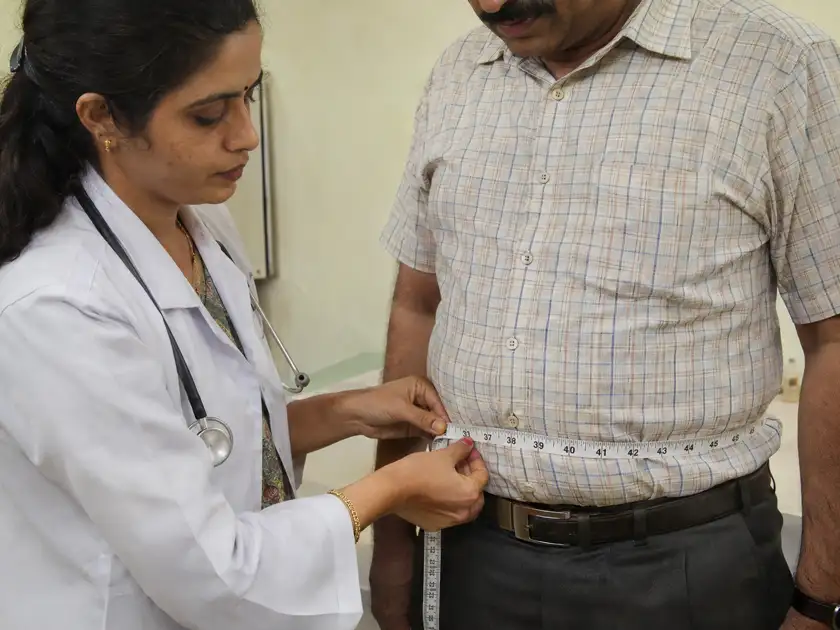
Excess weight is the leading risk factor, because fat around the neck and tongue narrows the airway and abdominal fat reduces lung volume. Indians can develop sleep apnoea at a lower BMI than Europeans, partly because of differences in jaw and airway structure and the tendency to carry fat centrally. It is common in men, and in women after menopause, and it is widely underdiagnosed.
| At night | During the day |
|---|---|
| Loud, habitual snoring | Excessive sleepiness, dozing off unintentionally |
| Pauses in breathing noticed by a partner | Waking unrefreshed, however long you slept |
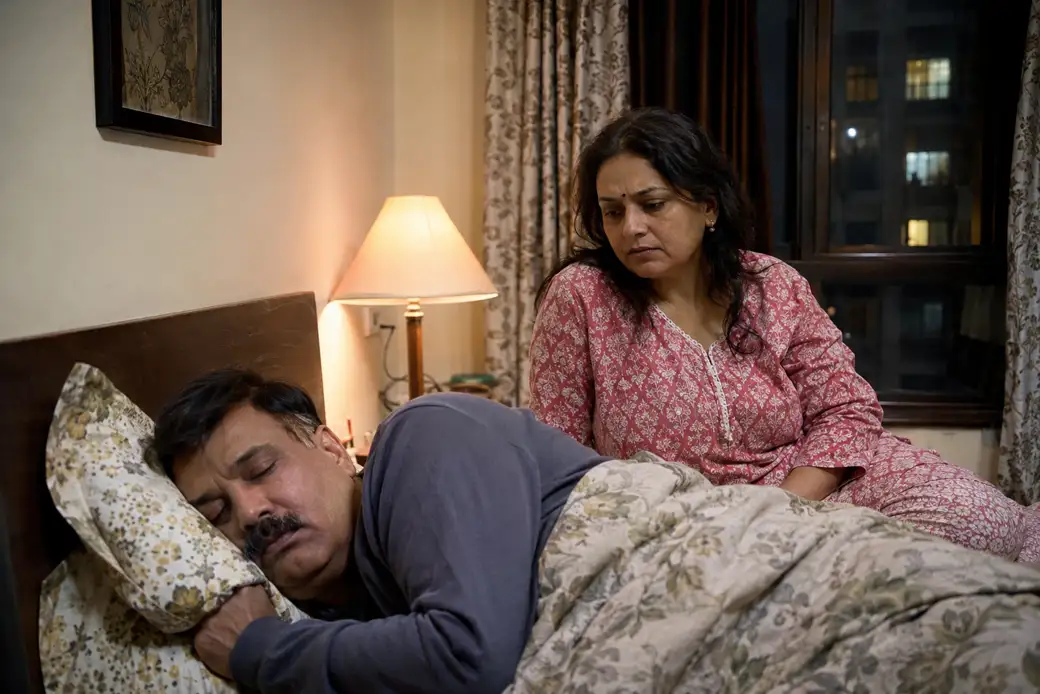
| Gasping, choking or snorting awake | Morning headaches |
| Restless sleep, frequent waking | Poor concentration, memory lapses, irritability or low mood |
| Getting up repeatedly to pass urine | Dry mouth or sore throat on waking |
When to act
See a healthcare professional if you snore loudly and have any of the other signs above, particularly witnessed pauses in breathing or daytime sleepiness. Do not drive if you are struggling to stay awake, and seek medical help promptly if you have ever fallen asleep at the wheel or at a traffic signal. Chest pain, severe breathlessness or palpitations at night need urgent care.
Untreated sleep apnoea is linked to high blood pressure, heart rhythm problems, heart disease, stroke, type 2 diabetes and road accidents. It also makes weight loss harder, through tiredness and increased appetite.
How is it diagnosed and treated?
Diagnosis is by a sleep study, which may be done overnight in a sleep laboratory or at home with a portable device, depending on your healthcare provider’s assessment. Treatment depends on severity and may include:
- CPAP: a bedside machine that delivers gentle air pressure through a mask to keep the airway open. It is the standard treatment for moderate to severe disease.
- Weight loss: reduces severity in most people with excess weight and sometimes resolves milder cases.
- Oral appliances fitted by a dentist, sleeping on your side, and treating nasal blockage, for selected people.
- Avoiding alcohol and sedatives in the evening, since both relax the throat muscles and worsen apnoea.
Clinical trials of tirzepatide, the medicine in Mounjaro, in adults with obesity and moderate to severe sleep apnoea found a substantial reduction in breathing pauses along with weight loss, and it has been approved for this use in some countries. Whether it is appropriate for you is a decision for your healthcare provider, and it does not replace CPAP unless your healthcare provider says so. For the wider picture, see the health benefits of GLP-1 medicines beyond weight loss.
Other causes of poor sleep to rule out
- Insomnia: difficulty falling or staying asleep at least three nights a week for three months or more. The recommended first treatment is a structured programme called cognitive behavioural therapy for insomnia, not long-term sleeping tablets.
- Acid reflux: worse after late, heavy or spicy dinners and when lying flat.
- Menopause: hot flushes and night sweats disrupt sleep in many women. See our guide to menopause weight gain.
- Medicines and stimulants: some medicines, caffeine, nicotine and alcohol all affect sleep.
Indian habits that quietly damage sleep
- Late, heavy dinners. Eating at 10 pm or later and going to bed soon after promotes reflux and lighter sleep.
- Evening chai and coffee. Caffeine stays in the body for many hours; in many people about half is still present five to six hours later. A cup at 6 pm can still be active at bedtime.
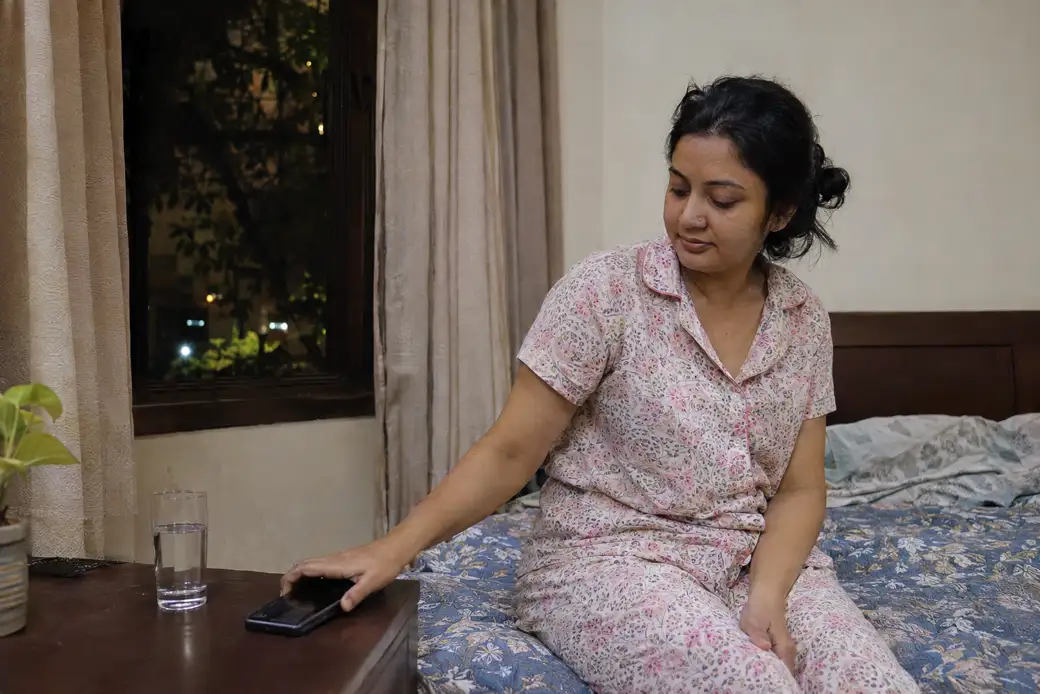
- Phones in bed. Scrolling, serials and work messages delay sleep and keep the mind alert.
- Alcohol as a nightcap. It may help you fall asleep but fragments sleep in the second half of the night and worsens snoring.
- Irregular hours. Late nights at weddings and festivals, followed by long lie-ins, shift the body clock in the same way as jet lag.
- Long afternoon naps. A short nap is fine; an hour or two after 3 pm usually pushes bedtime later.
How to sleep better: a practical evening routine
This is an illustrative example for someone who needs to wake at 6.30 am. Shift the times to suit your own schedule; the spacing matters more than the clock.
| Time | What to do |
|---|---|
| By 2 to 3 pm | Last tea or coffee of the day |
| Evening | A walk or exercise session, finishing at least two hours before bed if it is vigorous |
| 7.30 to 8.30 pm | Dinner: lighter than lunch, with protein and vegetables |
| 9.30 pm | Dim the lights. Put the phone on charge outside the bedroom or out of reach. |
| 9.45 pm | Wind down: a warm bath, light reading, prayer, slow breathing or gentle stretches |
| 10.30 pm | In bed, in a cool, dark, quiet room |
| 6.30 am | Wake at the same time every day, including Sundays. Get daylight within the first hour. |
- Keep the wake-up time fixed. It is the strongest anchor for the body clock.
- Use the bed for sleep, not for work, television or scrolling.
- If you cannot sleep after about 20 minutes, get up, do something quiet in dim light and return when sleepy.
- Naps: 20 to 30 minutes, before mid-afternoon.
- Be active in the day. Regular exercise improves sleep depth. Our guide to walking for fat loss is a good place to start.

What should you eat in the evening?
No single food makes you sleep, but the pattern of the evening meal matters. Aim to finish dinner two to three hours before bed, keep it moderate in size, and include protein so that you are not hungry at midnight.
| Dinner type | Vegetarian | Non-vegetarian |
|---|---|---|
| Light and filling | Moong dal khichdi with vegetables and a katori of curd | Chicken and vegetable soup with one roti |
| Roti-based | 1 to 2 rotis, paneer bhurji or dal, lauki or beans sabzi, salad | 1 to 2 rotis, egg curry or grilled fish, sabzi, salad |
| If hungry near bedtime | A small cup of warm milk without sugar, or a few nuts | The same, or a boiled egg |
Things that commonly disturb sleep: very spicy or oily food late at night, large portions, sweets after dinner, alcohol, and a lot of fluid in the last hour.
Shift work, new parents and other difficult situations
Some people cannot follow standard advice. Night-shift workers, healthcare professionals and nurses on call, call-centre staff working to overseas time zones, drivers and parents of young babies all have sleep that is cut short or mistimed. Shift work is itself associated with weight gain and diabetes.
- Keep sleep and meal times as regular as the job allows, including on days off.
- After a night shift, sleep in a dark, cool room with the phone silent. Blackout curtains or an eye mask help.
- Carry planned meals and snacks such as roasted chana, fruit, curd, eggs or a dal-roti tiffin, so that the night is not fuelled by vending machines and tea with biscuits.
- Use caffeine early in the shift only.
Sleep while on weight loss medicines
People taking GLP-1 medicines sometimes find that nausea, acidity or reflux disturbs their sleep, particularly after a dose increase or a late, rich dinner. Smaller, earlier evening meals and raising the head of the bed slightly usually help. Persistent symptoms should be reported; see our complete guide to GLP-1 side effects.
On the positive side, as weight falls, snoring and sleep apnoea often improve and many people report better energy. If you use CPAP, keep using it and ask for a review after substantial weight loss, since the pressure you need may change. If your weight has stalled, poor sleep is worth examining; see reasons for not losing weight on a GLP-1 medicine.

Common myths about sleep and weight
- “I manage fine on five hours.” Most people who say this have adapted to feeling tired. Appetite and blood sugar are still affected.
- “Snoring is just a sign of deep sleep.” Loud, regular snoring means the airway is partly obstructed. With pauses or daytime sleepiness, it needs checking.
- “Only very overweight older men get sleep apnoea.” Women, younger adults and people who are only modestly overweight can have it, and this is seen often in Indians.
- “A drink helps you sleep.” Alcohol brings sleep on faster but makes it lighter and more broken.
- “Sleeping tablets are a harmless fix.” They are not a long-term solution, can cause dependence and may worsen untreated sleep apnoea. Use them only as prescribed.
Questions to ask your healthcare provider
- Do my snoring, tiredness or morning headaches suggest sleep apnoea, and do I need a sleep study?
- Should I be tested for thyroid problems, anaemia, low iron or diabetes?
- My blood pressure is hard to control: could a sleep problem be contributing?
- What is the right treatment for my insomnia, and is cognitive behavioural therapy available?
- If I have sleep apnoea, how much might weight loss help, and what are my options?
- Is it safe for me to drive while my sleepiness is being investigated?
How The Prime Fit helps
At The Prime Fit, sleep is treated as part of the weight picture and not as an afterthought. An assessment covers your weight history, BMI and waist using Indian cut-offs, eating pattern, daily routine and sleep, along with relevant blood tests. If your symptoms suggest sleep apnoea or another sleep disorder, you will be advised to have this evaluated by the appropriate specialist, because treating it makes everything else work better.
Nutrition support through our clinical nutrition service includes practical work on meal timing, evening eating and caffeine, built around your own schedule, including shift work. Where medical treatment for weight is appropriate, it is prescribed and monitored with regular follow-up. To find out whether treatment may be suitable, see who is eligible for weight loss injections.
Frequently asked questions
Can lack of sleep stop me losing weight?
It can make it much harder. Short sleep increases hunger and cravings, reduces energy for activity, worsens blood sugar control and, in studies, shifts weight loss away from fat. Improving sleep often helps a stalled plan.
How many hours of sleep do I need to lose weight?
Most adults need seven to nine hours a night. There is no special number for weight loss, but regularly sleeping less than about six hours is associated with weight gain.
Why do I crave sweets when I am tired?
Sleep loss raises hunger signals and makes the brain’s reward centres respond more strongly to high-calorie food, while reducing self-control. The result is a pull towards sugar, fried snacks and refined carbohydrate.
What are the warning signs of sleep apnoea?
Loud habitual snoring, pauses in breathing seen by a partner, gasping or choking at night, waking unrefreshed, morning headaches, daytime sleepiness and blood pressure that is hard to control. See a healthcare professional if you have these.
Will losing weight cure my sleep apnoea?
Weight loss usually reduces its severity and can resolve milder cases, but not always. Continue your prescribed treatment and ask for a repeat assessment after significant weight loss.
Does sleeping in the afternoon cause weight gain?
A short nap of 20 to 30 minutes does not cause weight gain. Long or late naps can push bedtime later and shorten night sleep, which is the real problem.
Does eating late at night cause weight gain?
Late eating is associated with weight gain, mainly because it tends to add extra calories and disturbs sleep. Finishing dinner two to three hours before bed is a sensible habit.
Should I take melatonin or sleeping tablets to help with weight?
Not without medical advice. They are not weight loss treatments, and sleeping tablets can worsen untreated sleep apnoea. Sleep habits and treating the underlying cause come first.
This article is general information and is not a substitute for a consultation with your own healthcare provider. Research findings are described approximately. If you have loud snoring with daytime sleepiness, long-standing insomnia or any of the warning signs above, seek a medical assessment, and do not drive when you are sleepy.