In this article
- How fasting and GLP-1 medicines interact
- Who should not fast, or should fast only with medical advice
- Before the fast: a preparation checklist
- The rules that apply to every kind of fast
- Navratri and other vrat fasts
- Ramadan
- Karva Chauth and other waterless fasts
- Ekadashi, weekly fasts and longer fasts
- Intermittent fasting on GLP-1 treatment
- Exercise and sleep during fasting periods
- Fasts with strict food rules
- If you have diabetes
- When to break the fast for medical reasons
- Breaking a fast the right way
- After the fasting period
- Common myths
- How The Prime Fit supports fasting safely
- Frequently asked questions
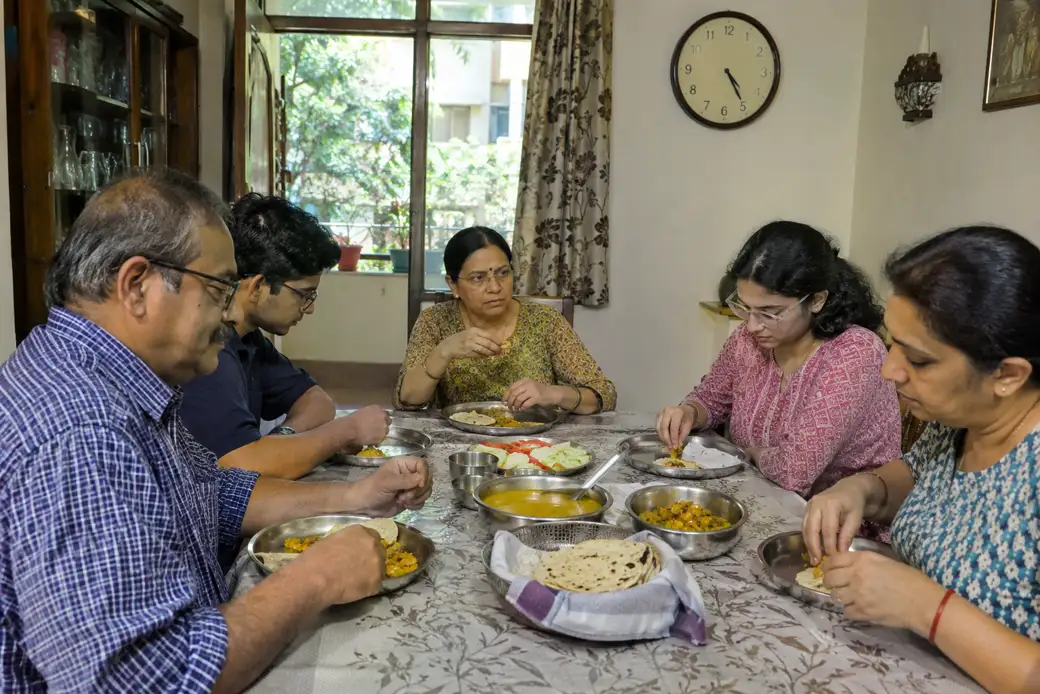
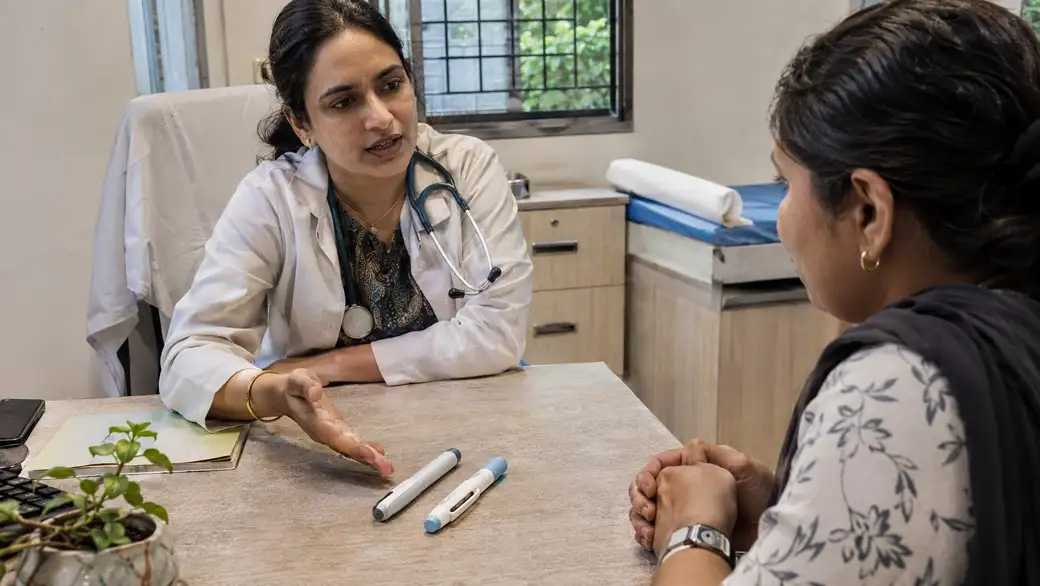
Fasting has deep roots in Indian life. Navratri, Ramadan, Karva Chauth, Ekadashi, Paryushan, weekly fasts on Mondays or Thursdays, and many others are observed with devotion across the country. Alongside these, intermittent fasting has become popular as a weight loss method. If you are taking a GLP-1 medicine such as Mounjaro (tirzepatide), Wegovy or Ozempic (semaglutide), it is natural to ask whether you can fast, and how.
For most people the answer is yes, with preparation. These medicines reduce hunger, which can make fasting feel easier. But the same effect brings risks: drinking too little, eating too little protein, low blood sugar in people on certain diabetes medicines, and nausea or vomiting when a slowed stomach meets a heavy meal at the end of the fast.
This guide explains how fasting and GLP-1 treatment interact, who should not fast, how to prepare, what to eat for different kinds of fast, and the signs that mean a fast should be ended. It is general information. Please speak to your healthcare provider before a fast, particularly if you have diabetes, and follow your own religious guidance on matters of observance.
How fasting and GLP-1 medicines interact
| Effect of the medicine | What it means during a fast |
|---|---|
| Reduced appetite | Fasting feels easier, but it is also easy to under-eat when the fast ends |
| Reduced thirst | Fluid intake before and after the fast may be too low, leading to dehydration |
| Slower stomach emptying | A large or oily meal at the end of the fast can cause nausea, bloating, acidity or vomiting |
| Lower blood sugar | On its own the medicine rarely causes low sugar; the risk rises with insulin or sulfonylureas and long gaps without food |
| Slower bowel movement | Less food, fibre and water during fasting days can worsen constipation |
| Ongoing weight loss | Repeated fasting on top of treatment can make weight loss too rapid, with more muscle loss, hair shedding and gallstone risk |
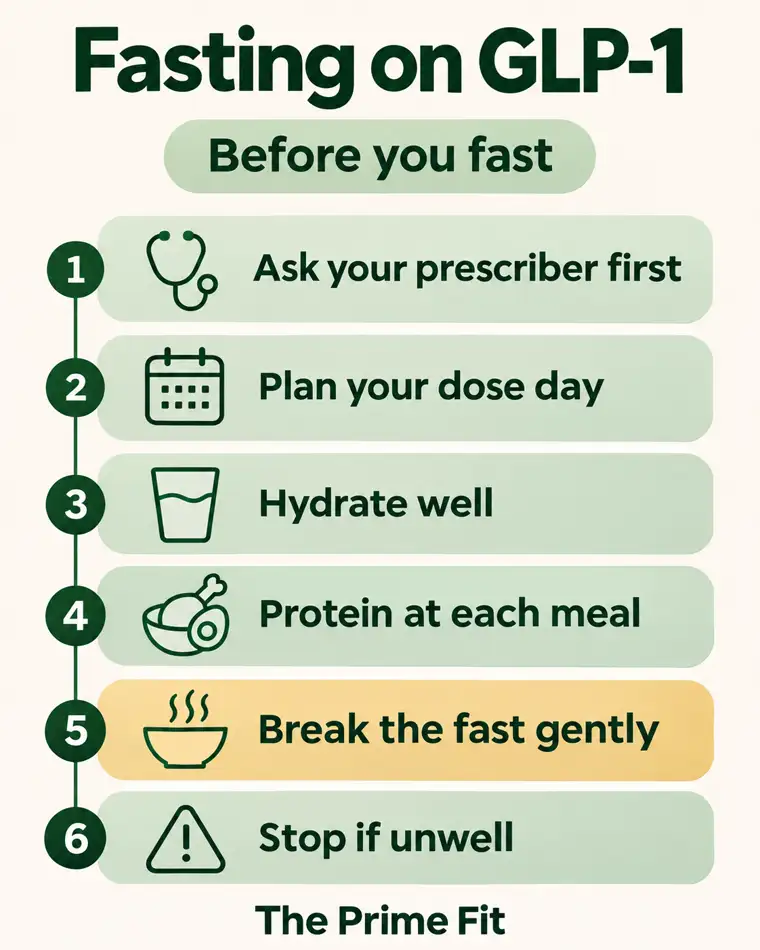
None of this means fasting is unsafe by definition. It means the fast needs a plan: enough fluid in the permitted hours, protein at each meal, a gentle way of breaking the fast, and attention to your other medicines.
Who should not fast, or should fast only with medical advice
| Situation | Advice |
|---|---|
| Pregnancy or breastfeeding | Fasting is generally not advised; GLP-1 medicines are not used at these times either |
| Type 1 diabetes, or type 2 diabetes on insulin | High risk; fast only after a specific plan from your healthcare provider, if at all |
| Diabetes treated with sulfonylureas (glimepiride, gliclazide and others) | Doses usually need adjusting before a fast |
| Frequent or severe low blood sugar, or poor awareness of low sugar | Do not fast |
| Poorly controlled diabetes | Improve control first |
| Kidney disease, heart failure or a history of kidney stones | Dehydration is risky; medical advice is essential, especially for waterless fasts |
| The first few weeks of treatment, or the weeks after a dose increase | Side effects are most likely; postpone strict fasts where possible |
| Ongoing vomiting, diarrhoea or acute illness | Do not fast until recovered |
| History of an eating disorder | Fasting can trigger relapse; discuss with your healthcare provider |
| Older adults who are frail, or anyone already eating very little | Fasting may cause weakness and falls |
Most faiths exempt people who are unwell, pregnant, elderly or for whom fasting would cause harm. Many patients find it helpful to discuss alternatives, such as a modified fast, charity or prayer, with their family or religious guide.
Before the fast: a preparation checklist
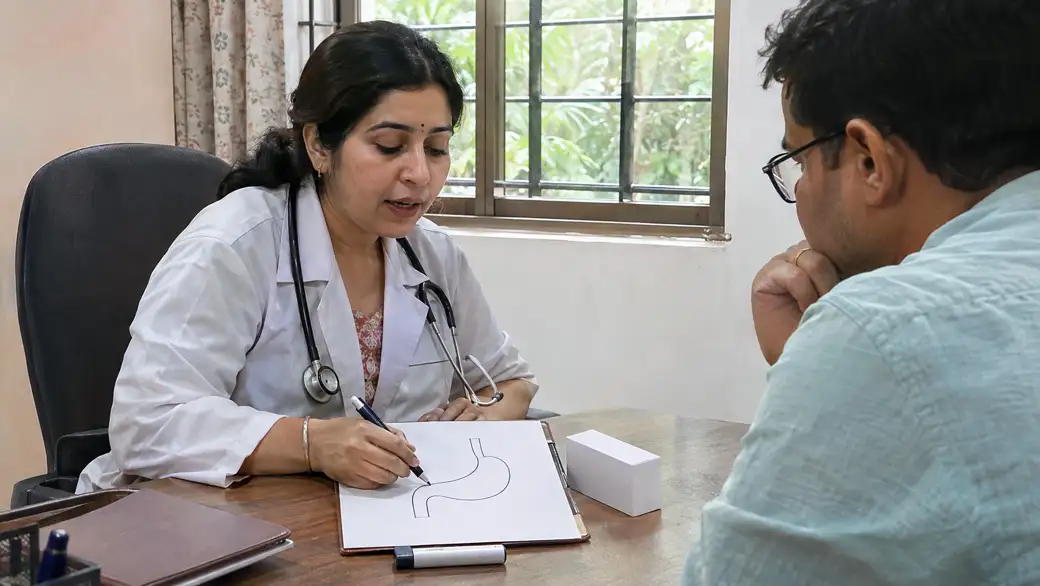
- See your healthcare provider two to six weeks ahead of a long fasting period such as Ramadan or Navratri, particularly if you have diabetes.
- Do not start a GLP-1 medicine or increase the dose just before or during a fasting period. Aim to be settled on a stable dose beforehand. If an increase falls due, ask whether it can wait.
- Review your other medicines. Insulin, sulfonylureas, some blood pressure tablets and diuretics may need a change of dose or timing.
- Plan your injection day. If you usually feel nauseous for a day or two after injecting, avoid placing a strict fast in that window. You may be able to change your injection day, keeping the required gap between doses.
- Do a trial. Try a shorter fast on a quiet day to see how you feel.
- Arrange monitoring if you have diabetes: check your glucose meter, strips and a source of fast-acting sugar.
- Stock your kitchen with the foods you will need to eat well in the permitted hours.
The rules that apply to every kind of fast
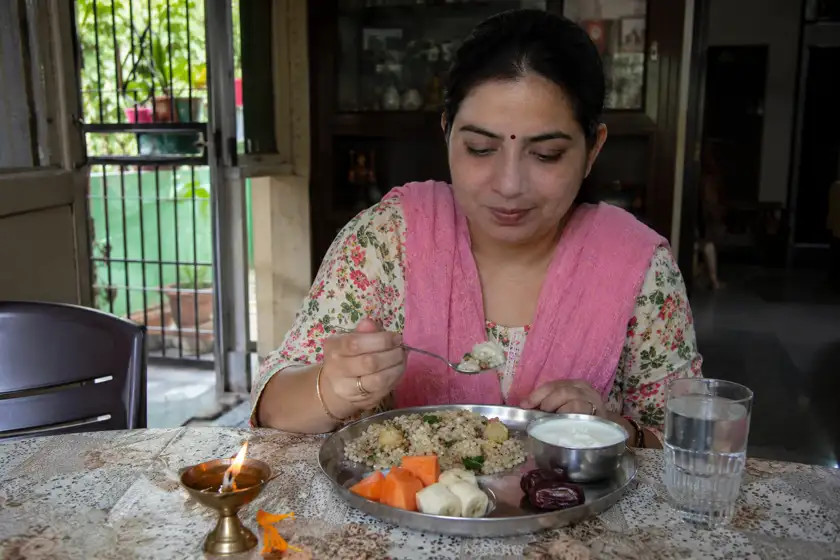
- Hydrate in the permitted hours. Aim for 2 to 3 litres between the end of one fast and the start of the next, or through the day if your fast allows fluids. Water, chaas, coconut water, nimbu pani and milk all count.
- Put protein in every meal you eat. A fasting day should still provide dal, curd, paneer, milk, nuts, eggs, fish or chicken where your observance allows.
- Break the fast gently. Begin with fluid and something small, wait a few minutes, then eat a modest meal. A slowed stomach cannot handle a feast.
- Keep fried and very sweet foods small. They are the usual cause of nausea and vomiting after a fast.
- Include fibre: fruit, vegetables and permitted whole grains or millets, to prevent constipation.
- Rest in the heat, and move gently. A short walk after the evening meal is useful; strenuous exercise while fasting is not.
- Know when to stop. See the section on breaking the fast for medical reasons.
Navratri and other vrat fasts
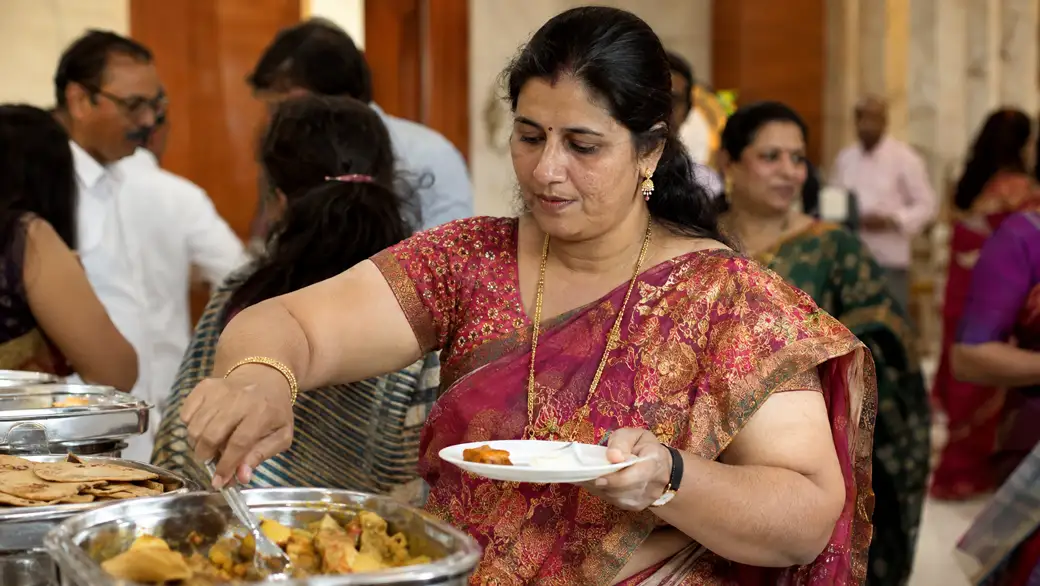
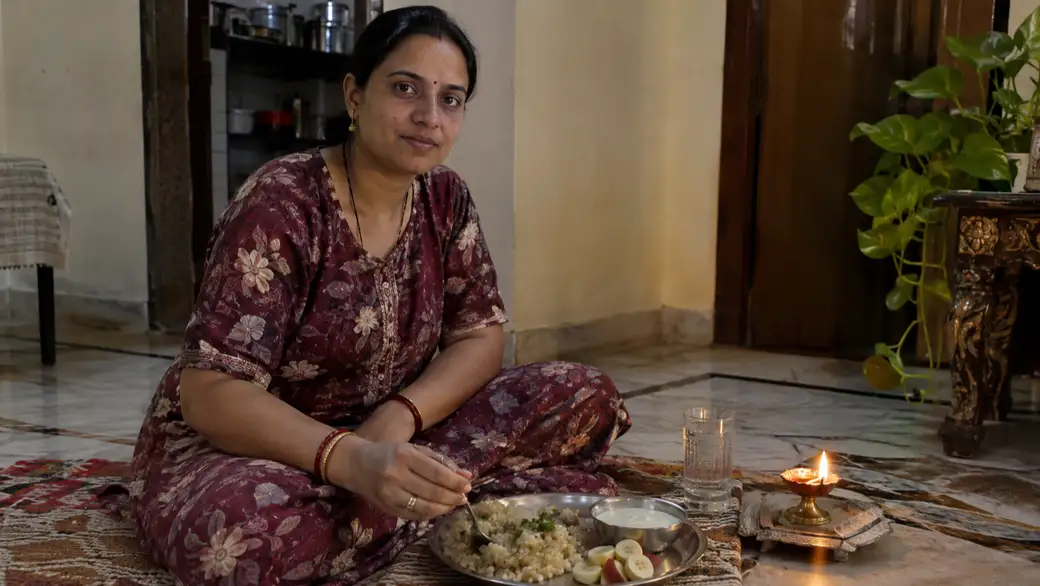
Navratri fasts usually allow certain foods: fruits, milk and dairy, nuts, potatoes and sweet potatoes, sabudana, and flours such as kuttu (buckwheat), singhara (water chestnut) and rajgira (amaranth), with samak (barnyard millet) in place of rice and sendha namak in place of ordinary salt. The practical problem is that typical vrat meals are heavy in starch and oil: sabudana khichdi and vada, fried kuttu puris, aloo, chips and sweets. On GLP-1 treatment these can cause discomfort, and they provide little protein.
Better vrat choices
| Common vrat food | Issue | Better option |
|---|---|---|
| Sabudana vada, fried kuttu puri | Deep fried; heavy on a slow stomach | Kuttu or rajgira chilla, or roti made on a tawa with little ghee |
| Large bowl of sabudana khichdi | Almost pure starch | Small portion with extra peanuts and curd; or samak rice khichdi with vegetables |
| Fried aloo, aloo chips | Starch plus oil | Boiled or roasted sweet potato chaat; lauki or pumpkin sabzi |
| Vrat namkeen and farali mixtures | Fried, salty, easy to overeat | Roasted makhana, roasted peanuts |
| Sweetened lassi, kheer, halwa | Sugar load | Plain curd, chaas, a small bowl of fruit with nuts; kheer in a small katori |
| Fruit juice | Sugar without fibre | Whole fruit, coconut water |
Protein sources that are usually permitted
Paneer, curd, milk, chaas, peanuts, almonds, makhana, and amaranth (rajgira), which is higher in protein than most grains. Build each meal around one of these.
A sample Navratri fasting day
| Time | Meal |
|---|---|
| Morning | Warm water; a bowl of papaya or apple with 8 to 10 almonds; a glass of milk |
| Mid-morning | Chaas or coconut water |
| Lunch | 1 to 2 kuttu or rajgira rotis (tawa), paneer and lauki sabzi, cucumber raita |
| Evening | Roasted makhana and peanuts; lemon water with sendha namak |
| Dinner | Small katori samak rice khichdi with vegetables, curd |
| Bedtime | Warm milk if hungry |
If you eat one meal a day during Navratri, keep fluids, fruit, milk or curd going through the day where your tradition allows, and make the single meal balanced rather than large.
Ramadan
During Ramadan, no food or drink is taken from dawn to sunset, for about a month. In an Indian summer the fast can last 14 hours or more. Studies of people with type 2 diabetes who continued GLP-1 medicines during Ramadan have generally found a low risk of hypoglycaemia with these medicines themselves. The main concerns are dehydration, digestive symptoms and the other diabetes medicines taken alongside.
Before Ramadan
- Have a pre-Ramadan review about six to eight weeks ahead if you have diabetes. International guidance recommends this for everyone with diabetes who plans to fast.
- Complete any dose increase well before the month begins, so that you are on a stable, tolerated dose.
- Agree changes to insulin or sulfonylureas, and how often to check your glucose.
Taking the injection
The weekly injection can be taken at any time of day, so it can be given after iftar. Whether an injection affects the validity of the fast is a religious question; many scholars hold that non-nutritional injections under the skin do not break the fast, but you should follow the guidance of your own religious authority. Checking blood sugar by finger-prick is widely accepted as not breaking the fast and should not be avoided.
Suhoor (pre-dawn meal)
Do not skip it. Eat as late as permitted. Choose slow-release foods with protein: eggs or paneer with whole wheat roti, oats or dalia with milk and nuts, curd, dal, fruit. Drink two to three glasses of water. Avoid very salty food, which increases thirst, and limit tea and coffee, which increase urine output.
Iftar (breaking the fast)
Begin with water and one or two dates, then a light soup or chaas. Pause for prayer, then have a moderate main meal: grilled or curried chicken, fish, dal or chana, vegetables, salad and one roti or a small portion of rice. Samosas, pakoras, fried kebabs, sweet sherbets and rich desserts are the usual triggers for nausea and reflux on GLP-1 treatment. Keep them to a taste.
Between iftar and suhoor
Spread your fluids across the evening. Have a small protein snack, such as curd, milk, nuts or a boiled egg, and fruit. A gentle walk after the evening meal or taraweeh prayers helps digestion and blood sugar.
A sample Ramadan day
| Time | Meal |
|---|---|
| Suhoor | 2-egg omelette or paneer bhurji, 1 whole wheat roti, a bowl of curd, 1 fruit, 2 to 3 glasses of water |
| Iftar | Water, 1 to 2 dates, a bowl of chicken or lentil soup, fruit chaat without added sugar |
| Dinner (after prayer) | Grilled chicken or fish or chana curry, mixed vegetables, salad, 1 roti or a small katori of rice |
| Before bed | A glass of milk or curd with a handful of nuts; water |
Karva Chauth and other waterless fasts
Nirjala fasts, kept without food or water from before sunrise until moonrise, carry the highest risk of dehydration, especially for someone whose thirst is already blunted by medication.
- Sargi (pre-dawn meal): make it count. Include protein and slow carbohydrate, such as paneer paratha with little oil or besan chilla, curd, milk, fruit and nuts, and drink at least three glasses of fluid, including coconut water or milk. Avoid fried mathri and very sweet pheni in large amounts.
- During the day: rest, stay cool and avoid strenuous work.
- Breaking the fast: start with water in small sips, then something light such as fruit, chaas or soup. Wait 15 to 20 minutes before a modest meal. Do not go straight to a rich festive dinner.
- If you have diabetes, kidney disease, low blood pressure or are in the first weeks of treatment, speak to your healthcare provider first. A modified fast with water may be the safer way to observe the day.
Ekadashi, weekly fasts and longer fasts
One-day fasts such as Ekadashi or a weekly Monday or Thursday fast are usually manageable on GLP-1 treatment if fluids and some permitted protein, such as milk, curd, nuts and fruit, are included. Longer fasts, including extended fasts of several days observed in some traditions, are a different matter. With appetite already suppressed by medication, prolonged fasting can lead to significant dehydration, electrolyte disturbance, low blood sugar and loss of muscle. Anyone considering a fast of more than a day or two should have an individual medical plan, and those with diabetes or kidney disease may be advised against it.
Intermittent fasting on GLP-1 treatment
Intermittent fasting means limiting eating to certain hours or days, for example eating within an 8 to 10 hour window each day, or eating very little on two days of the week. People on GLP-1 medicines often fall into this pattern without trying, because they are not hungry in the morning or evening.
Is it necessary?
No. Research comparing intermittent fasting with ordinary calorie reduction shows broadly similar weight loss. There is no evidence that adding fasting to GLP-1 treatment improves results, and the medicine already reduces intake substantially.
The main risk: too little protein
Meeting a protein target of roughly 1.0 to 1.5 grams per kilogram of body weight a day is difficult in three small meals. It is harder still in one or two. Low protein intake speeds up muscle loss, hair shedding and fatigue.
If you prefer a time-restricted pattern
- Choose a moderate window, such as 10 to 12 hours of eating, rather than one meal a day.
- Fit three protein-containing eating occasions into the window.
- Drink water, and unsweetened tea or coffee in moderation, outside the window.
- Avoid fasts of 24 hours or longer.
- Stop if you feel weak, dizzy or unable to meet your protein and fluid targets.
A sample 10-hour eating day
| Time | Meal |
|---|---|
| 9:00 am | Besan or moong chilla with curd, or 2 eggs with 1 toast; fruit |
| 1:30 pm | 1 to 2 rotis, dal or chicken, sabzi, salad, chaas |
| 4:30 pm | Sprouts chaat, roasted chana or a protein shake blended with fruit |
| 6:45 pm | Paneer, tofu or fish with vegetables and a small portion of rice or 1 roti |
| Outside the window | Water, jeera water, unsweetened herbal tea |
Exercise and sleep during fasting periods
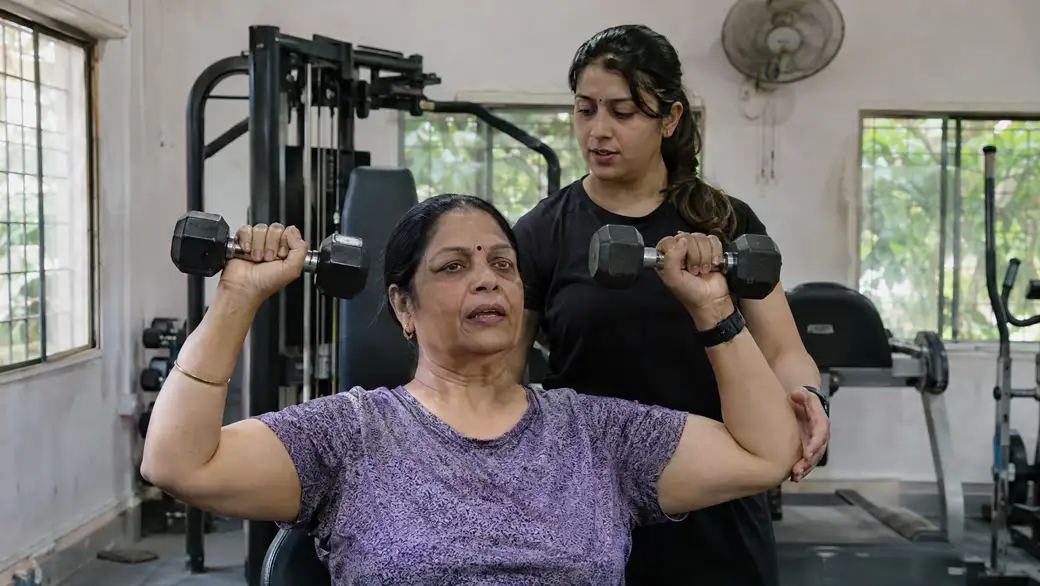
Fasting days are not the time for personal bests, but stopping all movement is not necessary either. Keep walking, and schedule strength exercise for the hours when you can eat and drink: for example, an hour or two after iftar during Ramadan, or after your main meal during Navratri. Follow it with a protein-containing snack such as milk, curd or paneer, which helps protect muscle. Avoid strenuous activity in the heat during a waterless fast. Sleep also changes during fasting months, with late nights and early meals. Short sleep increases fatigue and cravings, so protect a regular rest period, and consider a brief afternoon nap if your routine allows. If you feel unusually weak or light-headed during exercise, stop, rest and rehydrate when you are able to.
Fasts with strict food rules
Some traditions limit foods further, for example avoiding root vegetables, eating only before sunset, or taking only boiled water or a single meal. The principles in this guide still apply: plan fluids for the permitted times, choose the most protein-rich foods your observance allows, such as dals, milk, curd and nuts, and avoid making up for restriction with a very large meal. Where the rules leave little room for adequate protein or water over several days, speak to your healthcare provider before starting, and ask whether your dose schedule should be adjusted around the fast.
If you have diabetes
- Check your sugar more often on fasting days: on waking, mid-day, mid-afternoon, before breaking the fast and two hours after the meal, or as your healthcare provider advises.
- Know your medicines. GLP-1 medicines and metformin on their own rarely cause low sugar. Insulin and sulfonylureas can, and usually need dose changes for fasting.
- Do not stop medicines yourself. Skipping doses can cause high sugar and dehydration.
- Carry glucose tablets or sugar and wear or carry identification.
When to break the fast for medical reasons
End the fast and seek advice if
Your blood sugar falls below 70 mg/dL, or you have symptoms of low sugar such as shaking, sweating, confusion or palpitations; your blood sugar rises above 300 mg/dL; you have repeated vomiting; you feel faint, very dizzy or confused; you pass very little or very dark urine; or you have severe abdominal pain. Treat low blood sugar immediately with sugar or glucose. Preserving health takes priority, and religious traditions recognise this.

Breaking a fast the right way
How you end a fast matters more on GLP-1 treatment than what you ate before it.
| Step | What to have | Why |
|---|---|---|
| 1. Rehydrate | Water, coconut water, chaas or nimbu pani, sipped slowly | Restores fluid without overfilling the stomach |
| 2. Something small | 1 to 2 dates, a piece of fruit or a few nuts | Gently raises blood sugar |
| 3. Pause | Wait 10 to 20 minutes | Lets the stomach adjust and fullness signals arrive |
| 4. A light, warm dish | Soup, dal, or curd | Easy to digest; begins the protein intake |
| 5. A modest main meal | Protein, vegetables and a small portion of roti, rice or permitted grain | Meets nutritional needs without triggering nausea |
| 6. Later in the evening | More fluids; milk, curd or nuts if hungry | Completes fluid and protein targets |
After the fasting period
When a long fasting period ends, return to regular meals over a few days rather than celebrating with several heavy meals in a row. Festive foods at Eid, Dussehra or Diwali are part of the joy; small portions eaten slowly let you enjoy them without paying for it afterwards. If your dose increase was postponed, discuss the timing with your healthcare provider. If your weight fell quickly during the fast, check your protein intake and strength routine, and have your weight and, if relevant, your sugars and medicines reviewed.
Common myths
“The injection means I cannot keep religious fasts”
Most people on a stable dose can fast with planning. Those at high medical risk should take advice, and may be able to keep a modified fast.
“Fasting will make the medicine work faster”
Combining the two does not improve results and can cause weight loss that is too rapid, with more loss of muscle.
“I should skip my injection during a fasting week”
Do not skip or delay doses without advice. Missing doses can bring back side effects when you restart. Ask your healthcare provider about timing instead.
“Vrat food is light, so I can eat as much as I like”
Many vrat foods are fried and starchy. Portion and preparation matter as much as on any other day.
“Not feeling thirsty means I am hydrated”
The medicine blunts thirst. Drink to a plan, not by feel.
How The Prime Fit supports fasting safely
At The Prime Fit, we plan around your observances rather than asking you to give them up. Before a fasting period, your healthcare provider reviews your dose schedule and other medicines, and your dietitian prepares a fasting menu that fits your tradition, with fluid and protein targets and guidance on breaking the fast. You can message the team during the fast if you feel unwell.
To prepare for an upcoming fast, book a consultation or read about our GLP-1 support programme and diabetes diet programme.
Frequently asked questions
Can I fast while taking Mounjaro, Wegovy or Ozempic?
Most people on a stable dose can, with planning for fluids, protein and a gentle end to the fast. People with diabetes on insulin or sulfonylureas, kidney disease, pregnancy or recent dose changes need medical advice first.
Does the weekly injection break a religious fast?
That is a religious question. Many scholars consider that a medical injection under the skin does not break a fast, and the injection can in any case be taken outside fasting hours. Follow the guidance of your own religious authority.
Should I change my injection day during a fasting period?
If you usually feel side effects for a day or two after injecting, it can help to choose a day when the following days are less strict. Ask your healthcare provider, and keep the required minimum gap between doses.
Can I start GLP-1 treatment during Ramadan or Navratri?
It is better to start, and to complete dose increases, before or after the fasting period, because side effects are most likely in the first weeks and after each increase.
Is intermittent fasting good with GLP-1 medicines?
It is not needed and has not been shown to improve results. A moderate eating window can suit some people, but very long fasts or one meal a day make it hard to get enough protein and fluid.
What should I eat to break my fast?
Start with water and something small such as dates or fruit, wait a few minutes, then have soup, dal or curd, followed by a modest meal with protein and vegetables. Avoid large portions of fried or very sweet food.
What are the best protein foods during Navratri?
Paneer, curd, milk, chaas, peanuts, almonds, makhana and rajgira (amaranth) are usually permitted and should be included at each meal.
Is a waterless fast such as Karva Chauth safe on these medicines?
It carries a higher risk of dehydration. Healthy people on a stable dose may manage with a good pre-dawn meal and careful rehydration afterwards, but those with diabetes, kidney problems or recent dose changes should seek advice and consider a modified fast.
When should I break my fast?
If your blood sugar is below 70 mg/dL or above 300 mg/dL, or you have symptoms of low sugar, repeated vomiting, fainting, confusion, very little urine or severe pain.
Will fasting cause more muscle loss?
It can if protein intake falls. Include protein at every permitted meal and keep up light strength exercise outside fasting hours.
This article is general information and is not a substitute for a consultation. Speak to your healthcare provider before fasting if you take prescription medicines or have a medical condition, and follow your own religious guidance on observance.