In this article
- Why this matters so much in India
- What GLP-1 medicines are
- Where GLP-1 medicines fit among diabetes treatments
- Who qualifies
- What results to expect
- How treatment starts
- Indian food and GLP-1 treatment
- Fasting, festivals and family meals
- Cost and access
- Buying safely in India
- Storage in the Indian climate
- Side effects and safety
- GLP-1 medicines and other approaches
- Tablet or injection?
- Starting early instead of late
- How long is treatment needed?
- Three illustrative examples
- Questions to ask your healthcare provider
- Common myths in India
- How The Prime Fit helps
- Frequently asked questions
For years, treatment of type 2 diabetes in India followed a familiar path: metformin, then a sulfonylurea, then more tablets, and eventually insulin, with weight creeping upward along the way. Treatment of excess weight was hardly a medical subject at all. People were told to eat less and walk more, and largely left to it.
GLP-1 medicines have changed both pictures. Semaglutide, sold as Ozempic, Wegovy and the tablet Rybelsus, and tirzepatide, sold as Mounjaro, lower blood sugar powerfully and reduce weight at the same time. They are now available in India on prescription, and more affordable versions of semaglutide are appearing.
With that availability has come a flood of information, much of it from other countries and some of it wrong for Indian bodies and Indian kitchens. This guide is written for patients in India. It is general information. Products, approved uses and prices change, so confirm current details with your healthcare provider and pharmacist.
Why this matters so much in India
A national survey published in 2023 estimated that about 101 million people in India have diabetes and about 136 million have prediabetes. Roughly a quarter of adults had generalised obesity and about four in ten had abdominal obesity. These numbers are rising in cities and villages alike.
The Asian Indian body type
Indians tend to carry more fat, and less muscle, at any given body weight than people of European origin. More of that fat sits inside the abdomen and in the liver. This pattern, sometimes called “thin outside, fat inside”, has several consequences:
- Type 2 diabetes develops about a decade earlier, often in the thirties and forties.
- It appears at lower body weights. Many Indians with diabetes have a BMI that would be called normal or only mildly raised elsewhere.
- Insulin resistance, fatty liver, high triglycerides and low HDL cholesterol are common.
- Heart disease occurs earlier and more often.
For these reasons, the cut-offs used in India are lower than international ones.
| Measure | International | Asian Indian |
|---|---|---|
| Overweight | BMI 25 to 29.9 | BMI 23 to 24.9 |
| Obesity | BMI 30 or above | BMI 25 or above |
| High-risk waist, men | 102 cm | 90 cm |
| High-risk waist, women | 88 cm | 80 cm |
A medicine that reduces both blood sugar and abdominal fat addresses the core of the problem for many Indian patients.
What GLP-1 medicines are
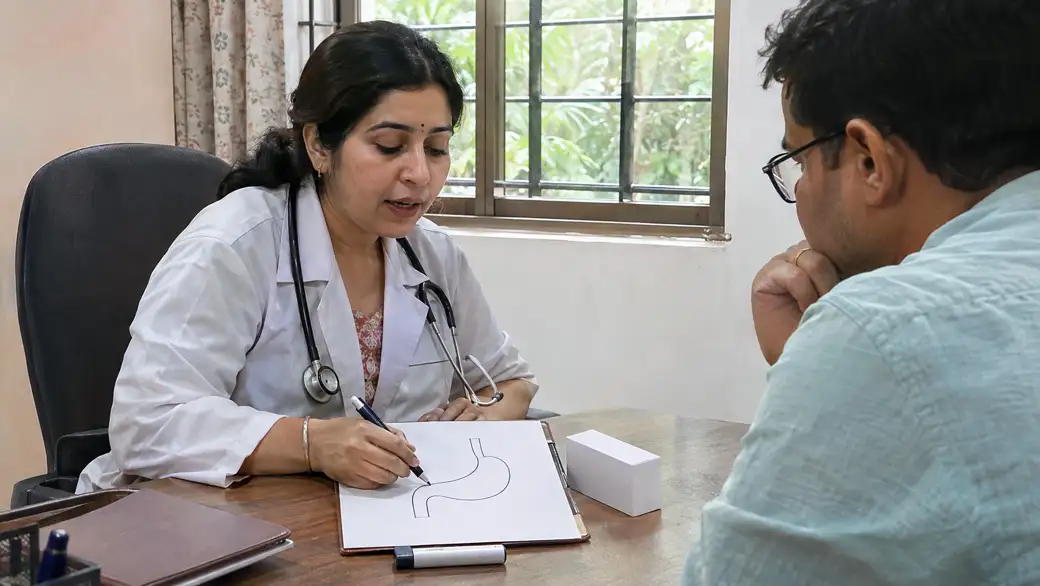
GLP-1 is a hormone released by the gut after meals. It increases insulin when blood sugar is high, reduces the liver’s output of sugar, slows the emptying of the stomach and tells the brain you are full. GLP-1 medicines are long-lasting copies of this hormone. Tirzepatide also activates a second hormone receptor, GIP.
Because they boost insulin only when sugar is raised, they rarely cause low blood sugar by themselves. And because they reduce appetite, they lead to weight loss, unlike most older diabetes medicines.
| Medicine | Form | Main licensed uses |
|---|---|---|
| Semaglutide (Ozempic) | Weekly injection | Type 2 diabetes |
| Semaglutide (Wegovy) | Weekly injection, higher dose | Weight management |
| Semaglutide (Rybelsus) | Daily tablet | Type 2 diabetes |
| Tirzepatide (Mounjaro) | Weekly injection | Type 2 diabetes and weight management |
| Liraglutide | Daily injection | Type 2 diabetes; weight management at a higher dose |
| Dulaglutide | Weekly injection | Type 2 diabetes |
Brand names, strengths and approved uses in India may differ from this general picture and change over time. Approved generic and second-brand versions of some of these medicines are also sold. Ask your healthcare provider which products are currently available.
Where GLP-1 medicines fit among diabetes treatments
| Type of medicine | HbA1c lowering | Effect on weight | Low blood sugar risk | Heart and kidney benefit | Relative cost |
|---|---|---|---|---|---|
| Metformin | Moderate | Neutral or slight loss | Very low | Possible | Low |
| Sulfonylureas (glimepiride, gliclazide) | Moderate to high | Gain | High | None shown | Low |
| DPP-4 inhibitors (sitagliptin, vildagliptin) | Modest | Neutral | Low | Neutral | Low to moderate |
| SGLT2 inhibitors (dapagliflozin, empagliflozin) | Modest to moderate | Loss of 2 to 3 kg | Low | Proven for heart failure and kidney disease | Low to moderate |
| Pioglitazone | Moderate | Gain | Low | Mixed | Low |
| GLP-1 medicines | High | Substantial loss | Low | Proven for heart attack and stroke; kidney benefit shown with semaglutide | Higher |
| Insulin | Highest | Gain | High | Neutral | Moderate |
Indian and international guidelines now recommend choosing diabetes medicines according to the person, not only the HbA1c. For someone with diabetes and excess weight, fatty liver, heart disease or kidney disease, a GLP-1 medicine, an SGLT2 inhibitor or both are preferred early, usually alongside metformin. Sulfonylureas and insulin remain valuable, especially where cost is a constraint or sugars are very high, but they cause weight gain and low blood sugar.

Who qualifies
For type 2 diabetes
- Adults with type 2 diabetes whose blood sugar is not at target on metformin or other treatment
- Those with diabetes and excess weight, for whom weight loss is a treatment goal
- Those with diabetes and heart disease, or at high cardiovascular risk
- Those with diabetes and chronic kidney disease
- Those in whom low blood sugar or weight gain with other medicines is a problem
For weight management
- Adults with a BMI of 30 or above
- Adults with a BMI of 27 or above and at least one weight-related condition: prediabetes or diabetes, high blood pressure, abnormal lipids, sleep apnoea, fatty liver, cardiovascular disease
- For Indian patients, risk starts at lower BMI and a larger waist, so healthcare professionals make an individual judgement within the approved use
Who should not take them
- Anyone with a personal or family history of medullary thyroid carcinoma or MEN 2
- Women who are pregnant, breastfeeding or trying to conceive
- People with type 1 diabetes, as a replacement for insulin
- Those with previous pancreatitis or severe stomach or bowel disease, in most cases
- People at a healthy weight without diabetes
What results to expect
| Medicine and setting | Fall in HbA1c | Weight loss |
|---|---|---|
| Semaglutide tablet, 14 mg, diabetes | About 1.0 to 1.4 points | About 3 to 4.5 kg |
| Semaglutide injection, 1 mg, diabetes | About 1.5 to 1.9 points | About 4.5 to 6.5 kg |
| Tirzepatide, 5 to 15 mg, diabetes | About 1.9 to 2.6 points | About 6 to 13 kg |
| Semaglutide 2.4 mg, obesity without diabetes | Not the aim; sugar improves | About 15% of body weight |
| Tirzepatide 10 to 15 mg, obesity without diabetes | Not the aim; sugar improves | About 20% of body weight |
| Either, in people with diabetes treated for weight | About 2 points | About 10 to 15% |
These are averages from international trials. Most participants were not South Asian, although analyses of Asian participants have shown broadly similar responses. Indian data are accumulating. Individual results vary.
Beyond sugar and weight, trials have shown fewer heart attacks and strokes in high-risk patients, slower kidney decline in diabetes, less liver fat and inflammation, improvement in sleep apnoea, and a large reduction in progression from prediabetes to diabetes.
How treatment starts
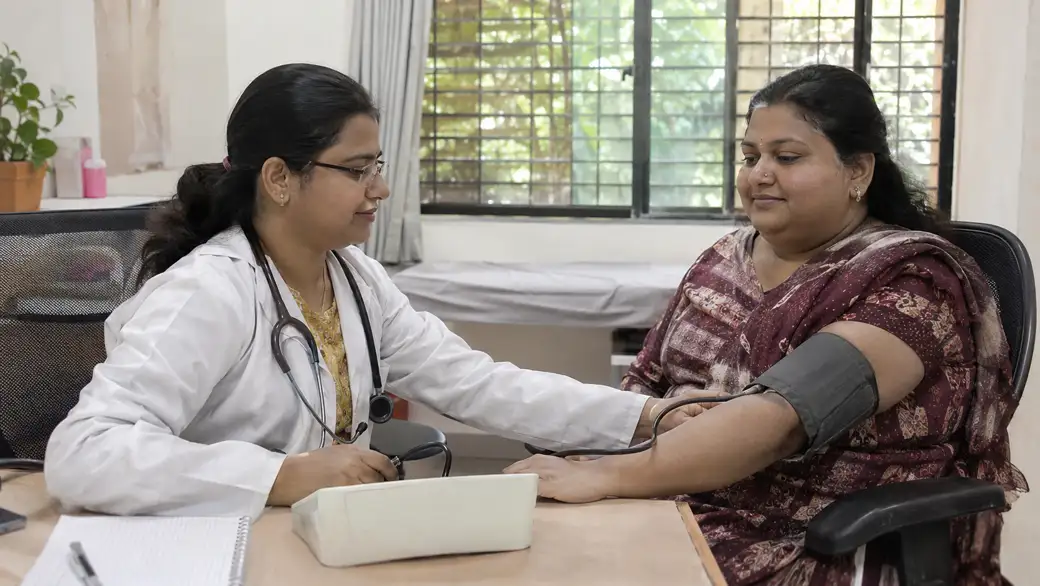
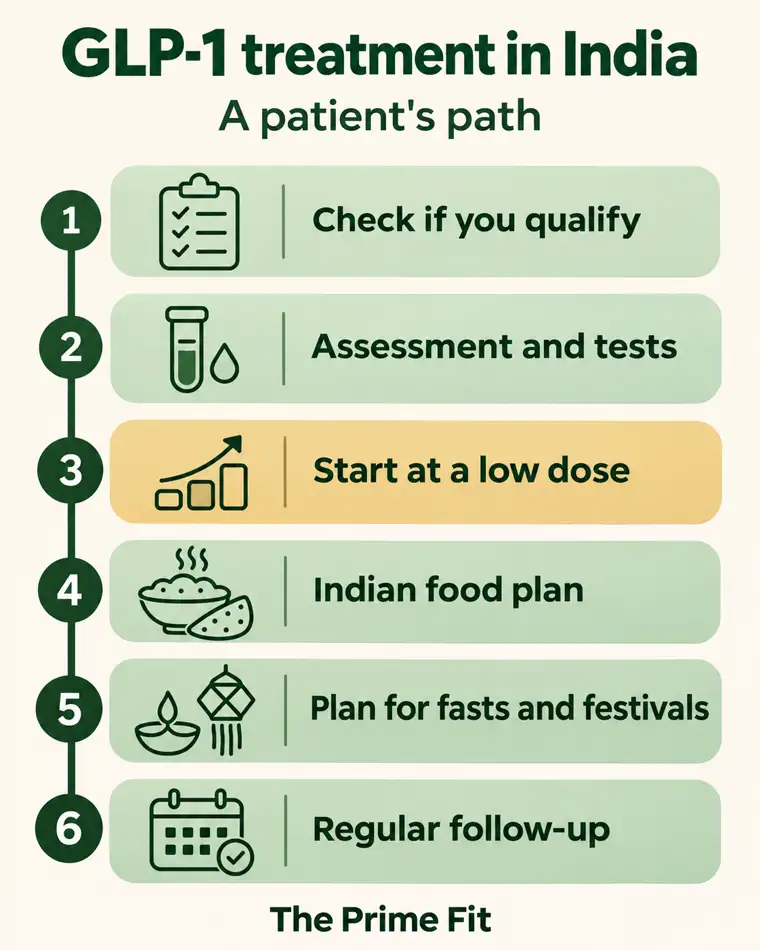
- Consultation. A healthcare professional reviews your history, medicines, family history, and for women, contraception and pregnancy plans.
- Measurements. Weight, height, BMI, waist, blood pressure and, where available, body composition.
- Tests. HbA1c and fasting glucose, kidney and liver function, lipids, thyroid function, blood count and vitamins; an eye examination if you have diabetes.
- Decision. Your healthcare provider explains the options, including tablets, injections and non-drug approaches, with their costs.
- Prescription and demonstration. You are shown how to use the pen, or how to take the tablet correctly.
- Adjustment of other medicines. Sulfonylurea or insulin doses are usually reduced at the start; DPP-4 inhibitors are stopped.
- Stepwise dosing. You start low and increase about every four weeks, if tolerated.
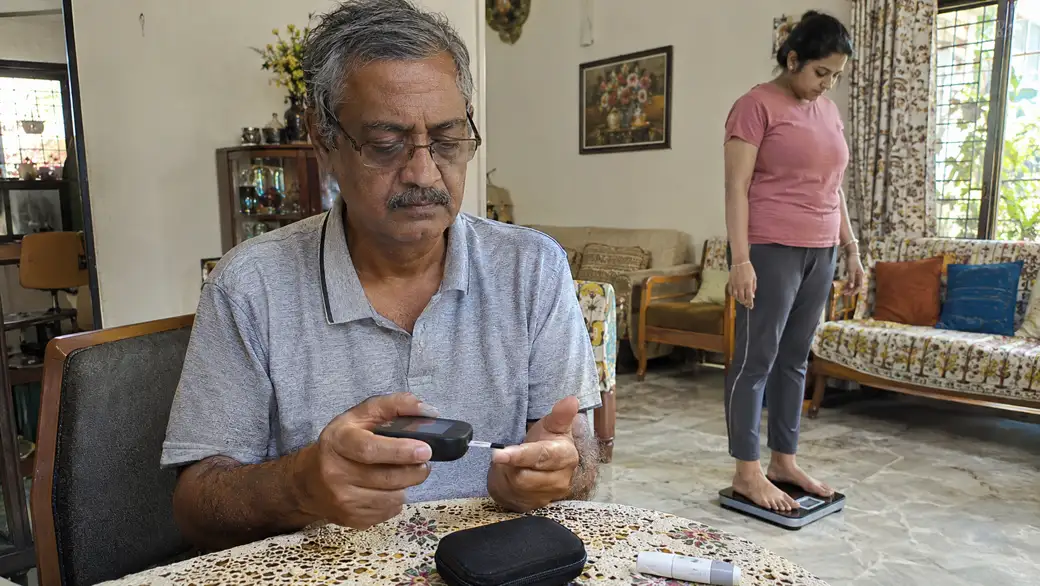
- Follow-up. Regular reviews of sugar readings, weight, side effects and diet, with HbA1c at three months.
Which healthcare professional?
Physicians, diabetologists and endocrinologists prescribe these medicines, and bariatric and obesity specialists use them for weight management. The important thing is that the prescriber assesses you properly, adjusts your other medicines and follows you up. A dietitian is a valuable part of the team.
Indian food and GLP-1 treatment
Typical Indian diets are rich in carbohydrate, from rice, roti, poha, idli and potatoes, and often low in protein, especially vegetarian diets. On a medicine that shrinks appetite, this pattern leads to loss of muscle. The adjustments are simple and do not require unfamiliar food.
| Principle | In an Indian kitchen |
|---|---|
| Protein at every meal, eaten first | Dal, chana, rajma, sprouts, paneer, curd, soya, eggs, fish, chicken |
| Smaller portions of cereal | 1 to 2 phulkas, or a small katori of rice; millets in rotation |
| Vegetables at lunch and dinner | Sabzi cooked in little oil; salad if it suits you |
| Less oil, especially around dose increases | Tawa, steam, pressure-cook or grill instead of deep-frying |
| Little sugar and maida | Tea with less sugar; fruit instead of juice; no daily biscuits and namkeen |
| Enough fluid | 2 to 3 litres: water, chaas, nimbu pani without sugar |
| Fibre for the bowel | Whole dals, vegetables, papaya, guava, isabgol if needed |
| Regular meals | Three small meals; do not skip, especially on insulin or sulfonylureas |
| Meal | North Indian vegetarian | South Indian vegetarian | Non-vegetarian |
|---|---|---|---|
| Breakfast | 2 besan chillas with paneer, curd | 2 idlis or 1 pesarattu with sambar rich in dal | 2-egg omelette, 1 toast |
| Lunch | 1 to 2 phulkas, rajma or dal, sabzi, salad, curd | Small katori rice, sambar, poriyal, curd, sundal | Small katori rice or 1 roti, fish or chicken curry, sabzi |
| Evening | Roasted chana, chaas | Sundal or peanuts, buttermilk | Boiled egg, chaas |
| Dinner | Paneer or soya sabzi, dal, 1 phulka | Vegetable kootu with dal, 1 small dosa or ragi roti, curd | Grilled chicken or fish, vegetables, dal |

Fasting, festivals and family meals
Religious fasts are part of life for many Indians. Most people on a stable dose can observe them with planning: enough fluid in the permitted hours, protein in each meal, and a gentle end to the fast. People taking insulin or sulfonylureas need their doses adjusted beforehand and should check their sugar more often. It is best not to start treatment or increase the dose just before a fasting period.
At weddings and festivals, portions matter more than the menu. Eat protein and vegetables first, take a small serving of sweets after the meal, and do not schedule a feast in the days after a dose increase.
Cost and access
Cost is a real consideration for long-term treatment. This guide does not quote prices, which change, but some principles help.
- Ask about all approved options. Prices differ between medicines, strengths and manufacturers. Approved generic versions of semaglutide can be considerably less expensive.
- Think in terms of monthly cost at your likely maintenance dose, not the starting dose.
- The lowest effective dose is good medicine. Many people do well without reaching the top dose.
- Count the savings. Other diabetes and blood pressure medicines are often reduced.
- Check your insurance. Cover for outpatient medicines varies between policies.
- If long-term treatment is not affordable, say so. Your healthcare provider can plan with other effective medicines, a structured nutrition programme, or in some cases a procedure.
- Never solve cost with an unverified source.
Buying safely in India
| Do | Do not |
|---|---|
| Obtain a prescription from a registered healthcare professional after an assessment | Buy from social media, gyms, salons or slimming centres |
| Buy from a licensed pharmacy, physical or an established online one | Accept a product without a bill |
| Check the carton: manufacturer, licence details, batch, expiry, price | Use vials or powders labelled “peptide” or “research” |
| Make sure it is supplied cold and stored in your refrigerator | Use a pen that arrived warm, frozen or unsealed |
| Have the device demonstrated | Share pens or reuse needles |
| Keep the carton and bill | Buy products described as “generic Mounjaro” from unofficial sellers |
Storage in the Indian climate
Injectable GLP-1 medicines must be refrigerated at 2°C to 8°C and never frozen. In most of India, room temperature for much of the year is above the limit allowed in the leaflets. Keep the pen in the fridge, carry it in an insulated pouch with a cool pack when you travel, never leave it in a parked car, and keep the fridge closed during power cuts. Tablets are stored at room temperature in their original blister.
Side effects and safety
The common side effects are digestive: nausea, loose stools, constipation, vomiting, acidity and reduced appetite, mostly when starting and after dose increases. They usually settle within one to two weeks. Small, low-oil meals, slow eating and enough fluid prevent most problems.
Seek medical help urgently if you have
Severe or persistent abdominal pain; repeated vomiting and cannot keep fluids down; shaking, sweating or confusion from low blood sugar; yellowing of the eyes; a sudden change in vision; or swelling of the face or throat or difficulty breathing.
Points of particular relevance in India:
- Sulfonylureas are very widely used. Their dose must be reduced when a GLP-1 medicine is added, or low blood sugar can occur.
- Diabetic eye disease is often undiagnosed. Have an eye examination before or soon after starting.
- Gallstones are common, especially in North India. Lose weight steadily, and report pain under the right ribs.
- Vitamin B12, vitamin D and iron deficiency are common. Test and treat them.
- Dehydration in hot weather is more likely when thirst is reduced. Drink to a plan.
- Thyroid disease is common. Hypothyroidism does not prevent treatment; the thyroid tablet dose may need lowering as weight falls.
- Tell your surgeon or anaesthetist before any procedure.
GLP-1 medicines and other approaches
| Approach | Typical weight loss | Suits |
|---|---|---|
| Structured diet and activity programme | 5 to 8% at one year | Everyone; the foundation of all treatment |
| Metformin | 1 to 3 kg | Prediabetes, diabetes, PCOS |
| SGLT2 inhibitors | 2 to 3 kg | Diabetes with heart failure or kidney disease |
| GLP-1 medicines | 10 to 20% | Diabetes with excess weight; obesity with related conditions |
| Swallowable gastric balloon | 10 to 15% over four to six months | Those wanting a non-surgical, time-limited option |
| Bariatric surgery | 25 to 30% | Higher BMI, especially with hard-to-control diabetes |
These are not rivals. Many people use more than one over the years.
Tablet or injection?
| Semaglutide tablet | Weekly injections | |
|---|---|---|
| How taken | Every morning on an empty stomach with a sip of water; wait 30 minutes before food, drink or other medicines | Once a week, any time, with or without food |
| Blood sugar control | Good | Good to very good |
| Weight loss at diabetes doses | Modest | Moderate to large |
| Storage | Room temperature, in the blister | Refrigerator |
| Suits | People who dislike needles and have a steady morning routine | People who want a weekly routine or greater weight loss |
Many patients who expect to dislike injecting find the weekly pen far easier than a strict daily tablet routine. Ask to see the pen before deciding. The needle is very fine and only a few millimetres long, and most people feel little or nothing.
Starting early instead of late
A common pattern in India is to add medicines one at a time over many years, moving to an injection only when everything else has failed. Current guidance points the other way. When someone with type 2 diabetes also has excess weight, fatty liver, heart disease or kidney disease, medicines that reduce weight and protect the heart and kidneys are preferred early, while the pancreas still works well and complications have not set in. Controlling blood sugar and weight in the first years after diagnosis gives lasting protection to the eyes, kidneys, nerves and heart. If your diabetes was diagnosed recently and your weight or waist is above the Indian cut-offs, it is worth asking your healthcare provider about these options now, not as a last resort.
How long is treatment needed?
Type 2 diabetes and obesity are long-term conditions. GLP-1 medicines control them while they are taken. If treatment stops, blood sugar and weight usually rise again over the following months. Most people therefore continue, often at the lowest effective dose, with regular review. Some who lose a large amount of weight early in the course of diabetes can reduce or stop other diabetes medicines, under their healthcare provider’s supervision.

Three illustrative examples
These invented examples reflect common situations in India. They are not recommendations for any individual.
Diabetes at a “normal” weight
A 42-year-old man weighs 76 kg with a BMI of 26.5, a waist of 98 cm, fatty liver and an HbA1c of 8.2 percent on metformin and glimepiride. By Indian criteria he has obesity with central fat. A GLP-1 medicine is added, his glimepiride is stopped as his sugars fall, and at nine months his HbA1c is 6.6 percent, his waist 89 cm and his liver enzymes normal.
Cost shapes the plan
A 50-year-old woman with diabetes and a BMI of 31 cannot afford the originator injection long term. Her healthcare provider prescribes an approved generic semaglutide from a licensed pharmacy at a moderate dose, with a dietitian-led plan. She loses 8 kg in a year and can sustain the treatment.
Weight without diabetes
A 35-year-old woman with a BMI of 32, PCOS and prediabetes starts treatment for weight management with reliable contraception. Over a year she loses 14 kg, her cycles become regular and her blood sugar returns to normal.
Questions to ask your healthcare provider
- Given my weight, waist and blood tests, am I a candidate for a GLP-1 medicine?
- Which products are approved and available for my condition, and what will each cost per month?
- Which of my current medicines will be reduced or stopped?
- Do I need an eye test or other checks first?
- How should I adapt my usual meals?
- What should I do during fasts and festivals?
- Where should I buy the medicine, and how do I store it?
Common myths in India
“These are only for very fat people”
Many Indians with diabetes and a modestly raised BMI but a large waist benefit.
“Injections mean my diabetes is at the last stage”
GLP-1 injections are not insulin and are now recommended early for suitable patients.
“Once I start, I become dependent”
They are not habit-forming. Diabetes and obesity need ongoing treatment, as blood pressure does.
“Foreign trial results do not apply to Indians”
Responses in Asian participants have been broadly similar. Diet and dose plans do need adapting to Indian habits.
“Home remedies like karela juice or methi can replace them”
Healthy foods help, but none matches these medicines, and none should replace prescribed treatment.
“A cheap pen from a friend or online is the same thing”
Without a licensed source and cold storage, there is no assurance of what it contains.
How The Prime Fit helps
At The Prime Fit, assessment uses Indian cut-offs for BMI and waist, with body composition and a full metabolic panel. Your healthcare provider explains the approved options and their costs, adjusts sulfonylureas, insulin and other medicines safely, and arranges eye and kidney checks. Your dietitian builds a plan around your own regional food, with protein targets and weekly follow-up, including for fasts and festivals, and we guide you to licensed pharmacies with proper cold storage.
To find out whether treatment is right for you, book a consultation or read about our GLP-1 therapy and diabetes diet programme.
Frequently asked questions
Are GLP-1 medicines available in India?
Yes, on prescription. Semaglutide is available as injections and a tablet, and tirzepatide as an injection. Products, approved uses and prices change, so check with your healthcare provider.
Are they for diabetes or for weight loss?
Both. They lower blood sugar in type 2 diabetes and reduce weight. Some products are licensed for diabetes, some for weight management and some for both.
Who can take them?
Adults with type 2 diabetes, or with a BMI of 30 or above, or 27 or above with a weight-related condition, after a medical assessment. For Indians, healthcare professionals consider the lower risk thresholds and waist size.
Is a GLP-1 injection the same as insulin?
No. It helps your own pancreas release insulin when sugar is high and reduces appetite. It does not replace insulin in those who need it.
Will I have to stop my other diabetes tablets?
Metformin is usually continued. Sulfonylureas and insulin are reduced, and DPP-4 inhibitors are usually stopped. Your healthcare provider will guide the changes.
How much weight will I lose?
On average about 15 to 20 percent of body weight without diabetes, and about 10 to 15 percent with diabetes, over 16 to 18 months, depending on the medicine and dose.
Can vegetarians take them?
Yes. Plan protein at every meal from dals, pulses, paneer, curd and soya, and have vitamin B12 checked.
Can I fast during Navratri or Ramadan?
Usually, with planning. If you take insulin or sulfonylureas, see your healthcare provider first, and do not increase the dose just before a fast.
Are generic versions safe?
Approved generics from licensed manufacturers, bought from a licensed pharmacy on prescription, are legitimate medicines. Unverified products are not.
How long will I need to take them?
Usually long term, at the lowest effective dose, with regular reviews. Blood sugar and weight tend to rise if treatment stops.
This article is general information and is not a substitute for a consultation. Survey and trial figures are approximate. Products, approved uses and prices in India change; confirm current details with your healthcare provider and a licensed pharmacist.