In this article
- How weight and type 2 diabetes are connected
- How food affects blood sugar
- The Indian diabetes plate
- Portion guide for common Indian foods
- Best foods for diabetes and weight loss
- Foods to limit
- 7-day Indian diabetes diet chart
- Meal timing and everyday habits
- Common myths about diabetes and food
- Staying safe while you change your diet
- When diet alone is not enough
- How The Prime Fit can help
- Frequently asked questions
A diagnosis of type 2 diabetes or prediabetes often arrives with a long list of foods to avoid and very little guidance on what to actually eat. The result is confusion: one relative says to stop rice completely, another recommends karela juice every morning, and a video promises reversal in thirty days. The truth is simpler and more encouraging. A normal Indian diet, with the right portions and combinations, can lower blood sugar, reduce weight and, for some people, bring diabetes into remission.
This guide explains how food affects blood sugar, the plate method that makes portion control easy, which foods to choose more and less often, and a seven-day Indian diet chart with vegetarian and non-vegetarian options. It is general information. If you take diabetes medicines, especially insulin or sulfonylureas, speak to your healthcare provider before changing your diet, because your doses may need to change as your sugars improve.
How weight and type 2 diabetes are connected
In type 2 diabetes, the body still makes insulin, but the cells respond poorly to it. This is called insulin resistance. Extra fat stored in and around the liver and pancreas is a major driver of the problem. Indians tend to store fat around the abdomen and inside these organs at a lower body weight than many other populations, which is one reason diabetes appears earlier and at lower BMI in India.
The important consequence is that losing weight treats the cause, not only the number on the glucose meter. Research consistently shows that:
- Losing 5 to 7 percent of body weight can lower the risk of prediabetes progressing to diabetes by more than half when combined with regular activity.
- In people who already have type 2 diabetes, a loss of 5 to 10 percent usually improves HbA1c, blood pressure and cholesterol, and often reduces the need for medicine.
- Larger losses, around 10 to 15 kg, achieved early in the course of diabetes have put the condition into remission in a substantial proportion of people in clinical trials. Remission means blood sugar stays in the non-diabetic range without diabetes medicines. It needs to be maintained, and it is not possible for everyone, but it is a realistic goal for many.
What this means for you
You do not have to choose between “a diabetes diet” and “a weight loss diet”. For most people with type 2 diabetes they are the same plan: steady blood sugar through the day and a gradual loss of body fat, especially around the waist.
How food affects blood sugar
Three ideas explain most of what happens after a meal.
Carbohydrates raise blood sugar the most
Roti, rice, bread, poha, idli, potatoes, fruit, milk and sugar all contain carbohydrate, which is digested into glucose. Protein and fat have a much smaller effect. This does not mean carbohydrates must be removed. It means the amount at each meal should be consistent and moderate.
The type of carbohydrate matters
The glycaemic index (GI) describes how quickly a food raises blood sugar. Sugar, white bread, maida and polished rice are fast. Whole grains, millets, pulses and most vegetables are slower because of their fibre. Choosing slower carbohydrates gives a gentler rise.
What you eat with the carbohydrate changes the result
Fibre, protein and fat slow the emptying of the stomach. A katori of rice eaten with dal, sabzi and curd raises blood sugar less than the same rice eaten alone. Even the order helps: studies show that eating vegetables and protein before the carbohydrate lowers the post-meal glucose peak.
The Indian diabetes plate
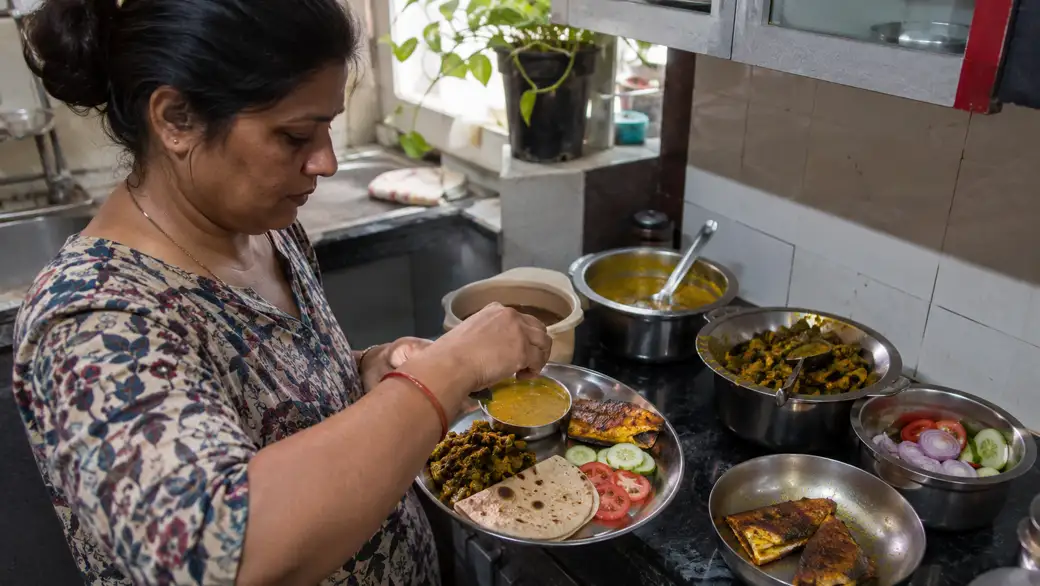
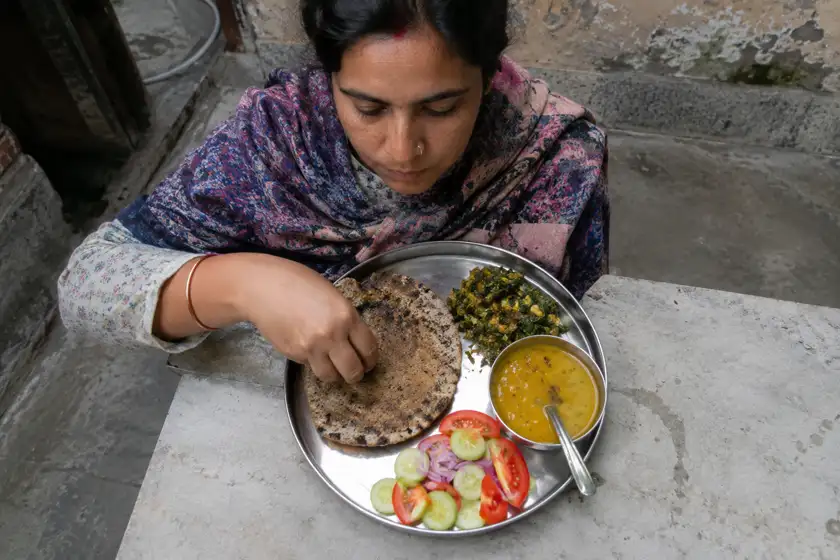
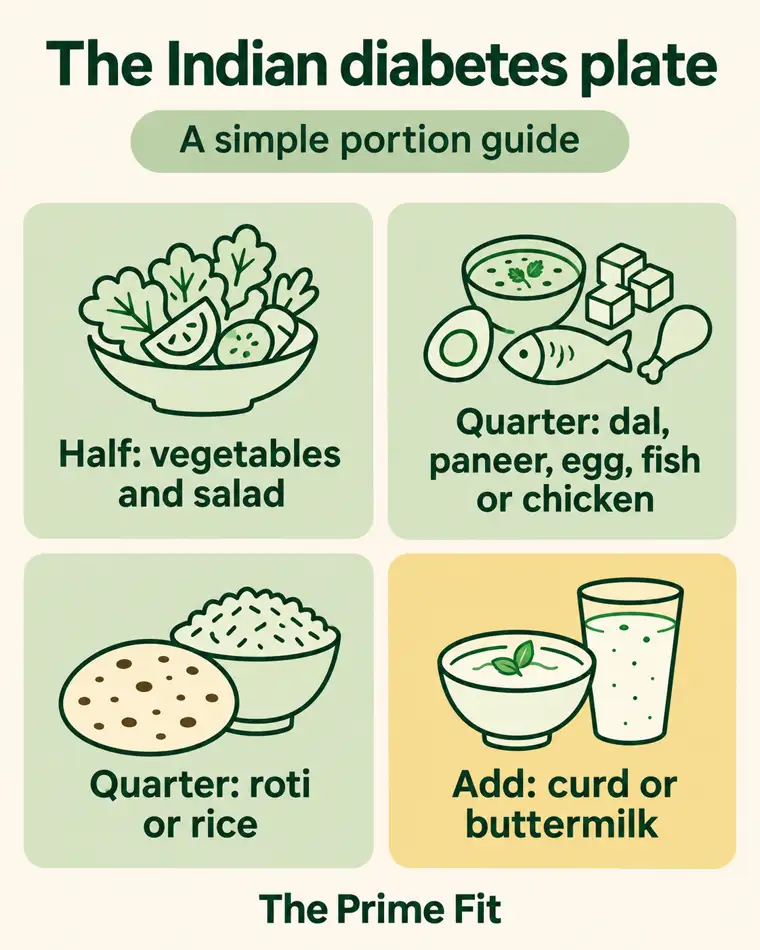
The plate method removes the need for weighing and calorie counting. Use a normal 9-inch dinner plate at lunch and dinner:
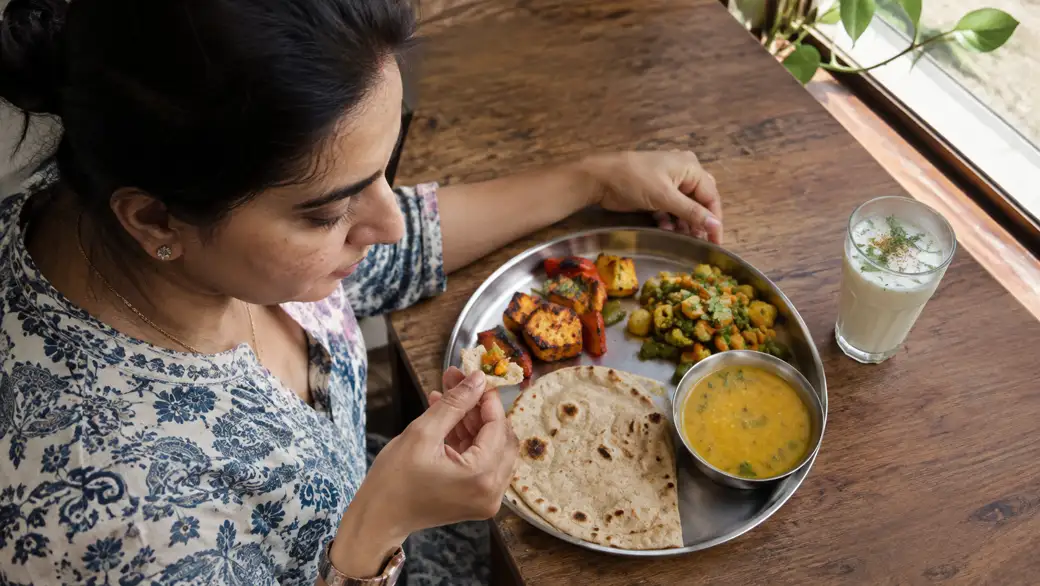
- Half the plate: non-starchy vegetables. Cooked sabzi and salad, such as lauki, tori, bhindi, beans, cabbage, cauliflower, palak, methi, cucumber and tomato.
- A quarter of the plate: protein. Dal, chana, rajma, paneer, tofu, curd, eggs, fish or chicken.
- A quarter of the plate: whole-grain carbohydrate. One to two medium rotis, or one small katori of rice, or a millet preparation.
- On the side: a small katori of plain curd or a glass of chaas, and water.
If you remember only one rule from this article, make it this: vegetables first, then protein, then roti or rice.
Portion guide for common Indian foods
Each of the following contains roughly the same amount of carbohydrate, about 15 grams, which dietitians call one carbohydrate serving. Most adults with diabetes who are trying to lose weight do well with two to three servings at a main meal and one at a snack, but your dietitian will set the right number for you.
| Food | One serving (about 15 g carbohydrate) |
|---|---|
| Whole wheat roti or phulka | 1 medium (about 6 inches) |
| Cooked rice | About one-third of a standard katori |
| Idli | 1 medium |
| Plain dosa | 1 small |
| Poha or upma (cooked) | About half a katori |
| Bread | 1 slice, whole wheat or multigrain |
| Cooked dal or pulses | About half a katori (also provides protein) |
| Fruit | 1 small apple, orange, pear or guava; half a banana; 1 cup papaya |
| Milk or plain curd | 1 glass milk (about 250 ml) or 1 large katori curd |
| Potato | 1 small |
These are approximate household measures. They are meant to build awareness of portions, not to turn every meal into arithmetic.

Best foods for diabetes and weight loss
Whole grains and millets
Whole wheat, jowar, bajra, ragi, barley, oats and brown rice contain more fibre than refined grains. Millets are a good choice, but they are not free foods. A ragi roti still contains carbohydrate, and millet flour ground very fine or made into sweet porridge can raise sugar quickly. Portion remains important.
Dals, pulses and legumes
Moong, masoor, toor, chana, rajma and lobia provide protein and soluble fibre together, and they have a low glycaemic index. Aim for at least one katori of dal or pulses twice a day. Sprouts and besan-based dishes such as chilla are useful at breakfast.
Non-starchy vegetables
These are the foundation of the diet. Eat them generously at lunch and dinner, cooked with moderate oil. Bitter gourd, methi and other traditional vegetables are healthy, but no single vegetable or juice controls diabetes on its own.
Protein foods
Paneer, tofu, curd, eggs, fish and chicken help you stay full and protect muscle during weight loss. Muscle is where most glucose is used, so preserving it improves blood sugar control. Fish twice a week is a good target for non-vegetarians.
Fruit
People with diabetes can and should eat fruit. Choose whole fruit, one serving at a time, preferably between meals or with nuts. Guava, apple, pear, orange, papaya, jamun and berries are good options. Mango, banana, chikoo and grapes are not forbidden, but keep the portion small. Avoid fruit juice, including fresh juice, because it delivers sugar without the fibre.
Nuts, seeds and healthy oils
A small handful of almonds, walnuts or peanuts makes a satisfying snack with little effect on blood sugar. Use mustard, groundnut, rice bran or olive oil for cooking, and limit the total to about three to four teaspoons a day per person.
Foods to limit
| Limit | Why | Better choice |
|---|---|---|
| Sugar, jaggery and honey in tea, coffee and sweets | All raise blood sugar quickly; jaggery and honey are not safer than sugar | Reduce gradually; use spices like cardamom or cinnamon for flavour |
| Soft drinks, packaged and fresh fruit juices | Liquid sugar is absorbed fastest | Water, chaas, unsweetened nimbu pani, whole fruit |
| Maida products: white bread, biscuits, naan, bakery items, noodles | Low fibre, high glycaemic index | Whole wheat roti, besan chilla, oats, whole-grain bread |
| Large servings of white rice, poha, upma or potatoes | High carbohydrate load in one meal | Smaller serving with extra vegetables and dal |
| Fried snacks, namkeen, chips | Refined starch with excess oil and salt | Roasted chana, makhana, sprouts, peanuts |
| “Sugar-free” or “diabetic” sweets and biscuits | Often still high in refined flour, fat and calories | A small portion of a regular sweet on occasions, after a meal |
7-day Indian diabetes diet chart
This sample chart suits an average adult aiming for gradual weight loss. Portions should be adjusted to your body size, activity, blood-sugar readings and medicines. Have tea or coffee without sugar, and drink water regularly.
| Day | Breakfast | Lunch | Evening snack | Dinner |
|---|---|---|---|---|
| Monday | 2 moong dal chillas with mint chutney, 1 small bowl curd | 2 phulkas, 1 katori toor dal, lauki sabzi, salad | Roasted chana (a handful), tea without sugar | 1 to 2 rotis, palak paneer or palak chicken, cucumber salad |
| Tuesday | Vegetable oats upma with peanuts, 1 boiled egg or a glass of milk | 1 small katori brown rice, rajma, cabbage sabzi, raita | 1 guava with 5 to 6 almonds | Vegetable soup, grilled fish or tofu, sautéed beans |
| Wednesday | 2 idlis with sambar (extra vegetables) and chutney | 2 jowar or bajra rotis, chana masala, bhindi sabzi, salad | Sprouts chaat with lemon | Moong dal khichdi with vegetables (more dal than rice), kadhi |
| Thursday | Besan chilla with paneer filling, green chutney | 2 phulkas, masoor dal, tori sabzi, curd | Roasted makhana, chaas | Egg curry (2 eggs) or lobia curry, 1 roti, stir-fried cabbage |
| Friday | Vegetable dalia with a bowl of curd | 1 small katori rice, sambar, beans poriyal, salad | 1 apple or orange with walnuts | Grilled chicken or paneer tikka with a large salad and mint chutney |
| Saturday | 2-egg vegetable omelette with 1 slice whole wheat toast, or sprouts and vegetable poha | 2 multigrain rotis, mixed dal, cauliflower-pea sabzi, raita | Roasted peanuts (a handful), lemon water without sugar | 1 to 2 rotis, mixed vegetable curry, dal, salad |
| Sunday | Ragi dosa with sambar, or vegetable stuffed roti with curd | Family meal: start with salad and sabzi, then 1 serving of the main dish and 1 roti or a small katori of rice | Papaya bowl with seeds | Light dinner: dal soup with sautéed vegetables |
If you get hungry mid-morning, add a fruit or a glass of chaas. If your healthcare provider has advised a bedtime snack because of your medicines, a small glass of milk without sugar is a good option.
Meal timing and everyday habits
- Eat at regular times. Skipping meals and then eating a very large dinner produces the biggest sugar swings. Three balanced meals with one or two small snacks suits most people.
- Keep dinner earlier and lighter. Finish dinner two to three hours before bed where possible.
- Walk after meals. Even 10 to 15 minutes of walking after lunch and dinner lowers the post-meal rise in blood sugar. It is one of the simplest and most effective habits.
- Add strength exercise. Two sessions a week of resistance exercise, with bands, weights or body weight, improve insulin sensitivity.
- Sleep seven to eight hours. Poor sleep raises blood sugar and appetite the next day.
- Monitor. Checking sugars before and two hours after a few different meals teaches you how your own body responds, which is more useful than any general list.
Common myths about diabetes and food
“I must give up rice completely”
No. A small portion of rice with dal and vegetables fits into a diabetes diet. The problem is a large plate of rice with little else. Many people find that switching the proportion, more sabzi and dal, less rice, is enough.
“Jaggery, honey and brown sugar are safe”
They are all sugars and raise blood glucose in much the same way as white sugar. They may be used in the same small amounts, not more.
“People with diabetes cannot eat fruit”
Whole fruit in controlled portions is recommended. It provides fibre, vitamins and potassium. The foods to avoid are juices and large fruit servings at one time.
“Bitter foods and special juices cure diabetes”
Karela, methi and jamun are healthy foods, but no food or juice cures diabetes, and none should replace prescribed treatment. Stopping medicine in favour of a home remedy can be dangerous.
“If I take medicine, I can eat anything”
Medicine works much better alongside the right diet. Diet and weight loss can reduce the amount of medicine needed over time, under your healthcare provider’s guidance.

Staying safe while you change your diet
Important if you take diabetes medicines
When you eat fewer carbohydrates and lose weight, blood sugar can fall. If you take insulin or sulfonylurea tablets (such as glimepiride or gliclazide), this can cause hypoglycaemia: shakiness, sweating, hunger, confusion or palpitations. Tell your healthcare provider before you start a new diet so that doses can be reviewed, check your sugar if you feel unwell, and keep a quick source of sugar with you.
People with kidney disease, pregnant women, and those with type 1 diabetes need individual dietary advice and should not follow a general chart. Regular check-ups, including HbA1c, kidney function, cholesterol, eye and foot examinations, remain essential even when your sugars improve.
When diet alone is not enough
For some people, especially those with a higher BMI or long-standing diabetes, lifestyle change needs medical support. Newer medicines in the GLP-1 family lower blood sugar and also help with weight loss, and your healthcare provider may consider them where appropriate. They work best alongside the eating pattern described here, with enough protein to protect muscle. For people with severe obesity and diabetes, bariatric surgery is another option with strong evidence. These are decisions to make with your healthcare provider after a proper assessment.
How The Prime Fit can help
A general diet chart cannot account for your medicines, your sugar pattern or your daily routine. At The Prime Fit, a diabetes nutrition plan starts with your history, blood reports and current readings. Your dietitian builds meals around the food your family already cooks, and reviews your progress every week. A healthcare professional is part of the same care team to guide treatment and adjust medicines safely as your weight and sugars improve.
To get a plan made for you, book a consultation or read about our diabetes and prediabetes diet programme.
Frequently asked questions
How many rotis can a person with diabetes eat in a day?
It depends on your body size, activity and other carbohydrate foods in the day. Many adults aiming for weight loss manage well with one to two medium rotis at lunch and at dinner, alongside plenty of vegetables and a protein food. Your dietitian can set the exact number for you.
Which is better for diabetes, rice or roti?
Portion and what you eat with it matter more than the choice. Whole wheat roti has more fibre than white rice, but a small katori of rice with dal and vegetables is also acceptable. Brown rice and millets are good alternatives.
Can type 2 diabetes be reversed with diet?
Some people, particularly within the first few years of diagnosis, achieve remission after substantial weight loss, usually 10 to 15 kg, with a structured programme. Remission has to be maintained and is not possible for everyone, but improvement in blood sugar is achievable for almost everyone.
Which fruits should people with diabetes avoid?
No fruit is completely banned. Keep portions small for very sweet fruits such as mango, chikoo, grapes and banana, and avoid all fruit juices. Guava, apple, pear, orange, papaya and jamun are good regular choices.
Are millets good for diabetes?
Yes, as part of a balanced plate. Jowar, bajra and ragi have more fibre than refined grains. They still contain carbohydrate, so portion size matters, and finely ground millet flour or sweet millet porridge can raise sugar quickly.
Is intermittent fasting safe in diabetes?
It can be suitable for some people, but it carries a risk of low blood sugar if you take insulin or certain tablets. Never start fasting without discussing it with your healthcare provider, who may need to adjust your medicines.
Can I drink milk and eat curd?
Yes. Plain milk and curd provide protein and calcium. Choose unsweetened versions, and count a glass of milk or a large katori of curd as one carbohydrate serving.
What should I eat when my sugar goes low?
Take about 15 grams of fast-acting sugar, such as three teaspoons of sugar or glucose in water or half a glass of fruit juice, recheck after 15 minutes, and repeat if it is still low. Then have a small snack. Tell your healthcare provider about any low readings, because your medicine may need adjusting.
This article is general information and is not a substitute for a consultation. Diet and treatment should be adjusted to your health, tests and medicines by a qualified professional.