In this article
- Zone 2, HIIT and strength training in simple terms
- What is zone 2 cardio?
- What is HIIT?
- What does strength training do for fat loss?
- Zone 2 cardio vs HIIT vs strength training for fat loss: what does the research show?
- Calories, the “fat-burning zone” and afterburn
- Side-by-side comparison
- Which is best for belly fat?
- How much exercise do you need each week?
- A sample weekly plan (illustrative example)
- Practical Indian examples: fitting it into daily life
- If you are on Mounjaro, Wegovy or Ozempic
- Who should check with a healthcare professional first, and when to stop
- Common myths about exercise and fat loss
- Questions to ask your healthcare provider
- How The Prime Fit helps
- Frequently asked questions
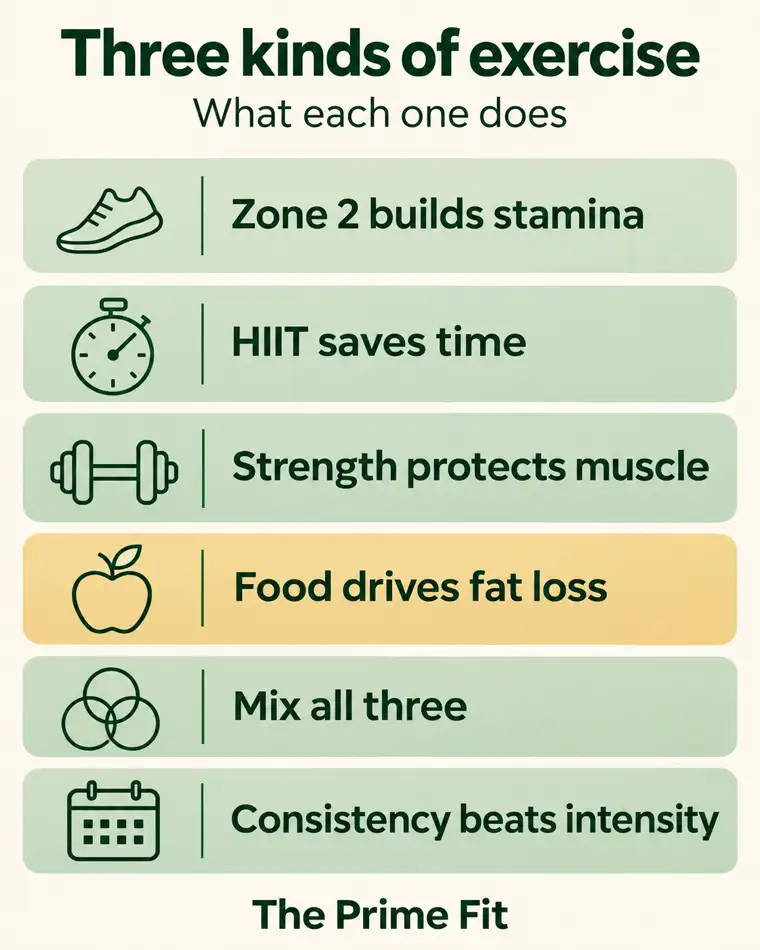
If you are comparing zone 2 cardio vs HIIT vs strength training for fat loss, the short answer is that none of them is clearly best when used alone. Studies that compare steady cardio with high-intensity interval training generally find similar fat loss when the total work done is similar. Strength training burns fewer calories in a session but is the best tool for keeping muscle while you lose fat. Most of the fat loss itself comes from what and how much you eat.
So the useful question is not “which one?” but “how much of each, and in what order?”. For most adults, a base of easy to moderate cardio, two or three strength sessions a week, and a small optional amount of harder interval work covers everything. The right mix depends on your starting fitness, your joints, your health conditions and the time you have.
Zone 2, HIIT and strength training in simple terms
| Type | What it is | How it feels | Examples |
|---|---|---|---|
| Zone 2 cardio | Steady, low to moderate intensity movement held for 30 minutes or more | Breathing faster but able to speak in full sentences | Brisk walking, easy cycling, swimming, cross-trainer |
| HIIT | Short bursts of hard effort separated by easy recovery periods | Hard: only a few words at a time during the bursts | Fast and slow intervals on a cycle, stair climbs, hill walks |
| Strength training | Working muscles against resistance for a set number of repetitions | The last two or three repetitions feel challenging | Squats, push-ups, rows, resistance bands, dumbbells, machines |
What is zone 2 cardio?
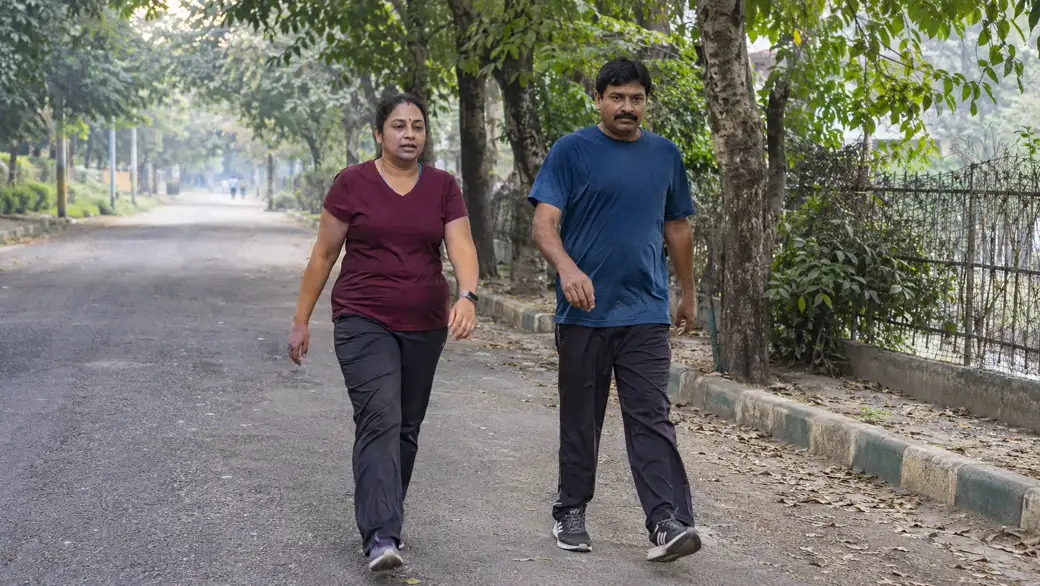
Trainers often divide exercise intensity into five heart rate zones. Zone 2 is the second lowest: clearly more than a stroll, but comfortable enough to keep going for a long time. A common rough guide is about 60 to 70% of your maximum heart rate.
The simplest test needs no gadget. In zone 2 you can talk in full sentences, though you would not want to sing. If you can only manage a few words, you have gone above it.
Illustrative example: estimating a zone 2 heart rate
A commonly used rough estimate of maximum heart rate is 220 minus age. For a 40-year-old, that is 220 minus 40, which is 180 beats per minute. Sixty to seventy percent of 180 is 108 to 126 beats per minute. This is only an estimate: true maximum heart rate varies a lot between people, and medicines such as beta blockers lower heart rate. The talk test is often more reliable than the formula.
What is HIIT?
High-intensity interval training alternates hard efforts with easy recovery. A typical session might be a warm-up, then 6 to 10 rounds of 30 to 60 seconds hard followed by one to two minutes easy, then a cool-down. The whole session often takes 20 minutes or less.
HIIT improves cardiovascular fitness quickly and suits people who are short of time. It is also demanding. It places more stress on the heart, joints and tendons, needs more recovery, and is harder to stick with for people who dislike feeling breathless.
What does strength training do for fat loss?
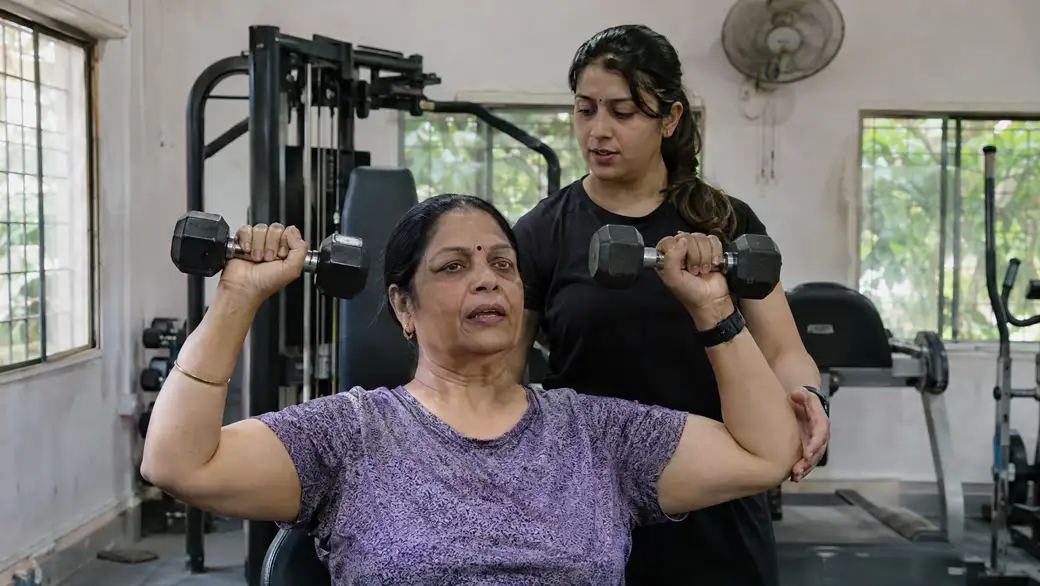
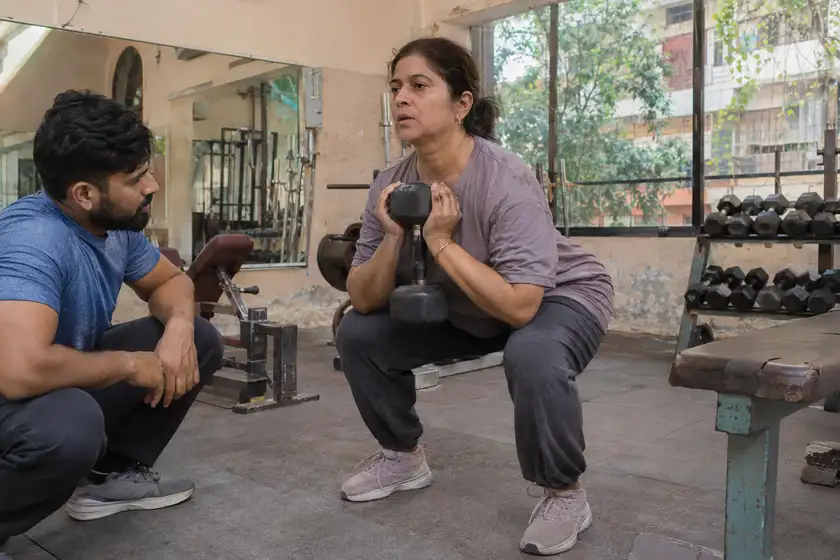
When you lose weight, you lose a mixture of fat and lean tissue, including muscle. Strength training, combined with enough protein, shifts that mixture so that more of what you lose is fat. This matters for several reasons.
- Muscle is where much of your blood glucose goes after a meal. Keeping it helps blood sugar control.
- Muscle keeps you functional: climbing stairs, carrying shopping, getting up from the floor, and staying steady as you age.
- Loading muscles also loads bones, which helps protect bone density during weight loss.
- Preserving muscle slightly limits the fall in daily energy needs that comes with weight loss. The effect is real but modest.
This is especially relevant for Indians. At the same BMI, South Asians tend to carry more body fat and less muscle than many other populations, sometimes described as the “thin-fat” pattern. A person can have a BMI of 23, the Asian Indian threshold for overweight, with a waist above 90 cm in men or 80 cm in women and relatively little muscle. You can check your own figure with our BMI calculator.
Zone 2 cardio vs HIIT vs strength training for fat loss: what does the research show?
Several broad findings are consistent across reviews of exercise trials.
- HIIT and steady moderate cardio produce similar fat loss when the total energy used is similar. HIIT gets there in less time; steady cardio gets there with less strain.
- Exercise without dietary change usually produces modest weight loss. People often expect more than it delivers, partly because appetite and rest tend to rise a little in response.
- Diet plus exercise does better than either alone, particularly for keeping weight off in the long term.
- Strength training preserves lean mass during weight loss better than cardio alone, though it produces less weight change on the scale.
- Combining cardio and strength training gives the best overall result for body composition and health markers.
- Adherence decides the outcome. The programme that people continue for months beats the one that is theoretically better but abandoned in three weeks.
Calories, the “fat-burning zone” and afterburn
Two ideas cause a lot of confusion.
The fat-burning zone. At lower intensities, a higher proportion of the energy you use comes from fat, and at higher intensities more comes from carbohydrate. This is true, but it does not mean easy exercise removes more body fat. Over days and weeks, the body balances its fuel use, and fat loss depends on the overall gap between energy eaten and energy used.
Afterburn. After hard exercise, the body uses slightly more energy for some hours while it recovers. This effect exists, and it is larger after HIIT and heavy strength work than after easy cardio, but it is small compared with the energy used during the session. It is not a reason to choose one type over another.

Side-by-side comparison
| Feature | Zone 2 cardio | HIIT | Strength training |
|---|---|---|---|
| Energy used per minute | Moderate | High | Low to moderate |
| Time needed | More | Less | Moderate |
| Fat loss | Helpful, with diet | Similar to steady cardio for matched work | Smaller direct effect |
| Muscle preservation | Limited | Limited | Best |
| Heart and lung fitness | Good | Very good | Some |
| Joint stress | Low with walking, cycling or swimming | Higher, depending on the activity | Low with good technique |
| Recovery needed | Little | More: not for consecutive days | About 48 hours for the same muscle group |
| Beginner friendly | Yes | Only after a base of fitness | Yes, starting light |
Which is best for belly fat?
No exercise removes fat from one chosen area. Sit-ups strengthen abdominal muscles but do not specifically reduce the fat over them. Fat around the waist and around the internal organs does, however, respond well to regular aerobic exercise and to overall weight loss, sometimes before the scale changes much. A falling waist measurement is a better sign of progress than weight alone.
How much exercise do you need each week?
The World Health Organization advises adults to do at least 150 to 300 minutes of moderate aerobic activity a week, or 75 to 150 minutes of vigorous activity, or a combination, plus muscle-strengthening activity involving the major muscle groups on two or more days a week. It also advises sitting less.
For someone starting from very little, these are goals to build towards over two or three months, not a day-one target. Ten minutes after each meal is a valid beginning. Short walks after meals also help to blunt the rise in blood sugar that follows eating. Our guide to walking for fat loss covers step targets and interval walking in more detail.
A sample weekly plan (illustrative example)
This is an illustrative example for a generally healthy adult who has been cleared to exercise. Adjust the days to your routine.
| Day | Beginner (first 8 weeks) | After building a base |
|---|---|---|
| Monday | Strength, full body, 20 to 30 minutes | Strength, full body, 40 minutes |
| Tuesday | Brisk walk, 20 to 30 minutes | Zone 2 cardio, 40 to 45 minutes |
| Wednesday | Easy walk or gentle yoga | Strength, full body, 40 minutes |
| Thursday | Strength, full body, 20 to 30 minutes | Zone 2 cardio, 30 minutes |
| Friday | Brisk walk, 20 to 30 minutes | Intervals, 15 to 20 minutes including warm-up |
| Saturday | Longer easy walk, 40 minutes | Strength, 30 to 40 minutes, or a sport you enjoy |
| Sunday | Rest, light stretching | Long easy walk or rest |
A basic strength session can be built from five movements: a squat or sit-to-stand, a push (wall or knee push-ups), a pull (band or dumbbell rows), a hip hinge (glute bridge), and a carry or plank. Two to three sets of 8 to 12 repetitions each is a reasonable starting point. Our beginner strength plan describes the exercises step by step.
Practical Indian examples: fitting it into daily life
- Zone 2 without a gym: a brisk walk in the colony park, cycling, swimming, walking briskly inside a mall or metro station, or a steady pace on a cross-trainer.
- Intervals without equipment: climb two or three flights of stairs briskly, walk down slowly, and repeat; or alternate three minutes of fast walking with three minutes of easy walking.
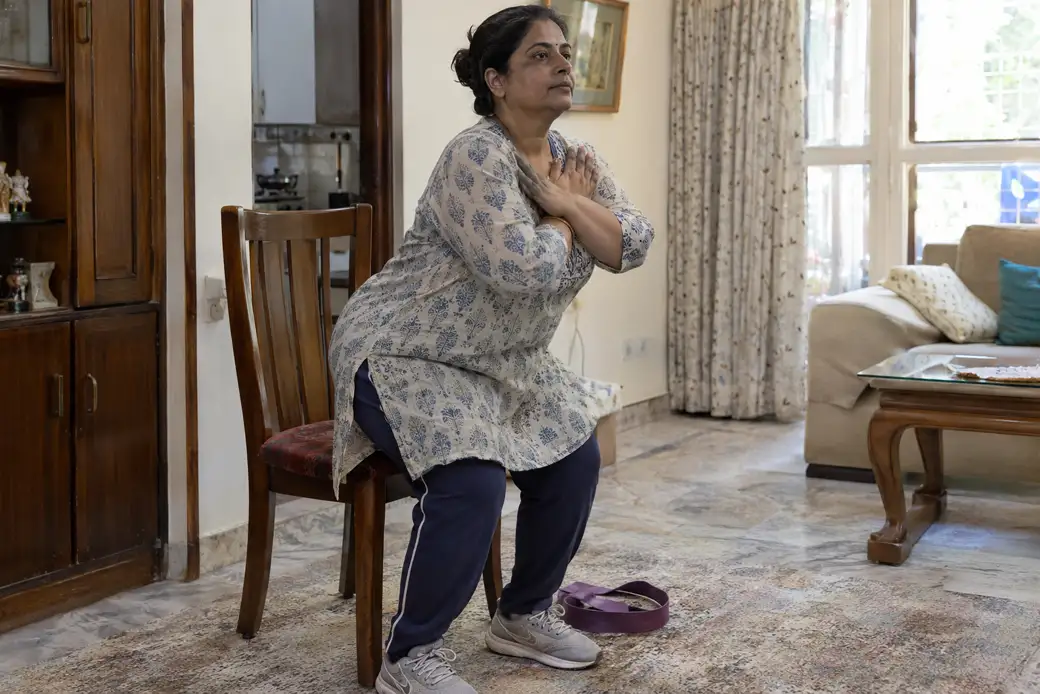
- Strength at home: sit-to-stand from a chair, wall push-ups, resistance bands, a filled water bottle or a rice bag as a weight.
- Delhi air: on days of poor air quality, especially in winter, exercise indoors and avoid hard outdoor efforts. In summer, choose early morning or late evening and drink enough water.
- Fasting days: during Navratri, Ramadan or Karva Chauth, keep sessions lighter, avoid HIIT while fasting without water, and time harder sessions after you have eaten. See our fasting guide.
Protein to support training
Many centres advise roughly 1.2 to 1.6 g of protein per kg of body weight a day during weight loss, adjusted by your healthcare provider or dietitian. People with kidney disease need individual advice. As an illustrative example, a person weighing 70 kg would aim for about 84 to 112 g a day (70 multiplied by 1.2 is 84; 70 multiplied by 1.6 is 112).
- Vegetarian sources: dal, rajma, chana, soya chunks, tofu, paneer, curd, milk, sprouts, besan chilla, peanuts.
- Non-vegetarian sources: eggs, fish, chicken, in grilled, tandoori or curry form with moderate oil.
Our vegetarian high-protein meal plan shows how to reach these amounts with Indian food.
If you are on Mounjaro, Wegovy or Ozempic
GLP-1 medicines reduce appetite, so much of the energy gap is already created by eating less. In the main trials, a meaningful share of the weight lost was lean tissue and not fat. That changes the priority order of exercise.
- Put strength training first. Two or three sessions a week, with adequate protein, is the main defence against losing muscle.
- Use zone 2 cardio and walking as the base for heart health, blood sugar and mood.
- Treat HIIT as optional. Hard sessions can feel unpleasant with nausea or on very low food intake. Avoid them on days when you feel unwell, especially in the days after a dose increase.
- If you also take insulin or a sulfonylurea for diabetes, ask your healthcare provider how to avoid low blood sugar around exercise.
Who should check with a healthcare professional first, and when to stop
Most people can start walking and light strength work safely. Please speak to your healthcare provider before starting vigorous exercise or HIIT if you have known heart disease, chest discomfort on exertion, uncontrolled high blood pressure, diabetes with eye, kidney or nerve complications, significant knee, hip or back problems, a very high BMI with breathlessness, or if you are pregnant or have recently had surgery.
Stop and seek urgent care if you notice
Chest pain, pressure or tightness; pain spreading to the arm, jaw or back; severe or unusual breathlessness; fainting or near fainting; a racing or irregular heartbeat that does not settle with rest; or sudden weakness, difficulty speaking or loss of vision. If you have diabetes and feel shaky, sweaty or confused, treat it as possible low blood sugar and check your glucose.

Common myths about exercise and fat loss
- “You can out-exercise a poor diet.” For most people this is not realistic. An hour of walking can be undone by one large sweet or a sugary drink.
- “HIIT melts fat for 24 hours afterwards.” The afterburn effect is real but small.
- “Low intensity burns more fat, so go slow.” The proportion of fat used is higher, but overall energy balance decides fat loss.
- “Weights make women bulky.” Building large muscles takes years of heavy, targeted training and plenty of food. Typical strength training makes most women firmer and stronger, not bigger.
- “Crunches reduce belly fat.” Fat cannot be removed from one area by exercising the muscle under it.
- “If I am on an injection, I do not need to exercise.” Exercise protects muscle, bone, heart health and long-term maintenance, whichever treatment you use.
Questions to ask your healthcare provider
- Is it safe for me to do vigorous exercise or intervals, or should I stay at moderate intensity?
- What heart rate range is right for me, given my medicines?
- Are there movements I should avoid because of my knees, back or blood pressure?
- How should I time exercise around my diabetes medicines and meals?
- How much protein is appropriate for me, considering my kidney function?
- How should I adjust exercise on fasting days or during a dose increase?
How The Prime Fit helps
At The Prime Fit, activity advice is part of a medical plan and not a separate gym programme. Care begins with an assessment of your weight, waist, health history, medicines and relevant blood tests, so that exercise recommendations fit your heart, joints and blood sugar. Our clinical nutrition support helps you eat enough protein within Indian vegetarian or non-vegetarian meals, and regular follow-up lets the plan change as your fitness improves or your treatment changes.
For people for whom medicine is appropriate, our GLP-1 support programme combines treatment with guidance on protecting muscle. We do not promise specific results: the aim is a routine you can keep.
Frequently asked questions
Is zone 2 cardio or HIIT better for fat loss?
Research generally finds similar fat loss when the total work is similar. HIIT takes less time; zone 2 is easier to recover from and to sustain. Choose the one you will actually do regularly, or use both.
Can I lose fat with strength training alone?
You can, if your eating creates an energy gap, but strength training burns fewer calories than cardio. Its main value is keeping muscle while you lose fat. Combining it with walking or other cardio works better.
How do I know I am in zone 2?
You are breathing faster but can still speak in full sentences. A rough heart rate guide is about 60 to 70% of your estimated maximum, though the talk test is often more reliable.
How many days a week should I do HIIT?
One or two sessions a week is enough for most people, with at least a day between them. Beginners should build a base of walking and strength work first.
Is HIIT safe if I have a high BMI or knee pain?
Jumping and running intervals can strain joints. Low-impact options such as cycling, swimming or brisk uphill walking are kinder. Check with your healthcare provider first if you have heart, blood pressure or joint problems.
Should I do cardio or weights first?
Do first whichever matters more to you that day. If keeping muscle is the priority, as it is during weight loss, do strength work first while you are fresh, or put the two on separate days.
Does walking count as zone 2?
Brisk walking is zone 2 for many people, especially beginners. As fitness improves you may need a faster pace, a slope or a longer duration to reach the same effort.
What exercise is best while taking Mounjaro or Wegovy?
Strength training two or three times a week, with enough protein, is the priority because it helps protect muscle. Add regular walking or zone 2 cardio. Harder intervals are optional.
This article is general information and is not a substitute for a medical consultation. Heart rate figures and plans are illustrative examples, and research findings are described in general terms. Speak to your healthcare provider before starting or intensifying exercise, especially if you have a heart condition, diabetes, high blood pressure, joint problems or are pregnant.