In this article
- What a GLP-1 medicine does, for comparison
- Berberine
- “Oatzempic”
- Chia seed water
- Psyllium husk (isabgol)
- Apple cider vinegar
- Other products sold as natural alternatives
- Why “natural” does not mean safe
- What is true about food and GLP-1
- A day built on these principles
- Who might reasonably try a supplement?
- Who should not rely on them
- Using supplements alongside a GLP-1 medicine
- How to judge any weight loss claim
- If you need more than a kitchen remedy
- What about Indian kitchen remedies?
- Three illustrative examples
- Questions to ask your healthcare provider
- Common myths
- How The Prime Fit helps
- Frequently asked questions
As GLP-1 medicines such as Ozempic, Wegovy and Mounjaro became famous, a second market grew in their shadow. Supplements, drinks and kitchen remedies began to be described as “nature’s Ozempic”, “natural GLP-1 boosters” or “Ozempic without the needle”. Videos promising dramatic weight loss from berberine, a drink of blended oats nicknamed “oatzempic”, or chia seeds soaked in water have been watched hundreds of millions of times.
The appeal is obvious. These options are cheap, need no prescription and sound gentler than an injection. The question is whether they work, and whether they are as harmless as they seem.
This guide examines the most popular claims one by one. The short answer: a few of them can help a little, mostly by adding fibre and making you feel full, and none has an effect remotely like a GLP-1 medicine. It is general information. If you take prescription medicines or have a medical condition, speak to your healthcare provider before starting any supplement.
What a GLP-1 medicine does, for comparison
GLP-1 is a hormone released by the gut after eating. It signals fullness to the brain, slows the stomach and helps control blood sugar. The body’s own GLP-1 is broken down within about two minutes. Medicines such as semaglutide and tirzepatide are engineered to last for a week, keeping the fullness signal switched on continuously at a level far above anything food can produce.
| Approach | Typical average weight loss | Quality of evidence |
|---|---|---|
| Tirzepatide (Mounjaro), 72 weeks | About 20% of body weight | Large randomised trials |
| Semaglutide 2.4 mg (Wegovy), 68 weeks | About 15% | Large randomised trials |
| Structured diet and exercise programme, 1 year | 5 to 8% | Large randomised trials |
| Psyllium husk before meals, several months | About 2 kg | Pooled small trials |
| Berberine, 2 to 3 months | About 1 to 2 kg | Pooled small trials of variable quality |
| Glucomannan, green tea extract, apple cider vinegar | 0 to 2 kg, inconsistent | Small, often weak studies |
| “Oatzempic” drink, chia water | Not studied as such | None; effect is that of fibre and a low-calorie meal |
| GLP-1 patches, drops and gummies | None shown | None |
For a person weighing 90 kg, the difference is between about 1 to 2 kg and about 13 to 18 kg. Calling the former “natural Ozempic” is marketing, not science.
Berberine
What it is
Berberine is a bitter yellow compound found in several plants, including Indian barberry, known as daruharidra, and tree turmeric. It has a long history in Ayurvedic and Chinese medicine, mainly for infections and digestive complaints. It is sold as capsules, usually 500 mg.
What it does
Berberine activates an enzyme inside cells that regulates energy use, an action somewhat like that of the diabetes medicine metformin. It also alters gut bacteria. It does not act on the GLP-1 receptor in the way the medicines do.
What the evidence shows
| Outcome | Finding in pooled trials |
|---|---|
| Body weight | Average loss of about 1 to 2 kg over two to three months |
| Waist | Reduction of about 1 to 3 cm |
| Blood sugar in type 2 diabetes | Modest reductions in fasting glucose and HbA1c |
| Triglycerides and LDL cholesterol | Modest reductions |
| Quality of the studies | Mostly small, short, and conducted in a limited number of countries; products and doses varied |
So berberine has a real but small metabolic effect. It is closer to a mild version of metformin than to a GLP-1 medicine.
Side effects and cautions
- Digestive upset is common: nausea, cramps, diarrhoea or constipation, and bloating.
- Drug interactions. Berberine affects liver enzymes and transporters that handle many medicines. It can raise or lower levels of some drugs, including certain immunosuppressants, blood thinners, sedatives and heart medicines.
- Low blood sugar when combined with diabetes medicines such as insulin or sulfonylureas.
- Not in pregnancy or breastfeeding, and not for infants. It can cross the placenta and has been linked with jaundice in newborns.
- Quality varies. Supplements are not regulated like medicines. Analyses have found products with far less berberine than the label states.
- Long-term safety is not established.
If you have diabetes and are considering berberine, discuss it with your healthcare provider. It is not a substitute for prescribed treatment, and metformin, which is inexpensive and well studied, does a similar job with far more evidence behind it.
“Oatzempic”
What it is
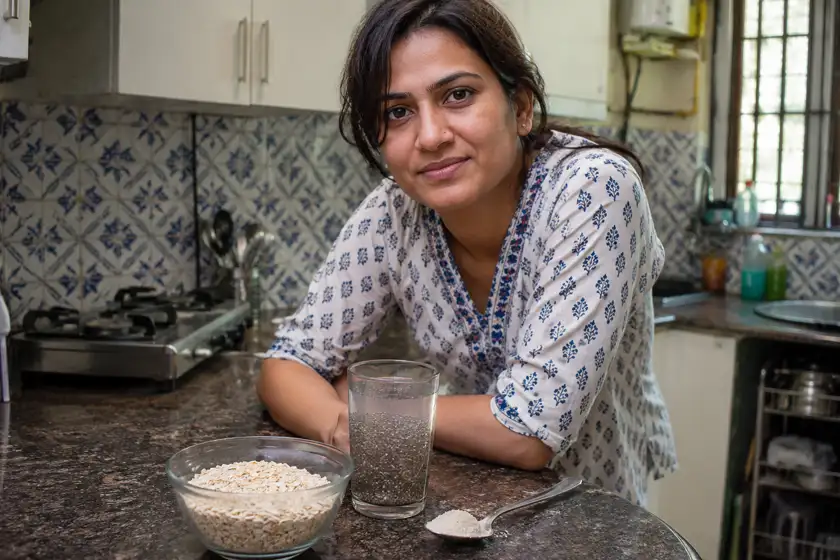
A drink made by blending about half a cup of raw rolled oats with a glass of water and the juice of half a lime, taken in the morning, often in place of breakfast. Videos have claimed losses of 15 to 20 kg in two months.
What is true
Oats contain beta-glucan, a soluble fibre that forms a gel in the gut. It slows digestion, increases fullness and modestly lowers LDL cholesterol and the rise in blood sugar after a meal. A serving of the drink has roughly 150 calories. If it replaces a breakfast of parathas or a sugary cereal, you will eat fewer calories and may lose weight.
What is not
- It has no drug-like action on GLP-1. Any food with fibre and protein nudges the body’s own GLP-1 up briefly.
- No study has tested this drink. The dramatic claims are anecdotes.
- It is low in protein, with only about 5 grams, so as a meal replacement it does little to protect muscle or keep you full until lunch.
- Any weight lost comes from eating less overall, and returns if old habits do.
A better version
Oats are a good food. Eat them as a proper meal: cooked in milk or with curd, with nuts or seeds, or as a savoury vegetable oats upma with a boiled egg or a katori of dal. That gives you the fibre with enough protein to make it a breakfast.
Chia seed water
What it is
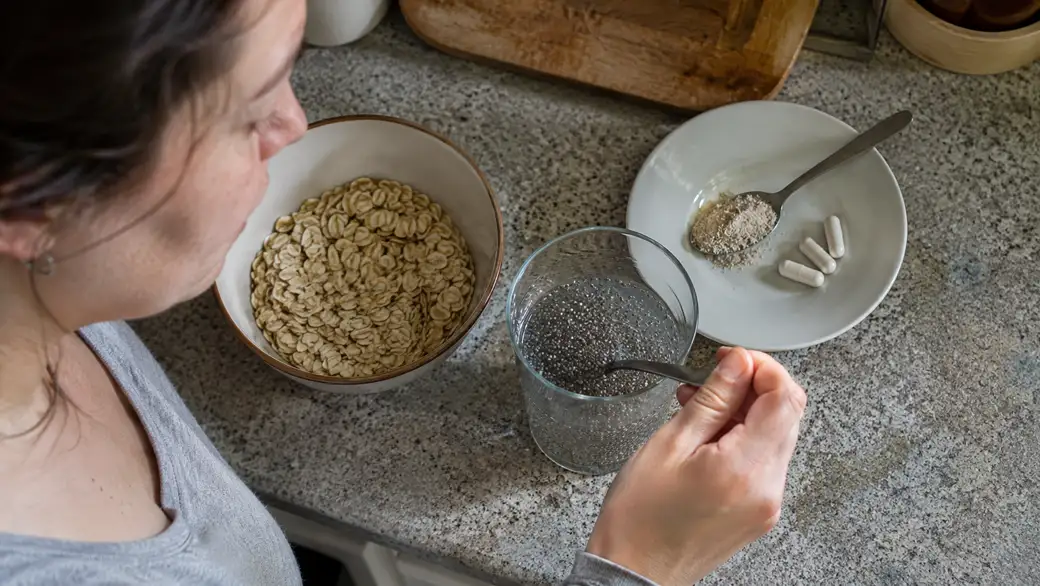
A tablespoon or two of chia seeds soaked in a glass of water, sometimes with lemon, drunk before meals or on waking. It is promoted as an “internal shower” and an appetite suppressant.
What the evidence shows
Chia seeds are rich in soluble fibre, about 4 to 5 grams per tablespoon, and swell to form a gel. That can increase fullness and helps constipation. Trials of chia for weight loss have been small and inconsistent. Some found no effect on weight, and one in people with type 2 diabetes found a modest additional loss alongside a calorie-controlled diet. There is no evidence of a GLP-1-like effect.
Cautions
- Always soak chia seeds for at least 15 to 20 minutes. Dry seeds swallowed and followed by water can swell in the food pipe and cause a blockage.
- Start with a teaspoon and increase gradually, with plenty of fluid, to avoid gas and bloating.
- People with swallowing problems or narrowing of the gut should avoid them.
- Sabja, or sweet basil seeds, traditionally used in falooda and sherbets, behave similarly and are a local, inexpensive alternative.
Psyllium husk (isabgol)
What it is
The husk of the seeds of a plant grown widely in Gujarat and Rajasthan, long used in Indian homes for constipation. It is almost pure soluble fibre.
What the evidence shows
Of all the “natural Ozempic” candidates, psyllium has the best evidence, and it is still modest. Pooled analyses of trials in people with overweight or obesity found that about 10 grams a day, taken before meals for several months, produced an average weight loss of about 2 kg and a reduction in waist of about 2 cm. It also lowers LDL cholesterol and the rise in blood sugar after meals, and relieves constipation.
How to take it
- One to two teaspoons stirred into a full glass of water, drunk promptly, followed by another glass.
- Fifteen to thirty minutes before a meal if the aim is fullness; at bedtime for constipation.
- Start with one teaspoon a day and build up.
- Take it two hours apart from other medicines, since it can reduce their absorption.
- Never take it dry, and avoid it if you have difficulty swallowing or a bowel obstruction.
For someone on a GLP-1 medicine, isabgol is a useful aid for constipation. It is not a replacement for the medicine.
Apple cider vinegar
Vinegar taken with a carbohydrate-rich meal slightly reduces the rise in blood sugar, probably by slowing stomach emptying. Claims of weight loss rest on a few small studies of poor quality, and at least one widely publicised trial has been retracted because of concerns about its data. Any effect is small.
The risks are real: erosion of tooth enamel, irritation of the throat and food pipe, worsening of reflux, and low potassium with heavy long-term use. If you like it, a teaspoon in a large glass of water with a meal, drunk through a straw, is unlikely to harm. It will not make a meaningful difference to your weight.
Other products sold as natural alternatives
| Product | Claim | Evidence | Cautions |
|---|---|---|---|
| Glucomannan (konjac fibre) | Swells in the stomach; reduces appetite | Mixed; small effect at best | Choking and blockage risk if not taken with plenty of water |
| Green tea extract | Burns fat | Very small effect on weight | Concentrated extracts have caused liver injury. Brewed green tea is safe |
| Garcinia cambogia | Blocks fat production | Little or no effect | Reports of liver injury |
| Fenugreek (methi) seeds | Controls sugar and appetite | Modest effect on blood sugar; little on weight | Can add to the effect of diabetes medicines; gas |
| Cinnamon | Lowers blood sugar | Small and inconsistent | Cassia cinnamon in large amounts contains a compound that can harm the liver |
| Karela, jamun, gurmar and similar remedies | Natural treatment for diabetes | Small studies; modest effects | Should not replace prescribed treatment; can cause low sugar with medicines |
| Probiotics, including “GLP-1 probiotics” | Certain gut bacteria raise GLP-1 | Early research; small changes in blood sugar in some studies; no meaningful weight loss shown | Expensive; claims run ahead of evidence |
| Yerba mate, caffeine, “fat burner” blends | Raise metabolism | Small, short-lived effects | Palpitations, anxiety, raised blood pressure; some products have been adulterated with drugs |
| GLP-1 patches, drops, gummies and nasal sprays | Deliver or boost GLP-1 without injection | None. They do not contain GLP-1 medicines, which cannot be absorbed this way | Money wasted; delay in effective treatment |
| “Herbal” or “Ayurvedic” slimming pills and teas | Rapid natural weight loss | None reliable | Some contain laxatives, diuretics or undeclared pharmaceutical drugs |
Why “natural” does not mean safe
- Supplements are not tested like medicines. They do not have to prove that they work, or establish a safe dose, before they are sold.
- What is in the bottle may not match the label. Strength varies, and contamination with heavy metals or undeclared drugs has been found in slimming products.
- Plant compounds are chemicals. They can injure the liver, interact with prescription medicines and be unsafe in pregnancy.
- Combining several products multiplies the risk.
- Delay has a cost. Months spent on ineffective remedies are months in which diabetes, fatty liver or sleep apnoea go untreated.
Stop a supplement and see a healthcare professional if you develop
Yellowing of the eyes or skin, dark urine, severe tiredness, abdominal pain, persistent vomiting, palpitations, fainting, a rash, or symptoms of low blood sugar such as shaking, sweating and confusion.
What is true about food and GLP-1
There is a kernel of fact behind the hype. What you eat does affect the body’s own GLP-1 release, and some habits strengthen the natural fullness signal.
| Habit | Effect | Indian examples |
|---|---|---|
| Protein at every meal | The strongest dietary stimulus for fullness hormones | Dal, chana, rajma, paneer, curd, eggs, fish, chicken |
| Soluble and fermentable fibre | Gut bacteria turn it into substances that stimulate GLP-1-producing cells | Oats, barley, whole pulses, vegetables, guava, isabgol |
| Vegetables and protein before rice or roti | A larger GLP-1 response and a lower blood sugar rise | Start with salad, sabzi and dal |
| Eating slowly | Gives gut hormones time to act | Fifteen to twenty minutes a meal |
| Healthy fats in small amounts | Modest stimulus | Nuts, seeds, mustard or groundnut oil |
| Fermented foods | Support a healthy gut flora | Curd, chaas, idli, dosa, kanji |
| Regular activity and adequate sleep | Keep appetite hormones in balance | Daily walking; seven to eight hours of sleep |
These effects are small compared with a medicine, but they are free, safe and add up. They are the reason a high-protein, high-fibre Indian diet is filling, and why it is the foundation of every weight programme.
A day built on these principles
| Meal | Vegetarian | Non-vegetarian |
|---|---|---|
| Breakfast | Vegetable oats cooked in milk with a spoon of chia and a few almonds; or 2 moong chillas with curd | Vegetable oats upma with 2 boiled eggs |
| Mid-morning | 1 guava or apple | 1 guava or apple |
| Lunch | Salad first, then dal or rajma, sabzi, 1 to 2 phulkas, curd | Salad first, then fish or chicken curry, sabzi, small katori of rice |
| Evening | Sprouts chaat or roasted chana; chaas | Boiled egg or roasted chana; chaas |
| Dinner | Vegetable soup, paneer or tofu with vegetables, 1 phulka | Vegetable soup, grilled chicken or fish with vegetables, 1 phulka |
| If constipated | 1 teaspoon isabgol in water at bedtime | 1 teaspoon isabgol in water at bedtime |
This gives roughly 30 grams of fibre and a protein food at every meal. It is, if you like, the real “natural Ozempic”: not a product, but a pattern.
Who might reasonably try a supplement?
- Isabgol: anyone with constipation, or who wants help feeling full before meals, provided they drink enough water. It is safe, cheap and local.
- Chia or sabja seeds: as part of meals, well soaked, for fibre.
- Berberine: only after discussion with a healthcare professional, for someone with mild metabolic problems who cannot take or does not want metformin, and who takes no interacting medicines. Expect a small effect.
Nobody should take green tea extract, garcinia, “fat burners” or unlabelled herbal slimming products.
Who should not rely on them
- People with obesity and related conditions, such as diabetes, sleep apnoea, fatty liver or heart disease, for whom a 1 to 2 kg loss will not change the outlook
- People with type 2 diabetes, as a substitute for prescribed treatment
- Women who are pregnant, breastfeeding or trying to conceive
- Anyone taking several prescription medicines, without checking for interactions
- People with liver or kidney disease
- Children and adolescents

Using supplements alongside a GLP-1 medicine
| Product | With a GLP-1 medicine |
|---|---|
| Isabgol | Often recommended for constipation. Take with plenty of water |
| Chia or sabja seeds | Fine in small, soaked amounts. Large amounts can add to bloating |
| Oats | A good breakfast when cooked with milk or curd and eaten in a small portion |
| Berberine | Not advised without your healthcare provider’s agreement. It adds digestive side effects and may lower blood sugar further |
| Apple cider vinegar | Likely to worsen reflux and nausea |
| Fat burners and stimulant blends | Avoid. The medicine already raises the pulse slightly |
| Protein powder | Useful if food alone does not meet your protein target |
| Vitamin B12, vitamin D and iron | Replace if tests show a deficiency |
How to judge any weight loss claim
- Who is making it? Someone selling the product, or an independent source?
- What is the evidence? A randomised trial in people, or a laboratory study, an animal experiment or a testimonial?
- How big is the effect? “Significant” in a study can mean one kilogram.
- How long did it last? Most supplement trials run for eight to twelve weeks.
- Is the comparison fair? Was the supplement compared with placebo, alongside the same diet?
- What are the risks, and who should not take it?
- Does it sound too good to be true? Ten kilograms in a month without changing your diet is not possible by any safe means.
- Is the name borrowed? A product that needs the word “Ozempic” to sell itself is trading on someone else’s evidence.
If you need more than a kitchen remedy
For people who meet medical criteria, effective treatment exists. A structured, dietitian-led programme produces 5 to 8 percent weight loss on average and substantial health gains. GLP-1 medicines, where appropriate, produce 15 to 20 percent. Approved generic versions of semaglutide have made treatment more affordable. If cost or fear of injections is what draws you to “natural” alternatives, talk to a healthcare professional about those concerns directly. There may be a better answer than a supplement.
What about Indian kitchen remedies?
Jeera water, methi seeds soaked overnight, lemon with warm water, ajwain, cinnamon and green tea are part of many Indian households’ routines, and they are now relabelled online as “natural GLP-1” drinks. They are safe in ordinary culinary amounts, pleasant, and a far better start to the day than sweet tea. Jeera and ajwain ease bloating, and methi has a small effect on blood sugar. None of them burns fat or mimics a weight loss medicine. Enjoy them as part of a good diet, and do not expect them to do the work of one.

Three illustrative examples
These invented examples show common outcomes. They are not accounts of real people.
Berberine on top of several medicines
A 61-year-old man with diabetes, taking several heart medicines, starts berberine after watching a video. Within three weeks he has loose stools and two episodes of low blood sugar. His healthcare provider stops it, explains the interactions, and adjusts his diabetes treatment properly.
Oats done well
A 34-year-old woman swaps her usual paratha breakfast for vegetable oats with milk, a boiled egg and fruit, starts lunch with salad and dal, and walks daily. In four months she loses 5 kg. The drink in the videos was not the cause. The change in her whole pattern was.
A year lost
A 45-year-old man with a BMI of 34 and sleep apnoea spends a year and a considerable sum on capsules, teas and patches, losing and regaining the same 2 kg. After a medical assessment and proper treatment, he loses 16 kg over the following year and his sleep study improves.
Questions to ask your healthcare provider
- Is this supplement safe with my medicines and conditions?
- What effect could I realistically expect?
- Would more fibre and protein from food do the same job?
- Given my weight and health, do I need more effective treatment?
- If cost is my concern, what affordable options are there?
Common myths
“Berberine is natural Ozempic”
It works differently and produces a small fraction of the effect.
“Oatzempic melts fat”
It is a low-calorie, high-fibre drink. Weight is lost only if you eat less overall.
“Natural products have no side effects”
Several cause digestive upset, interact with medicines or have injured the liver.
“GLP-1 patches and drops deliver the same medicine”
They contain no GLP-1 medicine.
“If millions of people are posting about it, it must work”
Popularity reflects marketing and hope, not evidence.
“Food cannot affect GLP-1 at all”
Protein and fibre do raise it modestly. That is a reason to eat well, not to buy a supplement.
How The Prime Fit helps
At The Prime Fit, we start with what is proven. Our dietitians build high-protein, high-fibre Indian meal plans that use the natural fullness signals of food to best effect, with weekly follow-up. If your weight and health call for more, our experts assess you for medical treatment and explain the realistic options and costs. And if you are taking supplements, tell us; we will check them against your medicines without judgement.
To find an approach that will work for you, book a consultation or read about our dietitian-led programmes.
Frequently asked questions
Is there a natural alternative to Ozempic?
No supplement or food matches a GLP-1 medicine. A diet high in protein and fibre strengthens the body’s own fullness signals modestly and safely.
Does berberine work for weight loss?
Pooled trials show an average loss of about 1 to 2 kg over two to three months, with modest improvements in blood sugar and lipids. It can cause digestive upset and interacts with medicines.
What is oatzempic, and does it work?
A drink of blended oats, water and lime. It is filling and low in calories, but has not been studied and has no drug-like effect. Oats eaten as a proper meal with protein are a better choice.
Does chia seed water reduce weight?
Chia adds fibre and may increase fullness. Studies of weight loss are small and inconsistent. Always soak the seeds before consuming them.
Is isabgol good for weight loss?
Taken before meals with plenty of water, it has produced about 2 kg of weight loss in pooled trials, and it helps constipation and cholesterol.
Does apple cider vinegar burn fat?
There is no reliable evidence of meaningful weight loss. It can damage tooth enamel and worsen reflux.
Do GLP-1 patches or drops work?
No. They do not contain GLP-1 medicines and have no evidence of effect.
Is berberine safe with diabetes medicines?
It can add to their blood sugar lowering effect and interact with other drugs. Speak to your healthcare provider first.
Can I take these supplements with Mounjaro or Wegovy?
Isabgol is often useful for constipation. Avoid berberine, vinegar and fat burners unless your healthcare provider agrees, as they can worsen side effects.
Which foods increase GLP-1 naturally?
Protein foods, soluble fibre from oats, pulses and vegetables, and eating vegetables and protein before carbohydrates. The effect is real but small.
This article is general information and is not a substitute for a consultation. Figures from studies are approximate. Speak to your healthcare provider before starting any supplement, especially if you take prescription medicines, are pregnant or have a medical condition.