In this article
- Why GLP-1 medicines are not used in pregnancy
- How weight and GLP-1 treatment affect fertility
- Contraception while you are on treatment
- Planning a pregnancy: when to stop
- Keeping weight steady after stopping
- Nutrients to build up before you conceive
- A sample day of eating in the months before conception
- If you have type 2 diabetes
- Questions to ask your healthcare provider
- If you become pregnant while taking a GLP-1 medicine
- During pregnancy
- Breastfeeding
- After delivery: when can treatment restart?
- Common questions about periods on GLP-1 medicines
- Fertility treatment, IVF and GLP-1 medicines
- What about men?
- The emotional side of pausing treatment
- Summary: your timeline at a glance
- Myths and facts
- How The Prime Fit supports women through each stage
- Frequently asked questions
Many women who start GLP-1 medicines such as Mounjaro (tirzepatide), Wegovy or Ozempic (semaglutide) are in their twenties, thirties or early forties. For them, questions about periods, fertility, contraception and pregnancy are just as important as questions about side effects and dose. They are also questions that often go unasked in a short appointment.
Two facts need to be held together. First, these medicines are not recommended during pregnancy or while trying to conceive. Second, weight loss often improves fertility, sometimes quickly, so pregnancy can become more likely during treatment than it was before. Planning ahead avoids anxiety later.
This guide covers the whole journey: before treatment, during treatment, the period before trying for a baby, an unexpected positive test, pregnancy, breastfeeding and life after delivery. It is general information. Decisions about your medicines and your pregnancy should be made with your own healthcare provider and obstetrician.
Why GLP-1 medicines are not used in pregnancy
Medicines are tested in animals before they are used in people. In animal studies of semaglutide and tirzepatide, exposure during pregnancy was associated with harm to the developing offspring, including reduced growth and structural abnormalities, often at doses that also caused the mother to eat less and lose weight. Pregnant women were excluded from the human trials, so there is very little direct human evidence.
Published reports of women who conceived while taking a GLP-1 medicine and stopped early in pregnancy have so far been broadly reassuring, without a clear signal of an increased rate of major birth defects. However, the numbers are limited, and they cannot prove safety. In addition, pregnancy is not a time for weight loss: the growing baby needs steady nutrition. For these reasons, regulators and manufacturers advise against using these medicines in pregnancy, and against starting them in a woman who is trying to conceive.
In one line
Use reliable contraception while on treatment, stop the medicine in advance of a planned pregnancy, and tell your healthcare provider promptly if you become pregnant while taking it.
How weight and GLP-1 treatment affect fertility
Excess weight, particularly with insulin resistance, can disturb the hormones that control ovulation. This is most obvious in polycystic ovary syndrome (PCOS), where periods are often irregular or absent. When weight falls and insulin levels improve, ovulation frequently returns.
- A loss of as little as 5 to 10 percent of body weight can restore regular cycles in many women with PCOS.
- Ovulation returns before the first period that follows it. A woman whose periods have been absent for months can therefore conceive without any warning sign.
- Weight loss can also improve the response to fertility treatment and reduce some risks in pregnancy, such as gestational diabetes and high blood pressure.
This is good news for women who hope to conceive in the future, and it is the reason unexpected pregnancies have been reported in women using these medicines. Improved fertility through weight loss is the most likely explanation. With tirzepatide there is a second factor: its effect on the contraceptive pill, described below.
The practical message is simple. If you are sexually active and do not want to become pregnant right now, do not assume that irregular periods or a history of difficulty conceiving will protect you once you start losing weight.
Contraception while you are on treatment
Women who could become pregnant are advised to use effective contraception throughout treatment. Which method is best depends partly on which medicine you are taking.
Tirzepatide (Mounjaro) and the oral contraceptive pill
Tirzepatide slows stomach emptying, most noticeably after the first dose and after each dose increase. This can reduce and delay the absorption of oral contraceptive pills, which may make them less reliable at those times. The standard advice is:
- Either switch to a non-oral method of contraception, or
- Add a barrier method, such as condoms, for four weeks after starting tirzepatide and for four weeks after each dose increase.
Because the dose is usually increased several times in the first few months, many women find it simpler to use a non-oral method for the whole period of dose escalation.
Semaglutide (Wegovy, Ozempic) and the pill
Studies of semaglutide have not shown a clinically important effect on the absorption of oral contraceptives. Even so, severe vomiting or diarrhoea from any cause can reduce the reliability of the pill, and the usual “missed pill” rules apply in those situations.
Contraceptive methods compared
| Method | Affected by slowed stomach emptying? | Notes during GLP-1 treatment |
|---|---|---|
| Combined or progestogen-only pill | Possibly, with tirzepatide | Add a barrier method for 4 weeks after starting and after each dose increase, or switch method |
| Copper IUD or hormonal IUD | No | Highly reliable, long acting; a good choice during treatment |
| Contraceptive implant | No | Highly reliable, long acting |
| Contraceptive injection | No | Reliable; discuss possible effects on weight and return of fertility |
| Vaginal ring or skin patch | No | Not absorbed through the gut; availability varies |
| Condoms | No | Useful as an added method; less reliable alone in typical use |
| Emergency contraceptive pill | Possibly, with tirzepatide | Ask a healthcare professional promptly; a copper IUD is the most effective emergency option |
Your healthcare provider or gynaecologist can help you choose. If you have PCOS, a history of blood clots, migraine, high blood pressure or you smoke, some methods will suit you better than others.

Planning a pregnancy: when to stop
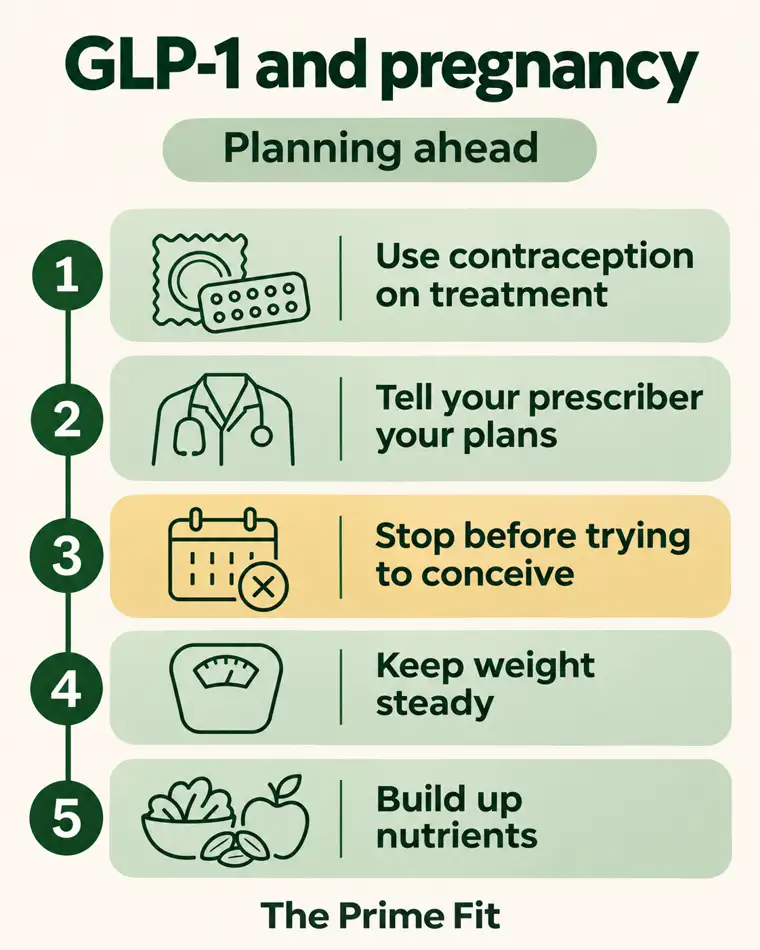
These medicines stay in the body for weeks after the last injection. To allow them to clear before conception, stop in advance:
| Medicine | Usual advice before trying to conceive | Why |
|---|---|---|
| Semaglutide (Wegovy, Ozempic) | Stop at least 2 months before | Long half-life of about one week; takes several weeks to clear |
| Tirzepatide (Mounjaro) | Stop at least 1 month before | Half-life of about five days; clears somewhat sooner |
Advice can differ slightly between countries and may be updated, so confirm the timing with your healthcare provider. Continue contraception during this washout period.
A step-by-step plan
- Tell your healthcare provider early. Ideally three to six months before you hope to conceive.
- Agree a stop date and whether to reduce the dose gradually or stop at the current dose.
- Prepare your nutrition plan. Appetite will return after stopping. A structured, protein-rich eating pattern helps you hold your weight.
- Start folic acid as advised by your healthcare provider, usually before conception and through early pregnancy. Women with a higher BMI or diabetes are often advised a higher dose.
- Review all other medicines. Some medicines for diabetes, blood pressure and cholesterol are also unsuitable in pregnancy and need to be changed.
- Check key tests. Blood sugar and HbA1c, thyroid function, haemoglobin, vitamin D and B12, and blood pressure.
- Keep moving. Regular walking and strength exercise support blood-sugar control and a healthy pregnancy weight.
What is a good weight to conceive at?
There is no single target. Any reduction in excess weight before pregnancy lowers the risks of gestational diabetes, high blood pressure, pre-eclampsia and complications at delivery. You do not need to reach a “normal” BMI. A stable weight for a few months, with good nutrition and controlled blood sugar, matters more than a number.
Keeping weight steady after stopping
When a GLP-1 medicine is stopped, hunger signals return over the following weeks, and weight tends to rise. If you conceive soon after stopping, this overlaps with early pregnancy. A plan helps:
- Eat three regular meals with a protein food at each one: dal, paneer, curd, eggs, fish or chicken.
- Fill half the plate with vegetables, and keep roti or rice to a quarter.
- Keep planned snacks ready, such as fruit with nuts, roasted chana or curd, so that returning hunger does not lead to biscuits and fried snacks.
- Continue walking after meals and strength exercise twice a week.
- Weigh yourself once a week, and stay in touch with your dietitian.
Some weight regain is common and is not a failure. The aim is to limit it and to enter pregnancy well nourished.
Nutrients to build up before you conceive
Reduced appetite on GLP-1 treatment can mean a lower intake of several nutrients that matter in early pregnancy. The months before conception are the time to correct any gaps. Ask your healthcare provider which tests and supplements you need.
| Nutrient | Why it matters | Indian food sources |
|---|---|---|
| Folate (folic acid) | Lowers the risk of neural tube defects; needed from before conception | Leafy greens, chana, rajma, moong, oranges; a supplement is routinely advised |
| Iron | Prevents anaemia, which is common in Indian women | Spinach, methi, bajra, ragi, jaggery in small amounts, eggs, meat; pair with vitamin C such as lemon or amla |
| Vitamin B12 | Nerve and blood health; often low in vegetarians | Milk, curd, paneer, eggs, fish, meat; supplement if deficient |
| Protein | Preserves muscle and supports early growth | Dal, pulses, paneer, tofu, soya, curd, eggs, fish, chicken |
| Calcium and vitamin D | Bone health for mother and baby | Milk, curd, ragi, sesame seeds; sunlight and supplements for vitamin D |
| Iodine | Thyroid function and brain development | Iodised salt, dairy, fish |
| Omega-3 fats | Brain and eye development | Fish, walnuts, flaxseed, chia seeds |
A sample day of eating in the months before conception
Once the medicine is stopped, this kind of menu helps steady appetite and provides the nutrients above. Adjust portions with your dietitian.
| Meal | Vegetarian | Non-vegetarian |
|---|---|---|
| Breakfast | Vegetable besan chilla with curd and an orange | 2-egg vegetable omelette with 1 whole wheat toast and fruit |
| Mid-morning | A handful of almonds and walnuts | Chaas and a handful of roasted chana |
| Lunch | 2 rotis, rajma or chana, palak sabzi, salad with lemon, curd | 1 small katori rice, fish curry, bhindi sabzi, salad, curd |
| Evening | Sprouts chaat or roasted makhana with a glass of milk | Boiled egg with fruit |
| Dinner | Ragi roti or 1 to 2 phulkas, paneer and vegetable curry, dal | 1 to 2 phulkas, chicken curry, mixed vegetables, dal |

If you have type 2 diabetes
For women with diabetes, planning is especially important. High blood sugar around conception and in early pregnancy raises the risk of complications for mother and baby, so the aim is good glucose control before conceiving. When a GLP-1 medicine is stopped, blood sugar can rise, and several other diabetes tablets are also not used in pregnancy. Your healthcare provider will usually move you to treatments with an established record in pregnancy, such as insulin and, in some cases, metformin, and will set an HbA1c target with you before you stop contraception. Do not stop any diabetes medicine without a replacement plan.
Questions to ask your healthcare provider
- Which contraceptive method suits me best while I am on this medicine?
- When exactly should I stop before trying to conceive, and should the dose be reduced first?
- Which of my other medicines need to change before pregnancy?
- Which supplements should I start now, and at what dose?
- What weight and blood-sugar targets should I aim for before conceiving?
- Who will support my nutrition after I stop, and during pregnancy?
If you become pregnant while taking a GLP-1 medicine
An unexpected positive pregnancy test on treatment is understandably worrying. Here is what to do.
- Stop the injections. Do not take the next dose.
- Contact your prescriber and an obstetrician as soon as you can. Tell them which medicine and dose you were taking and the date of your last injection.
- Do not panic. The information available so far from women in this situation has not shown a clear increase in major birth defects, although the data are limited. Your obstetrician will advise on scans and follow-up.
- Start folic acid if you are not already taking it, as advised.
- Review your other medicines with your healthcare provider straight away.
- Do not try to diet. Eat regular, balanced meals. Your team will guide appropriate weight gain for your starting BMI.
If you have diabetes, your blood sugar will need close monitoring, because stopping the medicine can raise it. Treatment will be changed to medicines that are established in pregnancy.
During pregnancy
GLP-1 medicines are not restarted during pregnancy. Weight management in pregnancy focuses on healthy eating, safe activity and appropriate weight gain, not weight loss.
- Weight gain: women who start pregnancy with a higher BMI are generally advised to gain less than women with a lower BMI. Your obstetrician will give you a personal range.
- Gestational diabetes: women with excess weight, PCOS or a family history of diabetes are at higher risk and are usually screened early. Diet is the first treatment; insulin or other medicines are added if needed.
- Nutrition: regular meals with protein, vegetables, whole grains, dairy and fruit; iron, calcium and other supplements as prescribed.
- Activity: walking and pregnancy-safe exercise on most days, unless your healthcare provider advises otherwise.
Breastfeeding
There is little information on whether these medicines pass into human breast milk or how they might affect a breastfed baby, and breastfeeding mothers need adequate nutrition to maintain their milk supply. For these reasons, GLP-1 weight loss injections are generally not recommended while breastfeeding. Most healthcare professionals advise waiting until breastfeeding has ended before starting or restarting treatment.
Gradual weight loss during breastfeeding through a balanced diet and activity is safe for most women. Crash diets are not advised.
After delivery: when can treatment restart?
Treatment can be considered again once you have finished breastfeeding, or after delivery if you are not breastfeeding and your healthcare provider agrees. Before restarting:
- Have a fresh assessment. Your weight, blood tests and medicines may have changed.
- Restart at the low starting dose and increase step by step, even if you were on a higher dose before.
- Arrange reliable contraception before the first injection. Fertility can return within weeks of delivery, even before periods resume.
- If you had gestational diabetes, have your blood sugar rechecked after delivery and then regularly, because the long-term risk of type 2 diabetes is higher.
Common questions about periods on GLP-1 medicines
Changes in the menstrual cycle are often reported during significant weight loss, whatever the method.
- Periods becoming more regular: common in women with PCOS or insulin resistance, and a sign that ovulation is returning.
- Temporary irregularity, spotting or a heavier period: can occur as hormone levels shift with fat loss. Fat tissue produces oestrogen, so losing fat changes the hormonal balance.
- Missed periods: take a pregnancy test first. If negative, very rapid weight loss or very low food intake can suppress periods and should be discussed with your healthcare provider.
Any bleeding that is very heavy, prolonged, or occurs after menopause should be assessed by a gynaecologist.
Fertility treatment, IVF and GLP-1 medicines
Some women use GLP-1 medicines to lose weight before fertility treatment, because a lower BMI can improve success rates and reduce complications. If this applies to you:
- Tell your fertility specialist that you are taking, or have recently taken, a GLP-1 medicine.
- Agree a stop date that allows the recommended washout before embryo transfer or attempts to conceive.
- Egg collection is usually done under sedation or anaesthesia. Because these medicines slow stomach emptying, the anaesthetist needs to know, and may give specific fasting instructions or ask you to pause treatment beforehand.
What about men?
There is no established evidence that a man’s use of semaglutide or tirzepatide harms a pregnancy conceived during his treatment, and current guidance on stopping before conception is directed at women. Weight loss in men with obesity may improve testosterone levels and some measures of sperm quality. Research is continuing, so couples who are planning a pregnancy can mention it at their review.

The emotional side of pausing treatment
Many women feel anxious about stopping a medicine that has finally helped them lose weight, and some feel guilty for worrying about weight while planning a baby. Both feelings are normal. It helps to remember three things. First, the weight you have already lost has improved your health and your chances of a healthy pregnancy. Second, a pause for pregnancy and breastfeeding is temporary, and treatment can be reconsidered afterwards. Third, you do not have to manage the return of appetite alone: a dietitian can adjust your plan week by week, and your healthcare provider can monitor your health throughout. If worries about weight or eating start to dominate your thoughts, say so. Support for emotional wellbeing is part of good care before, during and after pregnancy.
Summary: your timeline at a glance
| Stage | What to do |
|---|---|
| Before starting treatment | Pregnancy test if relevant; choose reliable contraception; discuss future pregnancy plans |
| During treatment | Continue contraception. On tirzepatide with the pill, add a barrier method for 4 weeks after starting and after each dose increase, or use a non-oral method |
| Planning a pregnancy | Tell your healthcare provider 3 to 6 months ahead; stop semaglutide at least 2 months before, tirzepatide at least 1 month before; start folic acid; review other medicines |
| Positive test on treatment | Stop injections; contact your healthcare provider and obstetrician promptly |
| Pregnancy | No GLP-1 medicines; healthy eating, safe activity, screening for gestational diabetes |
| Breastfeeding | GLP-1 medicines generally not recommended; gradual weight loss through diet and activity |
| After breastfeeding | Reassessment; contraception; restart from the lowest dose if appropriate |
Myths and facts
“GLP-1 injections cause infertility”
There is no evidence for this. Weight loss on these medicines more often improves fertility, particularly in women with PCOS.
“I have PCOS, so I do not need contraception”
Not true once you begin losing weight. Ovulation can return before your first regular period.
“If I conceive on the injection, the pregnancy must be ended”
No. Stop the medicine and seek prompt medical advice. Available data, though limited, have not shown a clear increase in major birth defects after early exposure. Decisions are made individually with your obstetrician.
“I can keep taking a small dose while trying to conceive”
No dose is recommended while trying to conceive or during pregnancy.
“The pill works normally with all GLP-1 medicines”
With tirzepatide, pill absorption can be reduced around the start of treatment and after each dose increase, so extra precautions are advised.
How The Prime Fit supports women through each stage
At The Prime Fit, pregnancy plans and contraception are part of the first assessment for every woman of childbearing age, not an afterthought. If you hope to conceive in the coming year, your healthcare provider will plan treatment around that goal, including when to stop. Our dietitians then build a maintenance plan with Indian meals to hold your progress during the washout period, and adapt it for pregnancy and breastfeeding. After delivery, our postpartum programme supports gradual, breastfeeding-safe weight loss, with medical treatment reconsidered only when the time is right.
To discuss your situation in confidence, book a consultation or read about our GLP-1 therapy PCOS programme and weight loss after pregnancy programme.
Frequently asked questions
Can I take Mounjaro, Wegovy or Ozempic while pregnant?
No. These medicines are not recommended during pregnancy. If you become pregnant while taking one, stop the injections and contact your healthcare provider and obstetrician.
How long before trying for a baby should I stop?
The usual advice is to stop semaglutide at least two months, and tirzepatide at least one month, before trying to conceive. Confirm the timing with your healthcare provider and keep using contraception until then.
Do GLP-1 injections make the contraceptive pill less effective?
Tirzepatide can reduce absorption of the oral pill when it is started and after each dose increase. Use a barrier method as well for four weeks at those times, or switch to a non-oral method. Semaglutide has not shown a clinically important effect on the pill.
Why are women getting pregnant unexpectedly on these medicines?
Mainly because weight loss improves ovulation and fertility, especially in PCOS. With tirzepatide, reduced absorption of the pill around dose changes may also contribute.
I found out I am pregnant and took my injection last week. Is my baby at risk?
Stop the medicine and speak to your obstetrician promptly. The limited human data available have not shown a clear rise in major birth defects after early exposure, but safety has not been established, so follow-up is important.
Can I take GLP-1 injections while breastfeeding?
They are generally not recommended during breastfeeding because of limited data and the mother’s nutritional needs. Most healthcare professionals advise waiting until breastfeeding has ended.
Will I regain weight when I stop to conceive?
Appetite returns after stopping and some regain is common. A structured meal plan with enough protein, regular activity and dietitian follow-up helps limit it.
Can GLP-1 medicines help me conceive if I have PCOS?
They are not fertility treatments, but the weight loss they produce can restore ovulation and improve the chances of conception. They must be stopped in advance, as advised, before you try to conceive.
Do I need to stop before IVF or egg collection?
Tell your fertility team. They will advise when to stop before embryo transfer, and the anaesthetist may ask you to pause the medicine or follow special fasting instructions before sedation.
When can I restart after having a baby?
After breastfeeding has finished, or after delivery if you are not breastfeeding and your healthcare provider agrees. You will need a new assessment, reliable contraception and a restart at the lowest dose.
This article is general information and is not a substitute for a consultation. Decisions about medicines, contraception and pregnancy should be made with your own healthcare provider and obstetrician.