In this article
- Why adult BMI cut-offs do not apply to children
- How is childhood obesity diagnosed in India?
- Why are more Indian children gaining excess weight?
- What are the health risks for children and teenagers?
- When should you take your child to a healthcare professional?
- Why children should not be put on a diet without medical supervision
- What can families do at home?
- Indian family meal ideas: vegetarian and non-vegetarian
- Activity, screens and sleep
- How to talk to your child about weight
- Are weight loss medicines or surgery used for teenagers?
- Common myths about childhood obesity
- Questions to ask your child’s healthcare professional
- How The Prime Fit helps
- Frequently asked questions
Childhood and teenage obesity in India is becoming more common, in cities and increasingly in smaller towns as well. If you are a parent who has been told, or who suspects, that your child is carrying more weight than is healthy, the first things to know are simple. Adult BMI numbers do not apply to children. A child’s weight has to be read against age and sex on a growth chart, by a paediatrician. And the answer is almost never a diet for the child: it is a set of steady changes for the whole household.
This matters because children are still growing. Restricting food without medical supervision can affect height, puberty, bone strength and a child’s relationship with eating. At the same time, excess weight in childhood is not something to ignore, because it is linked with raised blood sugar, blood pressure, fatty liver and emotional distress, and it often continues into adult life.
Why adult BMI cut-offs do not apply to children
For Indian adults, a body mass index (BMI) of 23 or more is classed as overweight and 25 or more as obesity. These fixed numbers work for adults because adult height has stopped changing. They do not work for children.
A healthy child’s BMI changes naturally with age. It usually falls after infancy, reaches its lowest point at around five or six years, and then rises steadily through childhood and puberty. A BMI of 19 can be entirely normal for a 16-year-old and high for a 7-year-old.
For this reason, healthcare professionals do not compare a child’s BMI with a fixed number. They plot it on a growth chart that shows the expected range for children of the same age and sex, and they look at how it has changed over time.
Please do not use an adult BMI calculator for a child
Our BMI calculator uses adult Asian Indian cut-offs. It is meant for people aged 18 and over. For anyone younger, the result will be misleading. Ask a paediatrician to plot your child’s height, weight and BMI on a growth chart instead.
How is childhood obesity diagnosed in India?
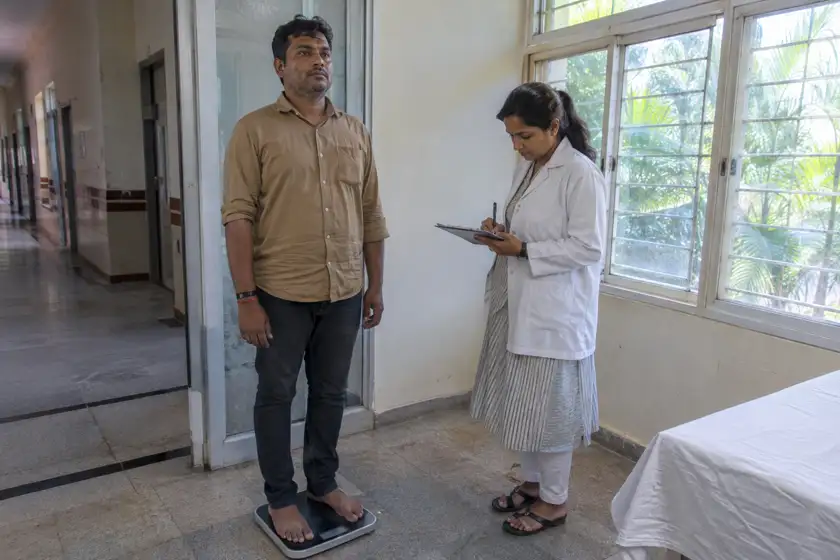
A paediatrician measures height and weight accurately, calculates BMI, and plots all three on growth charts. In India, healthcare professionals commonly use World Health Organization growth standards for children under five and the Indian Academy of Pediatrics growth charts for children and teenagers from 5 to 18 years. The Indian charts include lines designed to match the adult Asian Indian thresholds, so that a child is flagged at a level appropriate for the Indian population.
The pattern across several readings is more useful than any single one: a child whose BMI line is climbing steeply across the chart needs attention even if the latest reading is not yet in the obesity range.
| What the healthcare professional checks | Why it matters |
|---|---|
| Height, weight and BMI on a growth chart | Shows where the child sits compared with others of the same age and sex |
| Previous measurements, if available | Shows whether weight is rising faster than height over time |
| Height growth | Weight gain with slow height growth can point to a hormonal cause and needs investigation |
| Waist measurement | Fat around the middle is linked with blood sugar and liver problems; some healthcare professionals use waist compared with height as an extra screen |
| Blood pressure | Read against charts for the child’s age, sex and height |

Why are more Indian children gaining excess weight?
Excess weight in a child is rarely caused by one thing, and it is not a sign of bad parenting or a lack of willpower. It usually reflects several influences acting together.
- Food environment: biscuits, chips, instant noodles, sweetened drinks, packaged juices, bakery items and delivery meals are cheap, heavily advertised and always within reach.
- Less movement: shrinking play spaces, safety worries, air pollution, tuition classes and exam pressure reduce active play.
- Screens: long hours on phones, tablets and television displace play and sleep, and encourage eating without attention.
- Family patterns: children share their parents’ genes and their kitchen. When parents have excess weight, children are more likely to as well.
In a small number of children there is a medical cause, such as an underactive thyroid, another hormonal condition, a genetic condition or a medicine that increases appetite. Clues include very early onset (severe obesity before the age of five), poor height growth, extreme and constant hunger, or delayed development. A paediatrician will look for these.
What are the health risks for children and teenagers?
South Asians tend to develop blood sugar and cholesterol problems at lower body weights than many other populations, and this appears to hold in the young as well. Conditions that were once seen only in adults are now diagnosed in Indian teenagers.
| Area | Possible effects of excess weight |
|---|---|
| Blood sugar | Insulin resistance, prediabetes and type 2 diabetes in adolescence |
| Heart and vessels | Raised blood pressure, high triglycerides and low HDL cholesterol |
| Liver | Fatty liver, usually without symptoms |
| Hormones | Earlier puberty in some girls, irregular periods and features of polycystic ovary syndrome in teenage girls |
| Breathing and sleep | Snoring, obstructive sleep apnoea, daytime tiredness, worse asthma control |
| Emotional wellbeing | Teasing and bullying, low self-esteem, anxiety, low mood and disordered eating |
When should you take your child to a healthcare professional?
See a paediatrician if you are worried about your child’s weight, if a school check has flagged it, or if clothes sizes are rising much faster than height. A routine visit is also sensible if there is a strong family history of type 2 diabetes.
Book an appointment soon if you notice any of the following:
- Dark, velvety skin at the back of the neck, in the armpits or in skin folds, which can signal insulin resistance
- Loud snoring, pauses in breathing during sleep, or unusual daytime sleepiness
- Rapid weight gain along with slow height growth
- Irregular or absent periods, or excess facial and body hair, in a teenage girl
- Persistent sadness, withdrawal, school refusal or signs of being bullied
Signs that need urgent medical care
Seek care the same day if your child has excessive thirst and passing urine very often with weight loss, tiredness or vomiting; a new limp or hip, groin or knee pain that makes walking difficult; severe or persistent headaches with vomiting or changes in vision; or severe abdominal pain. If a child or teenager talks about self-harm or not wanting to live, seek help immediately.
Why children should not be put on a diet without medical supervision
This is the most important practical message in this guide. Adult weight-loss diets, calorie-counting apps, meal skipping, intermittent fasting, very low carbohydrate plans, “detox” drinks, slimming teas, fat burners and meal-replacement shakes are not suitable for children or teenagers unless a healthcare professional and a qualified dietitian have specifically prescribed and supervised them.
- Growth needs fuel. Children need enough energy, protein, calcium, iron and other nutrients to grow taller and to go through puberty. Restriction can slow this.
- The goal is usually different. For many children, the aim is to slow weight gain or hold weight steady while height catches up, so BMI improves as the child grows. Actual weight loss is advised only in some situations, and gradually.
- Dieting can backfire. Restriction, weighing and comments about body shape are linked with secret eating, binge eating and eating disorders in adolescents.
- Singling out one child hurts. A separate plate, or being denied what siblings are eating, teaches shame, not health.
If your child’s healthcare professional does recommend a structured eating plan, it should be designed by a paediatric dietitian, reviewed regularly, and paired with growth monitoring.
What can families do at home?
The changes with the best evidence are family-based. They work when everyone in the house follows them, including parents and grandparents, and when they are presented as “how our family eats and lives”, not as a treatment for one child.
- Eat together when you can, at a table, with screens off. Children eat more slowly and notice fullness better.
- Keep regular meals and planned snacks. Skipping breakfast or long gaps often lead to overeating later.
- Change what comes into the house. It is easier not to buy chips and soft drinks than to police them.
- Make water and plain milk the usual drinks. Keep sweetened drinks and packaged juices for occasional use.
- Do not use food as a reward, bribe or comfort. Use time, praise and activities instead.
Indian family meal ideas: vegetarian and non-vegetarian
These are examples of balanced meals for the whole family, not a diet chart for a child. Portions depend on age, appetite and activity, and a growing teenager may need more than a parent. No calorie targets are given on purpose.
| Meal | Vegetarian ideas | Non-vegetarian ideas |
|---|---|---|
| Breakfast | Vegetable poha with peanuts; moong dal chilla with curd; idli with sambar; vegetable upma; paneer-stuffed roti | Egg bhurji with roti; boiled eggs with vegetable sandwich; omelette with a fruit |
| School tiffin | Roti roll with paneer and vegetables; vegetable idli; chana chaat; curd rice with cucumber; besan chilla | Egg roll in a roti; chicken and vegetable sandwich on wholewheat bread |
| Lunch | Dal or rajma, roti or rice, a seasonal sabzi, curd and salad | Fish curry or chicken curry with rice or roti, sabzi and salad |
| Dinner | Khichdi with vegetables and curd; roti with paneer bhurji and sabzi; vegetable pulao with raita | Egg curry with roti; grilled or tandoori chicken with dal and sabzi |
A simple picture for the plate helps children: half vegetables and salad, a quarter dal, curd, paneer, egg, fish or chicken, and a quarter roti or rice. Nothing needs to be banned: festival sweets and birthday cake are part of childhood, as long as they stay occasional.

Activity, screens and sleep
The World Health Organization recommends that children and adolescents aged 5 to 17 average at least 60 minutes a day of moderate to vigorous physical activity, with activities that strengthen muscles and bones on at least three days a week. Cycling, skipping, football, badminton, dancing and swimming all count.
- On polluted days, which are common in Delhi winters, move activity indoors: dancing, skipping, yoga, indoor games.
- Agree screen limits. Indian paediatric guidance advises no screen time under two years and no more than about an hour a day, supervised, between two and five years. For older children, screens should not displace sleep, play and family time.
- Protect sleep. School-age children generally need about 9 to 12 hours and teenagers about 8 to 10 hours. Keep bedtimes regular and phones out of the bedroom at night.
How to talk to your child about weight
Children remember what is said about their bodies for a long time. How you speak matters as much as what you serve.
- Talk about health, energy, strength and growing well, not about size, shape or the number on the scale.
- Do not tease, compare with siblings or cousins, or use nicknames about weight. Ask relatives to stop too.
- Do not weigh your child at home regularly. Leave measurements to visits.
Are weight loss medicines or surgery used for teenagers?
For the great majority of children and teenagers, treatment means family-based changes in eating, activity, sleep and screen use, with support from a paediatrician and dietitian. Medicines and surgery have a limited role.
In some countries, certain GLP-1 medicines have been approved for adolescents aged 12 and over with obesity, used alongside lifestyle care and under specialist supervision. Approval and prescribing practice differ between countries, so whether any option is appropriate for an Indian teenager is a decision for a paediatric endocrinologist. These medicines should never be obtained without a prescription or shared from an adult’s supply. Adults can read about the eligibility criteria for adults separately.
Weight loss surgery is considered only for a small number of older adolescents with severe obesity and serious related illness, after assessment by a specialist team that includes paediatric, surgical, nutrition and mental health professionals.
Common myths about childhood obesity
- “It is just baby fat, they will grow out of it.” Some children do, but many do not. A BMI that keeps climbing on the growth chart deserves a check, not a wait.
- “A chubby child is a healthy child.” Health is better judged by growth pattern, energy, sleep and examination than by appearance.
- “My child just needs to eat less.” Unsupervised restriction can harm growth and lead to disordered eating. The home routine needs to change, not only the child’s plate.
- “It is all genetic, so nothing can be done.” Genes influence risk, but habits and environment strongly shape what happens.
Questions to ask your child’s healthcare professional
- Where does my child sit on the growth chart for height, weight and BMI, and how has this changed?
- Is my child’s height growth and puberty on track?
- Are any blood tests or a blood pressure check needed now?
- Should the aim be to hold weight steady or to reduce it, and over what period?
- Can you refer us to a paediatric dietitian?
- How should we talk about this at home, and what should we avoid saying?
How The Prime Fit helps
A child’s assessment should begin with a paediatrician, and any decision about weight loss medicines for a child or teenager belongs with a specialist. Where The Prime Fit can help is with the adults in the family, because children’s habits follow the household.
For parents, care with us starts with a medical assessment of weight, waist, health history and relevant blood tests, using Asian Indian thresholds as described in India’s updated obesity definitions. Our clinical nutrition support focuses on practical Indian home cooking that the whole family can share, and follow-up helps new routines last. Simple steps such as regular walking often become family habits. To discuss your own health, you can contact us.
Frequently asked questions
What BMI is overweight for a child in India?
There is no single number. A child’s BMI is plotted on a growth chart for age and sex, and the cut-off changes every year as the child grows. The adult thresholds of 23 and 25 should not be applied to anyone under 18. A paediatrician can tell you where your child sits.
Should I put my overweight child on a diet?
No, not without medical supervision. Restrictive diets can affect growth and increase the risk of disordered eating. Change the family’s routine instead, and ask a paediatrician whether a supervised plan is needed.
Will my child grow out of it?
Some children do as they grow taller, particularly when family habits improve. Many do not without changes. If the BMI line on the growth chart keeps rising, see a healthcare professional.
Is childhood obesity caused by thyroid problems?
Rarely. An underactive thyroid usually causes slow height growth along with modest weight gain. A paediatrician will test for it when the growth pattern or examination suggests it.
How much exercise does a child need?
The World Health Organization advises an average of at least 60 minutes a day of moderate to vigorous activity for ages 5 to 17. Active play, cycling, sport and dancing all count, and it can be spread through the day.
Can teenagers take weight loss injections?
Some GLP-1 medicines are approved in some countries for adolescents aged 12 and over with obesity, under specialist care. Whether one is suitable is a decision for a paediatric specialist. They should never be used without a prescription or shared from an adult’s supply.
What does dark skin on my child’s neck mean?
Dark, velvety skin on the neck or in the armpits is called acanthosis nigricans. It is often a sign of insulin resistance and is a reason to see a paediatrician. It is not dirt and scrubbing does not help.
How do I talk to my child about weight without hurting them?
Focus on health and habits for the whole family, not on size or the scale. Avoid teasing, comparisons and separate food rules for one child. Listen to how they feel, and involve the school if there is bullying.
This article is general information for parents and is not a substitute for a consultation with a paediatrician. Growth, nutrition and treatment decisions for children and teenagers should always be made with a qualified healthcare professional who has examined your child. If you are worried about your child’s physical or emotional health, please seek medical advice.